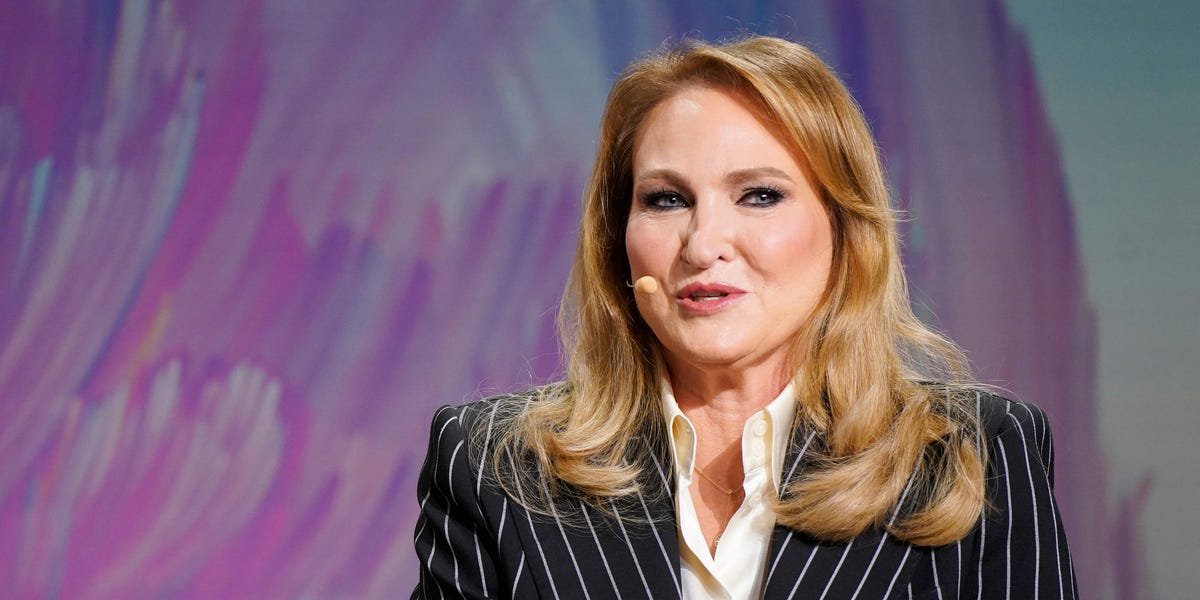
Ultas-CEO-said-the-GLP-1-craze-has-created-new-demand.jpeg

Ulta’s CEO said the GLP-1 craze has created new demand for certain hair and skincare products

Ulta Beauty’s CEO said weight loss drugs are sending customers to pick up new beauty products.

“Hair loss with GLP-1s is real, and products that can help with that,” Kecia Steelman said in an interview with Yahoo Finance’s Opening Bid, released on Monday. “And then also skin elasticity, when you’re losing weight really rapidly, you know, the skin elasticity is something that you’ve got to get moisture into.”

She said there was a crossover in the types of products sought by GLP-1 users and people with aging skin. Both groups are trying to find products that are helping maintain “the longevity of the look.”

GLP-1 drugs are seeing a massive rise in popularity in the US. An EY consumer products expert told Business Insider in 2025 that 10% of the country’s population is on some sort of weight-loss drug.

An Ulta Beauty representative did not respond to a request for comment from Business Insider about which specific products are seeing an increase in demand because of the weight-loss trend.

Hair loss is a side effect of GLP-1 drugs, sold under brand names like Ozempic and Wegovy. It was reported as a side effect in 3% of people in Wegovy clinical trials.

Other companies are cashing in on the “Ozempic face” phenomenon.

The CEO of Swiss pharmaceutical giant Galderma told Bloomberg in 2024 that he sees a strong demand for facial fillers to counteract the sunken look that some GLP-1 users develop.

The effects of weight-loss drugs have manifested in many other ways. Tailors on Wall Street told Business Insider in January that their clients have brought back entire wardrobes to be taken in.

Ulta Beauty reported 2025 annual sales of about $12.39 billion, up 11.8% from the year before. Skincare, wellness, and hair care accounted for 43% of its total sales.

The company’s stock price has risen about 50% in the past year.


Source link

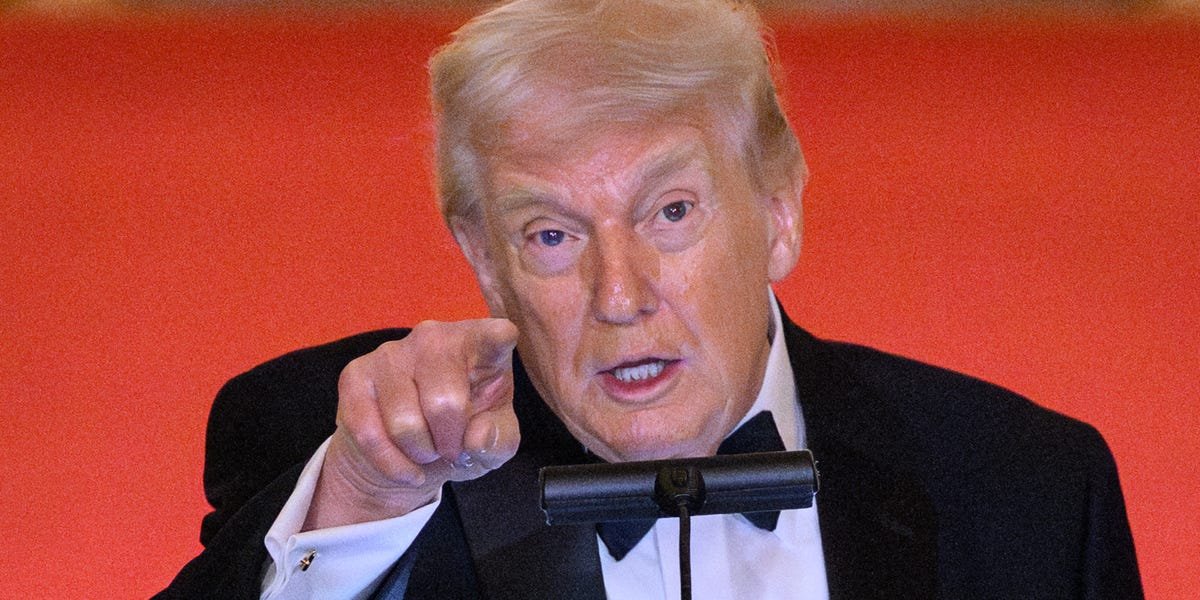
Trump-demand-that-Netflix-fire-Susan-Rice-is-an-extraordinary.jpeg

Trump demand that Netflix fire Susan Rice is an extraordinary use of presidential power

Netflix wants President Donald Trump’s stamp of approval as it maneuvers to buy Warner Bros. Discovery.

Now, Trump has a demand for Netflix: unseat board member Susan Rice.

In normal times, we would all be marveling at the spectacle of the US president telling a company in the midst of a merger fight (Paramount also wants to buy Warner Bros. Discovery) how to structure its board. During Trump 2.0, though, this has become standard stuff. Trump routinely tells companies to fire someone he doesn’t like or do something he does like.

That doesn’t mean Trump always gets what he wants. The demands alone, however, are an extraordinary use of power. We should make sure we don’t become inured to it.

Trump’s Truth Social post is a reminder that the future of Warner Bros. Discovery will run through the White House, no matter what Trump says at any given moment. (Refresher: In December, Trump said, “I’ll be involved” in the fight between Netflix and Paramount. Earlier this month, he announced that “I’ve decided I shouldn’t be involved.” Now he’s telling Netflix it will “pay the consequences” if it doesn’t fire Rice, which sure seems like he’s involved again.)

Trump himself doesn’t have the authority to stop Warner Bros. Discovery from selling itself to Netflix or Paramount, which is controlled by David Ellison and his father, the prominent Trump supporter, Larry Ellison. He can, however, instruct Attorney General Pam Bondi to sue to stop a deal on antitrust grounds.

Modern presidents have traditionally assumed an arm’s-length distance from federal law enforcement. And it’s entirely possible that any other president’s Department of Justice would also look into an antitrust case against Netflix, given its enormous market power.

Trump, however, has made it clear that he expects Bondi to act on his behalf. So if he doesn’t want Netflix to buy Warner Bros. Discovery, he can certainly make it more difficult for them.

Which makes it puzzling that Rice, who held senior roles in the Clinton, Obama, and Biden administrations, would sound off on a podcast, announcing that “elites” and “corporate interests” who accommodated Trump would one day “be held accountable by those who come in opposition to Trump and win at the ballot box.

This wasn’t a mere gaffe or misstatement. She went on at length. It was, regardless of how she intended it, a provocation aimed at the Trump White House — at the exact moment the company she’s supposed to help govern is seeking Trump’s approval.

I’ve asked Netflix for comment on Rice’s comments and Trump’s response.

We should also note that Trump’s most consistent trait is his inconsistency and that he frequently reverses himself. Last summer, for instance, he announced that Intel CEO Lip-Bu Tan was “highly CONFLICTED” and must resign. Days later, Trump met with Tan and described him as a “success.” Weeks after that, the US government acquired 10% of Intel.

Nor does Trump always follow through. Last fall, he demanded that Microsoft fire Lisa Monaco, an executive who had also worked for Clinton, Obama, and Biden. Monaco still works for Microsoft.

However, just because we don’t know how serious Trump is about pushing Rice out of Netflix — or how his administration will ultimately rule on the Netflix/Paramount race — doesn’t mean we should shrug this off.

We’re in a place where the president routinely tells companies how to run their businesses and threatens them if they don’t comply. If we get used to that, we shouldn’t be surprised when future presidents decide they can do it, too.

Disclosure: Mathias Döpfner, the CEO of Business Insider’s parent company, is a Netflix board member.


Source link

Kelsey Vlamis's face on gray background.

Democrats demand Trump issue $1,700 tariff refunds to Americans after Supreme Court ruling

President Donald Trump previously promised Americans tariff dividend checks, but if Democrats have their way, he could be issuing refunds instead.

After a Supreme Court ruling on Friday struck down Trump’s tariffs levied under the International Emergency Economic Powers Act, Democratic lawmakers were quick to demand that the president repay Americans through tariff refunds.

“Donald Trump should return that money immediately. He has an obligation,” California Gov. Gavin Newsom said on Friday. “$1,751 per family that were taxed by Donald Trump. He took hundreds of billions of dollars from working folks, from the ag community, from small businesses for this vanity play, this illegal action, and he finally was held to account. The rule of law won out.”

Illinois Gov. JB Pritzker sent a letter to Trump calling for refunds to families in his state.

“Your tariff taxes wreaked havoc on farmers, enrage our allies, and sent grocery store prices through the roof,” Pritzker said in the letter. “On behalf of the people of Illinois, I demand a refund of $1,700 for every family in Illinois.”

The governor also sent an invoice billing that amount for more than 5.1 million Illinois families, totaling more than $8.6 billion. The invoice said it was “PAST DUE – DELINQUENT.”

When reached for comment, White House spokesman Kush Desai responded in part by saying if Pritzker “really cared about delivering economic relief for Illinois, he’d start with his own state government instead of chasing another stupid headline.”

The offices of Newsom and Pritzker did not respond to requests for comment.

Both Newsom and Pritzker are considered potential candidates for the presidential election in 2028, and they’ve both been highly critical of Trump.

The governors appeared to be basing their requests for refunds of that amount on a report released this month by Democrats on the Joint Economic Committee in Congress. The report found American families paid an average of $1,745 in tariff costs between February 2025 and January 2026, for a total of over $231 billion paid by consumers.

Other studies, including from Harvard Business School and The Budget Lab at Yale, have found that tariff costs are largely paid by American businesses and consumers.

The Supreme Court on Friday ruled that tariffs issued under the IEEPA, a national security act, had exceeded the president’s authority. Trump denounced the decision and said he would pursue additional tariffs through other avenues.

In November, Trump touted the money being collected from tariffs and floated the idea of sending $2,000 tariff dividend checks to middle and low-income Americans, though issuing such checks would likely have required an act of Congress. In January, Trump gave mixed messages about his plans for tariff rebate checks.

Now, with the IEEPA tariffs struck down, it’s likely some American businesses will try to receive refunds for the tariff costs they paid.

Despite Democrats’ stance on the issue, there’s a lot of uncertainty about whether or how refunds would happen.

The Supreme Court ruling did not touch on issuing tariff refunds.

When Trump was asked Friday if the government would now have to issue refunds, he said, “I guess it has to get litigated for the next two years.”

Treasury Secretary Scott Bessent said Friday it was “unlikely” Americans would receive tariff refunds.

“I got a feeling the American people won’t see it,” Bessent said, adding, “My sense is that could be dragged out for weeks, months, years.”


Source link