Trump-says-he-will-sign-an-executive-order-to-have.jpeg

Trump says he will sign an executive order to have the Department of Homeland Security pay TSA workers

President Donald Trump said that he will sign an order “instructing the Secretary of Homeland Security, Markwayne Mullin, to immediately pay our TSA Agents.”

Trump made the announcement on Truth Social on Thursday.

“Because the Democrats have recklessly created a true National Crisis, I am using my authorities under the Law to protect our Great Country, as I always will do!” Trump wrote.

It’s unclear whether Trump has the power to allocate funds immediately without congressional approval, as the Senate has failed to reach a deal on how to fund DHS. A partial government shutdown began on February 14 due to a stalemate over immigration enforcement, mainly affecting DHS agencies.

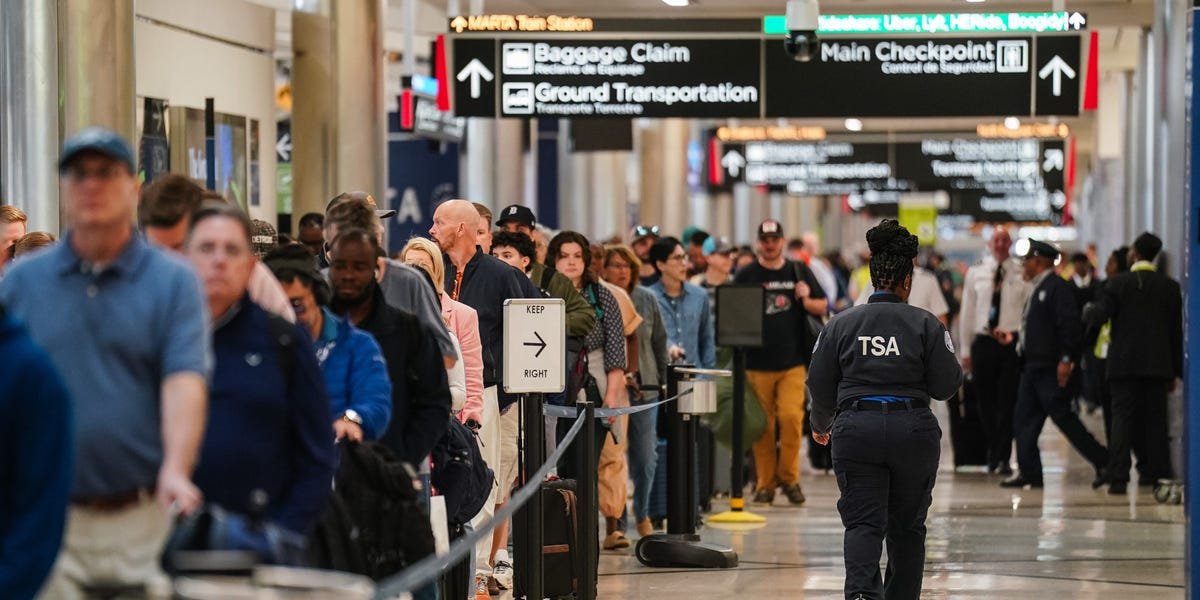
Trump’s comments come as travel chaos intensifies across major national travel hubs. TSA workers are set to miss another paycheck by Friday morning and have begun to call out sick en masse, creating a severe staffing shortage, which is leading to many hours in wait time at TSA checkpoints.

Delta Air Lines suspended travel perks for Congress members and their staff that usually speed up their security checks, citing the government shutdown.

The White House did not immediately respond to a request for comment.

This is a developing story. Check back for updates.


Source link

The-State-Department-says-its-boosting-flights-across-the-Middle.jpeg

The State Department says it’s boosting flights across the Middle East to get Americans home

US embassies in the Middle East are changing their language about helping US citizens evacuate from the region.

Previously, multiple embassies said they were unable to assist citizens in leaving, urging them to evacuate by commercial means. The embassy in Jerusalem said in a notice on Tuesday: “The US Embassy is not in a position at this time to evacuate or directly assist Americans in departing Israel.”

However, they are now issuing notices telling Americans that government assistance is available.

In an X post late on Wednesday, the US Department of State said, “Today, a Department of State charter flight of American citizens departed the Middle East in route to the United States, as part of our ongoing efforts to assist Americans return home.”

It added that “additional flights will be surged across the region.”

The post did not say which Middle Eastern country the charter flight on Wednesday had departed from. The State Department post included photos showing consular staff standing next to US Embassy banners at an airport, with the country’s name blurred on the signage.

The embassy in Jerusalem said in a late Wednesday notice that the US government is “ready to help Americans leave the Middle East if you choose to take advantage of the options available.”

A security alert by the US embassy in Kuwait communicated the same message.

In the notice, the embassy added a link to a crisis intake form, which included the option, “I am seeking U.S. government departure assistance.”

The US embassy in Riyadh, Saudi Arabia, said in an X post on Wednesday that “Americans trying to get home from Israel, Saudi Arabia, the United Arab Emirates, or Qatar,” should fill out the crisis intake form.

The Wednesday notice from the embassy in Doha, Qatar, however, said it’s “currently exploring options to assist U.S. citizens in reaching a safe destination,” but did not provide a link to the crisis intake form.

The State Department said on Monday that Americans in the following countries should vacate: Bahrain, Egypt, Iran, Iraq, Israel, the West Bank and Gaza, Jordan, Kuwait, Lebanon, Oman, Qatar, Saudi Arabia, Syria, the United Arab Emirates, and Yemen.

In a Monday X post, the US Department of State Consular Affairs shared three steps for US citizens in the region to follow:

1) Enroll in http://step.state.gov for security updates from the nearest US Embassy.

2) Follow @travelgov on social media or the WhatsApp channel “U.S. Department of State – Security Updates for U.S. Citizens.”

3) For emergency assistance, call:

  • +1-202-501-4444 from overseas
  • +1-888-407-4747 from the US and Canada

Air travel remains disrupted

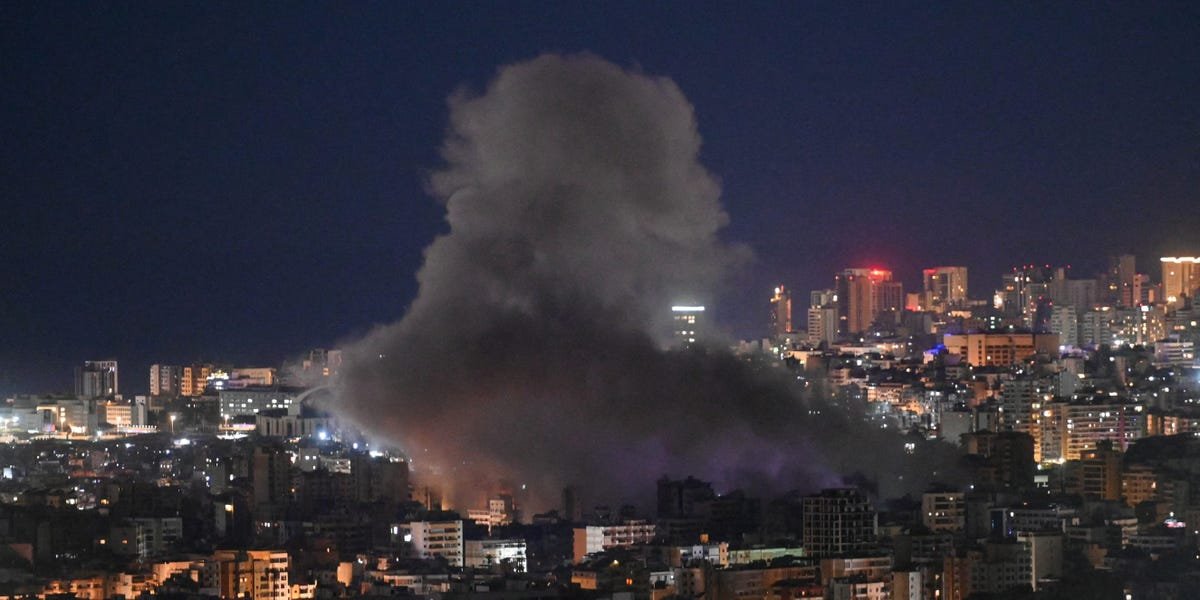
Meanwhile, commercial air travel remains disrupted. Most airports in the region, such as Dubai International Airport and Zayed International Airport in Abu Dhabi, are telling customers not to come unless their airlines have confirmed their flights. Travellers in the region spoke to Business Insider about feeling stranded and terrified.

Some Emirates flights have resumed, prioritizing travelers with earlier bookings. The airline said in a Wednesday X post that it continues to operate a “limited flight schedule,” and data from FlightRadar24 shows that Emirates has scheduled flights on Thursday to Warsaw, San Francisco, Chicago, Tokyo, and other destinations.

Representatives for the State Department did not respond to a request for comment from Business Insider.


Source link

Katherine Tangalakis-Lippert's face on a white background

OpenAI shares its contract language and ‘red lines’ in agreement with the Department of War

OpenAI says its agreement with the Department of War is “better” and has more safety guardrails than the one Anthropic was blacklisted for refusing to comply with.

In a blog post published Saturday, OpenAI shared some contract language from its agreement with the Department of War, including clauses that indicate its tech cannot be used for mass domestic surveillance or to power autonomous weapons or high-stakes decision systems like “social credit” scores.

“We think our agreement has more guardrails than any previous agreement for classified AI deployments, including Anthropic’s,” OpenAI’s post read. “In our agreement, we protect our red lines through a more expansive, multi-layered approach. We retain full discretion over our safety stack, we deploy via cloud, cleared OpenAI personnel are in the loop, and we have strong contractual protections. This is all in addition to the strong existing protections in U.S. law.”

OpenAI CEO Sam Altman took to social media shortly after the company’s blog post was published, answering questions from users concerned about the nature of OpenAI’s agreement with the government.

In Ask-Me-Anything-style responses, he doubled down on OpenAI’s agreement being better than Anthropic’s, not just for the broader AI landscape but also for the American people.

“Anthropic seemed more focused on specific prohibitions in the contract, rather than citing applicable laws, which we felt comfortable with,” Altman wrote in response to a question about why OpenAI agreed to partner with the government when its rival would not. “I think Anthropic may have wanted more operational control than we did.”

OpenAI’s agreement with the federal government comes on the heels of Anthropic being blacklisted and declared a supply chain risk after refusing to comply with the military’s terms of use for the company’s frontier model, Claude.

Anthropic, in a Friday statement, said that “no amount of intimidation or punishment from the Department of War will change our position on mass domestic surveillance or fully autonomous weapons” and vowed to “challenge any supply chain risk designation in court.”

OpenAI, in its Saturday post, argued that Anthropic should not be designated as a supply chain risk and said it had made its position “clear to the government.” Its agreement with the Department of War stemmed, in part, from a desire to “de-escalate things between DoW and the US AI labs.”

“A good future is going to require real and deep collaboration between the government and the AI labs,” OpenAI’s post reads. “As part of our deal here, we asked that the same terms be made available to all AI labs, and specifically that the government would try to resolve things with Anthropic; the current state is a very bad way to kick off this next phase of collaboration between the government and AI labs.”

Representatives for OpenAI and Anthropic did not immediately respond to requests for comment from Business Insider. It was not immediately clear whether Anthropic, or any other leading AI company, had been offered similar contractual terms to those that OpenAI said it had agreed to.

OpenAI said that, as part of its deal with the Department of War, it will maintain “full control” over the safety stack it deploys, and robust “safety guardrails” to prevent misuse. Should the government violate the terms of the agreement, OpenAI said it “could” terminate the contract.

“We don’t expect that to happen,” OpenAI said in its post.

Altman, in his Ask Me Anything posts, wrote that OpenAI would not agree to allow the government to use its technology for mass domestic surveillance “because it violates the constitution.”

He added that he is prepared for a potential dispute over the legality of specific governmental requests in the future, but added that if the Constitution were amended to make such surveillance legal, “Maybe I would quit my job.”

“I very deeply believe in the democratic process, and that our elected leaders have the power, and that we all have to uphold the constitution,” Altman wrote. “I am terrified of a world where AI companies act like they have more power than the government. I would also be terrified of a world where our government decided mass domestic surveillance was ok. I don’t know how I’d come to work every day if that were the state of the country/Constitution.”

The dispute between the government and the AI giants has sparked widespread criticism, with critics concerned about the ethical implications of the Department of War’s use of AI and OpenAI’s agreement to provide the government access to its technology.

OpenAI on Saturday said it believes AI will “introduce new risks in the world” and, by allowing the government use of its models, will give people defending national security “the best tools” to do so.

Business Insider previously reported that Anthropic’s model, Claude, shot to the top of the app store on Saturday, and many people on social media, including celebrities like Katy Perry, have publicly posted about canceling their ChatGPT subscriptions in the wake of OpenAI’s agreement with the government.


Source link

THEN-AND-NOW-Vintage-photos-show-how-department-stores-have.jpeg

THEN AND NOW: Vintage photos show how department stores have changed

  • Department stores have changed dramatically over the last 100 years.
  • Department stores once sold necessities. Now, many are struggling to remain in business.
  • While some classic chains cease to exist, other retailers have found ways to increase sales.

In the early 1900s, department stores existed to sell necessities, including food, home goods, and apparel.

Today, many luxury department stores are struggling to survive.

The rise of the internet and surge in online sales have placed a major strain on department stores. Saks Global, the parent company of Saks Fifth Avenue, Bergdorf Goodman, and Neiman Marcus, became the latest department retailer to file for bankruptcy on Tuesday.

Take a look at how department stores have changed over the last 100 years.

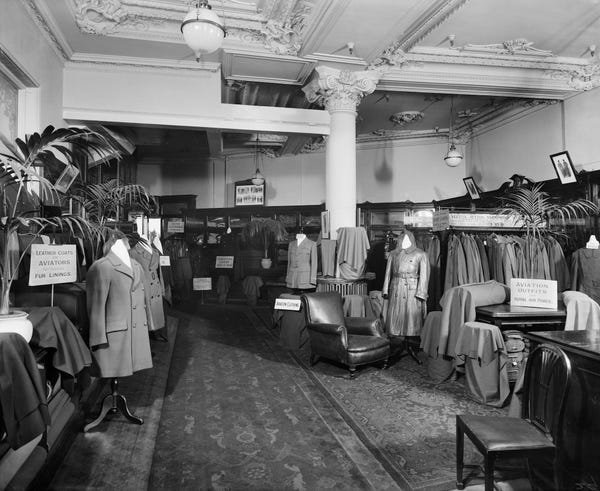
In the early 1900s, department stores were focused on selling the necessities.

A Harrods department store.

Heritage Images/Getty Images

Core products included clothing and home goods. During times of war, the necessities on sale included military jackets, coats, and accessories.

That’s why Harrods, a famous department store in London, featured an in-house tailoring room throughout World War I. The space was utilized to alter used uniforms and sell new ones.

Department stores still sell the basics, but novelty items are also typically present.


Harrod's Department Store holidays

A modern Harrods department store.

Prisma by Dukas/Getty Images

You can find everything from household tools and fashionable clothes to toys and knickknacks at modern department stores — they seem to sell everything, in an apparent bid to compete with online retailers.

Harrods also sells store-branded items, including bags, stationery, and teddy bears.

Leading up to the 1930s, department stores were often crowded.


An old photo of a crowded department store.

A crowded department store.

Bettmann/Getty Images

Around 1929, people were encouraged to shop in order to help boost the nation’s sinking economy, Fortune reported.

But that same year, the stock market crashed, and the Great Depression officially began. The period lasted for 10 years, causing major layoffs, failing banks, and mass poverty.

Today’s department stores rarely see such large crowds, aside from major shopping events like Black Friday.


Macy's on Black Friday/

A Macy’s department store on Black Friday.

Kamil Krzaczynski/Getty Images

Even during major holiday sales, many modern shoppers still prefer to shop online from the comfort of their homes.

In 2025, shoppers in the US were projected to spend a record $11.7 billion online on Black Friday, an 8.3% increase from 2024.

It marked a contrast from the wild Black Friday scenes that could be seen in stores in the decade before the COVID-19 pandemic.

In the 1920s, employees worked in department store basements to make change for cashiers upstairs.


Making change for department store cashiers.

The basement of a department store in the 1920s.

Underwood Archives/Getty Images

In large stores that existed across multiple floors, vacuum systems transported the change upstairs through tubes.

None of those “tube rooms” are needed anymore, thanks to computers and credit cards.


A Macy's cashier.

A cashier at Macy’s.

Kena Betancur/Getty Images

Modern shoppers often don’t even have to interact with a cashier if they don’t want to. Instead, they can use touchscreen self-checkout machines to purchase products from many department stores.

Starting in 1924, Macy’s celebrated the holidays with its first annual “Christmas Parade.”


macy's first thanksgiving day parade

A photo from the first parade was taken in 1924.


Macy’s


Live animals such as elephants were included in the early days of the Macy’s parade. Balloons depicting popular characters such as Mickey Mouse appeared a little later in the ’30s.

The name has since been changed to the “Macy’s Thanksgiving Day Parade.”


The Radio City Rockettes at the Macy's Thanksgiving Day Parade.

The Radio City Rockettes at the Macy’s Thanksgiving Day Parade.

Scott Gries/NBC via Getty Images

Other aspects of the yearly tradition have also been changed. For example, live animals have been replaced with people dressed in costumes, and giant marching bands have become a staple. Tons of celebrities have also appeared on floats.

Minimal merchandise was showcased in store window displays throughout the ’40s.


department store display window

A department store display window.

Kirn Vintage Stock/Getty Images

Beginning in the 1870s at Macy’s, some chain retailers in New York City have made it a tradition to decorate store-front windows each holiday season.

There was some art to these displays, as props were placed alongside mannequins and merchandise to create a scene.

Contemporary display windows are unlike anything of the past.


A holiday display window at Macy's.

A holiday display window at Macy’s.

Nicolas Economou/NurPhoto

Modern department stores often incorporate technology, moving props, and bright lights into window displays.

As early as 1923, Barneys New York was a popular department store.


barneys new york

Barneys New York.

Peter Morgan/AP

Barneys New York was created by a man named Barney Pressman when he pawned his wife’s engagement ring and opened a shop on Seventh Avenue and 17th Street in New York City.

By the ’60s, Barney’s son, Fred, had turned the location into a luxury store, and the company became a national sensation throughout the 1990s and 2000s. By 2019, there were 22 stores in the US.

However, the chain faced difficulties and shuttered all stores in 2020.


A closing sale at Barneys New York.

A closing sale at Barneys New York.

WWD/Penske Media via Getty Images

Barneys New York filed for Chapter 11 bankruptcy in August 2019 and closed all remaining stores in February 2020.

Bonwit Teller was once a prominent luxury department store with a flagship location in New York City.


Bonwit Teller Department Store

A Bonwit Teller department store.

George Rinhart/Getty Images

The store was known for selling a range of high-end women’s clothing inside a luxurious Art Deco building. It grew to more than a dozen locations across cities, including Chicago, Philadelphia, and Columbia, South Carolina.

By 2000, every Bonwit Teller store had gone out of business.


Bonwit Teller out of business

Bonwit Teller’s closing sale.

Barbara Alper/Getty Images

In 1979, the Bonwit Teller company was sold from its original owners to outside corporations. Ten years later, in 1989, the store filed for bankruptcy and began shutting all of its stores, with its last location closing in 2000.

While the flagship Bonwit Teller store would have been exempt from the closure, the building was purchased by Donald Trump in 1979, who demolished it to build Trump Tower.

The Saks Fifth Avenue flagship store in New York City opened in 1924.


Saks Fifth Avenue in New York City.

Saks Fifth Avenue.

Bettmann Archive/Getty Images

Saks Fifth Avenue was once a bustling destination for luxury shoppers. At 650,000 square feet, the store spans an entire city block.

Saks Global filed for bankruptcy on Tuesday.


Saks Fifth Avenue.

Saks Fifth Avenue in New York City.

ANGELA WEISS/AFP via Getty Images

Saks Global’s 2024 acquisition of Neiman Marcus for $2.7 billion left the company in debt and struggling to pay luxury vendors, some of whom have withheld inventory.

Business Insider reporter Madeline Berg visited the Saks Fifth Avenue flagship store the day Saks Global announced it was filing for bankruptcy and found it to be “nearly empty” with little foot traffic.


Source link

Hilton-called-out-by-DHS-after-the-department-said-ICE.jpeg

Hilton called out by DHS after the department said ICE agents’ reservations were canceled at an independently owned Hampton Inn

The Department of Homeland Security singled out Hilton on X, saying a hotel in Minnesota canceled reservations belonging to Immigration and Customs Enforcement agents.

According to a screenshot shared by DHS on Tuesday, a Hampton Inn in Lakeville, south of Minneapolis, said it was “not allowing any ICE or immigration agents to stay at our property.”

“If you are with DHS or immigration, let us know as we will have to cancel your reservation,” the screenshot said.

Hilton said it doesn’t own or operate the hotel.

“This hotel is independently owned and operated, and these actions were not reflective of Hilton values,” Hilton said in a statement to Business Insider. “We have been in direct contact with the hotel, and they have apologized for the actions of their team, which was not in keeping with their policies. They have taken immediate action to resolve this matter and are contacting impacted guests to ensure they are accommodated.”

“Hilton’s position is clear: Our properties are open to everyone and we do not tolerate any form of discrimination,” the statement said.

Everpeak Hospitality, the owner of the hotel, said in a statement Tuesday that the incident was “inconsistent with our policy of being a welcoming place for all.”

“We are in touch with the impacted guests to ensure they are accommodated,” the statement said. “We do not discriminate against any individuals or agencies and apologize to those impacted.”

The Department of Homeland Security did not respond to a request for comment.

Who owns Hilton-branded hotels?

Hilton is a publicly traded company owned by its shareholders.

Hilton’s largest known shareholders are The Vanguard Group and BlackRock, which respectively own 10.6% and 8.5% of its common stock, according to the company’s 2025 proxy statement.

Hilton, like other global hotel chains, does not own most Hilton-branded hotels.

Instead, most of its hotels are franchised, in which case they are owned and operated independently, or they are owned by a third party and operated by Hilton.


Source link