
When-my-daughter-was-diagnosed-with-autism-at-age-2.jpeg

When my daughter was diagnosed with autism at age 2, I never imagined she’d own a business and be a reality TV star

This as-told-to essay is based on a conversation with Christine Romeo, mother of “Love on the Spectrum” star Abbey Romeo. It has been edited for length and clarity.

Sometimes I look at pictures of my daughter Abbey when she was 3 or 4. She was just so, so cute. But I think — was I present for that? Did I enjoy that time, or was I too obsessed with therapies and my worries about her future?

It’s normal for anyone, especially parents, to fret about the future, but for parents of kids with disabilities, those worries can be overwhelming.

Abbey is now 27. When she was diagnosed with autism 25 years ago, I couldn’t have imagined that Abbey would be running two small businesses or appearing on reality TV. But along the way, we both learned to think outside the box, and that’s helped Abbey grow so much.

I put Abbey in a vocational program in 8th grade

Abbey went to one of the best schools for autism. She had moderate setbacks, but her curriculum was still focused on academics. She was learning what typical kids were, like tectonic plates and world history, just at a slower pace.


Abbey Romeo

Christine Romeo moved her daughter, Abbey, to a program that would teach her life skills.

Courtesy of Christine Romeo


I could see that wasn’t what she needed. It’s not helpful to learn Western Civilization if you can’t remember what you did yesterday. I would rather Abbey focus on life skills that could help her cope with her autism, like visual clues to help her access her short-term memory.

When Abbey was in eighth grade, I switched her to a vocational program that focused on job and life skills. I had to set my ego aside and do what was right for Abbey. She didn’t need a high school diploma — she needed skills to help her live her life.

I realized as a parent you don’t get to order who your child is

There were moments throughout Abbey’s schooling when I knew I had made the right decision. One time, the teacher sent me a picture of Abbey rewiring a light. I was blown away.

Another was when I came in to see Abbey weaving in the textile program. She was operating this big machine with foot pedals and a large swatch of fabric, and it was regulating her. I had to leave the room, because I was crying.

With Abbey and her brother, who’s a year younger, I realized that as a parent, you don’t always get what you order. I’m determined to help both of them be who they are and be as successful as they’re meant to be.

Entrepreneurs inspired me to not take no for an answer

Abbey excelled at weaving, and I realized selling her creations could be a job. I believe it’s important for everyone to have a sense of purpose, and Abbey had expressed that she wanted a “real job.”

I spoke with her school about creating a program to allow kids to sell their art and crafts. The teacher loved the idea, but the principal didn’t. When he said no, I thought about one of my favorite shows, Shark Tank, and how entrepreneurs don’t take no for an answer. I was determined to find a solution for Abbey, even when the system said there wasn’t one.


Abbey Romeo making a hat

Abbey Romeo runs her own hat-making business.

Courtesy of Christine Romeo


The teacher ended up coming to our home on Saturdays to teach Abbey advanced weaving. Soon, her business, Hats by Abbey, was born. She also has another business shredding people’s paperwork, which they pay for by the bag.

Using cash helped Abbey learn about money

Today, Abbey has control over her days. She often makes hats from 9 to 12, then walks the dog before her voice lesson. She has the sense of purpose that we all need.

For a while, it was difficult for Abbey to connect with the idea of money. I found it helped when she could see cash. I started putting cash in her money box, and if she wanted to order something online, she had to give me the bills.


Abbey Romeo

Charley Gallay/Getty Images for Netflix


The first thing Abbey ordered with her profits was a $160 stuffed lion. It challenged every fiber of my being to let her order that, but she had earned the money, and she got to decide how to spend it. Seeing the glee on her face when she opened the box was worth every obstacle we’ve had to jump over.

Abbey continues to grow so much. I’ve created opportunities, and she’s taken them. It’s been the most beautiful, amazing experience.


Source link

Julia Pugachevsky's face on a gray background.

A 20-year-old woman had waves of stomach pain for months. She was eventually diagnosed with stage 2 colon cancer.

Katie Davis lived the typical busy college student life when she first started feeling stomach pain.

Then a 20-year-old junior and marketing major at Westchester University in Pennsylvania, Davis split her time between classes, her job at Playa Bowls, and her sorority. The pain in the top right of her abdomen was easy to ignore because it was so sporadic and fleeting.


Katie Davis in Central Park

Davis was living the normal life of a college student when she started experiencing pain in her abdomen.

Katie Davis


“It was on and off, it would come in waves,” Davis, now 21, told Business Insider. “I would go a good while without it, and then it would come and only last a few minutes, sometimes even a few seconds.”

Over time, the pain — when it showed up — got more severe, sometimes causing her to double over in pain. Three months after it started, she went to a local urgent care while at her boyfriend’s family beach house. There was no ultrasound equipment at the facility, and she was told that, based on her symptoms, it could be an ovarian cyst that would hopefully go away after her next period.

Her doctor suspected colon cancer before the biopsy


Katie Davis in hospital

Davis had a feeling she had colon cancer because of the private room she was placed in after her colonoscopy.

Katie Davis


Davis was told to keep an eye on the pain and go to an emergency room if she felt other symptoms like fever or nausea. A few days later, when she started getting chills and vomited at her parents’ home, Davis did just that.

“That was the first time anything more serious than an ovarian cyst was brought up to me,” Davis said. According to her ultrasound and CAT scan, her colon was inflamed and appeared to have free fluid, a potential indication of infection, trauma, or cancer.

The ER doctor thought it could be Crohn’s or ulcerative colitis, or, in more serious cases, colon cancer. He scheduled a colonoscopy.

“I didn’t think I was going to come out of it having cancer or anything really serious,” Davis said. Her first clue that something was wrong was when she woke up from the procedure. She noticed she was placed in a separate room from the other colonoscopy patients.

The doctor who performed the procedure told Davis and her mom that he was “pretty positive” the mass in Davis’ colon was cancerous. “He said he’d been doing it for long enough that he could kind of tell,” she said.

Shortly after, Davis was diagnosed with stage 2 colon cancer.

“I didn’t really know what to think or feel,” Davis said about learning her diagnosis. “Definitely just numb and confused at first, like ‘how did I get this?'”

Treatment dragged on due to side effects like vision loss


Katie Davis chemo

Davis had to switch to a milder and prolonged treatment plan when traditional chemo led to serious side effects.

Katie Davis


After diagnosis, Davis had surgery on her colon and was supposed to start three months of chemotherapy soon after. But, the side effects complicated her treatment.

“I couldn’t tolerate the more hardcore chemotherapy,” Davis said. She developed extreme fatigue, nausea, and neuropathy, which she said felt like “pins and needles” in her hands every time she encountered temperature changes.

The most alarming side effect was her vision loss. “My vision would go completely black,” Davis said. Her parents researched the drug, oxaliplatin, which can cause vision issues in some patients. Davis also found the Colorectal Cancer Alliance (CCA) and said hearing similar stories around common side effects helped her stay informed about alternative treatment options.

Davis was put on oral-only chemotherapy medication, prolonging her treatment from three to six months. The only upside was that she no longer had to travel back and forth for treatment, since she could take it wherever she was.


Katie Davis at Bryn Mawr hospital

Davis tried to keep her life as normal as possible during treatment.

Katie Davis


All the while, she was still attending her college classes in person as often as she could, even though her professors knew about her colon cancer diagnosis. “My boyfriend lives there, all my friends live there, so I tried to be there as much as possible,” she said. “I tried to keep up with my stuff as much as I could, but it definitely was difficult to do schoolwork when I felt as horrible as I did on the chemo.”

She’s glad she listened to her body

Davis finished chemo in June 2025 and was declared cancer-free shortly after. Going forward, she’ll have blood tests every three months and an annual colonoscopy.

Now a senior, she’s a marketing intern at a financial advisory firm and is trying to figure out her plans post-graduation. She said finishing treatment made her feel “excited to be normal again” and get back to her normal college life without worrying about doctor’s appointments or treatment side effects.


Katie Davis at hockey game

Now cancer-free, Davis advocates for more awareness of colon cancer symptoms in young people.

Katie Davis


Looking back, she’s grateful for noticing the warning signs early enough. “A lot of my doctors said that most people at my age or with my stage wouldn’t really have the symptoms that I had that let me know that something is wrong,” she said. “I’m glad that I learned to listen to my body.”

It’s her biggest piece of advice to young people with similar or subtle symptoms, as colon cancer recently became the leading cause of cancer death in people under 50. She said joining the CCA and colon cancer Facebook groups can also help raise awareness of potential symptoms.

“You’re not really alone going through it,” she said, whether you’re worried about symptoms or actively undergoing treatment. “There are other people who are experiencing it too who can help you.”


Source link

A woman in glasses wearing a blue dress standing in front of a bush.

When I was diagnosed with low sperm count, I felt guilty and embarrassed. I want to break the taboo.

This story is based on an interview with Brian Mazza, 41, who has appeared on the cover of “Men’s Health.” Mazza was recently named “Champion for Male Fertility Advocacy” by the World Fertility Awards. The conversation has been edited for length and clarity.

Before we got married in 2014, my wife, Chloe Melas, a journalist, and I were very much aligned on wanting children in the future. It’s a huge step for anybody in a relationship, but we agreed that it would be great to start a family together.

Then, around a year after the wedding, we tried to get pregnant — without success.

The sense of disappointment each month was challenging and disheartening. Like anything else in life you want to accomplish, it becomes frustrating when it’s not working out.

It wasn’t ideal for both of us and caused a lot of issues, which weren’t fun. It was a strain and kind of brutal.

The test to determine my sperm count felt awkward

Fortunately, we were able to find a good, straight-talking doctor who ran a series of tests. Chloe was found to have a diminished ovarian reserve, but they wanted to check me out, too.

It was awkward and strange. Everybody in the waiting room knew why you were there, which was fine, but then you were ushered into a room next to the secretary’s desk. It felt a bit strange.

My test was back in 2016. Thankfully, there are now a lot of companies that allow you to sort everything out in your own home.


A man wearing a tuxedo

Mazza attends the Michael Rubin Reform Alliance Casino Night Event in September 2025 in Atlantic City, New Jersey.


Photo by Dimitrios Kambouris/Getty Images for Reform Alliance


The results showed I had a low sperm count, which proved to be the primary cause of the issues. If someone asked if I felt guilty, embarrassed, or was worried that Chloe was resentful toward me, I’d answer yes.

I was extremely fit, eating well, and doing everything to meet the expectations of an elite performer in life. I thought, “What is getting in the way of this goal?”

I began to wonder if I’d done something in the past that was responsible. It wasn’t the case, but I wanted to look at the full road map.

I went to every appointment with the fertility doctor

Then, since I’ve always been a problem solver and a reverse engineer, I thought, “How can we approach the situation?”

We had no luck with intrauterine insemination (IUI) and moved on to IVF. The process was pretty easy from a male perspective because you are physically removed.

Still, I went to every doctor’s appointment to listen to the advice. It was hard to see Chloe go through what she did, but we tried to focus on the end result.

We didn’t share our journey with family or friends at the time. It was to protect the situation and not feel like we were letting people down.


A family of four on a dinghy

Mazza and Melas with their sons.


Courtesy of Brian Mazza.


Thankfully, we got pregnant on our first round of IVF. We were thrilled, and it turned into elation when our son, Leo, was born in July 2017.

We went through the same process, and Luke arrived exactly two years later.

I advocate for increased awareness of male factor infertility

Holding Leo and Luke in my arms was every dream that I’d ever dreamed. I’d wanted to become a father so much.

I’m speaking up about male factor infertility because it’s a topic that should be openly discussed. I hope that I’m helping to remove the stigma. It’s useful when someone who has been through an experience like ours can share their story.

As the years pass, I find myself gazing at my boys — now 8 and 6 — with joy and wonder. They’re bright, athletic, and kind. Chloe and I call them our miracles.


Source link

How-narcissism-actually-works-according-to-a-diagnosed-narcissist.jpeg

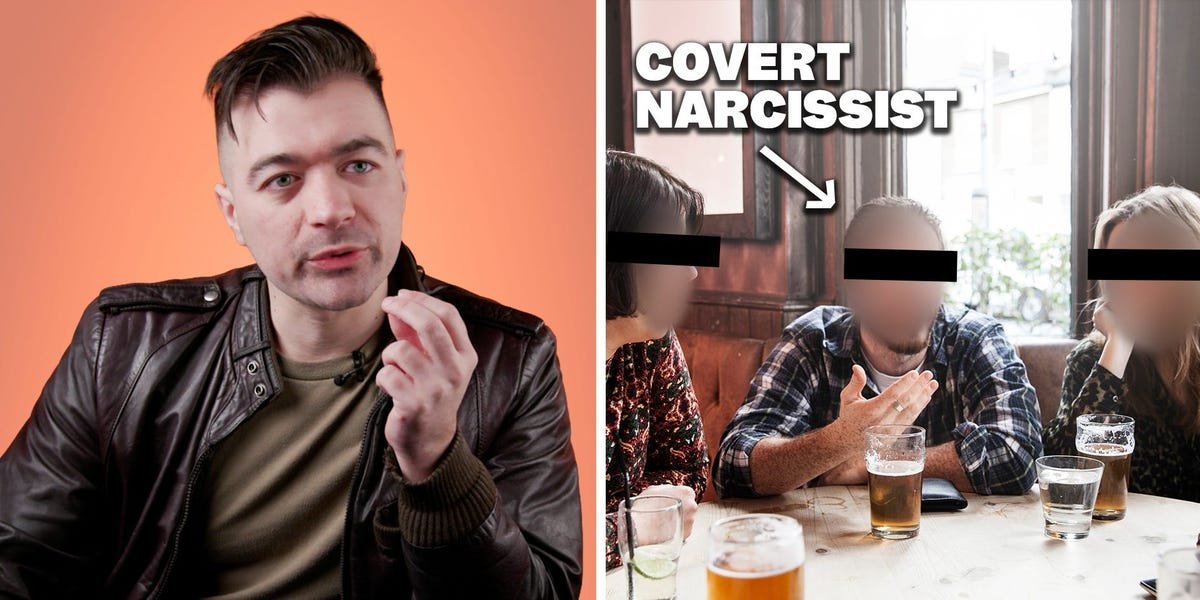
How narcissism actually works, according to a diagnosed narcissist

Jacob Skidmore was diagnosed with narcissistic personality disorder, or NPD, in 2022. He’s known online as the Nameless Narcissist.

Skidmore uses his platform to explain how narcissism actually feels from the inside — a constant calibration of admiration, shame, control, and image. He speaks to Business Insider about what drives narcissistic behavior, the difference between confidence and pathology, and what recovery and responsibility look like for someone who knows they hurt others and still wants to change.

Awareness of NPD is at an unprecedented level. Increasingly, people who identify with NPD are sharing their experiences through social media and public interviews.

For more:

https://www.youtube.com/@Thenamelessnarcissist/videos

https://www.tiktok.com/@thenamelessnarcissist

If you or someone you know is dealing with substance misuse or mental illness, call the Substance Abuse and Mental Health Services Administration’s National Helpline (1-800-662-4357) for 24/7, free, confidential treatment referral and information.


Source link