
When-I-got-my-cancer-diagnosis-I-had-to-cancel.jpeg

When I got my cancer diagnosis, I had to cancel 3 planned vacations. A 1-night staycation in nearby Santa Cruz gave me the reset I needed.

The winter months were a blur of holiday activities and family gatherings. It felt like I was running on a treadmill from Thanksgiving into the new year, without the opportunity to get off.

As the unofficial “bringer of cheer” in my family, I feel a heavy burden to make sure we have enough fun over the holidays and work hard to create all the memories. Cookies must be baked, and decorations must be put up. And then they need to come down and get put away as I ready the family for the new year and the months ahead.

On top of that, I’m doing weekly chemo for breast cancer, which didn’t let up throughout the holiday madness. Life doesn’t stop for cancer. Eventually, I learned I needed to stop and do something for myself, though.

My diagnosis meant a change of plans

When I got my cancer diagnosis, I had to cancel planned trips to St. Maarten, Boston, and Dollywood. Not having those to look forward to was hard for me. As a travel writer, I love getting out of my regular routine for a few days to snorkel with sea turtles and dine on new cuisines.

With only my weekly chemo sessions on the calendar, I was feeling down. I knew that limiting my exposure to germs was important, but I missed my time spent enjoying Guinness in Ireland and kayaking near glaciers in Alaska. I knew I had to go somewhere, even if it was nearby.

I booked a one-night staycation near home

My solution: I booked myself a night away at West Cliff Inn, a boutique hotel by the beach in Santa Cruz that’s just a 30-minute drive from my home. I knew this wouldn’t be the same as a week in the Caribbean, but it was the perfect combination of time by myself and relaxation.


The author poses with a glass of wine while outside in Santa Cruz.

The author said she enjoyed having time and space to herself while on this solo trip.

Courtesy of Kate Loweth.


When I checked in, I found that my room was extra spacious and could have accommodated a friend or two. Did I think maybe I should have brought someone with me? Yes. But that thought vanished as soon as I set out to explore the area on my own

Simple moments helped me reset

I took a long walk on the beach and hiked along the cliffs, watching surfers just offshore. I enjoyed an umbrella drink and coconut shrimp at a tiki restaurant on the water, where I sat in the rotating bar area. A friend texted me at the perfect time with some gossip, and it felt like we were enjoying the vibrant sunset together.


A picturesque shot of the beach in Santa Cruz at sunset.

The writer said she enjoyed a long walk on the beach during her stay in Santa Cruz.

Courtesy of Kate Loweth.


Before it got too dark, I headed back to the hotel and enjoyed a salt soak in my massive tub before cozing up in my king-size bed at an early hour to enjoy the latest episode of “Below Deck.”

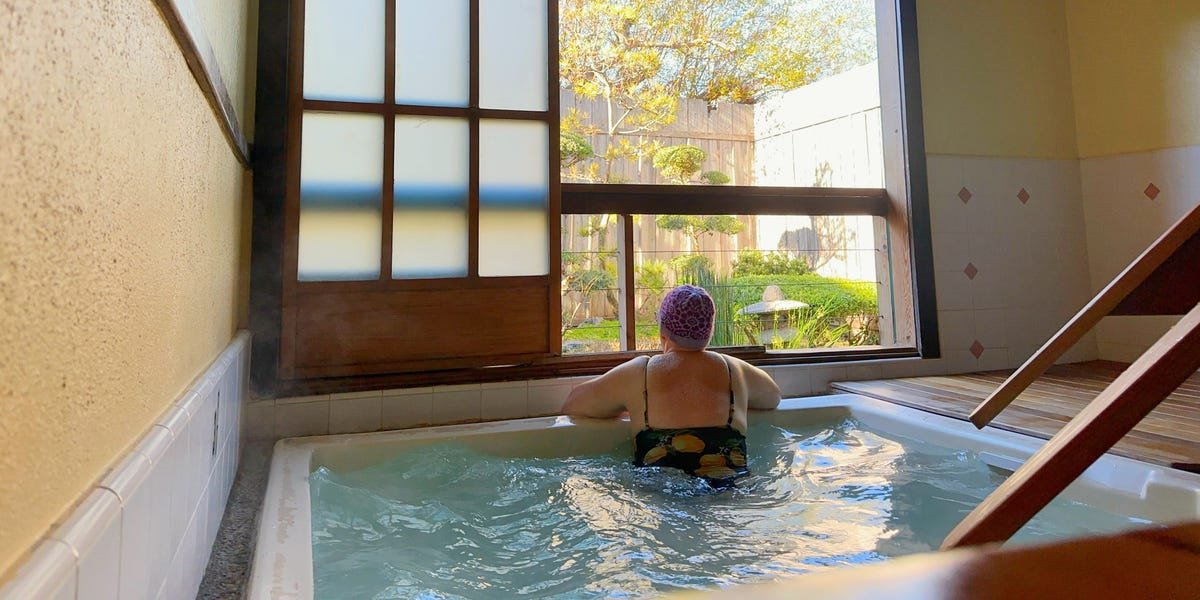
The next day, I visited a nearby spa and enjoyed a massage and a dip in a private hot tub before heading back home. Few things are perfect, but these 36 hours came pretty close.

I learned I don’t need a big trip to feel refreshed

This trip wasn’t about avoiding my family. It was about giving myself something to look forward to and acknowledging the difficult time I am going through.

I got home and felt ready to tackle what comes next, and I’m going to keep that in mind as I continue to move forward.


Source link

I-worked-14-hour-days-at-a-startup-A-cancer-diagnosis.jpeg

I worked 14-hour days at a startup. A cancer diagnosis changed how I succeeded at Netflix and Meta.

This is an as-told-to essay based on a conversation with David Ronca, a retired video systems engineer. He spent 12 years at Netflix and six years at Meta. This story has been edited for length and clarity.

My time at a startup in the early years of my engineering career was like a really bad relationship.

I joined a company that specialized in video playback around 2000. I loved working on video. I consider those seven years like going to school, and I came out with a Ph.D. in practical video systems. But it was the hardest seven years I’ve ever had in terms of work demands.

I was told when I joined that it would be really important that you’re seen around here a lot. So I would work until 7, 8, 9 — sometimes until 10 p.m. Then we started hitting delivery schedules, and I was getting to work around 10 in the morning and going home sometimes at 2:30 in the morning. We’re talking 14-hours days, six to seven days a week. Eighty hours a week would’ve been a break.

We didn’t have good direction. We’d be four or five months into solving a hard problem before leadership would stop us and say, “Go work on this instead.” It was madness.

We were using work hours to compensate for really bad decisions.

In January 2004, I started feeling ill. On a Sunday, I didn’t feel so good, and by midweek, I got worse.

On Friday night, January 17, my wife took me to the emergency room. The doctor told me, “This is likely colon cancer.” After the first surgery, he said, “There’s no way you have a tumor like this and it’s not cancer.”

Two weeks earlier, I had been running and feeling great. Within a week, I was in a hospital bed on machines.

It took another week before doctors could do the full surgery. And you spend that time with no idea what they’re going to find. That was a very dark week.

My mother died of breast cancer when she was 48. I was 16. Now, I’m in the hospital at 44. I remember thinking, “History doesn’t repeat, but it rhymes.”

My wife would bring the three kids. My oldest, who was seven, would sit quietly in the room with me. My youngest was two years old. He didn’t really know me.

I was looking at my young son, thinking he’s going to grow up without a dad.

After surgery, they told me it was stage 3 colon cancer. They removed 60% of my colon. There was lymph node metastasis. My five-year survival prognosis was about 25%.

‘I will not work like this’

I went back to work part-time at first.

I was told that I had used up all my sick leave and vacation and was put on California disability, which is around $200 a week.

By that time, this was a company I had spent four years working 24/7 for.

I told my boss, “I’m sorry, I will not do this. I still want to work here, but if I have to leave, I will quit. Because I will not work like this.”

From that point on, I didn’t. And that was the irony of it all.

I feel like I did some of my best engineering after that. The real change was that I was no longer wasting my brainpower and my thinking on junk.

You don’t do good work after 12 hours. You can’t work sustained all-nighters and be productive. The quality of your work is going to suck. I don’t care who you are. For most mere mortals, you try to work those hours, you’re just not going to be doing good work.

I also started making intentional decisions for life, not just work.

I coached soccer for all three of my kids. I went to their games. My daughter did ballet, and we were there all the time. We started planning and taking family vacations — hiking in the mountains, RV road trips, and Maui.

I realized you have to work to have a life, but you have to have a life to work. So you want to stand in the middle of those things.

Hours worked are not a performance metric

In 2007, after several clean scans, I joined Netflix. I delayed accepting the offer until I got my scan report. I didn’t want to change jobs yet because if you have positive liver metastasis, you’d be lucky to get two years.

In my interview, Patty McCord, the chief talent officer at the time, told me, “We don’t value 24/7 work. You won’t be successful here working all the time.”

That was almost foreign to me. But it also didn’t mean we didn’t work hard.

At Netflix, I was part of the early streaming team — maybe 12 to 16 people. We made aggressive schedules, and we didn’t miss them. We launched a Netflix app on the original iPad on Day One within two months.

The culture at the company was: If you have to work 24/7 for us to be successful, you’ve got a problem, and we’ve got a problem, and we’re going to fix it.

Even at Meta, my favorite poster had a silhouette of a rocking horse that said, “Don’t mistake motion for progress.”

In other words, high performance is not measured by how much work you do. It’s measured by how impactful your results are.

This is not to say that it’s wrong to work more than eight hours. Instead, you should understand why you’re working more hours. It should be intentional. Intentional exceptions.

If I were to tell my younger self anything, it would be to make work-life balance part of your DNA. Learn to take time off.

Don’t wait until you have cancer or some other near-death experience to realize this.


Source link