My-husband-and-I-work-from-home-and-try-to.jpeg

My husband and I work from home and try to follow a nutritious diet. Here are 10 of our favorite groceries to buy at Aldi.

  • As empty nesters who work from home, my husband and I love shopping at Aldi.
  • The Elevation energy bars and Summit Popz prebiotic sodas are good substitutes for pricier brands.
  • I love snacking on the Simply Nature coconut clusters and Southern Grove trail mix.

As empty nesters who both work from home, my husband and I try our best to choose nutritious food options while keeping our grocery costs low.

Luckily, shopping at Aldi helps us achieve both of these goals. Here are some of our favorite products to buy.

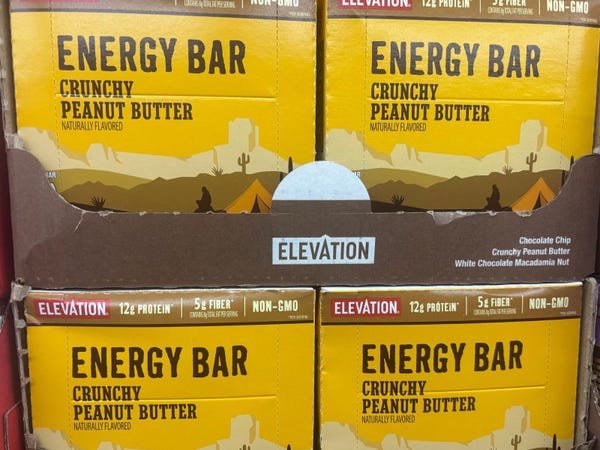
My husband enjoys the peanut butter Elevation energy bars.

Elevation energy bars are a great afternoon pick-me-up.

Amy Barnes

My husband recently stopped buying Clif Bars and replaced them with the more budget-friendly Elevation energy bars from Aldi.

These come out to just about $1 per bar, and he says the taste and texture are great.

He likes to enjoy them as a snack or an afternoon pick-me-up.

I love snacking on the Simply Nature coconut clusters.


Bags of Simply Nature coconut clusters on display at Aldi.

The Simply Nature coconut clusters are made with pumpkin, sunflower, and hemp seeds.

Amy Barnes

The Simply Nature coconut clusters satisfy my sweet tooth, with only 160 calories per serving.

These crunchy clusters are made with a mix of pumpkin, sunflower, and hemp seeds.

Southern Grove trail mix is great for when I’m hiking.


Boxes of Southern Grove trail mix on display at Aldi.

This Southern Grove trail mix is made with cranberries, sunflower kernels, almonds, edamame, chocolate, and peanuts.

Amy Barnes

Whenever I head to Aldi, I like to grab snack-size portions of trail mix. I especially love the Southern Grove version because it doesn’t include raisins.

Packed with cranberries, sunflower kernels, almonds, edamame, chocolate, and peanuts, this mix is easy to snack on at home or when we’re hiking with our dog.

I prefer Aldi’s egg bites to the Starbucks version.


Boxes of Whole & Simple omelet breakfast bites on display at Aldi.

The Whole & Simple egg bites are easy to heat up in the morning.

Amy Barnes

I’m always hunting for delicious protein options to start my day, and I often find myself craving the egg bites from Starbucks. However, my wallet doesn’t love them as much as I do.

So, I’ve switched to Aldi’s Whole & Simple version, made with bell peppers, uncured ham, and cheddar. I think they taste similar to the Starbucks version and they’re easy to heat up at home.

We love the Happy Farms spreadable cheese wedges.


Containers of Happy Farms spreadable cheeses on display at Aldi.

There are lots of different varieties of Happy Farms spreadable cheese.

Amy Barnes

Since we both work from home, my husband and I are always looking for quick lunch options. We like the Happy Farms spreadable cheese wedges, which cost less than $3 each, and taste great on their own or in wraps.

Simply Nature popcorn is great for movie night.


Bags of Simply Nature popcorn on display at Aldi.

Each cup of Simply Nature sea-salt popcorn contains 35 calories.

Amy Barnes

At only 35 calories per cup, I like to have Simply Nature popcorn with my lunch or as a movie-watching snack when the kids come back home. It’s also a good source of fiber and is gluten-free.

Aldi’s steamed vegetable medleys make dinner easy.


Bags of steamed vegetables on display at Aldi.

I love the Season’s Choice Asian-seasoned vegetable medley.

Amy Barnes

Whenever I take a trip to Aldi, I look for the Season’s Choice steamed vegetable medleys. These bags of brightly-colored veggies are reasonably priced and easy to make.

I like to season my veggies with Burman’s stir-fry sauces.


Bottles of Burman's sweet and sour stir-fry sauce on display at Aldi.

Burman’s stir-fry sauces are a great way to add flavor to steamed vegetables.

Amy Barnes

Instead of ordering take-out, I like to season my steamed vegetables with Burman’s orange or sweet and sour sauces. I just add some chicken to create an easy stir-fry meal.

Aldi sells a great substitute for brand-name probiotic sodas.


Cans of Summit Popz prebiotic soda on display at Aldi.

I love the Summit Popz prebiotic sodas.

Amy Barnes

Staying hydrated while working from home is a necessity, and I love sipping on the Summit Popz prebiotic sodas. I think they’re a great alternative to the more expensive Poppi sodas.

Click to keep reading Aldi diaries like this one.


Source link

hilary brueck backyard headshot

What ‘healthy fats’ actually are — and how to choose the right ones for your diet

US Health Secretary Robert F. Kennedy Jr. says his diet message is clear: “Eat real food.”

That was his main mantra during a White House press briefing on the new Dietary Guidelines for Americans, released Wednesday.

The new guidelines feature an inverted pyramid, with protein, dairy, and so-called “healthy fats” as the foundational corner of the new American diet.


new pyramid

Protein, dairy, and ‘healthy’ fats are the foundation for RFK Jr.’s new pyramid.

realfood.gov


“Protein and healthy fats are essential, and were wrongly discouraged in prior dietary guidelines,” Kennedy said.

If you’re trying to eat healthier, the problem isn’t that you need more fat — it’s that “healthy fat” is a vague term that means very different things depending on the source.

But what is a healthy fat, exactly? Here’s how nutrition experts say to tell the difference, and how to use that information when you shop, cook, and eat.

A ‘healthy fat’ isn’t just about fat — it’s about the whole food


olive tree

Olive oil is a healthy fat that everyone can agree on. Others spark more debate.

Philipp von Ditfurth/picture alliance via Getty Images


The new federal guidelines don’t provide a strict definition of “healthy” fat, only saying that healthy fats come from whole foods.

Business Insider reached out to the Department of Health and Human Services multiple times, asking for a clear definition of “healthy” fat, but didn’t get an answer.

Typically, when nutritionists talk about healthy fat, what they mean is sources that have:

  • More unsaturated fat and less saturated fat
  • Other nutrients traveling with the fat

Take olives. An olive is a fruit that includes a mix of both unsaturated and — to a much lesser extent — saturated fats. It also has other nutrients in it, including fiber, iron, and vitamin E, plus plant chemicals called polyphenols, which are good for your brain. That’s why olive oil is widely regarded as a healthy choice.

The same goes for chia seeds. They’re high in omega-3 fatty acids, an essential fatty acid that we need to consume because we can’t make it on our own. They’re naturally low in saturated fat, and also provide other nutritional benefits, including decent doses of both fiber and protein.

Walnuts provide another great example. Until the 1990s, they were thought to be bad for your heart, due to their high fat content. It turns out the opposite is true: walnuts are packed with polyunsaturated omega-3s, making them actively good for your heart.

Dr. Joan Sabaté, who pioneered that walnut research in the 90s, said the key is to think about your fats in a broader context, not just focusing on one metric.

“It’s not only the type of fat, but the source of the fat, and how the fat is together with [other nutrients],” Sabaté, a Blue Zone epidemiologist who directs the Center for Nutrition, Lifestyle and Disease Prevention at Loma Linda University, told Business Insider.

What’s the deal with saturated fat?


buttered bread

Butter is a classic example of a food that’s high in saturated fat. Fine, in moderation.

ArtMarie/Getty Images


Unveiling the new guidelines, Kennedy said, “We are ending the war on saturated fats.”

The new food pyramid features beef, butter, and whole milk high up.

“Eating a little bit of animal products is good,” Sabaté said. Red meat and full-fat dairy are packed with nutrients like vitamin B12 and iron, for example, which is hard to find in plants. Experts agree that a little saturated fat is not that bad for your body.

Still, it’s controversial that the new guidelines front-load meat and animal products as “healthy” fats, and mention them first.

Meat and dairy contain significantly more saturated fat than plants like olives and avocados. Research has linked diets rich in red meat and dairy to a higher incidence of chronic health issues, including heart disease and cancer. Animal products are also more pro-inflammatory than whole grains and vegetables.

“That is not the way to go,” Sabaté said, echoing concerns that many health experts shared this week.

(Plus, the new guidelines still recommend limiting your saturated fat consumption to 10% of total daily calories, which means you can’t actually live on a diet of butter, red meat, and cream.)

The takeaway: How to apply this to your diet


drizzle olive oil

Fat packs a punch, more than doubling the calories per gram of a protein or carbohydrate.

AzmanL/Getty Images


So, what should you cook with tonight?

Most days, consider swapping butter for olive oil in your frying pan. That will mean more heart-healthy fats get in your system.

The best change you can make, though, is to curb ultra-processed snacks. Packaged cakes and cookies are often loaded with saturated fat from cooking oils. If you had a buttery steak for dinner, and skipped after-dinner snacks, that could be a good thing.

Don’t fear fat — but don’t center your diet on it either.


Source link

Amanda Goh

Matt Damon says cutting one thing out of his diet got him down to his ‘high school’ weight

Matt Damon, 55, says one diet change left him lighter than he has been in years.

During an appearance on Wednesday’s episode of the “New Heights” podcast, Damon spoke about how he prepared for his latest role in “The Odyssey.”

“I was in really good shape. I lost a lot of weight. He said he wanted me like lean but strong. It’s a weird thing,” Damon told hosts Jason and Travis Kelce, referring to the film’s director, Christopher Nolan.

To achieve that physique, Damon said he cut one thing out of his diet.

“I literally, just because of this other thing I did with my doctor, stopped eating gluten,” Damon said. “I used to walk around between 185 and 200. I did that whole movie at 167. And I haven’t been that light since high school. So it was a lot of training and a really strict diet.”

The actor said he works with a trainer, and compared the physical preparation to how the Kelce siblings would gear up for a football season, with training becoming part of his daily routine.

“You know, it’s like just part of your day. It’s part of your job, right? And it’s like yeah, you get really routinized about it and really kind of build your day around all that stuff,” Damon said.

The actor added that he hasn’t had gluten since. “I’m done. I’m done. I’m gluten-free everything,” Damon said.

A gluten-free diet eliminates gluten, a protein found in grains such as wheat, barley, and rye. It is often adopted for medical or digestive reasons, including to manage symptoms of celiac disease.

For most people, gluten isn’t necessarily harmful.

“Evidence suggests that, for general health, the emphasis should be on a whole, minimally processed, plant-based diet, which can include gluten-containing grains,” Grace Fjeldberg, a registered dietician with the Mayo Clinic Health System, told Business Insider in 2021.

Despite its popularity, a gluten-free diet doesn’t necessarily result in weight loss and isn’t a universal approach to better health.

Damon is no stranger to getting into peak shape for a role.

In a 2016 BBC interview, Damon said that getting back into shape for his return to the Bourne franchise was “brutal,” after his last appearance in 2007’s “The Bourne Ultimatum.”

“For the first Bourne movie I was 29 and I thought that was hard work getting into shape,” Damon said.

“Now I’m 45 and it’s just brutal. We shot this bare-knuckle fighting scene on my 45th birthday and it was a lot of work to get there,” he added.


Source link

A-nutritionist-who-lowered-his-cholesterol-through-diet-shared-4.jpeg

A nutritionist who lowered his cholesterol through diet shared 4 simple tips for eating more fiber

When Rob Hobson, a registered nutritionist based in the UK, found out his cholesterol levels were “really high” in June, he decided to manage them through diet, focusing particularly on increasing his fiber intake.

Six months later, when he tested again, his cholesterol levels had improved, and he’d discovered four tricks that make eating more fiber easy.

Cholesterol is a fatty substance the body needs for many bodily processes, but if a person has too much LDL or “bad” cholesterol, it can form sticky plaque in their arteries, putting them at greater risk of cardiovascular disease.

To reduce cholesterol levels, the American Heart Association recommends exercising at least 150 minutes a week, quitting smoking and vaping, maintaining a healthy weight, and eating a heart-healthy diet that’s low in saturated fats and high in fiber. If these measures don’t help, then statins, a medication that lowers LDL cholesterol, will likely be prescribed.

Hobson, the author of “Unprocess Your Life” and “The Low Appetite Cookbook,” already worked out for around an hour each morning, and ate minimal ultra-processed foods and saturated fats. So he zeroed in on fiber.

Eating at least 5 to 10 grams of soluble fiber a day can help lower total cholesterol and LDL cholesterol, according to the National Lipid Association. Quinoa, oats, avocado, sweet potatoes, carrots, and chia or flax seeds are good examples.

Here are Hobson’s tips for seamlessly adding more fiber to your diet.

Eat breakfast

Hobson is a big advocate of breakfast because it lends itself to high-fiber foods such as oats, nuts, and seeds. “It’s really easy to get plenty of fiber in at that time of day,” he told Business Insider.

He has two go-to breakfasts that he eats on repeat. The first is a Greek yogurt bowl with berries, oats, and chia seeds. The second is overnight oats, which he makes with milk, protein powder, berries, honey, nuts, and seeds.

Fiber cupboard


A cupboard with shelves of seeds, beans, nuts, and pulses.

Rob Hobson’s fiber cupboard.

Rob Hobson


Hobson created a “fiber cupboard” in his kitchen that’s packed with fibrous foods. He challenges himself to include something from the cupboard in every meal. “Then at least you know that you are making the effort to do it,” he said.

He stocks up on lentils, beans, pulses, wholegrain pasta, brown rice, as well as snacks like fruit and nut bars, rye crackers that he likes to pair with some cottage cheese, and seaweed thins.

“I’m always rooting around for stuff, and I just think having it all in one place is so much easier,” he said.

Add pulses and legumes to your meal and put the rest into a Tupperware in the fridge

The easiest way to add fiber to a meal is to pour half a can of beans or pulses into it, Hobson said. Just one cup of black beans, for example, contains 15 grams of fiber. “You can add them to anything,” he said.

Mix some into a soup, sauce, or curry, or simply sprinkle a couple of tablespoons on top of a salad.

If you’re not using the whole can, decant the rest into a Tupperware and place it in the fridge, Hobson said. That way, they’ll stay fresher for longer and be easily accessible. “Then you don’t have to worry about, ‘I’m going to waste the rest of the tin,'” he said.

Keep the food you want to eat visible

Hobson recommends keeping the foods you want to eat in a visible spot. That way, you’re more likely to reach for them. “Nuts and seeds, always keep them on the side so they’re there,” he said.

Research suggests that the foods you keep on your countertop could impact your body weight, a factor that can influence cholesterol levels. In a 2015 study published in Sage Journals, researchers at Cornell University analyzed the visible foods on 210 countertops in New York and measured their owners’ BMIs. They found that those who had just fresh fruit visible weighed an average of 20 pounds less than those who had unhealthier snacks like candy, soda, and cereals on show.

“It’s your basic See-Food Diet — you eat what you see,” Brian Wansink, the study’s lead author, said of the findings.

But if you’re not ready to make changes to your kitchen layout, Hobson said to stick to one basic principle: “Make sure that you’ve got a bit of fiber on your plate every day with every meal,” he said.


Source link

Im-a-dietitian-on-the-Mediterranean-diet-who-loves-Costco.jpeg

I’m a dietitian on the Mediterranean diet who loves Costco. Here are the 10 best things I bought there this year.

  • I’m a dietitian, and some of the best Mediterranean-diet staples I got this year came from Costco.
  • Kirkland Signature blueberries and PuraVida fire-roasted root veggies were freezer staples for me.
  • My favorite Costco buys this year included the Ithaca x Graza hummus and Safe Catch yellowfin tuna.

As a dietitian and devoted follower of the Mediterranean diet, my love for Costco runs deep.

An eating pattern rooted in fresh, whole foods, and a warehouse store famous for its bulk buys may seem like an odd pairing, but hear me out.

The Mediterranean diet is all about nutrient-dense staples like olive oil, nuts, whole grains, legumes, fresh produce, lean proteins, and other heart-healthy fats.

It’s a flexible, flavorful way of eating that prioritizes balance and sustainability — values that align surprisingly well with some of Costco’s offerings.

In my experience, Costco is a goldmine for high-quality, affordable staples that make sticking to this lifestyle not only easier but also more delicious (and at times, more affordable).

Here are some of the best things I bought there this year.

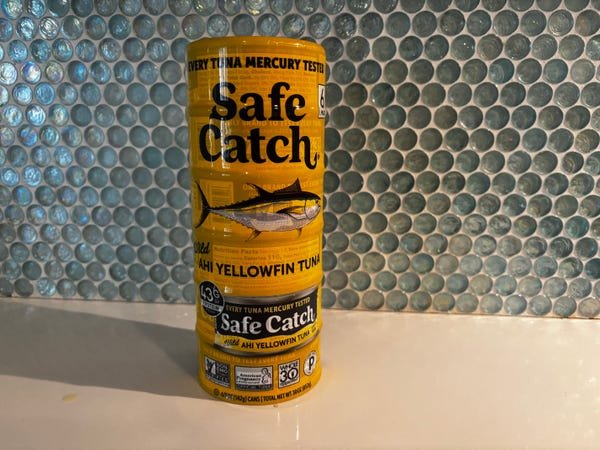
Safe Catch yellowfin tuna is great for quick meals.

At Costco this year, I was able to buy six-packs of 5-ounce cans of Safe Catch tuna.

Lauren Manaker

I get Safe Catch canned yellowfin tuna in bulk at Costco to use in easy, nutrient-packed meals, like salads or grain bowls.

Tuna is a solid source of protein and omega-3 fatty acids, which help support heart and brain health. Though I love enjoying a piece of fresh fish, on busy days, the canned stuff is exactly what I need.

I like buying from Safe Catch because the brand says it tests every fish’s mercury levels to ensure they are well below the FDA action limit.

I heat up a Red’s Egg’Wich for a quick breakfast without bread.


Red's turkey sausage egg-wich

I heat up a turkey-sausage Egg’Wich when I’m in a rush but want a breakfast with protein.

Lauren Manaker

Even dietitians have busy days where cooking meals from scratch isn’t an option.

Found in Costco’s frozen section, Red’s Egg’Wiches are my go-to for a quick breakfast with protein. Each turkey-sausage sandwich has 17 grams of protein and uses two cage-free egg patties instead of a traditional bun.

I like to pair one of these with fresh fruit whenever I’m having a hectic morning but need a balanced breakfast.

Pompeian Smooth & Fruity extra-virgin olive oil is perfect for everyday cooking.


Back of Pompeian olive oil bottle

I grabbed a 2-liter bottle of Pompeian Smooth & Fruity extra-virgin olive oil at Costco this year.

Lauren Manaker

A good extra-virgin olive oil is non-negotiable in a Mediterranean kitchen, and the limited-edition Pompeian Smooth & Fruity EVOO I picked up at Costco has been a standout this year.

Its smooth, fruity flavor makes it incredible for drizzling over salads, finishing roasted vegetables, or using as a dip with crusty bread.

High-quality olive oil provides antioxidants and “good” monounsaturated fats; this one also delivers an exceptional taste.

Pop & Bottle chocolate-pistachio lattes were one of the best ways I got my caffeine fix this year.


Pop and bottle dubai-style chocolate drink

The Pop & Bottle almond-milk lattes have a satisfying, decadent flavor.

Lauren Manaker

These Dubai-style lattes from Pop & Bottle have been perfect for when I want a decadent, satisfying treat that also gives me a caffeine boost.

Each 11-ounce bottle has 5 grams of fiber and 5 grams of protein, which is impressive for a ready-to-drink beverage. I also like that they’re made with quality whole ingredients, including almond milk, pistachio butter, and cacao.

PuraVida’s fire-roasted mix made it easier to eat more vegetables this year.


Pura Vida fire-roasted root vegetables

Vegetables are a key part of any balanced diet.

Lauren Manaker

I’ve been keeping this 64-ounce bag of sweet potatoes, parsnips, carrots, and onions from Costco in my freezer to use as a quick side dish alongside fish or chicken.

They’re simply seasoned with salt, pepper, and olive oil — and the fire-roasting process brings out a wonderful, deep flavor in the root vegetables.

This is definitely one of my favorite buys from Costco this year for creating a balanced meal with minimal effort.

Pure Flavor Poco Bites cucumbers are crunchy, fresh, and versatile.


Small cucumbers in bag

Poco Bites are small, crunchy cucumbers.

Lauren Manaker

Fresh, crunchy cocktail cucumbers are a staple in my kitchen.

Mostly water, they’re a hydrating, low-calorie way to add volume and nutrients (like Vitamin K) to any meal. I use them in everything from refreshing salads and hearty grain bowls to summery sandwiches and simple snack platters.

Costco usually has these Poco Bites at a great price point — $7.37 for a 1 ½-pound bag at the time of writing — so they’re easy for me to keep on hand.

POM Wonderful pomegranate juice is delightfully simple.


Bottle of POM pommegranite juice

I use POM Wonderful in cocktails and marinades.

Lauren Manaker

Pomegranates are a source of powerful antioxidants, and I use POM Wonderful’s juice to easily incorporate them into my diet.

Each bottle contains just the juice of whole-pressed pomegranates — no added sugars or fillers.

I love grabbing 64-ounce bottles of it at Costco because I know I’ll use it up, whether I’m mixing it in marinades to add a tangy, slightly sweet flavor to various proteins or pouring it into my favorite 3-ingredient cocktail.

My freezer has stayed stocked with Kirkland Signature frozen organic blueberries.


Kirklans Signature frozen organic blueberries

I often pick up frozen fruit, like Kirkland Signature organic blueberries, at Costco.

Lauren Manaker

Throughout the year, I’ve enjoyed the frozen Kirkland Signature organic blueberries, a solid source of fiber and antioxidants that are perfect for adding to oatmeal, yogurt, or smoothies.

Frozen fruit can be just as nutritious as fresh, and sometimes even more so since it’s typically picked and preserved at peak ripeness.

Plus, their shelf life is significantly longer than that of their fresh counterpart, which helps me avoid food waste.

I reached for Wonderful’s shelled sweet-cinnamon pistachios all year long.


Wonderful pistachios b

The fact that these Wonderful pistachios are pre-shelled is a convenient bonus.

Lauren Manaker

Finding a 22-ounce bag of this limited-edition Wonderful pistachio flavor at Costco was a delightful surprise.

Pistachios are a nutrient-dense nut, offering healthy fats, protein, and fiber. They’re one of the few plant-based protein sources that provide all nine essential amino acids your body can’t make on its own.

Plus, these pistachios have a pleasant hint of cinnamon that satisfies my sweet tooth, and their pre-shelled convenience makes them a perfect snack.

The Ithaca x Graza hummus tastes homemade and goes with everything.


Ithaca x Graza hummus with olive oil and sea salt

I snagged a 26-ounce container of the Ithaca x Graza hummus at Costco this year.

Lauren Manaker

Hummus is a classic Mediterranean dip, and this collaboration between Ithaca and Graza is exceptional.

I give this hummus bonus points for not containing any unnecessary fillers or artificial flavors. Made with high-quality ingredients, like Graza olive oil and chickpeas, it has a rich, smooth texture and bright, zesty flavor.

It’s a delicious way to add plant-based protein and healthy fats to my diet, whether I’m using it as a dip for fresh vegetables, spreading it into sandwiches, or scooping it onto grain bowls.


Source link