
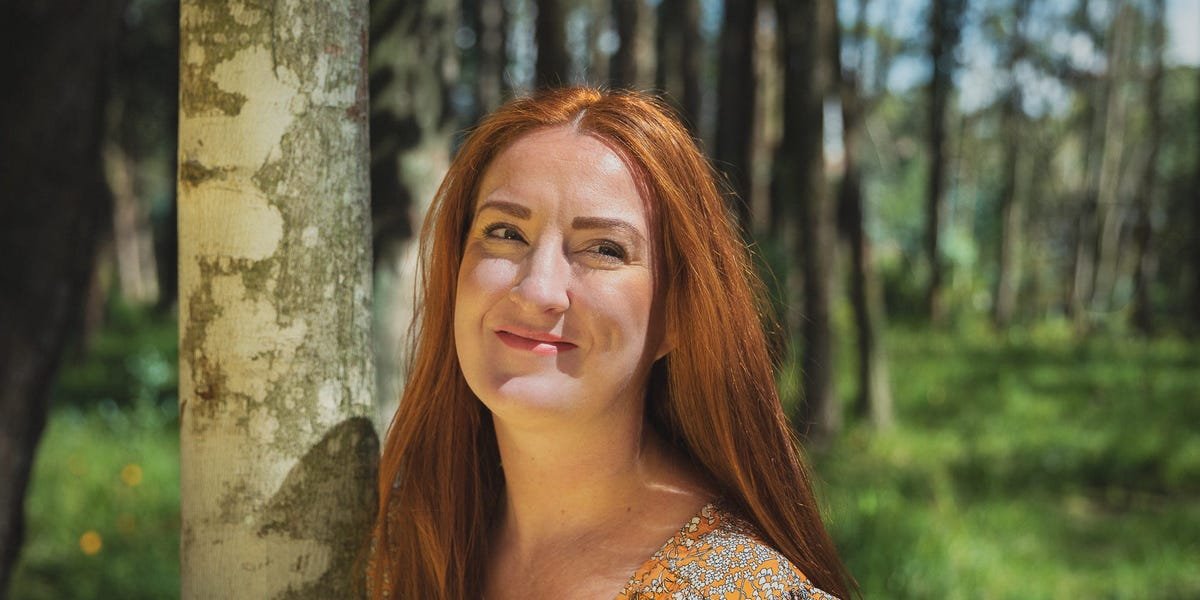
A-trip-to-Colombia-in-my-20s-turned-into-8.jpeg

A trip to Colombia in my 20s turned into 8 years freelancing in South America. Here’s what I’d do differently.

In 2016, I spent two weeks in Medellín, Colombia — and it changed the course of my life.

I explored the city and hiked to a waterfall hidden in the mountains, but it was the small details that stayed with me: Latin music I’d never heard before, tropical fruits, and locals socializing in a neighborhood barbershop.

Back in Canada, I couldn’t shake Colombia’s beauty. I hatched a far-fetched plan: become a freelance writer and move there.

At the time, I was in my mid-20s, living in Toronto, and working in magazines. With no deep roots in the city and a sense I’d soon be changing jobs anyway, the timing felt as good as it would ever be.

Over the next two years, I built up contacts, clients, and savings. Then I returned to Colombia to go freelance. I wanted to immerse myself in the culture and learn the language.

Eight years later, I live in Ecuador and still work as a freelance writer. The move worked out — but there are a few things I’d do differently.


A woman working on a laptop and a dog cuddling up.

She started off in Colombia and settled down in Ecuador. 

Provided by Sinead Mulhern


Here’s what worked

I researched the monthly cost of living and saved for a year

Creative industries like mine can be unstable, and there’s always a new hurdle. Right now, it’s AI.

The instability and oversaturated market can keep people like me from giving it an honest shot. Knowing I had my work cut out for me, I saved enough to cover my living expenses for a year, about $8,850.

I was halfway there already and saved the rest by freelance writing in the evenings and on weekends and by simplifying my lifestyle. I’d been working full-time for a few years as an editor at a running magazine in Toronto. The savings goal was pretty straightforward: 1,000 Canadian dollars a month for the time I planned to be away.

When I got to Colombia, I was fortunate to work while exploring the rolling green coffee region. Oftentimes, I hiked through fields after meeting morning deadlines. I was slowly figuring out how to lean into work that felt satisfying and valuable. It didn’t take long to come up with the three client green flags I still stand by.

Those are: a client that’s enjoyable to work with; work that’s meaningful and engaging; projects that pay well. In deciding whether to accept new work or continue with existing contracts, it has to be all three.

In hindsight, there are things I’d do differently

Of course, hindsight is 20-20. For anyone on a similar trajectory, this is what I’d do differently.


A group of women having drinks at a table in South America.

She would have taken more time to become fluent in Spanish. 

Provided by Sinead Mulhern


1. Dedicate time to learning Spanish and nothing else

I now speak Spanish at an intermediate level, and my second language has been crucial to my work. Because I write travel stories largely set in Ecuador, most of the pieces I’ve published have either been inspired by a conversation I had or required interviews in Spanish. Oftentimes, it’s both.

When I arrived in South America, I didn’t expect to stay this long. I enrolled in Spanish classes right away — and I’m still studying — but in hindsight, I would have learned faster if I’d paused everything else and focused solely on the language for a while.

2. Give back to my community more

Remote workers like me are part of a relatively new and deeply privileged group that can work in one economy while spending in another. That reality has never sat comfortably with me. It’s my opinion that those of us in this position — myself included — owe more to the communities we live in.

After all, in the absence of an office, my neighborhood has become my workplace. Though I’ve given back in small ways, one thing I’d do differently is commit to supporting local causes close to my heart on an ongoing basis, whether through my time or money, or both.

3. Put myself out there

Last year, I realized I’d been standing in my own way. For years, I’d refused to put together a proper online portfolio. When I finally did, several opportunities came up — including a large travel writing project.

That editor had been on my radar but when she came to me, I realized I’d underestimated myself by not making the introduction first.

So, in retrospect, I’d put myself out there by launching the website, sharing my work, or getting in touch with goal publications without hesitating.


A woman in black posing uner palm trees in South America

Looking back, she’d tell her younger self to take solo work trips. 

Jake VDVF


4. Take advantage of freelancer flexibility

There’s a lot that freelance work and entrepreneurship don’t offer: stability, paid sick days, benefits, the safety net of HR — I could go on.

What it has offered me is freedom and flexibility — and that’s what has made it worth it. Nobody can tell me when, where, or how to work.

Looking back, I value how hard I hustled, especially during the six months when I lived in Medellin. I’d tell that younger version of myself to lean into that flexibility a little more and travel solo.

That trip I took 10 years ago inspired a dream that eventually became a plan. That plan was shaky at best, but a decade later, I’m now in my mid-30s, living in a part of the world I love with a writing career I’m happy with.

Do you have a story to share about living abroad? Contact the editor at akarplus@businessinsider.com.




Source link

How-we-spent-1600-on-a-2-day-trip-to-Disney.jpeg

How we spent $1,600 on a 2-day trip to Disney World — and what we’d do differently next time

I’ve been to Disney World many times, and I like to think I know how to do it on a “budget” … at least, a loose one.

Recently, my partner and I planned a last-minute trip to the theme park on our way to visit family in Southern Florida for the holidays.

Between flights, transportation to and from the airport, lodging, park tickets, food, and souvenirs, we spent about $1,600, or $800 each … for about 48 hours in the Disney bubble.

Here’s a look at what we spent, ways we saved, and what we might do differently next time.

We stuck with a value resort since we wouldn’t be spending much time in our room


Author and their partner with suitcases in front of All-Star music hotel

All-Star Music is a value resort at Disney.

Jordyn Bradley


We spent $237 on our flights from Fort Myers, Florida, to Orlando and landed a few hours before we planned to visit Disney World.

By the time we arrived at our value resort, All-Star Music, our room was ready for check-in ($319 for two nights).

We tend to choose value resorts because they are the cheapest hotels on Disney property. Plus, stays come with complimentary bus transportation to the parks and Disney Springs.

All-Star Music was the cheapest of the five Disney value resorts when we booked, and our room provided us with enough space for our short stay.

After grabbing some snacks at the hotel food court ($25), we took a much-needed nap and got ready to visit Magic Kingdom.

Since we attended a seasonal event, we didn’t need buy separate park tickets


Author and their partner smiling with Mickey and Minnie in festive outfits

Mickey’s Very Merry Christmas Party was fun.

Jordyn Bradley


Fortunately, past me unknowingly helped me save during the trip.

I had two unused tickets to last year’s Mickey’s Very Merry Christmas Party — an additional ticketed event held at Magic Kingdom — that I was able to put toward a new party date. I just had to pay the difference, which was $21 for both tickets.

These tickets typically run $169 to $209 per person, and they felt virtually free since I’d already paid for them in the past.

We also didn’t need to buy a park ticket because we were able to enter Magic Kingdom at 4 p.m. on our event day — and we could stay until midnight.

Several drinks and treats were included with our ticket


Author Jordyn Bradley and partner at magic kingdom at night

Our Mickey’s Very Merry Christmas Party tickets came with some freebies.

Jordyn Bradley


When we arrived at Mickey’s Very Merry Christmas Party, we each got an ornament and a Mickey-shaped peppermint marshmallow.

Our ticket also included festive treats and drinks, like cookies and hot chocolate, that we picked up throughout the evening. I’d estimate we consumed at least $30 worth of treats.

We got our sugar fill with those and purchased a few savory bites, like my favorite meal at Magic Kingdom, the ham-and-Gruyère croissant sandwich with chips ($11) at Gaston’s Tavern.

We also got popcorn for only $2.50 because we got a refill in our reusable popcorn bucket — it’s a must-pack item for every Disney trip.

I kept my souvenir purchases to a pair of mix-and-match character ears ($46 for a headband and two characters to go on it) and a commemorative event pin ($23).

The party also included performances, a holiday parade, fireworks, character meet and greets, and access to classic rides (which sometimes have shorter waits than a normal park day).

We got to ride all the Magic Kingdom rides we wanted to (some multiple times) without having to pay extra for line-skipping Lightning Lane passes.

A Magic Kingdom ticket on its own can run upwards of $200 depending on the day, so the special event add-ons, like unique character meet and greets and complimentary snacks, definitely make the ticket price worth it.

These events are my hack to a cheaper Disney day if you’re down to have a late night and stay in one park instead of opting for a flexible-but-pricier park-hopper pass.

If it’s your first time at Magic Kingdom and you can get a one-day ticket for the same price or less than the party ticket, I’d stick with the former so you can go at your own pace.

Our second day was focused on eating around the world at Epcot, and we didn’t spare any expense


piece of carrot cake on plate

I don’t regret buying the carrot cake.

Jordyn Bradley


We purchased two single-day tickets to Epcot for our second day, which cost us $381.

On longer trips, we normally opt for the flexibility of park-hoppers, but we didn’t want to spend our limited time traveling between parks. Plus, the flexible multi-park ticket would’ve cost over $70 more per person.

Since we were staying in Epcot, we didn’t buy Lightning Lane passes.

I don’t think they’re worth it here because the park doesn’t have many rides — plus, we could use single-rider lanes to skip large waits at both Remy’s Ratatouille Adventure and Test Track.

Most of our money was spent at on food and drinks from booths at Epcot International Food and Wine Festival.


Flauta de Barbacoa and Strawberry-Pomegranate in Epcot

We got a lot of drinks and bites during the Epcot International Food and Wine Festival.

Jordyn Bradley


We revisited festival classics, like the filet mignon with mashed potatoes ($20 for two orders) from the Canada pavilion, and tried some new favorites, like the flauta de barbacoa ($9) from the booth in Mexico. We loved the latter so much we got it twice.

Other favorites included the warm carrot cake with cream-cheese icing ($5), which I get every year, and my favorite drink, the Ottawa Apple ($16.50).


Drink and chicken and dumplings in Epcot

The chicken dumplings we had were just OK.

Jordyn Bradley


Some bites were just OK, like the chicken dumplings ($6) in the China pavilion.

However, I’m glad we looked into festival menus in advance to plan which booths we wanted to prioritize. This helped us save time and money while getting me more excited about our trip.

I shelled out the most money on collectible pins


Author and their parter with Rafiki at Disney

I often meet characters and trade pins when I visit Disney.

Jordyn Bradley


Every time I go to Disney, I know I’m going to put most of my souvenir budget toward collectible enamel pins, and this trip was no exception.

Many of these pins can only be purchased at Disney parks, and collecting and trading them is a popular hobby.

On this trip, I was trying to complete a set and only needed one more pin, so I bought multiple mystery two-packs at about $23 each.

Ultimately, I spent $165 on mystery packs, which is more than my share of the hotel. I didn’t complete my set and I ended up with way more pins than I wanted (or needed).

Next time, I’ll buy one or two pins that I can pick out myself instead of mystery packs. I also plan to hold off on buying more until I can swap the ones I don’t want at one of the trading stations in the parks.

We ended our trip with a free activity

After our full Epcot day, our last afternoon was spent walking around Disney Springs.

The shopping and dining spot has free parking and is a nice place to wander if you’re wanting to be part of the Disney bubble without forking over hundreds for tickets.

Then, we headed to the airport for our flights home ($197).

All in all, we enjoyed ourselves and made the most of our 48 hours


Author Jordyn Bradley hugging  Donald Duck

I didn’t calculate what I spent until I got home, but I didn’t shy away from lots of snacks and mystery pin packs, so it’s not surprising how we got there.

Jordyn Bradley


Many people could spend what we did on our two-day trip and stay at resorts with nicer amenities or have more park days and sit-down meals.

However, because this trip was last-minute, we were happy with anything we made the time for, and since it was shorter, we felt better about having a higher food and souvenir budget.

Those were our priorities, especially since we never spend enough time at our hotel to justify booking a nicer one at a higher nightly rate.

We could’ve made the trip more affordable by spending less on souvenirs, which we will likely do next time. However, now I have more pins to trade for my next trip — and a way to remember one of our favorites.


Source link

Im-parenting-my-kids-differently-from-how-I-was-raised.jpeg

I’m parenting my kids differently from how I was raised. I don’t want them to fear me, but instead trust me.

Growing up, the grandparents who raised me were a generation removed from me, and because of it, I never felt like I could go to them with real issues or problems.

I hid the deep and dark stuff because children were to be seen and not heard. We did not talk about the big things like sex or drugs. Instead, the warnings were direct and often frightening. They went something like this, “Do not do drugs or you’ll die.” The pregnancy mantra was similar: “Do not have sex or you’ll get pregnant.”

Alongside the lack of communication was a heavy dose of fear and threats. I suppose their own parents passed down less-than-stellar communication skills and used threats in an effort to protect.

I was terrified of my grandparents

I remember coming home after having a few drinks at a high school party. “You can do this one step at a time. Say hello and walk (in a straight line) to your room,” I whispered to myself as I climbed the steep front steps leading to our second-floor apartment. There was no getting caught, or I would die, or at least endure endless punishments preventing me from going to said parties until I was an adult capable of making my own decisions.

Not only did I not know how to talk to my grandparents, but I was also terrified of them.

Sometimes, this lack of communication led to unwise decisions. I didn’t feel like I had an adult I could call if I’d done something I wasn’t supposed to do. If I did something foolish, I was on my own. It wasn’t safe, and I’d watched more than one friend get seriously injured (either physically or mentally) when they made a typical teen choice and felt they didn’t have an adult they could trust to help them.

I wanted my kids to trust me

With my own kids, I wanted to keep the lines of communication open, which became especially important as my children navigated middle school and high school. These years of adolescence included poor decision-making and a desperate struggle between being a kid and trying to grow up.

I talked openly with them about drugs, sex, and drinking. No subject was off limits. They knew they could tell me anything. Keeping our communication open and honest showed them a level of trust that other parents found difficult to understand. I often had my kids’ friends telling me things they couldn’t say to their parents. I tried to listen without judgment. I knew it was a fine line between discipline and acceptance. I also knew no matter what, keeping my kids safe was my first and most important job as a parent.

As my second set of kids head into the muddy waters of middle school and high school, these discussions are again at the forefront. “If you drink, I’ll be more upset if you get in a car with someone who’s been drinking or if you decide to drive than I will because of the drinking,” I recently told my high school daughter. Realistically, while I don’t openly condone underage drinking, I know it is, more often than not, a part of the teen years. “Call me,” I said, “and I’ll come get you.

I try to stay open-minded

While there were many things I did not accept, I also did my best to remain open-minded. It was sometimes difficult to parent this way. My kids did and continue to do things I often don’t agree with. I looked at these as teaching opportunities, rather than seeing them as moments to punish. Viewing things this way has helped me foster and maintain very close relationships with my kids. It is something others have commented on, including a social worker I visited with my son. “No matter what is going on,” she said, “you two seem to have a really tight and open relationship.” It remains one of the best compliments I’ve received as a parent.

There was another side to those comments, though. Parenthood is often filled with judgment and criticism. When my son dropped out of school, and my teens struggled with typical teen things like drinking, drug use, and sex, I remember hearing a neighbor refer to me as a loosey goosey parent. The neighbor in question didn’t understand my relationship with my kids. They didn’t share my parenting philosophy. Really, they didn’t have to. While the comment initially bothered me, I knew I was parenting in the only way I could. I parented in a way that I wasn’t parented, but wished that I had been.

As my two oldest kids hit adulthood and my youngest two become teenagers, I’m not sorry for being loosey goosey. I would do it the same way all over again. In fact, I am. I have no regrets. I hope the neighbor who judged me feels the same way when their kids go through the tough teen years.


Source link