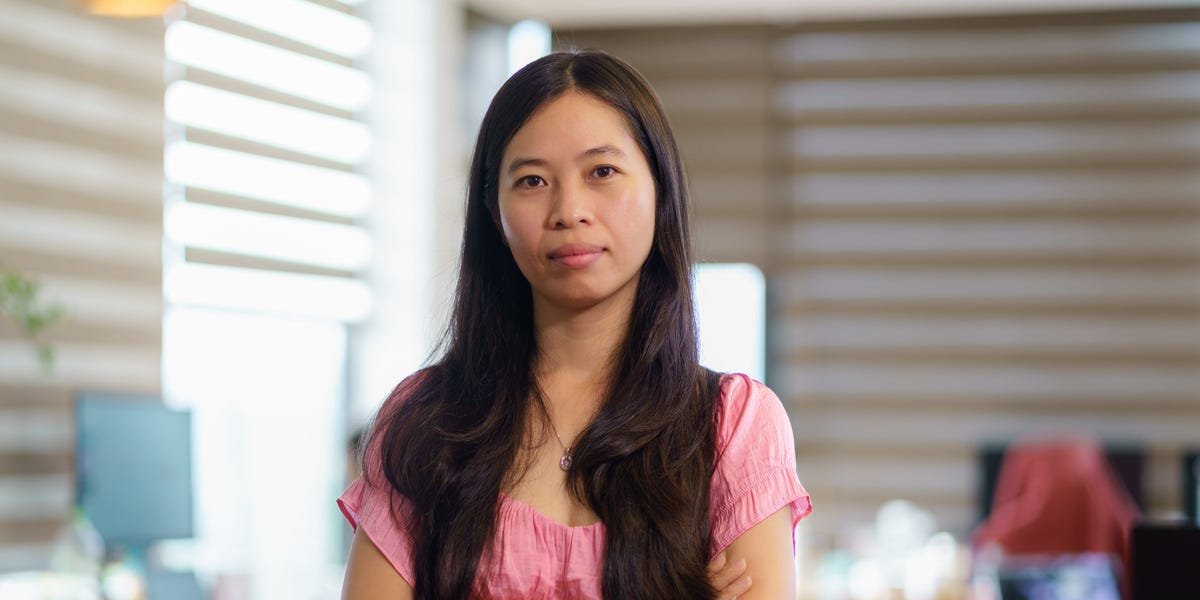
This as-told-to essay is based on an interview with Nguyen Thị Thanh Thơ, aka Hana Nguyen, 36, founder of Hana’s Coworking in Da Nang, Vietnam. It has been edited for length and clarity
I never planned to work with digital nomads. In fact, three years ago, I didn’t even know what “coworking” meant.
I was born in the countryside of central Vietnam and, in my teens, moved to Da Nang with my family for college. I first studied business administration, and later trained to become a pharmacist.
After graduating in 2016, I found a job in a local pharmacy. It was the typical job for many Vietnamese graduates: stable but low-paying; not especially challenging but also very boring.
I couldn’t get excited about it, and I didn’t see a future for myself there.
In 2023, I met a foreigner on an online forum who wanted to go hiking in the Marble Mountains, a group of cave-like temple structures in southern Da Nang. I decided to join.
At that time, I was curious about foreigners, but my English was poor, and I didn’t really know how to connect with people from other countries.
That small encounter changed everything. A few days after visiting the mountains, my new foreign friend took me to a coworking space. I had never seen anything like it before — people from all over the world working on laptops, speaking in English, and sharing ideas.
Something clicked immediately.
Provided by Hana Nguyen
I felt drawn to the community
I didn’t have money or experience, but I had motivation. In early 2024, I spoke to a friend who owned a hotel with an unused floor.
I offered to manage a coworking space there. I told her that I could try working there for two months for free. If it worked out, we could talk about money. If it didn’t, we could both move on.
After a few months, the project really took off, and I got some good exposure from Vietnamese TV and visiting content creators.
I worked there full-time for more than a year, doing everything myself — managing the space, cleaning, talking to customers, and organizing events. I negotiated a salary of about $250 a month, which wasn’t much, but I loved it.
Eventually, I realized I was building something valuable and with potential — but I didn’t own it. I began feeling exhausted and knew it wasn’t sustainable. Around the same time, my dad fell ill with cancer. I knew I needed to make more money to help my family, so when another friend offered me a space inside his bar — unused during the day — I said yes.
That was the first coworking space where I felt some ownership.
I didn’t have to pay rent, which worked because I had very little money — I couldn’t even afford to hire staff. But still, I managed to build the community. I organized events, beach trips, yoga, dinners — anything that helped people connect.
Since I wasn’t paying rent, I knew this arrangement could only be temporary, so I worked up the courage to ask my parents if we could convert one of the floors in our three-story family home into a coworking space. I explained that I’d need to borrow money from family members and spend a few months renovating the house.
Duc Nguyen for BI
Despite the risk, my parents agreed
It wasn’t easy. I was working nonstop and felt stressed, but the top floor, which can seat 18, filled up quickly, so I expanded the coworking space to other parts of the house. I can now fit 30 people and charge $76 a month.
I still manage everything myself. I don’t have employees. My father is a guard at the entrance, and my mother cleans the place, so it’s still very much a family business.
Many people ask me why there are so many digital nomads in Da Nang. I think it’s because the city is friendly, affordable, and super convenient. You have the beach, mountains, urban life, and an international airport close by.
Provided by Hana Nguyen
Da Nang is the kind of place where you can go for a walk along the beach in the morning, work during the day, swim in the sea in the afternoon, and eat great food in the evening — and it’s not expensive.
The biggest challenge I’ve seen among digital nomads is loneliness. Many people arrive alone, without friends, and everything feels unfamiliar — the culture, transportation, and daily life. That’s why community is so important. Everyone researches online before they come, but a real connection only happens in person. That’s exactly what I’m trying to foster with my coworking space.
At my events, around 20% of participants are Vietnamese. Many come to practice English, but they also learn about different ways of working and living. Some locals have even found freelance work with nomads in design, tech, and marketing. That makes me proud.
I’m still learning. I don’t have a big master plan. I just know I love connecting people, and I believe community can change lives — including mine.
Do you have a story to share about living abroad? Contact the editor at akarplus@businessinsider.com.