
He-skipped-college-to-intern-with-an-ex-Sequoia-director-Three.jpeg

He skipped college to intern with an ex-Sequoia director. Three years later, he’s a cofounder.

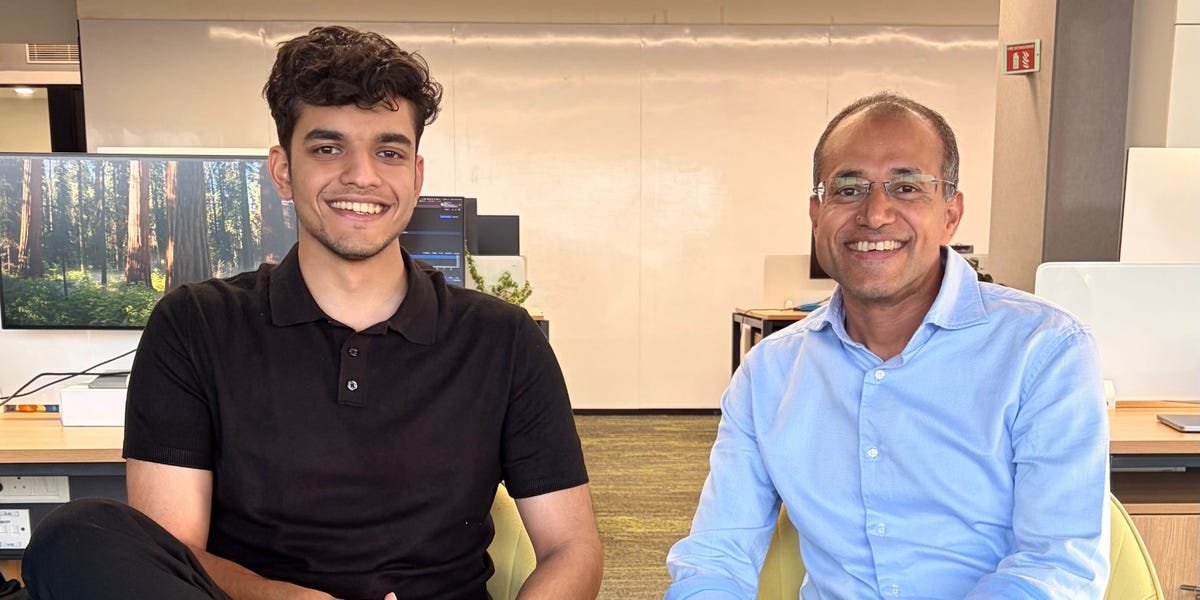
This as-told-to essay is based on conversations with Amit Jain and Raghav Saraf, cofounders of Bengaluru-based agentic AI startup Zamp. It has been edited for length and clarity.

Raghav Saraf: I joined Zamp four days after my last high school exam ended in 2022. I met Amit at a blockchain hackathon I had participated in, where I built a payment gateway. My product was really similar to what Amit was trying to build at Zamp, and the hackathon organizer introduced us.

Amit Jain: Before I founded Zamp, I was a managing director at Sequoia India and Southeast Asia based in Singapore, and Uber’s head of Asia Pacific prior to that. Venture capital was awesome, but I had an itch to get back into running a company. I wanted to start something of my own and spent six to nine months brainstorming startup ideas before coming up with the idea that led to Zamp.

Saraf: When I first spoke to Amit, the plan was to go to the US for my undergrad. I thought about how working with his team would be super fun and decided to try it out for a three-month summer internship.

Zamp had five to 10 employees at the time, and I was able to take on large projects and maximize my learning during those three months. At the end of the summer, I realized I was learning much faster than I would in college and was sold on the idea of staying at the company. But it took some time to convince my parents about the idea of skipping college.

Jain: I remember getting “interviewed” by Raghav’s dad in a coffee shop under my office after he decided to join us. Very politely, his dad just wanted to do a pulse check on who I am and why his son wanted to join me before allowing him to work for us. I was lucky to have passed that interview and fortunate that Raghav could join us.

Saraf: I always knew that college was important, not for the actual textbook learning but because of the people and the environment I’d be in. I’m 21 now, and it’s been almost four years since I decided to miss college, and friends from my cohort have started graduating. When I talk to them, I’m pretty happy with my decision. They say college was a good experience, but they don’t feel prepared to apply what they learnt to the professional world.

Move to cofounder

Jain: Now, Zamp has about 80 employees and a fairly global customer base, including top banks.

Saraf: We don’t have titles here, but I lead everything related to product at the company. Amit handles sales, customer relations, hiring, and everything else.

Jain: Our decision to promote Raghav to cofounder came gradually. He was a pleasure to work with from day one, and the critical thinking, judgment, and maturity he displayed were well beyond those of most leaders I’ve seen in my career. The cofounder potential had always been there, but it became evident over the course of a year or two. When we made the announcement in 2025, it wasn’t a surprise to anyone because Raghav had been gradually taking on more responsibility.

Saraf: After we announced the change, my team was very supportive. They told me I was already a leader to them, and nothing has changed. My school classmates were very surprised but happy for me. More than anything, becoming a cofounder made the biggest difference to my parents, who went from saying, “We’re not sure what this guy is building,” to “He knows what he is doing.”

Jain: Timing is a minor factor in deciding who becomes a cofounder, and it doesn’t need to happen at the time a company is founded. I think a startup is a journey, and a cofounder is somebody who has played and will play or continues to play a critical role in that direction of that startup. So, looking back at the last four years, it was more about the role Raghav plays.

Working like peers

Saraf: I had to teach myself everything on the job. I didn’t know how to build products, how to go to market, how to lead teams, or do most of what I know now. I’m sure that will continue to be the case a few years later as well. Learning to me is a very active process — understanding my gaps, reading books about it, and teaching myself.

I’m close with the people on my team, and we hang out often and spend weekends together. One of my colleagues is also my flatmate. But I maintain a balance: When we’re at work, everyone recognizes that I’m leading the team.

Jain: Our relationship is 100% like peers, and we complement each other very well.

Saraf: What surprised me about working here was the level of trust and openness, and the ability to make my own decisions. If I were in Amit’s position, I probably wouldn’t have let a 17-year-old drive things.

Source link

Rob-Reiner-director-of-The-Princess-Bride-is-dead-at.jpeg

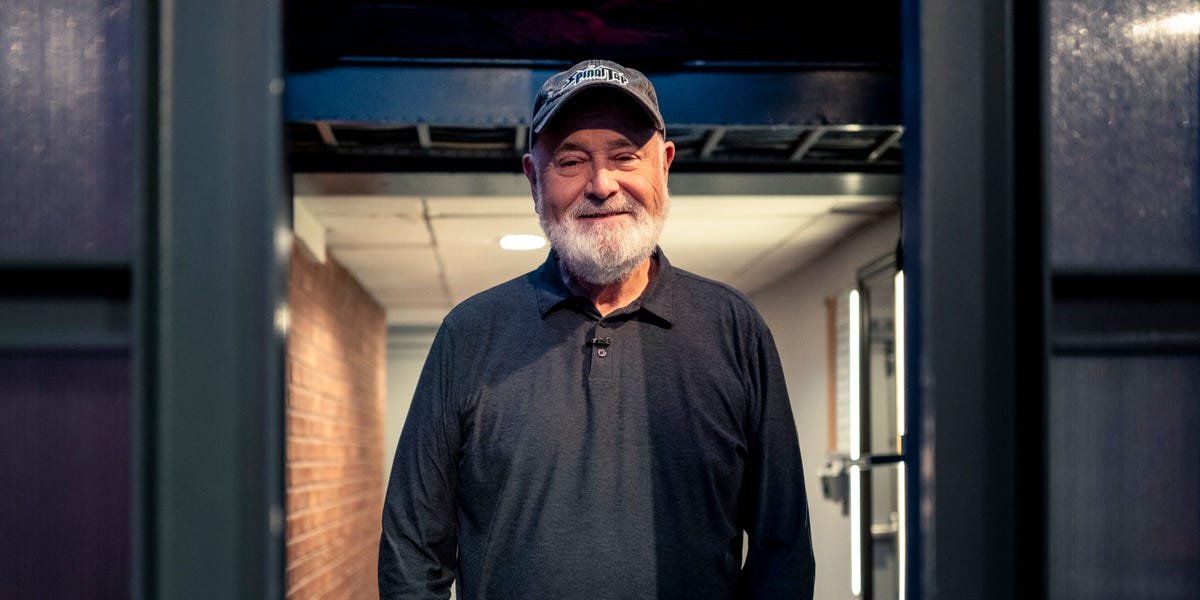
Rob Reiner, director of ‘The Princess Bride,’ is dead at 78

Rob Reiner, the award-winning director of “When Harry Met Sally” and “The Princess Bride,” and his wife, Michele Singer Reiner, were found dead in their home on Sunday.

A Los Angeles Police Department representative told Business Insider that at 3:38 p.m. on Sunday, the department received a medical aid call to the 200 Block of Chadbourne Avenue in Brentwood, Los Angeles.

At the scene, the LAPD determined the deaths of a 78-year-old man and 68-year-old woman. The LAPD said in an X statement that its Robbery Homicide Division was investigating an apparent homicide.

In a Sunday night statement, LA Mayor Karen Bass confirmed the Reiners’ deaths and said that the investigation was ongoing.

LAPD Deputy Chief Alan Hamilton said in a Sunday night press conference that the department was not seeking anyone as a suspect or person of interest in the case, and that the LAPD would speak with the couple’s family members in the investigation.

Representatives for the family did not immediately respond to Business Insider’s requests for comment.

Former House Speaker and California Rep. Nancy Pelosi said in an X post on Sunday that the news was “devastating.”

“It’s hard to think of anyone more remarkable and excellent in every field and endeavor they pursued,” Pelosi wrote.

She added, “Rob was creative, funny, and beloved. And in all of their endeavors, Michelle was his indispensable partner, intellectual resource, and loving wife.”

Reiner had a long and illustrious career in Hollywood. The son of actor, director, and screenwriter Carl Reiner, he studied at the UCLA Film School before starting his directing journey.

He directed several iconic Hollywood movies, including “This is Spinal Tap” in 1984, “The Princess Bride” in 1987, and “When Harry Met Sally” in 1989.

Reiner also appeared in several acting stints, including movies such as the 2013 Martin Scorsese blockbuster “The Wolf of Wall Street” and TV series “New Girl” and “The Bear.”

In 1987, he founded Castle Rock Entertainment, a production company, alongside a group of film producers. The company is now a subsidiary of Warner Bros. Discovery.

Reiner and his wife had three children together: Nick, Jake, and Romy Reiner. He has one daughter, Tracy Reiner, from his previous marriage to actor Penny Marshall.

Nick Reiner battled drug abuse in his teens and early adulthood. His experience, including stints in rehab, led him to write the screenplay for “Being Charlie,” a 2015 romance-drama that his father directed.

In 2016, Reiner told Business Insider that his son was the “heart and soul of the film.”


Source link

Guilty-on-all-counts-Jury-convicts-Netflix-director-Carl-Rinsch.jpeg

Guilty on all counts: Jury convicts Netflix director Carl Rinsch in $11 million fraud case

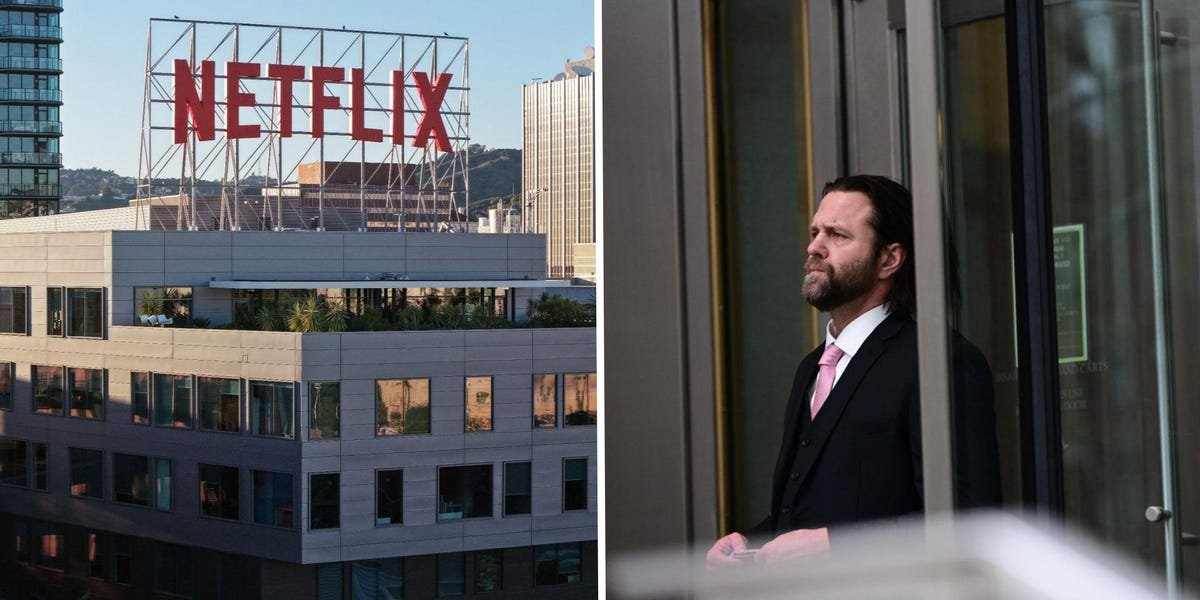
A Manhattan federal jury on Thursday found Carl Rinsch guilty on charges that he scammed Netflix out of $11 million in a lavish spending spree.

After less than five hours of deliberation, the jury said it found Rinsh guilty on all seven counts, including fraud, money laundering, and illegal money transmission. He faces up to 90 years in prison, but is expected to be sentenced to far less.

Rinsch, wearing a purple-plaid tie and matching pocket square, looked straight at the judge as the jury foreman read the verdict.

The case centered on the millions of dollars Netflix paid Rinsch to film “White Horse,” a sci-fi epic about a world where clone-like beings, after a schism with humankind, create their own society walled off from the rest of the world. Rinsch testified in his own defense earlier this week.

Rinsch — a Ridley Scott protege who previously directed the Keanu Reeves-starring “47 Ronin” — shot footage for “White Horse” on two continents. But by the fall of 2019, he exceeded the $44 million Netflix budgeted for the project and asked for more money.

Through the end of 2019 and early 2020, Rinsch negotiated with Netflix to figure out how to move “White Horse” forward and realize his ambitions. He envisioned a franchise like “Star Wars” and “Game of Thrones,” complete with an elaborate fantasy world, that could become part of Netflix’s catalogue.

In March of 2020, the streaming service agreed to give Rinsch’s production company another $11 million.

Then, everything went wrong.

On the witness stand in Manhattan federal court, he said he believed the bulk of the $11 million was meant to reimburse him for keeping the production of “White Horse” afloat the previous fall, when it had gone over-budget. According to him, Netflix expected him to conduct only “soft pre-production” on a potential second season.

Netflix balked. Former executives testified in the trial that the $11 million was meant to go toward finishing a first season that Rinsch never delivered. According to prosecutors, the entire negotiation for the $11 million was a sham, and Rinsch meant to defraud the company all along.

At closing arguments on Wednesday, Assistant US Attorney David Markewitz presented the jury with a Buzzfeed-style list of “10 Ways You Know Carl Rinsch is Guilty.” In a slideshow, he walked them through what he said were Rinsch’s contradictory claims — on the witness stand, in emails and text messages, and in prior statements in a civil legal dispute with Netflix — that he said demonstrated Rinsch wasn’t telling the truth.

He argued it was absurd to think Rinsch’s lavish purchases — like a $439,000 handmade Hastens mattress — could not have possibly been meant for the production of “White Horse.” And Rinch’s 2021 purchases of Rolls-Royces were insured in his own name, rather than insured by Netflix.

“In a TV show, a mattress is going to be covered by sheets and a blanket,” Markewitz told the jury. “No one watching ‘White Horse’ from home is going to have any idea what is under those linens.”

Daniel McGuinness, an attorney representing Rinsch, told the jury that Rinsch never had the “intent” required to find him guilty.

He showed them emails and texts leading up to the March 2020 agreement that he said demonstrated Rinsch’s negotiating posture had always been that Netflix owed him about $11 million for reimbursement. Rinsch never said he would spend all the money on additional production for “White Horse,” McGuinness said.

In reality, according to McGuinness, the situation was a “contract dispute” based on misunderstandings between Rinsch and Netflix.

“They were talking past each other, and the government has turned it into a nefarious fraud conspiracy,” McGuinness said.

This is a breaking story. Please check back for updates.


Source link

A-Ferrari-and-over-480-takeout-orders-FBI-details-spending.jpeg

A Ferrari and over 480 takeout orders: FBI details spending spree of Netflix director in $11 million fraud case

In March of 2020, Netflix infused $11 million into a production company to complete the first season of “White Horse,” a futuristic sci-fi series it hoped to bring to its platform.

Carl Rinsch — the director, writer, and showrunner of “White Horse” — never finished the 12 episodes he was supposed to deliver.

But a short time after he got the cash, Rinsch spent millions of dollars on furniture, cars, credit card bills —  and a whole lot of takeout.

According to testimony at his criminal trial on Thursday, Rinsch spent a total of $9.14 million through a personal bank account with funds originally earmarked to finish “White Horse,” which had the production codename “Conquest.”

The spending included more than 480 food deliveries from Postmates and Uber Eats during a six-month span in 2022, according to a spreadsheet entered into evidence. The spreadsheet showed Rinsch sometimes making a dozen separate food purchases each day.

The most expensive category, FBI agent Michael Naccarelli testified, was for furniture, for which Rinsch spent $3.36 million.

Rinsch also spent $2.4 million on cars — including a Ferrari and Rolls-Royces — and $1.8 million on American Express bills, according to Naccarelli. He also spent money on hotels, jewelry, and art, Naccarelli said.

“Rinsch described the Ferrari as “a birthday gift to myself” in a 2021 text message to his personal assistant, which was shown to jurors later Thursday.

Attorneys for Rinsch told jurors at his trial in Manhattan federal court that the “White Horse” debacle is a civil business dispute — not criminal financial fraud.

They say Rinsch, who previously directed “47 Ronin,” starring Keanu Reeves, is a “creative genius” who was overwhelmed by the demands of directing, writing, and producing “White Horse” and left to flounder by the streaming company.

Days after Netflix sent $11 million to a bank account for Rinsch’s production company, he moved $10.5 million to a personal Wells Fargo bank account, according to Naccarelli and records entered into trial evidence.

The director then moved portions of the funds to a Kraken cryptocurrency exchange account, as well as other bank accounts, before ultimately transferring $13.7 million to a personal Bank of America account.

With his Kraken account, Rinsch purchased about a dozen different cryptocurrencies, including Dogecoin, Etherium, Bitcoin Cash, and the stablecoin Tether, trial records show.

In April 2022, Rinsch’s Dogecoin holdings were worth about $755,000, and his Etherium tokens about $939,000, according to Naccarelli.

While a financial advisor previously testified in the trial that Rinsch’s stock investments went badly, Naccarelli said the director’s cryptocurrency investments were profitable.

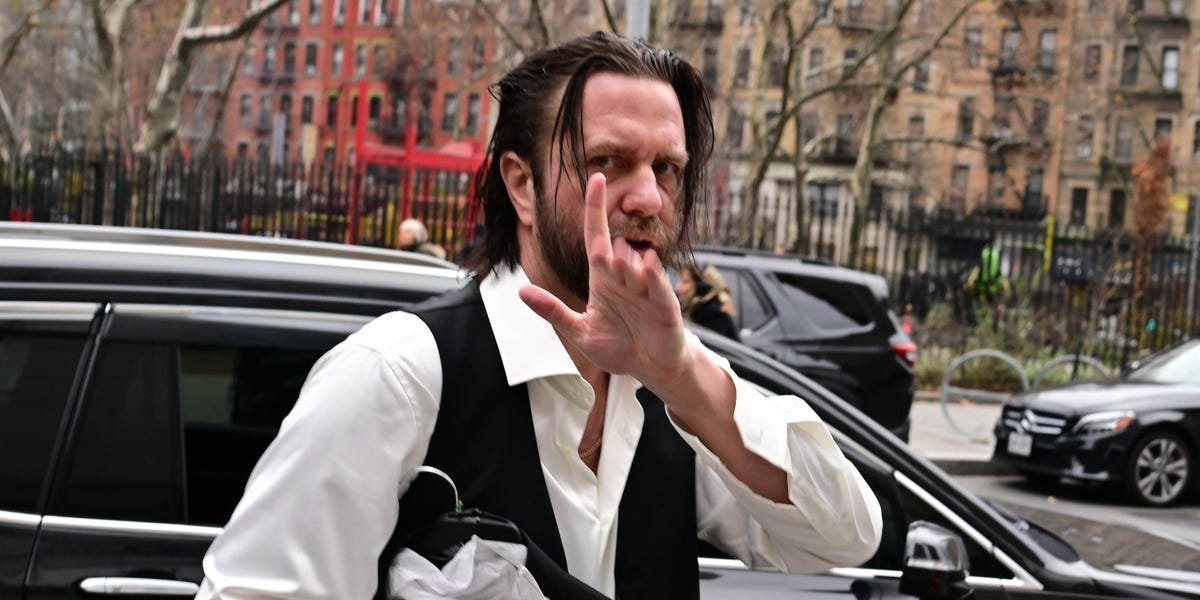
“The trades performed very well,” Naccarelli said as Rinsch — wearing a three-piece black suit and a patterned pink tie and matching pocket square — nodded slightly.

Allen Grove, an FBI agent who testified after Naccarelli, said Rinsch considered himself a major Dogecoin trader when they met in April 2023 regarding a dispute over one of Rinsch’s furniture purchases in Paris.

“Mr. Rinsch described to me that he became wealthy during the pandemic by investing in Dogecoin,” Grove testified. “He described himself to me as ‘The Dogecoin Whale.'”

Rinsch said in an earlier deposition, which was shown to jurors on Thursday, that his purchases of four Rolls-Royces were meant for the production of “White Horse,” and not for personal use. Netflix wrote off the production as a loss in 2020.

“That would be fraud otherwise,” Rinsch said in the deposition.


Source link

Jury-hears-how-Netflix-director-lost-a-fortune-on-options.jpeg

Jury hears how Netflix director lost a fortune on options trades — days after streamer sent him $11M for ‘visionary’ show

Director Carl Eric Rinsch made so many failed, seven-figure option bets after Netflix wired him $11 million that his broker at Wells Fargo tried — and failed — to stop him, a New York fraud jury heard on Tuesday.

“I can afford to lose the money,” Rinsch said, according to testimony by his former Wells Fargo advisor, Ronald See.

And when the brokerage hit the brakes — limiting him to $250,000 per transaction — the show developer was undaunted.

On March 30, 2019, just three weeks after receiving the $11 million, Rinsch instructed See, of Wells Fargo Advisors, to wire his remaining $8.5 million to Citibank so he could establish a new brokerage account with Charles Schwab.

“They won’t put restrictions on me there,” Rinsch wrote See in a letter shown to jurors.

Rinsch, 48, is on trial in federal court in Manhattan, fighting charges that he had no right to use the $11 million Netflix sent him on anything other than “White Horse,” the 120-minute TV series he’d already spent $44 million of Netflix’s money on. (Rinsch ultimately never finished a single episode of the clones-versus-humans sci-fi thriller.)

Defense lawyers counter that the $11 million was actually Rinsch’s contractually-promised payment for having completed principal photography, and was his money to spend as he pleased.

Either way, testimony on Tuesday by two of Rinsch’s former financial advisors showed that he was eager to spend the cash prosecutors say the director had quickly moved into his Wells Fargo account.

The streamer wired Rinsch the $11 million on March 6, 2020, as the COVID-19 pandemic halted film production worldwide.

Over the next three weeks, he then lost some $5.8 million, almost all of it on highly risky options trades involving Gilead Sciences, which was developing COVID-19 treatment drugs. (See would earn a $22,000 fee on these losses, the defense pointed out on cross-examination.)

The director was off to the races again as soon as he switched to Charles Schwab, according to testimony.

“I could send $3 mm personal to get started,” he wrote to his new financial advisor, Adam Checchi, who also testified on Tuesday.

“I understood that to mean three million from his personal funds,” Checchi said under questioning by a federal prosecutor.

Checchi told jurors that Rinsch would soon lose almost $6 million more, mostly on failed, highly risky bets that Gilead’s stock would rise and that the S&P 500 would decline.

“I’m not a broad, diversify kind of guy,” Rinsch explained in a late March 2020 email, adding that he pursues “aggressive” option trading “fully expecting to lose it all.”

Earlier in the day, former Netflix executive Peter Friedlander, who on Monday called Rinch’s project “visionary,” completed a second day of testimony.

On overhead screens, defense attorney Benjamin Zeman showed Friedlander — and the jury — emails from August 2019, in which Rinsch begged for “immediate support” with casting in Brazil.

“Show is set to collapse,” Rinsch wrote.

The defense is blaming the implosion of White Horse on Netflix’s decision to pull support for the project in September 2020.

In the email chain projected throughout the courtroom on Tuesday, Zeman attempted to show jurors that a year earlier, Friedlander was already cold toward the show developer’s requests for help.

“His own delays in decisions have caused this,” Friedlander wrote in forwarding Rinsch’s email to Mike Posey, an original series vice president, and others, including production executive Shelley Stevens and Rahul Bansal, an original series director.

Rinsch would continue asking for support — and money — for another six months before Netflix forwarded the $11 million payment at the center of the trial. The project was ultimately written off by Netflix as a tax loss eight months later, in November 2020.

Rinsch’s trial is expected to continue through next week. He faces up to 90 years in prison if convicted of wire fraud, money laundering, and engaging in unlawful monetary transactions.


Source link