
A-Bigfoot-documentary-premiered-at-SXSW-Was-it-fake-news.jpeg

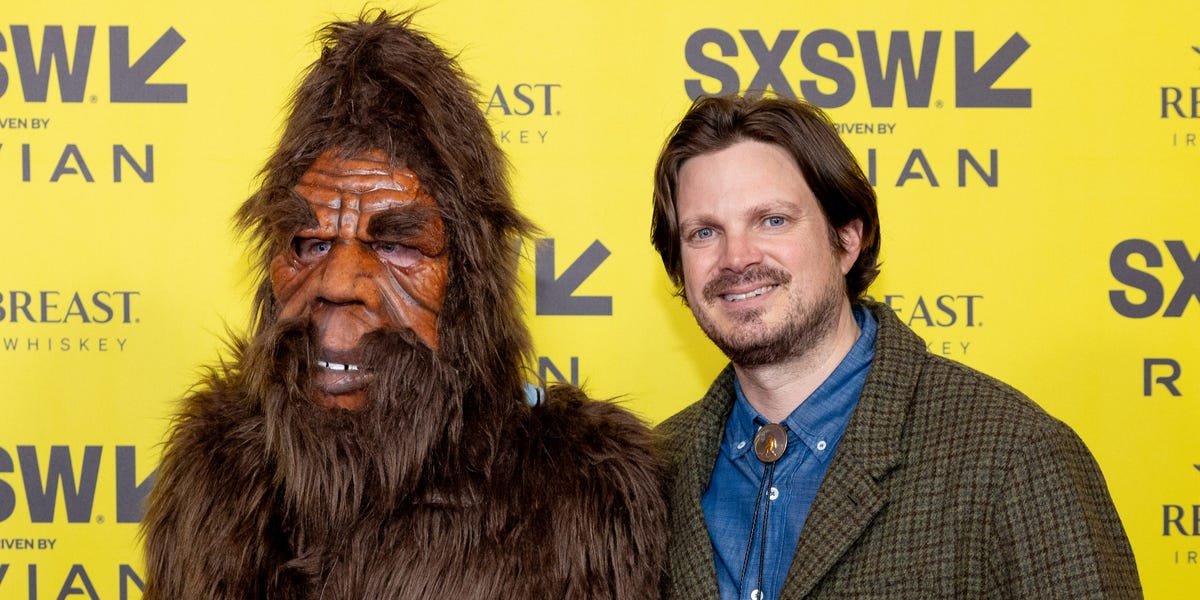
A Bigfoot documentary premiered at SXSW. Was it ‘fake news?’ An online community is tearing itself apart.

A new documentary doesn’t disprove Bigfoot — he or she could still be out there! — but it aims to upend the biggest piece of evidence that Bigfoot believers have held onto for 60 years.

Now, some of those true believers are becoming skeptics, bringing modern “fake news”-type arguments to social media, or suggesting newly discovered evidence could be an AI-generated hoax.

The Patterson-Gimlin film is instantly recognizable. Under a minute long, the grainy 1967 film shows a tall, furry creature walking on two legs through the Northern California woods. The creature turns slightly, looking over its shoulder, and then walks on. This is the most iconic footage of Bigfoot, and for decades has been the best “proof” that a large, undiscovered hominid species roams the Pacific Northwest, partly because the film has been stubbornly complicated to fully disprove (unless, of course, you simply assume Bigfoot isn’t real to begin with).

“Capturing Bigfoot,” which premiered at SXSW this month, has unearthed a piece of long-lost footage — an apparent “dry run” rehearsal of the famous film where it’s more clearly a man in a furry suit. This new footage strongly suggests that the famous Patterson-Gimlin film was a hoax.

For the Bigfoot online community, the documentary is hitting like a nuclear bomb.

In 2022, “Chasing Bigfoot” director Marq Evans, who teaches film at Olympic College in Washington, was approached by a colleague. She had a piece of old film that had belonged to her deceased father, and she wanted Evans to help her find someone to process and transfer it. Her father had worked in a film processing lab in the 1960s and was socially connected to Patterson and Gimlin.

The new footage shows a different man in a fur suit, along with Bob Gimlin on horseback, shot in a forest that looks more like Washington state, where they lived, instead of Northern California. Based on markings on the film, it was filmed a year prior to the more famous film, perhaps as some sort of rehearsal or dry run of what they’d eventually show to the public.

“I never thought this would happen in our lifetime, what Marq Evans has come up with in the documentary,” said Joshua Kitakaze, a longtime Bigfoot fan who is active in a Facebook group for Bigfoot researchers. Kitakaze stopped believing in Bigfoot years ago, but is still fascinated by the myth and culture around it.

“For many of us who were believers, whether or not you are now, it just can’t be understated that the film was the pillar, that was the cross of this religion,” Kitakaze told Business Insider. “It was the No. 1 thing.”

“I do know that I am internally coping,” wrote someone on the r/Bigfoot subreddit. “The [Patterson-Gimlin] Footage has been the most credible and clear-cut source of proof we have (had). With the supposed claim that it was just a hoax all along, I’ve found myself struggling to accept that possibility.”

Because “Chasing Bigfoot” hasn’t been widely released yet, almost none of the hardcore Bigfoot fans have seen the movie or the new footage from 1966. This is creating a confusing situation where people who are used to poring over visual evidence to prove or disprove something are forced to rely on secondhand descriptions of the film.

Evans is aware of the controversy playing out online and the skepticism among some people who haven’t seen the film — including people who think that the new footage was made with AI. “It’s almost like when ‘fake news’ became a thing, then it was just like everything’s fake news, and people, I don’t know what to believe,” Evans told Business Insider. “I think we’re in that same boat now with AI, that because something could be AI, anything could be dismissed as AI.”

Eric Palacios, who has a YouTube channel devoted to investigating Bigfoot and other cryptids, lives in Austin and went to see “Chasing Bigfoot” at the SXSW screening. Immediately after, he posted a video about his reaction — shocked. He had gone into the film believing that the Patterson-Gimlin Film held up to scrutiny, but after seeing the documentary, he changed his mind.

As one of the few people in the community who has seen the movie, Palacios’s description of it has carried a lot of weight — and made him a target for criticism and harassment from true believers.

“I don’t know if it’s changed my feelings on the existence [of Bigfoot]. It’s changed my feeling on the community 100%. I’ll tell you that much,” Palacios told Business Insider. “I was kind of disgusted the way some of these people were acting — people that you’ve seen on television, on documentaries, talking about the Patterson footage and other stuff.”

But Palacios still holds onto some belief.

“To me, I still think there’s a possibility of something being out there. What it is, I can’t say, but I mean, there’s a million reports, eyewitness reports, and everything,” Palacios said. “And I mean, if one of them is true, then it’s true. That’s the way I look at it.”


Source link

12-details-you-might-have-missed-in-Melania-Trumps-documentary.jpeg

12 details you might have missed in Melania Trump’s documentary

  • Melania Trump’s documentary, “Melania: Twenty Days to History,” premiered in theaters on January 30.
  • It follows Melania Trump in the 20 days leading up to the 2025 inauguration.
  • The “very private” first lady was deeply involved in the film’s creation, producer Marc Beckman told Business Insider.

First lady Melania Trump is no stranger to cameras, but this time, she’s the one calling the shots.

Her new documentary, “Melania: Twenty Days to History,” provides a glimpse into her life and work during the 20 days leading up to President Donald Trump’s 2025 inauguration.

It was released in theaters on Friday. After its theatrical run, “Melania” will stream on Amazon, which paid $40 million for the film and a forthcoming docuseries set for release this summer.

The first lady served as both its star and producer.

“She’s a very private and very selective person as to who she speaks to and what she does,” Marc Beckman, Melania Trump’s senior advisor and a producer of the film, told Business Insider. “We thought that this would be the appropriate opportunity to share a little bit more, to open the lens a little bit more into her family life, her career, and her philanthropy, all as she becomes first lady of the United States of America again.”

Beckman said that the first lady was deeply involved in the film’s creation.

“She participated not just with the creative direction, but in production and post-production,” Beckman said. “She was in the edit room. She was helping with color correction. She was very much involved with music selection — every song was selected by her.”

Critics largely panned “Melania” for not offering major revelations and for lacking journalistic rigor due to Trump’s oversight. Instead, they felt like it largely focused on surface-level moments from her life.

Still, there were some new details we learned about Trump’s life from the documentary, from how she left her mark on her husband’s inaugural address to insight into her favorite musical artists, and there were some surprising cameos.

Melania Trump is a Michael Jackson fan.

Melania Trump listens to Michael Jackson in the car.

PRAKASH SINGH/AFP via Getty Images

The film opens with “Billie Jean” by Michael Jackson playing over aerial footage of Mar-a-Lago. The song reappears later as Melania Trump sings along while riding in the car and names it her favorite Michael Jackson hit.

She described Mar-a-Lago as her “refuge from the outside world, a place where I can exhale.”


Mar-a-Lago.

Mar-a-Lago.

Joe Raedle/Getty Images

“Melania” follows Melania Trump as she divides her time between Trump Tower in New York City, Mar-a-Lago in West Palm Beach, Florida, and Washington, DC.

The Florida estate holds special meaning for the first lady, who remembers it as the place “where Baron took his swim lessons with his grandfather, played golf with his father, and took his first tennis lesson with me.”

At President Jimmy Carter’s funeral, Melania Trump was also mourning the first anniversary of her mother’s death.


Donald and Melania Trump at Jimmy Carter's funeral.

Donald Trump and Melania Trump at Jimmy Carter’s funeral.

Haiyun Jiang/Pool/Getty Images

Carter’s funeral was held on January 9, 2025, one year to the day after the death of Melania Trump’s mother, Amalija Knavs.

“Grief comes in waves when you lose someone who means so much to you. I will be sitting in the Washington Cathedral, paying respect to President Carter, but I know my beloved mother will be on my mind,” she said in the film’s voiceover.

During a dress fitting, designer Herve Pierre revealed a closer look at her inauguration gown, which he constructed with no visible seams.


Donald Trump and Melania Trump at an inaugural ball.

Donald Trump and Melania Trump at an inaugural ball.

Jabin Botsford/The Washington Post via Getty Images

In the film, Pierre said the seams on the dress were entirely hidden beneath the black band zigzagging across it.

“You don’t give the recipe,” he said. “It’s like a mystery.”

First lady Brigitte Macron of France made a surprise cameo in the documentary.


Brigitte Macron and Melania Trump.

Brigitte Macron and Melania Trump in 2019.

REGIS DUVIGNAU/POOL/AFP via Getty Images

The film showed a video call between Macron and Melania Trump, where they spoke about working together on her Fostering the Future and Be Best initiatives focused on children’s well-being.

“My next step and my next goal is to foster relationships and work on it with like-minded leaders and establish a coalition,” Melania Trump said. “And when we do, I hope you will join me.”

“With pleasure. I go everywhere with you,” Macron said.

The film also featured an appearance by Queen Rania of Jordan.


Queen Rania of Jordan with Melania Trump at the White House in 2017.

Queen Rania of Jordan and Melania Trump.

Pool/Getty Images

In the days leading up to her return to the White House, Melania Trump also recruited Queen Rania of Jordan for her coalition during a meeting at Mar-a-Lago.

The film included a meeting with Aviva Siegel, a released Israeli hostage who was held by Hamas.


Aviva Siegel.

Former Hamas hostage Aviva Siegel.

FABRICE COFFRINI/AFP via Getty Images

Aviva Siegel was held for 51 days before being released on November 26, 2023, as part of a temporary ceasefire deal brokered by the Biden administration. In the documentary, Melania Trump comforted Siegel and pledged Donald Trump’s support for releasing the remaining hostages, including Siegel’s husband, Keith Siegel.

“I know that once he’s commander in chief, I know that’s his priority. I’m sure of it,” Melania Trump said.

One of the final title cards of the film reads: “Melania Trump played a key role in securing the release of Keith Siegel after 484 days as a hostage in Gaza, just 12 days after the inauguration.”

The first lady revealed what she was thinking about right before entering the Capitol Rotunda for the inauguration.


Melania Trump at the Capitol Rotunda.

Melania Trump at the Capitol Rotunda on Inauguration Day.

Kenny Holston-Pool/Getty Images

“Walking into the Capitol Rotunda, I felt the weight of history intertwined with my own journey as an immigrant — a reminder of why I respect this nation so deeply,” she said in the film’s narration. “Everyone should do what they can to protect our individual rights. Never take them for granted because in the end, no matter where we come from, we are bound by the same humanity.”

As the first naturalized US citizen to serve as first lady, Melania Trump has previously spoken about her “arduous” pathway to citizenship.

She said she was “relieved” when the inaugural parade was moved indoors to the Capitol One Arena.


Melania Trump at Capital One Arena.

Melania Trump at the Capital One Arena.

Jabin Botsford/The Washington Post via Getty Images

Though the move was due to frigid temperatures in Washington, DC, on Inauguration Day, Melania Trump said she preferred an indoor space for security reasons after her husband survived an assassination attempt in July 2024.

“Being in a more secure and closed space brought a certain peace of mind,” she said.

Melania Trump contributed to Donald Trump’s inaugural address.


Donald Trump delivers his inaugural address.

Donald Trump’s inaugural address.

SHAWN THEW/POOL/AFP via Getty Images

In a scene toward the end of the film, Donald Trump was shown practicing an inauguration speech as Melania Trump watched.

“My proudest legacy will be that of a peacemaker,” he said.

“And unifier,” Melania added.

Her addition made it into the final draft of Donald Trump’s inauguration speech.

The film ends with a behind-the-scenes look at Melania Trump’s official White House portrait shot by photographer Régine Mahaux.


Melania Trump's official White House portrait.

Melania Trump’s official White House portrait.

Régine Mahaux/The White House

Mahaux, who has photographed the Trump family for over 20 years, describes Melania Trump as “very reserved, but deeply intentional.”

“I think what people don’t always see in her is a curiosity that she has for the world,” she told Business Insider. “I think the documentary reflects her sense of duty, her discipline.”

Mahaux also took Melania Trump’s White House portrait during Donald Trump’s first term in 2017.

“The first portrait was about discovering her new duty and her new role, and now this time, the portrait was an affirmation,” Mahaux said. “She really knew what she was. She was really embracing it and ready to get to work.”


Source link

Shuby headshot

Marc Benioff says a documentary about Character.AI’s effects on children was ‘the worst thing I’ve ever seen in my life’

Marc Benioff shared what he thinks is the darkest aspect of AI.

On an episode of the “TBPN” show streamed on Wednesday, the Salesforce CEO said that he couldn’t “believe what he was watching” when he saw a “60 Minutes” documentary on chatbot-building startup Character.AI and its impact on children.

“We don’t know how these models work. And to see how it was working with these children, and then the kids ended up taking their lives,” he said, “That’s the worst thing I’ve ever seen in my life.”

Character.AI allows users to build custom chatbots that can emulate the behaviour of a close friend or romantic partner. The startup did not immediately respond to Business Insider’s request for comment about Benioff’s remarks.

“Tech companies hate regulation. They hate it,” Benioff said. “Except for one regulation they love: Section 230. Which means that those companies are not held accountable for those suicides.”

Section 230 of the 1996 US Communications Decency Act protects social media companies from liability for user-generated content while also letting them moderate posts. Tech giants use Section 230 as a common defense strategy, saying they are just platforms and not responsible for what users say and do on them.

“Step one is let’s just hold people accountable,” he said. “Let’s reshape, reform, revise Section 230, and let’s try to save as many lives as we can by doing that.”

Executives, including Meta’s Mark Zuckerberg and former Twitter CEO Jack Dorsey, have repeatedly defended the regulation in Congress, asking for it to be expanded rather than removed.

Last week, Google and Character.AI agreed to settle multiple lawsuits from families whose teenagers died by suicide or hurt themselves after interacting with Character.AI’s chatbots.

These negotiations are among the first settlements in lawsuits that accuse AI tools of contributing to mental health crises and suicides among teenagers. OpenAI and Meta are facing similar lawsuits as they, along with others, race to build large language models that sound more friendly and helpful, ultimately keeping users coming back.


Source link

Trump-sues-the-BBC-for-5-billion-alleging-defamation-over.jpeg

Trump sues the BBC for $5 billion, alleging defamation over January 6 documentary

President Donald Trump sued the BBC for defamation.

On Monday night, Trump’s lawyers filed a civil complaint in a federal court in Florida and are seeking at least $5 billion in damages from the British broadcaster.

The lawsuit claims that the BBC has defamed Trump in a Panorama documentary that aired about a week before the 2024 election. The complaint alleges the program presented a “false, defamatory, deceptive, disparaging, inflammatory, and malicious depiction” of Trump.

The suit’s allegations focus on how the documentary was edited with regard to footage of Trump’s January 6, 2021, speech near the White House.

The White House and BBC did not immediately respond to requests for comment.

This is a developing story; please check back for updates.


Source link