Netflix-CEO-Ted-Sarandos-says-he-bailed-on-WBD-because.jpeg

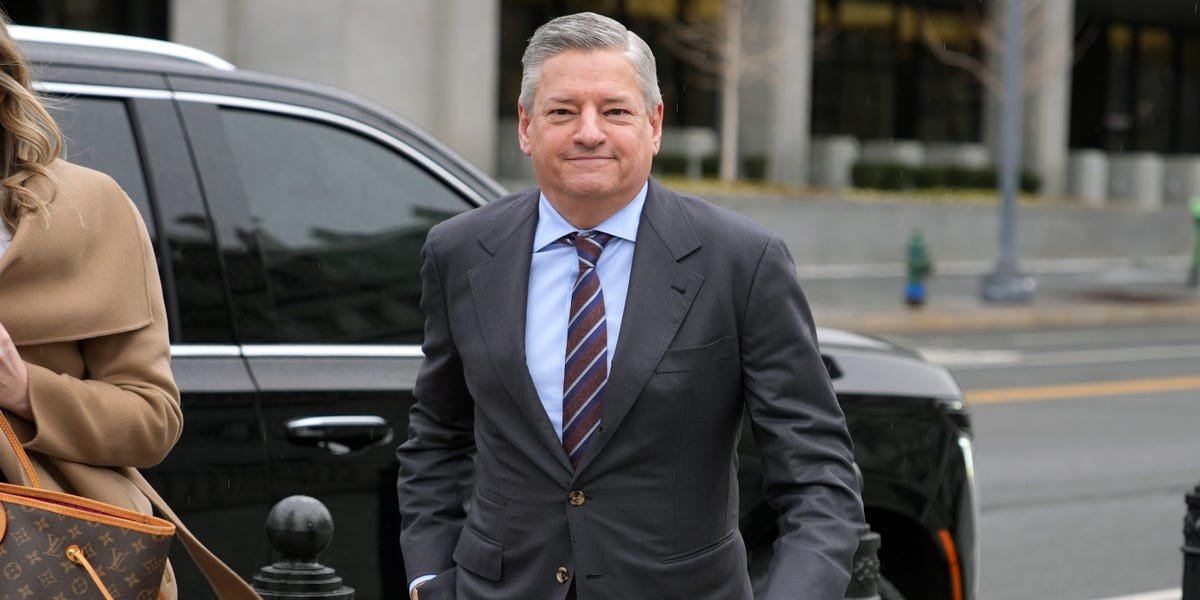
Netflix CEO Ted Sarandos says he bailed on WBD because of the deal’s price, not because of Donald Trump

Did Netflix walk away from Warner Bros. Discovery because of money? Or because of politics?

Money, says Netflix boss Ted Sarandos. Just money.

Sarandos, the streamer’s co-CEO, says Netflix pulled out of the WBD bidding war — ultimately won by Larry and David Ellison’s Paramount — because Netflix didn’t want to raise the price it would pay for WBD’s studio and HBO business.

The fact that the proposed Netflix/WBD deal was getting pushback from Republicans in Washington — and other regulators in the US and around the world — was not an issue, Sarandos said in an interview this weekend.

“I still believe in all the positives. I just believed in them up to $27.75 a share,” Sarandos told Bloomberg, referring to the price Netflix originally agreed to pay for WBD’s studio business and HBO unit in December.

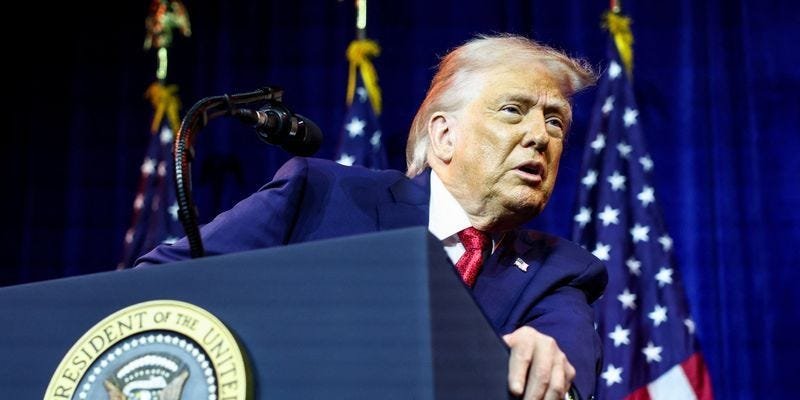
I don’t know that Sarandos’ argument will entirely sway those who think the Ellisons’ attempts to court President Donald Trump and other Republicans had an impact on Netflix’s calculus. David Ellison, for example, attended last week’s State of the Union address as the guest of Trump ally Sen. Lindsay Graham.

Adding fuel to those theories: Netflix announced that it was withdrawing from the WBD auction shortly after Sarandos visited the White House on Thursday. But Sarandos says nothing in that meeting had anything to do with his decision. “It was a very productive meeting, nothing out of the ordinary,” he said.

Instead, Sarandos said, Netflix had already decided to bow out earlier that day, as soon as WBD told the company that Paramount’s most recent bid was a “superior proposal.” Just about everyone in the media world expected Netflix to counter that offer with a new one of their own.

But asked repeatedly about what role Trump and any other politician had in his decision, Sarandos insisted that the answer was zero.

“Things have been going exactly the way they should,” he said, arguing that “the president stayed completely neutral on this.”

This is also what Sarandos had said for the last few weeks, when asked if politics and/or Trump’s preferences would influence the deal. That made sense at the time — why complain about politics at the same time you’re trying to woo politicians?

And it may continue to make sense, given that Netflix may end up back in Washington in the future, asking for a sign-off on a different deal. (Sarandos did say it was “unlikely” he would try to buy something else in the next year or so.)

But what about Trump’s interest in the fate of CNN, which is currently owned by WBD, and which will become part of Paramount, assuming the deal closes? Trump had previously announced that it was “imperative that CNN be sold”.

Follow that idea to its logical conclusion, and it would mean that Trump would favor the Paramount bid, since it was for all of WBD, including CNN. The Netflix bid didn’t include the news network or WBD’s other basic cable channels.

“Once it was clear that we weren’t in the CNN business, it was a lot less interesting. He didn’t care that much more about our deal,” Sarandos said.

I wanted to make sure I understood what Sarandos was saying: Was it that once Trump realized Netflix didn’t want to buy CNN, he didn’t support Netflix buying any part of WBD? Or was it that once Trump realized Netflix didn’t want to buy CNN, he became less interested in its outcome, period?

The latter, a Netflix rep told me Sunday.



Source link

Ellen Thomas Business Insider

President Donald Trump pitched a power fix that Big Tech has a head start in

The AI data center boom has triggered a dramatic spike in electricity costs, and President Donald Trump has a plan to stop it.

To do this, Trump said at Tuesday’s State of the Union address that he issued a mandate for data centers to build their own power plants.

Trump said he’d “negotiated” a ratepayer protection pledge with major technology companies and billed it as a unique solution to Big Tech’s mounting power demand that would also protect American consumers from higher electricity bills.

“They can build their own power plants as part of their factory,” Trump said.

Many data center sites have already started building their own power plants. The vast majority of this buildout will initially run on fossil fuels, despite tech giants’ clean energy commitments.

When reached for comment on Wednesday morning, a White House spokesperson gave the following statement: “Major Tech companies will join President Trump at the White House next week to formally sign the Rate Payer Protection Pledge that he announced during his historic State of the Union address. Under this bold initiative, these massive companies will build, bring, or buy their own power supply for new AI data centers, ensuring that Americans’ electricity bills will not increase as demand grows. President Trump is committed to ensuring American AI dominance while simultaneously lowering costs for working families.”

A spokesperson for Amazon confirmed to Business Insider that it will attend the White House next week.

“The Ratepayer Protection Pledge is an important step. We appreciate the Administration’s work to ensure that data centers don’t contribute to higher electricity prices for consumers,” Microsoft vice chair and president Brad Smith wrote in an e-mailed statement.

A spokesperson for Anthropic referred Business Insider to a post on X made last night by Sarah Heck, the company’s head of external affairs.

“American families shouldn’t pick up the tab for AI. In support of the @WhiteHouse ratepayer protection pledge, Anthropic has committed to covering 100% of electricity price increases that consumers face from data centers,” Heck wrote.

Microsoft, Anthropic, and OpenAI have previously announced commitments to covering the costs of electricity consumption at their data centers, though details on those plans remain scant.

Big Tech is building its own power plants

In the last year, on-site power plants fueled mostly by natural gas have emerged as a key strategy for data center developers looking to stay ahead in the AI race. Meanwhile, US power demand has reached record highs.

Utilities in the US last year asked state regulators to approve $31 billion in rate increases, more than double the amount sought in 2024, according to research from PowerLines, a nonprofit advocate for utility customers. Many of those requests occurred in places experiencing heavy data center development, such as Virginia, Texas, Utah, and North Carolina.

Trump has framed data center developers building their own power plants as part of his broader promise to ensure that Big Tech pays for the infrastructure needed to power AI ambitions. For developers, building an on-site power plant can bypass long wait times for a grid connection.

Elon Musk’s xAI is the most prominent example of this. Musk has drawn intense scrutiny in Tennessee and Mississippi, where he has deployed unpermitted mobile generators to quickly get his data centers up and running.

Musk brought his first mobile generators to Memphis in 2024. In the US, dozens of data centers — about 30% of all planned data center capacity in the nation — plan to build their own power plants, according to a report issued this month from Cleanview, a data visualization software company that tracks clean energy and data center projects. Nearly all of that planned capacity — 90% — was added in 2025, Cleanview found.

In a review of permit documents, corporate filings, press releases, and local news stories, Cleanview identified 46 data center projects, many of them already under construction, that plan to draw power “behind the meter” by building on-site, private power plants that don’t need a grid connection or service from the local utility to run.

These include Meta’s plans to build an on-site natural gas plant for its data center in New Albany, Ohio, as well as Oracle and OpenAI’s plans to power their Project Jupiter data center site in New Mexico with two massive natural gas-fired systems.

While Big Tech companies often tout their commitments to clean energy, Cleanview’s review of behind-the-meter permit documents found that natural gas powered 75% of all equipment listed.

Tech companies have said they want to power AI with clean technology, such as small modular nuclear reactors and geothermal energy. Much of it is still years away from being deployed at scale.

Texas is becoming the top state for new data centers

Cleanview found that more than one-third of the behind-the-meter buildout is happening in Texas, which could soon overtake Virginia as the data center capital of the world.

Business Insider has reported on Oracle and OpenAI’s plan to power Stargate data centers in Texas with on-site natural gas plants, as well as Fermi America’s pitch to build the world’s largest combined data center and power plant in the state’s Panhandle region.

After Texas, the top five states with the most planned behind-the-meter capacity are New Mexico, Pennsylvania, Utah, and Wyoming. West Virginia, Tennessee, Ohio, Virginia, and North Carolina also have significant behind-the-meter projects.

Have a tip for this reporter? Contact Ellen Thomas at ethomas@insider.com or on Signal at 929-524-6964.


Source link

Donald-Trump-says-Venezuela-would-give-30-to-50-million.jpeg

Donald Trump says Venezuela would give 30 to 50 million barrels of oil to the US, to be controlled by him

  • President Donald Trump announced a plan to import over 30 million barrels of Venezuelan oil to the US market.
  • Venezuela’s interim president, Delcy Rodríguez, has not commented on Trump’s proposal.
  • Trump is considering subsidizing oil companies to expand their operation to Venezuela.

President Donald Trump said he’s wasting no time when it comes to oil in Venezuela.

In a post on Truth Social on Tuesday, Trump said that the interim president of Venezuela will “be turning over” between 30 and 50 million barrels of sanctioned oil, and that the oil would be sold at market prices, with the revenue overseen by him as president to ensure it benefits both Venezuela and the US.

“It will be taken by storage ships, and brought directly to unloading docks in the United States,” Trump wrote on Truth Social.

He added that he directed Energy Secretary Chris Wright to carry out the plan “immediately.”

It is unclear if the plan will face legal hurdles, and further details are unknown. The White House did not immediately respond to a request for comments.

The current interim leader of Venezuela is Delcy Rodríguez, who was sworn in as acting president on January 5, 2026, after the US captured and detained the country’s former President Nicolás Maduro, alongside his wife. Rodríguez is a longtime Maduro loyalist and originally served as the Vice President of Venezuela. She has so far not spoken out on whether she would cooperate with Trump’s plan.

Trump’s comments build on his previous remarks that he would “take back” Venezuela’s oil reserves and revive the country’s battered energy sector, which has faced sanctions and mismanagement.

Trump also previously said in an interview with NBC News that the US could reimburse American oil companies for expanding their operations in Venezuela, but he did not have an estimate on how much the subsidy would cost.

Even though a larger supply could lead to lower costs for American consumers, the downward pressure on prices could disincentivize large oil companies from investing in Venezuela. It could also take years to build functioning infrastructure.

Venezuela’s oil production currently accounts for less than 1% of the global oil output, despite possessing the world’s largest known oil reserves.


Source link

Peter Kafka

Donald Trump’s shadow hangs over the call to kill a ’60 Minutes’ story

Ever since Bari Weiss arrived as the head of CBS News, people inside and outside the company have been waiting to see whether her politics — and those of CBS owner David Ellison — would show up in the journalism.

This weekend, they may have gotten their answer. Or they may not have.

And that uncertainty is the problem.

It’s possible Weiss had legitimate editorial concerns about a “60 Minutes” segment on the Trump administration’s use of El Salvador’s notorious CECOT prison. CBS pulled the segment abruptly before it was scheduled to air on Sunday evening. News organizations do periodically delay or spike stories.

But the reported details around this decision make it hard to take the explanation entirely at face value. And Weiss’s position — and the politics surrounding her appointment — mean that editorial calls like this one will always be read for hints of political bias.

The segment, reported by Sharyn Alfonsi, had been promoted by CBS ahead of Sunday’s broadcast and, according to multiple accounts, had cleared the network’s standard internal processes. A few hours before airtime, CBS News announced that the segment needed additional reporting and editorial work.

Alfonsi saw it differently.

“In my view, pulling it now — after every rigorous internal check has been met is not an editorial decision, it is a political one,” she wrote in a note to her co-workers. “We are trading 50 years of ‘Gold Standard’ reputation for a single week of political quiet.”

Weiss, meanwhile, told her staff Monday morning that she held the story because “it did not advance the ball,” and because it didn’t include on-camera comment from the Trump administration, which had sent hundreds of Venezuelans to the prison, where many were reportedly tortured. She had previously sent a memo to “60 Minutes” producers complaining that the report they’d made didn’t provide viewers with “the full context they need to assess the story.”

There are two big problems with those arguments: 1) Making them so late in the process of a long-running investigation, shortly before the air date, is guaranteed to raise eyebrows. And 2) arguing that a story about the Trump administration can’t air without on-camera participation from the Trump administration leads to a chilling endpoint: If the Trump administration doesn’t want a story to run on “60 Minutes,” it can kill it by not showing up on camera.

Now, add in the environment Weiss stepped into. She arrived at CBS News through a deal engineered by Paramount’s owners, the Ellison family, at a moment when the Ellison family is deeply enmeshed with the Trump administration.

David Ellison’s father, Larry, who funded his son’s acquisition of Paramount, controls Oracle — which just got approval to acquire part of the US operations of TikTok, in a deal the Trump administration negotiated with the Chinese government. And the Ellisons are also trying to get Trump to favor their bid to buy Warner Bros. Discovery — a deal that would require approval from the Trump-controlled Department of Justice, as well as other regulators.

Trump, meanwhile, has already been complaining about “60 Minutes” under Ellison’s ownership. “For those people that think I am close with the new owners of CBS, please understand that 60 Minutes has treated me far worse since the so-called ‘takeover,’ than they have ever treated me before,” he posted on his Truth Social platform last week.

None of which proves that politics drove Weiss’ decision. And it’s understandable if the way “60 Minutes” used to work isn’t the way Weiss wants it to work — she’s the new boss, and she has spent much of her career complaining about big media institutions like “60 Minutes.”

But it explains why people are wondering if Weiss’ call was directly, or indirectly, influenced by her owner and his political status. I’ve asked Weiss for comment; a Paramount rep declined to comment.

What we do know is this: The decision was made inside a system where the people who own the newsroom need things from a president who wants leverage over the press.

In that world, suspicion isn’t paranoia. It’s a rational response to how power works. And it’s not something Weiss can fix, explain away, or out-communicate.


Source link