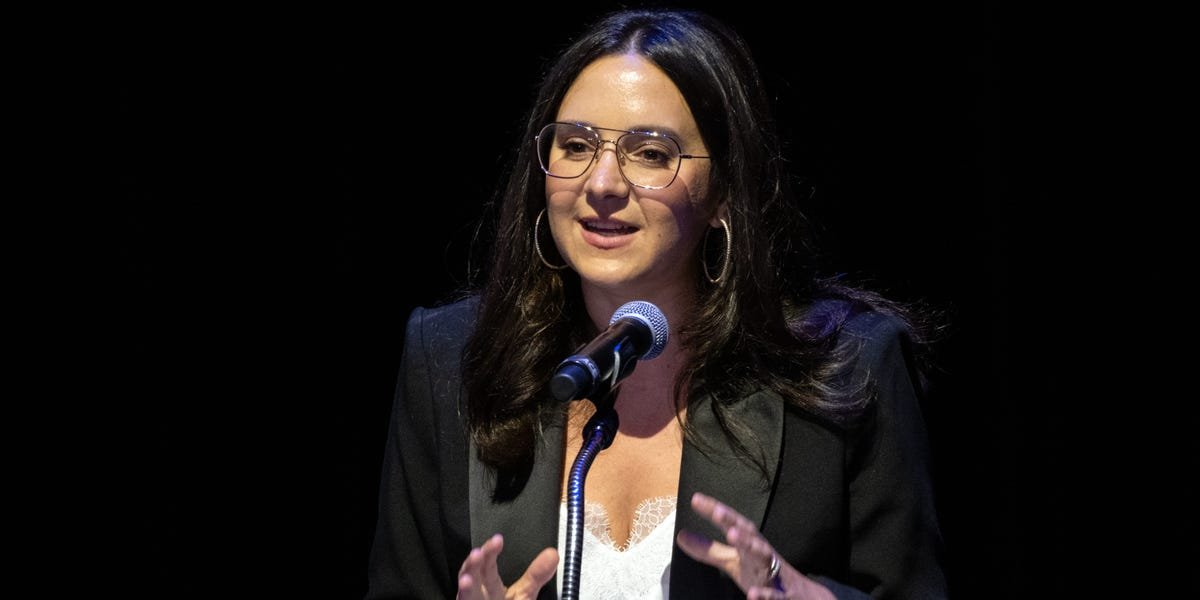
CBS News is planning to shed dozens of staffers as top editor Bari Weiss reshapes the storied broadcast network, Business Insider has learned.
The network plans to announce the layoffs imminently, a source with direct knowledge told Business Insider.
Weiss foreshadowed these cuts some weeks ago, telling CBS News employees at a late-January all-hands meeting that a “tsunami of technological change” could force staffing changes at the network.
“I can’t stand up here and tell you that in a moment of incredible transformation that that’s not going to mean transformation of our workforce,” Weiss told staffers at the town hall.
When asked about specific personnel changes at the town hall, Weiss said CBS needs to shift away from undifferentiated “commodity news” toward exclusive reports that people “can’t get anywhere else.”
“If you can get what we’re selling in five other places, in 10 other places, in 100 other places — that’s probably not a thing we need to double down on,” Weiss said.
Eleven employees on “CBS Evening News” took buyouts last month as former “CBS This Morning” cohost Tony Dokoupil became anchor, multipleoutlets reported. Business Insider could not independently confirm the figure.
CBS Newsis also growing in certain areas. The broadcast network brought on over a dozen new contributors in January, and Weiss has said she’s looking to hire more people who can help CBS transform into a digital-focused company.
“Our strategy until now has been to cling to the audience that remains on broadcast television. I’m here to tell you that if we stick to that strategy, we’re toast,” Weiss said in late January.
Weiss was hired by Paramount Skydance CEO David Ellison to shake up CBS News, whose ratings have long trailed broadcast peers ABC and NBC.
The former New York Times editor, who founded anti-establishment news site The Free Press, was a polarizing choice for the top spot.
Her decision to delay a story that criticized President Donald Trump’s deportation efforts, as Paramount tried to buy Warner Bros. Discovery, prompted backlash inside and outside CBS News. In response to a question from a staffer about political bias, Weiss said she’s not “a mouthpiece for anybody.”
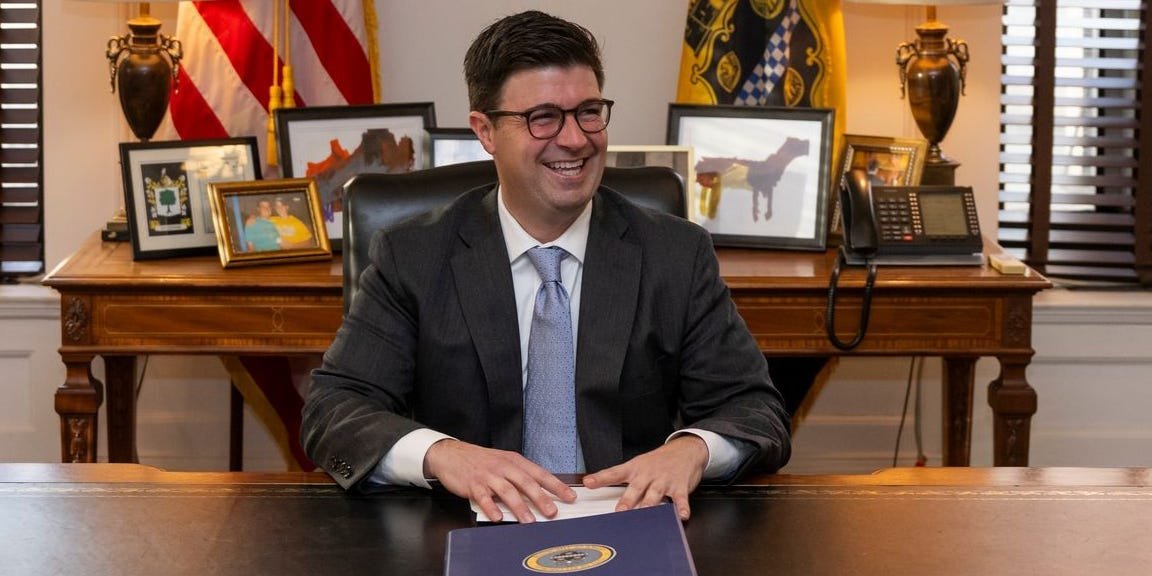
Pittsburgh’s new mayor is personally cold-calling upwards of 20 founders and CEOs across the country every week to check in on them, or to convince them to move to his city.
“Some people think it’s a prank call, but for others, it’s like, ‘wow, the mayor of Pittsburgh just called,'” said Corey O’Connor, who estimates he has called around 150 people since taking office in January. “If you’re already here, I ask, ‘How can we help you expand?’ If you’re not here, I ask ‘How do we get you to come to Pittsburgh?”
Pittsburgh has historically been known as “the Steel City” and is home to the Pittsburgh Steelers. O’Connor’s father worked as a steelworker before a long career in city politics. However, as O’Connor is quick to point out, there are no longer any steel mills within city limits, while the area is home to some of the most important startups in the U.S.
After predictions of its waning influence during the Covid era turned out to be wildly off, the Bay Area’s tech scene is now hotter than ever, largely thanks to AI. That has not stopped smaller cities like Miami and Austin from trying to grab VC dollars, especially as the cost of living in California skyrockets. Now, Pittsburgh would like to be the next Miami.
Its startups raised $1.48 billion in 2025, still a fraction of major tech hubs, but the region’s strongest venture capital year since 2019, according to PitchBook.
Standouts include Gecko Robotics, valued at $1.7 billion, which builds wall-climbing robots that inspect critical infrastructure, including power plants and industrial facilities. Abridge, valued at $5.3 billion, uses artificial intelligence to automatically generate medical documentation from doctor-patient conversations. It has emerged as one of the most closely watched AI companies in healthcare.
The most high-profile is Skild AI, which is developing foundation models for robotics, training AI systems that allow machines to operate more autonomously in real-world environments. The company raised $1.4 billion in a deal led by SoftBank Group and Nvidia in January, pushing its valuation to $15 billion, according to PitchBook.
“Our goal is to change the narrative,” O’Connor said, adding he will use every opportunity he can get to tout the city’s tech potential, especially as the spotlight will be on Pittsburgh as it prepares to host the NFL Draft in April.
Deep-seated roots in AI and robotics
The city’s AI and robotics credentials stretch back decades. In the 1960s, Carnegie Mellon professors began groundbreaking research in AI. In 1979, the first robotics institute at a U.S. university was started at CMU.
The challenge is keeping the most talented graduates from bolting to Silicon Valley.
“I’m constantly going to meet kids on campus,” O’Connor said.
Affordability is a key selling point. The median price for a single-family home in Pittsburgh and surrounding Allegheny County is 42.3 percent below the national average.
O’Connor is also trying to streamline the city’s permitting process to make it easier for tech companies to expand.
“We can get you a permit in four to five weeks, so you don’t have to wait through the government bureaucracy,” he said.
In January, Factify, a Tel Aviv-based digital document startup, said it plans to expand its presence in Pittsburgh and use the city as a major hub for customer engagement and operations.
Asked if he has successfully convinced any companies to move to Pittsburgh, O’Connor said not yet, but he is focused on the long game.
“They’re going to at least tell 10 friends that the mayor of Pittsburgh called,” he said. “That creates a buzz about the city.”
My 17-year-old daughter told me that she’d been offered a special deal at the Verizon store: access to Apple Music for up to six people for $10 a month. She was desperate to take advantage of the promotion and said the streaming service had an amazing selection of songs.
I said no, not only because we have Spotify, but also because I’d had a rude awakening after New Year’s.
My husband and I were worried about how much we were charging to our credit cards, especially during the holiday period.
We decided to do a financial tune-up, and I was responsible for reviewing the Mastercard statement. We only used it as a secondary payment method if a merchant didn’t accept American Express.
I thought I’d been subject to fraud
As a result, I rarely looked at the bill. This time, however, I printed the statement covering November 11 to December 12, 2025, when we did most of our Christmas shopping.
Every time Jane publishes a story, you’ll get an alert straight to your inbox!
Stay connected to Jane and get more of their work as it publishes.
There were a few transactions for items like coffee at a little café that doesn’t take Amex and some co-pays for doctors’ visits, but there were others I didn’t recognize.
What on earth was Uexton? I’d paid them $19.99 on November 11. Then there was Sportelx, to whom I’d paid $29.55 on November 21. I’d never heard of it.
I Googled to find that Uxeton was a gaming website and Sportelx was a sports news service.
I’d been a victim of fraud on several occasions, and assumed it had happened again.
The author accidentally signed up for services she never used.
Lam Kraker/Business Insider
Then, I looked over the rest of the bill and saw payments of $29.99 to ESPN New York, $14.99 to Canva, and $11.95 to Audiobookstore.com. As far as I was concerned, neither my husband, kids, nor I had used any of them.
There was also a $25 fee to Rockin’ Jump, where my son went once a week before getting too old for a trampoline park. Why were we still paying for his membership?
I reviewed the last two months’ statements and realized the suspicious payments had occurred before, on the same day each month.
It wasn’t fraud. The recurring fees were subscriptions we’d signed up for before switching banks and credit cards. Some went back years. We had failed to cancel Rockin’ Jump. I didn’t know how the rest had come about.
Over the next few hours, I racked my brains trying to figure out where they came from. The only thing I could think of was that my spouse or I must have shared our credit card information at some point to get a trial subscription.
We’d wasted almost $1,600 annually
We must have forgotten to cancel at the end of the free or discounted period. The total of our unnecessary payments was $131.88 a month, the equivalent of a family cellphone plan.
Over the years, I calculated that we’d spent almost $1,600 annually on streaming and other services we didn’t touch. It was hard to blame the companies that use subscription models when I had been the one to drop the ball. I felt dumb and ashamed.
I sprang into action, canceling as many fees as I could. In most cases, I found it much more difficult to unsubscribe than to subscribe because of the hoops you have to jump through.
Still, the experience taught me a lesson. It’s no thank you to tempting — but ultimately useless — offers from now on.
What do Timothée Chalamet, Ariana Grande, Sabrina Carpenter, Addison Rae, and Blackpink’s Rosé have in common?
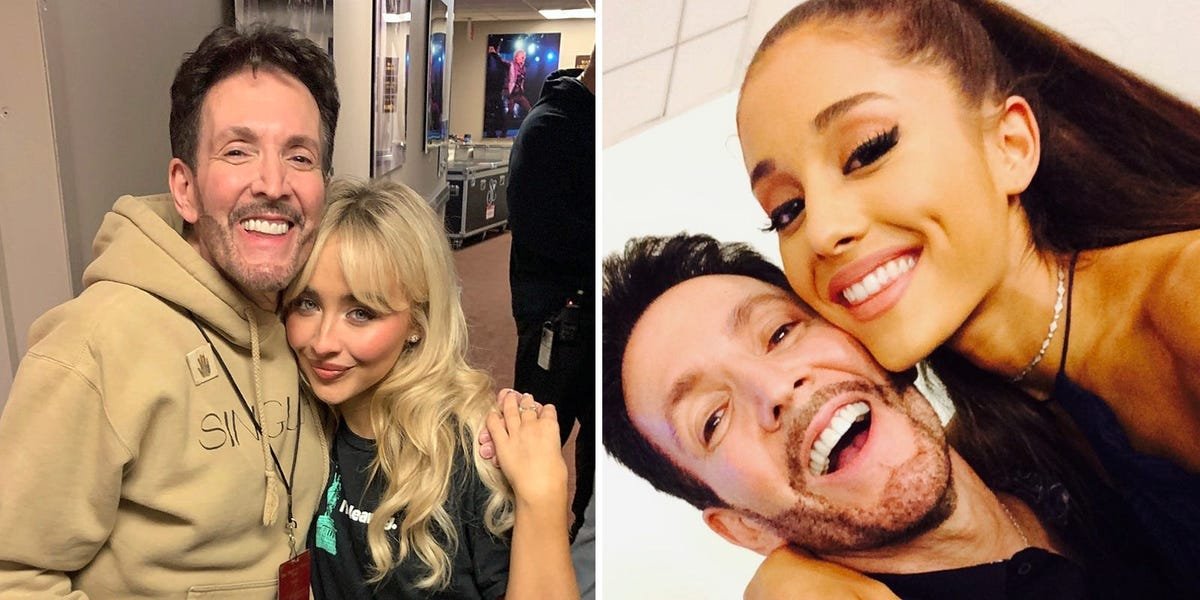
They’re all nominated for Grammy Awards this year, and they’ve all worked closely with the same vocal coach: Eric Vetro.
In an industry that runs on pomp and publicity, Vetro is the man behind the curtain shaping the voices of some of Hollywood’s biggest stars. Over the decades, his A-list roster has grown largely by word of mouth, with happy students across all genres recommending him to friends and coworkers.
In addition to counting many of today’s biggest pop stars like Grande, Katy Perry, and Carpenter as clients, he’s been involved in over 40 feature films, training actors like Chalamet, Angelina Jolie, and Jeremy Allen White to emulate musicians like Bob Dylan, Maria Callas, and Bruce Springsteen. He’s done his time coaching rock singers (Meat Loaf, Weezer’s Rivers Cuomo), Broadway stars (Bette Midler, Kristin Chenoweth) and Oscar winners (Emma Stone, Renée Zellweger). He even got a shoutout in an Ariana Grande lyric in her 2019 single “Monopoly” (“I never track my vocals, so shout out to Eric Vetro / I love Eric Vetro, man”).
Vetro’s vocation may keep him in close proximity to the limelight, but he’s never wanted to step into it himself, preferring to play his coaching role with a proudly gentle touch. Being a vocal coach, he said, is as much about building confidence and managing his famous clients’ stress as it is about delicately giving feedback when they don’t hit the high notes.
“I’m pretty good at delivering a negative in a way that they know I’m only doing it because I care about them,” Vetro explained. “A lot of times I say to people, look, I’m going to be honest with you because I don’t want you to come back to me later and say, ‘You told me I was doing a great job, but I really wasn’t,’ or, ‘You said I sounded great on this song, but I really didn’t.'”
“Most of them are pretty open. They want to hear what can make them sound better,” he added. “I’m not really interested in working with someone who’s just phoning it in.”
Vetro himself certainly isn’t. His job has seen him huddled in public bathrooms with pop stars (for better acoustics, of course) and ferried to LAX at 6 a.m. to run vocal warmups with a client as soon as they deplaned. Once, he had a session with Julia Louis-Dreyfus in the middle of a poison ivy patch while she was filming the 2000 musical “Geppetto.”
Despite the ever-frenzied logistics, Vetro said he loves his job now more than ever.
“I wouldn’t have it any other way,” he said.
Ahead of the 2026 Grammys, Vetro spoke to Business Insider about what it’s like to teach, critique, and win affection from some of the biggest names in show business.
On managing the stresses and vulnerabilities of A-list stars while giving honest feedback
Ariana Grande performs at the 2024 Met Gala.
Kevin Mazur/MG24/Getty Images for The Met Museum/Vogue
You work with a lot of people on the cusp of something big — a movie, a tour, a performance. How much of your job is stress management?
Well, picture singing at the Grammys, which is live. So if they screw up, that’s not good. Or the Oscars. That’s live, so if they make a mistake, that’s not good.
So a lot of it is stress management. But I try to think of all the things that the person needs, and then I try to fulfill all of those needs in every session that we do.
I try to get them to really learn how to use their voice the best way they possibly can, how to warm up their voice the best way they possibly can, how to find the correct placement for the song that they’re going to be singing, or songs that they’re going to be singing. But also how to stay grounded, how to stay relaxed.
It’s kind of like a holistic approach. What they eat and drink is going to affect how they sound, how much sleep they get is going to affect how they sound, the environment they’re in. It might be very dry, so they need to have a humidifier going, or they might have to make sure they have a personal steamer with them, depending on how much hydration they get. It entails a lot of different things. So I just try to fit all of that in as much as I can.
What have you learned about what it’s like to be famous through working with some of your students?
I’ve learned it’s exhausting. It’s intrusive. It can be really fun and wonderful, but it also makes people much more self-conscious because they don’t want to get caught looking their worst. They don’t want to get caught tripping, looking foolish.
Sometimes they just want to be with their friends alone. And how often can you really do that? You might be in a city and go, “I just want to take a walk up and down this strip where there are some great stores,” or, “I’ve heard this is a really fun walking path.” Well, how can you just be yourself when people are taking pictures of you? And not just paparazzi now. It’s anybody.
Eric Vetro with Jeremy Allen White.
Courtesy of Eric Vetro
You necessarily see a vulnerable side of very famous people, because it’s vulnerable to sing in front of someone — especially if you’re tired, if you’re doing it a cappella, if your voice may be a little strained.
I do, but I get also a really sweet, wonderful side, people who are so appreciative. I don’t have any bad stories. I couldn’t sell a bad story about someone. I’ve had such great experiences with people — and most of them, when you really get to the heart of things, are pretty humble. Even the biggest stars are the most humble, and they aren’t arrogant about what they do.
A lot of people come across much more confident and assured on camera when they’re doing an interview, because that’s basically what’s expected of them. The fans want them to be that way. But in person, when we’re just alone, they’re really very sweet people who want to do the best job they can, who don’t want to disappoint. They don’t want to disappoint their family. They don’t want to disappoint their teams, and they don’t want to disappoint their fans. So they’re working really hard to do the best possible job they can.
I used to have this image in my head of a pyramid: all the bricks on the bottom of the pyramid represented agent, manager, labels, choreographers, vocal coaches, stylists, hair, makeup — all these people holding this one person up, whether it’s an actor or a music artist, at the top. That’s how I used to see it before I really worked in the “big time” or the professional realm.
Now I see it as completely opposite: The person who is the artist or the actor is at the bottom, holding up all of this. Because without that person, none of these people have jobs. So they have to be successful in order for all these people to have jobs, and people feel that. They feel the pressure of making sure their team is taken care of, making sure their team has work.
On Sabrina Carpenter’s work ethic and helping Timothée Chalamet sing like Bob Dylan
Eric Vetro with Rosé and Addison Rae.
Courtesy of Eric Vetro
I’m so glad Addison Rae is nominated for best new artist at the Grammys. Since she came from the TikTok world, what was something you focused on to develop her voice as someone who wasn’t known as a singer before?
My main focus with her was just to get her to understand her voice, so that she would know how to sound like she wanted to sound.
She was working with two excellent female songwriters. They all were on the same page with everything, and especially after I heard “Diet Pepsi,” I was like, “Oh, OK. I completely get what they’re going for.” So now, let me try to keep working with her to be able to have her voice sound the best it can — in that world, in that sound, in that genre, keeping that vibe.
Addison has a phenomenal personality, and she also has a very creative mind. I think if you watch any of the videos of her performing, you go, “Oh, this is very specific to her.” Addison has her own thing going on, and so I just wanted her to feel confident when she got onstage that she could sound like the album.
Timothée Chalamet is also nominated for a Grammy for the “A Complete Unknown” soundtrack. What’s the biggest difference between training someone who is trying to emulate a certain singer versus somebody who is singing as themselves?
I start out basically the same with both, just trying to teach them how best to use their voice, how to understand their voice, vocal exercises to strengthen their voice, to increase their range.
Then we start listening, and I try to get them to really listen: What are the characteristics that make this singer special? Is it the way they pronounce a word? Is it the way they attack a note? We start really discovering the essence of these singers that they’re going to emulate — not as a carbon copy, because a carbon copy then becomes an impersonation.
With Timothée Chalamet, it’s like, why did Bob Dylan sound a certain way? And then when you look at him, you go, oh, well, he had a certain posture about him. You can see maybe his leg twitching a little or tapping on the beat. Whereas Joan Baez was very aggressive in her tone. So I would say to Monica Barbaro, who was playing Joan Baez, why do you think it was so aggressive? Do you think it was just, that was her naturally? Or maybe she felt like she had to be a woman in a man’s world, especially in those days? Or is it because the subject matter she’s singing about is so powerful to her and so strong, and she wants to get it across?
So then you start thinking why they are singing a certain way. That’s a better way to capture the essence of them organically.
Timothée Chalamet as Bob Dylan in “A Complete Unknown.”
Macall Polay/Searchlight Pictures
If I’m working with a singer who just wants to sound like themselves, then I start by saying, what do you think is special about your voice? What do we want to bring out about it? Or what is it you want to sound like?
I usually ask, if someone is listening to you in a concert, what do you want them to walk away with? How would you want your voice to be described? That’s a huge question to ask. Sometimes they haven’t even thought about that, and they might think, oh, I want my voice to have a really warm tone, or I want to have a tone that they can relate to, so they can relate to what I’m singing about.
Another big nominee this year is Sabrina Carpenter. I know that you two have worked together for a long time. From the perspective of someone on the inside, what would you say is most notable about her growth over the last couple of years?
Sabrina worked so hard for so many years. She’s one of those performers that, kind of like Ariana, once they get on a roll, they know what they’re doing. Once they find their voice, find out how they want to sound, what they want their vibe to be, what they want their performances to look like and sound like, they just get on a roll, and then it’s almost like a freight train. It just goes.
Sabrina has really honed in on having the best possible time being authentically herself, and I think that that’s what’s so great. She takes episodes out of her own life and puts them into her music, and she’s been doing that for a long time, but I think she just keeps getting better and better and better at it.
That’s the thing about someone who’s continually doing it. Now, if they’re the type of person who takes big vacations, big chunks of time off in between, I don’t think you can have that momentum, but these girls don’t take time off. They’re constantly moving and doing things. You might not see what they’re doing because they’re prepping for something else or prepping for something for the future, but she’s working all the time. She is the least lazy person on the planet.
It sounds like a big part of your job is focused on longevity, making sure people keep their voices healthy through the craziness.
I focus a lot on that. I think that’s so important. I don’t want anyone to burn out, or miss a really great opportunity, or to sing incorrectly, then get a vocal nodule, then have vocal cord surgery, then lose several months out of their life. I try to avoid that at all costs.
I say this every year, so I think people probably go, “Yeah, right,” but I enjoy it more now than ever. I keep enjoying it more as I get older.
I feel like I’m more empathetic than I’ve ever been, because I really understand how difficult it is.
This interview has been edited and condensed for length and clarity.
The year 2026 is just getting started, and layoffs are already underway.
Companies, including Angi, the company formerly known as Angie’s List, and the popular web tool Tailwind, have cut staff, citing the impact of artificial intelligence among the reasons for the layoffs.
More than 100 other companies, from Amazon to Nike to Verizon, have filed legally mandated WARN notices about job cuts to come in 2026, according to WARN Tracker. Some of the cuts are part of previously announced reductions.
This year’s cuts follow three years of significant workforce reductions across a broad range of industries, including tech, media, finance, and retail.
The moves come as artificial intelligence, public policy, and broader economic conditions present sweeping changes to the business landscape.
A World Economic Forum survey last year found that some 41% of companies worldwide expected to reduce their workforces in the next five years because of the rise of artificial intelligence. The survey also found that jobs in big data, fintech, and AI are expected to double by 2030.
Last year, Business Insider tracked layoffs at around 65 major companies, such as Amazon, Meta, Paramount, and Starbucks. In 2026, we’ll continue to track additional job cuts based on company announcements, WARN notices, and our own reporting.
Here are the companies with job cuts underway in 2026, listed in alphabetical order.
Angi is cutting 350 jobs
Angi, a contractor listing platform, was previously known as Angie’s List. Donald King/AP
Angi, the popular contractor listing site once known as Angie’s List, said in January that it was cutting around 350 jobs “to reduce operating expenses and optimize the organizational structure in support of long-term growth.” The company also said it’s making the cuts “in light of AI-driven efficiency improvements.”
In a January 7 SEC filing, Angi said that the cuts would save between $70 million and $80 million in annual spending. The layoffs will cost the company between $22 million and $30 million, according to the filing.
Citi’s job cuts continue this year
Citibank said it will continue to cut jobs in 2026. Kevin Carter/Getty Images
Citi will cut more jobs this year as part of its plan to reduce its workforce by 10%, or 20,000 employees.
In a statement on January 13, the bank said that it will continue to reduce head count in 2026.
“These changes reflect adjustments we’re making to ensure our staffing levels, locations and expertise align with current business needs,” a spokesperson for Citi said.
The plan was detailed in the company’s January 2024 earnings report and could save the bank as much as $2.5 billion.
Meta is preparing for layoffs
Meta is preparing to slash jobs within its Reality Labs division as the branch’s cash burn continues. Joan Cros/NurPhoto via Getty Images
Meta is preparing to slash jobs within its Reality Labs division, the unit responsible for Mark Zuckerberg’s metaverse ambitions, three people familiar with the matter told Business Insider.
Two employees said that teams working on virtual reality headsets and Horizon Worlds, the company’s VR social network, will be disproportionately affected. The New York Times reported that roughly 10% to 15% of the division’s 15,000 employees are expected to be laid off, with announcements coming as soon as this week.
The cuts coincide with a high-stakes division-wide meeting scheduled for Wednesday. Meta’s CTO and Reality Labs chief Andrew Bosworth described the upcoming gathering as the “most important” of the year and urged employees to attend in person.
Tailwind cut 3 of its 4 engineers
Tailwind, a popular web tool, said it cut three of its four engineers in January, citing an AI-driven decline in revenue.
“75% of the people on our engineering team lost their jobs here yesterday because of the brutal impact AI has had on our business,” CEO Adam Wathan wrote in a GitHub comment on January 6 that made waves in the tech community.
Is your company conducting layoffs? Got a tip?
Using a non-work device and an encrypted messaging service is recommended when contacting reporters. michnik101/Getty Images
Have a tip about company layoffs? Contact Business Insider reporter Dominick Reuter using a personal email address, a non-work WiFi network, and a non-work device;here’s our guide to sharing information securely.
I travel often — at least once a month — and I like having access to Delta Sky Clubs through my co-branded Delta credit card and Priority Pass, a membership that gets me into more than 1,500 airport lounges worldwide.
These two programs usually allow me to find a lounge I can use regardless of the airport I’m at or the airline I’m flying.
I enjoy using airport lounges because they’re usually quieter and less crowded than waiting at the gate. I also like having access to a nicer, less-crowded restroom, and of course, the complimentary food and beverages are pretty sweet, too.
As a frequent traveler, here are five things I never do in an airport lounge.
Plop in the first seat I see
Most airport lounges have a variety of seating, from desk-like workspaces with electrical outlets to comfortable upholstered couches you might find in a living room.
Every time Jill publishes a story, you’ll get an alert straight to your inbox!
Stay connected to Jill and get more of their work as it publishes.
I don’t pick the first open seat I see unless the lounge is super crowded and I feel as if it’s my only option. Fortunately, I can usually gauge how crowded a lounge is by the presence of a line at the entry.
A lot of lounges I’ve visited don’t allow new visitors when they’re close to capacity, so finding a seat is usually not an issue.
If I’m not familiar with a lounge’s layout, I’ll take a lap to see all the available seating. I love a comfortable chair with built-in USB ports so I can charge my phone, so I’ll look for that type of seating first.
I also like to sit away from the buffet, bar, and restrooms so I can have as quiet an atmosphere as possible.
Stuff my face like food is going out of style
Many airport lounges offer buffets.
Jill Robbins
Food varies widely from lounge to lounge, from chef-curated menus to bowls of trail mix and grab-and-go snacks, but there are typically plenty of hot food offerings.
They can be tempting, but I don’t have that “it’s free, and it’s there” mentality, so I won’t load up my plate unless I’m starving or know I won’t be eating for a while. I don’t want to feel too full or bloated before a long flight.
The bar is always a happening spot for travelers, but I take it easy on the alcohol some lounges give out for free.
I might have a drink once in a while, but I don’t want to get dehydrated before a long flight or lose my inhibitions to the point where I’m not watching my belongings or the time.
Snooze
Even if I’m tired and a lounge has comfy, reclining chairs, I don’t sleep in airport lounges. I’m always too nervous I’ll miss my flight.
I’ve never had a lengthy layover during which I was thatexhausted, plus most lounges have time limits on how long people can be inside them.
Getting off my feet and relaxing is usually enough of a break if I’m tired.
Be inconsiderate of other lounge guests
Airport lounges are public spaces.
Jill Robbins
Unless a lounge is virtually empty, I don’t take up more than one seat or put my backpack on its own chair. I get frustrated when I’m looking for a seat, but many are unavailable because people are using them as storage.
Using headphones is also a cardinal rule in airport lounges, although I often see people being inconsiderate by streaming or using FaceTime without them.
I also wouldn’t engage in some behaviors I see in lounges that I find gross, such as removing shoes to put bare feet on airport furniture or taking care of personal grooming — like clipping nails — outside a restroom.
Lounges provide a comfortable, home-like environment, but I try to remember that they are public spaces. I wish other people would, too.
Go to another terminal in the airport to use a lounge
As much as I love using an airport lounge, I won’t go too far from my gate to use one.
Jill Robbins
I love having lounge access, but I won’t leave my flight’s terminal to seek one out unless my layover is at least two hours long.
Even then, I hesitate to go unless I’m familiar with the airport. I never want to miss a flight just because I wanted some extra comfort before it.
This story was originally published on July 25, 2024, and most recently updated on December 18, 2025.