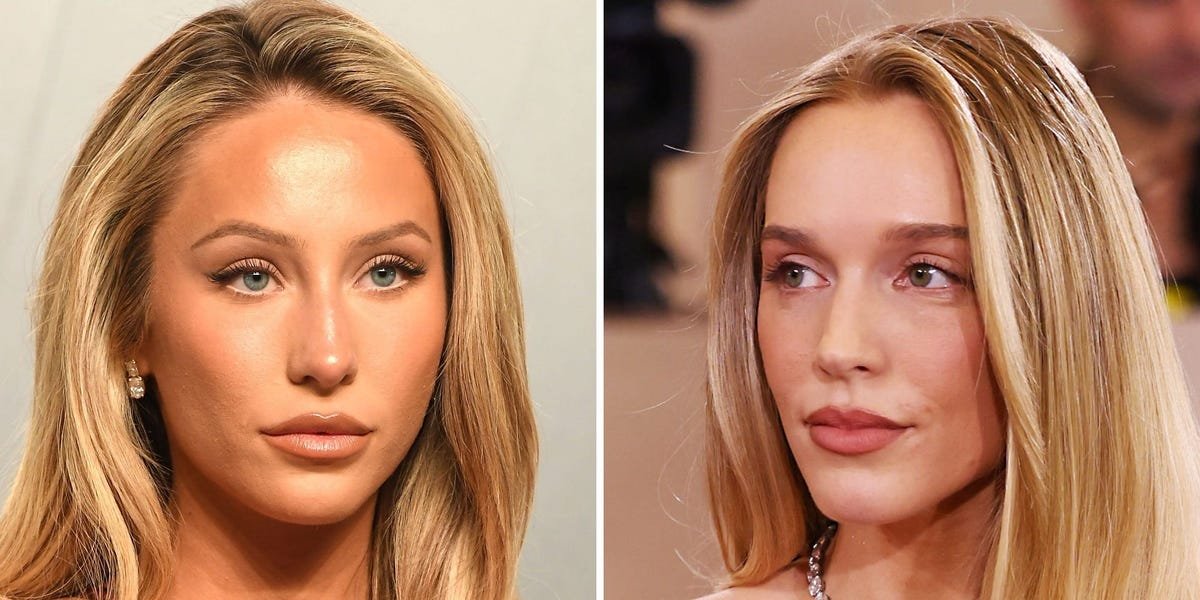
The-Alex-Cooper-Alix-Earle-drama-is-more-than-just-influencer.jpeg

The Alex Cooper-Alix Earle drama is more than just influencer beef

It’s an Alex/ix off.

There’s drama between two of the biggest personalities in digital media: Alex Cooper and Alix Earle.

Whether you’re obsessed or oblivious, there are real business implications at stake. Let’s break it all down.

What’s going on? This week, Cooper posted a video calling out Earle, who used to work for her, for reposting a not-so-nice TikTok about her. (It referred to Cooper as an “ambulance chaser,” among other things.) Cooper encouraged Earle to “say what you got to say about me,” to which Earle commented, “Okay on it!!” The collective internet is now losing its mind as we all await Earle’s response.

So what if influencers are fighting? Just calling these two “influencers” is like calling Niagara Falls a cute waterfall. They command massive audiences and cut major business deals.

The beef also highlights the tension that influencer- and creator-founded media companies face, including managing talent with their own brands.

And it translates beyond the influencer world. In business, there are plenty of examples of top talent feeling they’ve outgrown the companies they work for.

The demand for AI specialists only amplifies that risk. Imagine if Meta’s AI wunderkind Alexandr Wang (playing the Earle role) left and took subtle shots at Mark Zuckerberg (Cooper) until Zuck finally called him out. (Don’t worry. They’re best buds.)

What’s the back story on the Alex(ix)s? Cooper’s been a household name in media for a while. She founded the Unwell Network, which includes her popular “Call Her Daddy” podcast and is in the middle of a three-year, $125 million deal with SiriusXM. She’s also got an electrolyte beverage with Nestlé called … Unwell Hydration. (Gotta stay on brand.)

Earle’s “get ready with me” TikToks took off around 2022. She’s built a reputation for quickly selling out products she mentions and recently launched a skincare brand, Reale Actives.

(And yes, in addition to almost sharing a name, they also look eerily similar.)

What’s the tea on their bad blood? Back in 2023, the Unwell Network signed Earle to host her own podcast, “Hot Mess.” Less than two years later, the podcast was dropped. Earle took a slight jab at how things went down in a 2025 interview. There’s been speculation that the two don’t get along, but this is the first time they are openly taking shots at each other.

What are the chances this is some marketing ploy? That theory’s been floated, but it feels like a stretch considering their not-so-great history together. These people do thrive on content — Earle posted her reaction to waking up to see the initial Cooper attack — so you can’t put anything past them. If it’s all fake, feel free to call me a sucker.

Who’s winning the beef? Earle’s indirect attacks have played into a narrative that Cooper is a “mean girl.” Others argue it’s mislabeling Cooper for just being a tough businesswoman. It also depends largely on who you ask. Earle, 25, skews toward Gen Z, while Cooper, 31, is a millennial.

Let us know who you’re backing: Vote here



Source link

Chong Ming Lee, Junior News Reporter at Business Insider's Singapore bureau.

Jensen Huang says Nvidia would love to back an OpenAI IPO, and there’s ‘no drama’ with Sam Altman

Jensen Huang says Nvidia would love to invest in a future OpenAI IPO.

Huang said in an interview on CNBC’s “Mad Money” on Tuesday that there was “no drama” between Nvidia and OpenAI CEO Sam Altman, pushing back against recent chatter of tension in the relationship between the two companies.

“The first deal is on,” the Nvidia CEO said, referring to the company’s September deal with OpenAI, under which the company said it planned to invest up to $100 billion in the AI startup.

“​​And then there’s, of course, an IPO in the future,” he added. “We love to be participating in that as well,” he added.

Huang also described OpenAI as a “once in a generation company” and said Nvidia is “delighted to invest in it.”

His comments come amid reports suggesting internal unease around the deal.

The Wall Street Journal reported on Saturday that the investment had sparked internal concerns at Nvidia, with some executives questioning the deal, according to people familiar with the matter.

Separately, Reuters reported on Tuesday that OpenAI had been unhappy with certain newer Nvidia chips and had looked at alternatives since last year, citing people familiar with the matter.

Huang told reporters in Taipei on Saturday that speculation of any dissatisfaction with OpenAI was “nonsense.”

“We will invest a great deal of money, probably the largest investment we’ve ever made,” he added.

Altman has also pushed back on rumors of tension.

“We love working with NVIDIA and they make the best AI chips in the world,” wrote Altman in a post on X on Tuesday.

“We hope to be a gigantic customer for a very long time. I don’t get where all this insanity is coming from,” he added.

OpenAI is one of the world’s most valuable private AI companies and a major customer for Nvidia’s chips, which power the training and deployment of large language models.

The startup has not announced plans for an IPO, but its fundraising and computing needs have fueled speculation about how it will finance future growth.

“Big Short” investor Michael Burry said in a Substack exchange in January that he was surprised that ChatGPT “kicked off a multi-trillion-dollar infrastructure race.”

“It’s like someone built a prototype robot and every business in the world started investing for a robot future,” he wrote.


Source link

Lucia Moses

Disney-backed DramaBox is seeking new funding as it tries to win the micro drama race in the US

The battle to become the top micro-drama app in the US is heating up.

DramaBox, one of the leading producers of the short-video format filled with soapy tropes, has been seeking fresh funding from US backers, according to two people with direct knowledge of its efforts.

One said DramaBox’s fundraising goal was $100 million with a $500 million valuation.

DramaBox is part of Singapore-based StoryMatrix, and is behind titles like “A Deal with the Hockey Captain” and “The Lost Heir: A Christmas Reckoning” that it monetizes through one-off payments, subscriptions (usually $20 a week), and ads.

DramaBox did not respond to multiple requests for comment.

Executives at DramaBox told Business Insider in September that the company was profitable and that their ambition was to become the most popular micro-drama platform for Americans. They aimed to do so by working with Hollywood filmmakers and diversifying into new storytelling styles and genres, such as series for families and choose-your-own-adventure-style dramas.

Industry reports regularly list DramaBox as one of the top two micro-drama apps, alongside fellow Asian import ReelShort. Analytics firm Sensor Tower estimated that DramaBox generated $120 million in global in-app revenue in the first quarter of 2025, just behind ReelShort’s $130 million. DramaBox countered in the September interview that its numbers were higher, without sharing specifics.

The streaming consulting firm Owl & Co. estimated that the format had generated $1.3 billion in the US in 2025, mostly from direct payments from viewers.

DramaBox already has a connection to Hollywood’s most blue-chip company, Disney, which has invested in DramaBox through its selective accelerator program. Disney said in late 2025 that it was in talks with DramaBox to adapt young adult fantasy novels into original micro dramas and was exploring adapting music albums into vertical short videos.

Investors have been placing bets elsewhere in the space as well:

  • This past fall, Bill Block, the former CEO of Miramax, raised $14 million from investors including Alexis Ohanian, Kris Jenner, and Kim Kardashian, among others, to launch GammaTime. He called it the first “premium micro drama streaming platform.”
  • Fox invested in Holywater, a Ukrainian company behind the micro drama app My Drama.
  • LA-based Bitz Films, which says it’s focused on creating elevated micro dramas in genres like comedy and horror, has raised $1.2 million in pre-seed funding.

Big Tech has also dived in.

Meta’s Instagram is testing the micro drama format in India with a series. TikTok, which is already widely used by short dramas for marketing, added a section called TikTok Minis where you can binge on bite-sized series without leaving the app.

Despite the format’s burgeoning popularity, there are those who question its long-term viability. Some investors told Business Insider they had held back from the space because of concerns that the format wouldn’t succeed in areas beyond its core of female-targeted romances.


Source link

Vanity-Fair-and-Olivia-Nuzzi-cut-ties-as-RFK-Jr.jpeg

Vanity Fair and Olivia Nuzzi cut ties as RFK Jr. relationship drama continues to unfold

Journalist Olivia Nuzzi and Vanity Fair are severing ties.

Nuzzi joined Vanity Fair in September 2025, after departing New York magazine in 2024 in the wake of revelations that she’d had a relationship with her source, Robert F. Kennedy, Jr, then a presidential candidate.

The fallout from the affair has continued after Nuzzi’s ex-fiancé, former Politico correspondent Ryan Lizza, recently accused Nuzzi of additional ethical breaches.

“Vanity Fair and Olivia Nuzzi have mutually agreed, in the best interest of the magazine, to let her contract expire at the end of the year,” according to a joint statement from spokespeople for Vanity Fair and Nuzzi provided to Business Insider.

A third-party investigation into her reporting at New York magazine revealed no bias, but the magazine said at the time that her relationship with the ex-presidential candidate violated their conflict-of-interest standards.

Following her split with Lizza and New York magazine, Nuzzi, a former star political reporter, moved to Los Angeles. She published a memoir, “American Canto” on Tuesday, in which she detailed the past 10 years of political reporting and her relationship with “the politician,” understood to be RFK Jr.

Since their split, Lizza and Nuzzi have been engaged in an ongoing reputational battle, with each publicly accusing the other of engaging in behaviors that, while not illegal, undermine each other’s journalistic credibility.

Nuzzi, in a petition for a temporary protective order against him in late 2024, accused Lizza of blackmailing her and threatening to destroy her career, which Lizza has denied. She later withdrew the petition.

After a lull, the public acrimony continued with the revelation of Nuzzi’s book, followed by a series of Substack posts from Lizza.

He has suggested in online postings that Nuzzi used her position as a reporter to “catch and kill” unflattering stories about RFK Jr. He also accused her of having another unusual relationship with a different subject.

A spokesperson for Nuzzi did not respond to questions about Lizza’s allegations. In a post for Emily Sundberg’s Substack, Feed Me, she wrote it was “another attempt to harass, humiliate, and harm me until I am as destroyed as he seems to be,” and called Lizza’s posts “fan fiction-slash-revenge porn.”


Source link