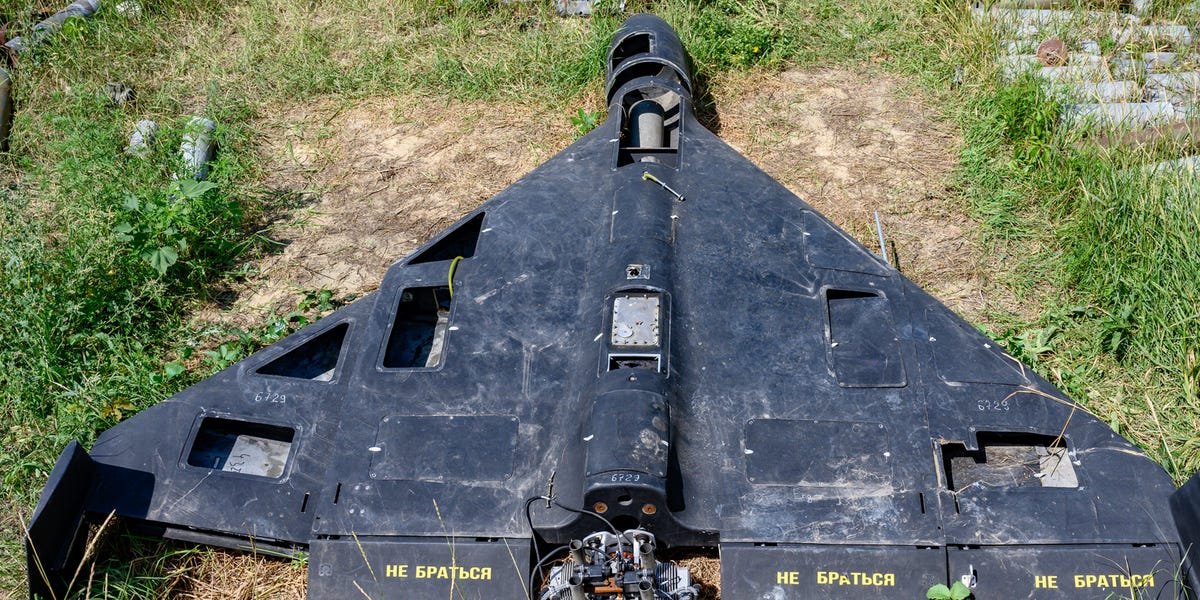
Iran attacked the Erbil region in northern Iraq over 400 times during its war with the US and Israel. WELT’s Chief Correspondent Ibrahim Naber got exclusive access to the wreckage of Iranian weapons used to strike the Kurdistan region.
The cache of damaged weapons includes the Zolfaghar ballistic missile and the Shahed drone, which has become Iran’s mainstay weapon during the war.
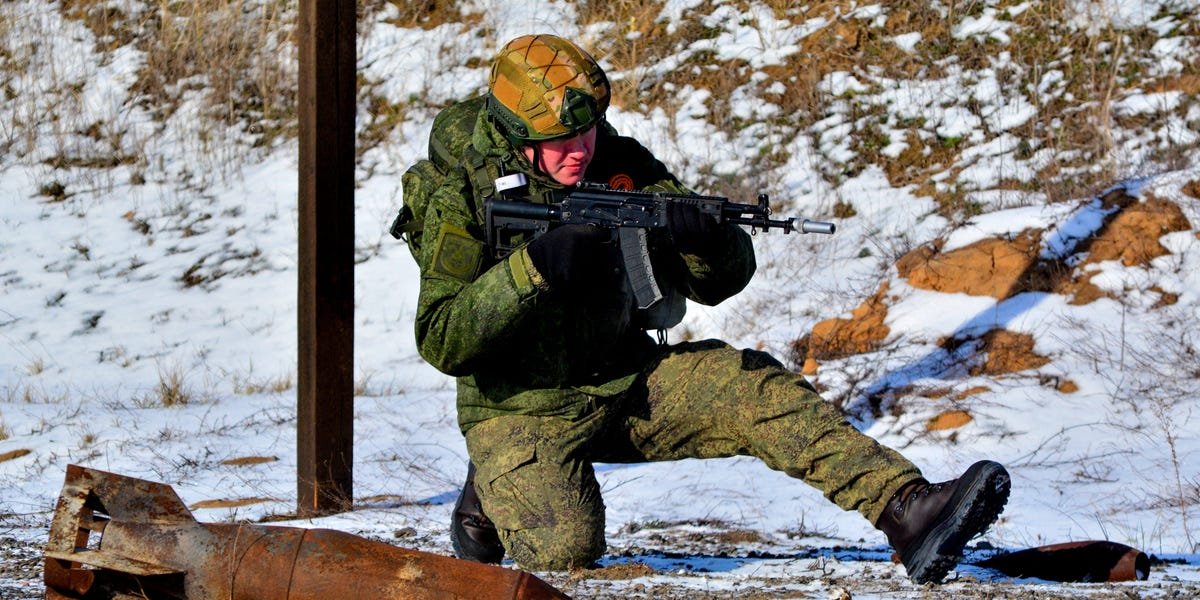
Russia’s primary small arms manufacturer, Kalashnikov Concern, said on Thursday that it’s developing 5.45mm rifle rounds specifically designed to disable drones.
Though similar types of bullets have emerged sporadically on the Russian battlefield since last year, Kalashnikov Concern said it plans to mass-produce the rounds, formalizing a national effort to make drone-killing ammo for individual troops.
The armsmaker said the 30-round magazine is built for the AK-12 gas-operated assault rifle, with each bullet releasing a “multi-element projectile that significantly increases the probability of hitting UAVs.”
Kalashnikov Concern said the round can be used in burst and single-fire modes and was tested against a drone hovering in the air and another drone flying along a preset path.
Ukraine has been making its own anti-drone rifle rounds, with a bullet called the “Horoshok,” or “Little Pea,” that splits into multiple fragments to widen the area of impact. Kyiv said in December that it plans to produce 400,000 of these rounds a month.
The Ukrainian 5.56mm round, however, sees the bullet traveling some distance before it fragments — extending the range of the shot.
Kalashnikov Concern said in its announcement that the fragments of its bullets “systematically separated upon exiting the barrel” during tests against fast-moving small drones.
Some Russian units were thought to have first publicized the overall idea, such as one group of soldiers who filmed themselves in February 2025 using steel pellets and heat shrink tubes to convert 7.62mm rounds into makeshift shotgun shell-like bullets.
The entire concept calls back to the now-widespread use of shotguns in the Ukraine war as a final line of defense against first-person-view drone attacks. The tactic became especially popular as both sides started using fiber-optic drones, which can’t be remotely jammed.
The West is experimenting with anti-drone rifle rounds, too.
The US Navy’s Naval Surface Warfare Center, for example, said in February that it’s developing a “drone-killer cartridge” containing bullets that split into three fragments. Other American and European startups are selling their own versions of split-fragment rifle rounds.
Meanwhile, the concept is catching the eye of the larger defense industry. The Belgian arm of Thales, the French-headquartered prime, has been building a 70mm airburst rocket filled with steel pellets to counter one-way attack drones like the Shahed.
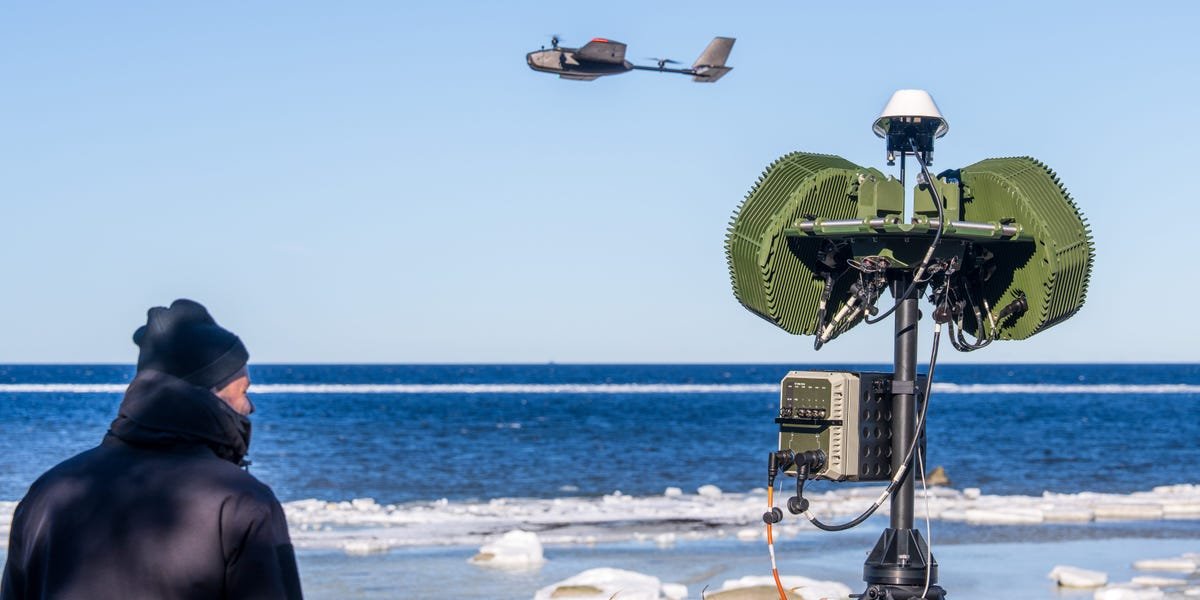
The US and its NATO allies are boosting their ability to detect, track, and target drone threats along the alliance’s eastern edge, its border with Russia.
Through rapid 90-day testing cycles designed to replicate real situations, US forces, Baltic allies, and defense companies are building a shared data network for faster decision-making. The effort links sensors that detect aerial threats with counter-drone systems that can destroy them, aiming to improve defenses against Russian-style drone attacks, including Shahed-type systems.
US and Estonian forces executed exercise Digital Shield 2.0 earlier this month, the second stage in an ongoing testing series.
The exercise “was really born from an initiative to integrate different sensor types into an easily accessible and shareable integrated sensor architecture, or an air picture,” US Army Capt. Micah Maule, plans officer for the 10th Army Air and Missile Defense Command, told Business Insider.
While the first Digital Shield proved the concept, the second expanded the scale, adding more sensors to detect larger uncrewed aerial systemssuch as Shahed-type drones and additional air-defense and counter-UAS radars to sharpen the picture of incoming threats.
Those systems feed into a common command-and-control network using commercially developed software, creating a streamlined flow of surveillance data that operators can view in a single air picture before deciding how to respond.
“So you could actually task effectors to go out and destroy drones from the same common operational picture,” Maule said.
Digital Shield 2.0 included several simulated scenarios that could become real-world threats, including cyberattacks disrupting operations, high-stress conditions with lots of drone targets, and a live-fire situation running the entire process against Shahed replicators.
The second testing involved various sensors, counter-drone interceptors, and Shahed replicators.
US Army photo by Maj. Alexander Watkins
Adding more sensors layers the defenses, but it also increases the volume of incoming data. Maule said the goal of the shared command-and-control system is to merge those inputs into one clear picture, reducing the cognitive burdenon operators.
An advantage of the design is that the system can be operated farther from the front, out of range of many types of drones, and that it feeds data to multiple partners for heightened awareness.
The rapid pace of the Digital Shield testing reflects the Pentagon’s Silicon Valley-style “move fast, fail fast, fix fast” approach for developing new technology. It also pressures industry partners to keep up. Vendors must meet strict integration requirements, and the swiftdevelopment cycle forces faster fixes and upgrades based on field feedback.
Digital Shield is an example of the work being done as part of the new Eastern Flank Deterrence Line initiative, which is led by the US and NATO. The effort is intended to build a robust defense against Russia that can detect drones across wide areas and counter them with lower-cost solutions.
Artificial intelligence is also being integrated into the initiative to analyze sensor data faster and speed up decisions on how to respond.
One persistent problem remains the cost of stopping cheap drones.
“We have to beat the cost curve,” Maule said. “If the UAS is a couple or tens of thousands of dollars, you can’t be using extremely expensive interceptors.” The US and its allies have learned that lesson from Ukraine and in the Middle East.
This story is available exclusively to Business Insider
subscribers. Become an Insider
and start reading now. Have an account? .
The US Embassy in Riyadh targeted by drones, Saudi officials said, causing minor damage and a small fire at the building.
Saudi Arabia’s defense ministry said the attack caused a small fire and some building damage.
The US Embassy in Riyadh issued a shelter-in-place alert in Saudi Arabia.
The US Embassy in Riyadh was struck by drones, officials in Saudi Arabia said in a post on X.
Saudi Arabia’s defense ministry said in a statement around 3:30 a.m. local time that the embassy was attacked by two drones, according to initial estimates, and that it resulted in a small fire and some minor damage to the building.
A few minutes prior, the US Embassy in Riyadh issued a “shelter in place” security alert for Saudi Arabia.
“The US Mission to Saudi Arabia has issued a shelter in place notification for Jeddah, Riyadh, and Dhahran and are limiting non-essential travel to any military installations in the region — we recommend American citizens in the Kingdom to shelter in place immediately,” the alert said, adding it encouraged all Americans to ” maintain a personal safety plan.”
The State Department did not immediately respond to a request for comment.
Earlier on Monday, the State Department ordered Americans in over a dozen countries in the Middle East to evacuate immediately via commercial travel.
Ukraine just gave us an extended look at one of its emerging tactics against Russia’s Shaheds: using helicopters to shoot the drones from above.
The Ukrainian navy published a two-minute montage of such operations on Thursday, saying that a helicopter crew had destroyed eight Shahed exploding drones and Gerbera decoy drones in a single day.
Cockpit and gun camera footage showed the Ukrainians engaging at least five delta-wing drones in flight, with another clip showing unidentified wreckage smoking on the ground.
Some clips indicate that at least one aerial engagement happened in the early morning or at night. Thermal footage from a gun camera showed the operator firing at a delta-wing drone, tracking its flight above open terrain before a screen flash indicates the drone was destroyed.
Other standard optical footage, filmed from a gun camera or the cockpit, appears to show several drones being destroyed high above the clouds or over water near a coastal settlement.
Additionally, an M134 minigun can be seen mounted from a helicopter’s side door, though the videos didn’t show the weapon itself in action.
The clips indicate some of the ideal conditions for downing a Shahed.
For one, the helicopter has to match the drone’s speed and trajectory and gain enough altitude to allow the minigun to fire downward at the Shahed. The chopper crew also needs to come within visual range of the drone to engage.
The footage comes several months after Ukraine said it would officially begin incorporating helicopter crews into its air defense network against Russia’s one-way attack drones, which Moscow uses in mass waves to pressure Ukrainian cities.
Because Russia mass-produces the Shahed and Gerbera, Kyiv has sought more inexpensive means, such as machine guns, instead of traditional antiaircraft missiles to counter them.
Ukraine’s commander in chief, Gen. Oleksandr Syrskyi, said in October that helicopters could sometimes destroy up to 40% of Russian Shaheds and Gerberas in one area.
Thermal and infrared cameras, such as the one seen in the latest footage, were among the systems that Syrskyi said would be equipped on such helicopters to improve their effectiveness.
Ukraine also uses ground crews with interceptor drones or truck-mounted machine guns to destroy Shaheds, but a helicopter crew can reposition much faster to engage multiple threats or hunt down a Russian drone that changes its flight trajectory.
The latter scenario became increasingly common as Russia was found to be outfitting Shaheds with more advanced communications and guidance systems, and, in rare cases, artificial intelligence.
Helicopters also allow for engagements at higher altitudes. Russia often directs its Shaheds to approach their targets at above 6,500 feet before swooping down to attack, making it more difficult for ground-based crews to hit the drones.
Aside from helicopters, Ukrainian troops have also been seen using M134 miniguns on turboprop planes to shoot down Shaheds.
Meanwhile, Russia has since been reported to be attempting to counter the Ukrainian helicopters by equipping its Shaheds with R-60 air-to-air missiles.
In November, Ukraine’s deputy minister of defense for innovation told Business Insider’s Jake Epstein that Moscow was also directly targeting patrolling helicopters and aircraft with Shaheds.
Ukraine’s large-scale drone war is pushing Western militaries to treat small drones less as high-end equipment and more as expendable ammunition that isn’t meant to come back.
US Army and British Army officials, as well as a NATO veteran who volunteered to fight in Ukraine, told Business Insider that effective drone warfare requires sending large numbers forward — and accepting many will be lost as a routine cost.
Maj. Rachel Martin, the director of the US Army’s new drone lethality course, told Business Insider that the conflict shows that “if you’re going to flood the zone with drones,” especially in a combat situation where electronic warfare is heavy, “you’re going to lose a lot of drones.”
She said it’s a “transition from the army of old,” where a lost drone was “a significant emotional event” that was reported to senior leadership. In Ukraine, it’s different. “Drones go down all the time.” There, losses are typically shrugged off, rather than investigated.
Drones are key to Ukraine’s fight, and the idea that many will be lost is understood across the military.
Sean Gallup/Getty Images
That shifting mindset is shaping how Western militaries train.
Lt. Col. Ben Irwin-Clark, the commanding officer of the British Army’s 1st Battalion of the Irish Guards, told Business Insider that his battalion has changed its training to allow drones to be damaged or even destroyed to reflect battlefield realities. “I absolutely think they need to be disposable because otherwise you’re not training realistically,” he said.
Not high-end equipment
Jakub Jajcay, a former special forces member from Slovakia who fought in Ukraine, told Business Insider that if NATO militaries want to start using drones for real missions, they “need to get used to the fact that they’re basically expendable material more akin to ammunition or fuel or gasoline, things like that, rather than specialized high-end pieces of equipment that need to be looked after.”
He said when he was serving in the military for his home country, “drones were very specialized pieces of equipment.”
The drones were fairly expensive, he shared, “and there was always a sort of bureaucratic process” in using them. Sometimes, only designated individuals were allowed to use the drones.
Ukraine uses small drones differently from the way that Western militaries did in previous conflicts.
Paula Bronstein/Getty Images
If something happened to a drone, “that would’ve been a big problem in training. If we had lost a drone, somebody would’ve been in big trouble for that.” The war in Ukraine shows how poorly that peacetime mindset fits large-scale combat.
Russia’s invasion of Ukraine has featured drones on an unprecedented scale. Ukraine says roughly 80% of its strikes are carried out using drones rather than other weapons. Many never reach their targets and are lost along the way, though.
Cheap drones worth several hundred dollars have destroyed weaponry worth millions. But many of them don’t have any effect. A report last year from the UK’s Royal United Services Institute said that “between 60 and 80% of Ukrainian FPVs fail to reach their target, depending on the part of the front and the skill of the operators.”
Some drones are jammed or disrupted by electronic warfare, while others are shot down or get their cables cut. Sometimes they’re knocked out by soldiers on their own side.
Many of the drones on the battlefield are single-use, designed to explode when they hit their target, but many of them are destroyed, damaged, or disabled before they even reach that point.
Jajcay said that even drones designed to be used again and again “have a lifespan of maybe a few dozen missions at most.”
He also said that drones failed “all the time,” and those losses were expected.
Allies want to learn as much as possible from Ukraine’s drone warfare.
Paula Bronstein /Getty Images
The West is changing its view
The US Army is recognizing and learning from these dynamics in Ukraine, as are other Western militaries, as they incorporate the idea that drones cannot be treated as overly precious assets into their drone warfare training and doctrine.
Maj. Wolf Amacker, who leads the Army’s Unmanned Aircraft Systems and Tactics Branch at the Aviation Center of Excellence, told Business Insider that out of the thousands of drones used daily, only around 30% of them hit their targets, while many others don’t have a significant impact on their targets.
The Army is learning that lots of drones need to be sent forward.
Irwin-Clark told Business Insider that the way the UK sees drones has also shifted. He said “every time there’s an iterative change in technology in the battlefield, everyone gets very excited about it and the ownership of that asset tends to be far too high.”
The US Army is training troops for drone warfare.
US Army/Leslie Herlick
He said that often when a new and powerful technology emerges, senior leaders will try to tightly control it, arguing that because there are only a handful available, only a select few should have the authority to decide when it’s used. The assets are carefully protected, at least initially. Later on, trust is imparted to soldiers to handle technology previously in the charge of higher-ups.
That pattern, Irwin-Clark said, is “exactly what’s happening with drones.”
His battalion wrapped the first drones it received years ago in bubble wrap, “and we didn’t fly them very often,” he said. “When we did,” he continued, “we made sure we flew in the middle of a field with nothing, no obstacles around.”
Now, his battalion is deliberately crashing its latest drone delivery into targets, while looking at how to make repairs. “It really doesn’t matter if we break them,” Irwin-Clark said.
The US is coming at it the same way. Martin, who previously commanded a Gray Eagle drone company, said her course takes into account that “drones crash. I’ll say that to the day I die having owned drones as a commander: drones crash.”
Secretary of Defense Pete Hegseth said last year that the defense department needs to view small drones as consumables rather than “durable property” — more like ammunition than valuable equipment. It’s a change that Jajcay described as “a step in the right direction.”
Western armies were using various drones in warfare before Russia’s invasion, often using them as surveillance platforms or tools for launching missile strikes. Small drones weren’t used the way they’re being used in Ukraine, but the US, UK, and others are learning drone lessons from the war.
Martin said the ongoing conflict in Ukraine shows that even when you lose drones, it’s ultimately “still cheaper than employing missiles on specific targets.” That’s an equation the US Army can’t totally ignore.
“They’re cheaper, and you’re not putting human lives in danger” to carry out the mission, she shared. And the Army knows that “they’re going to crash. It’s going to happen.”
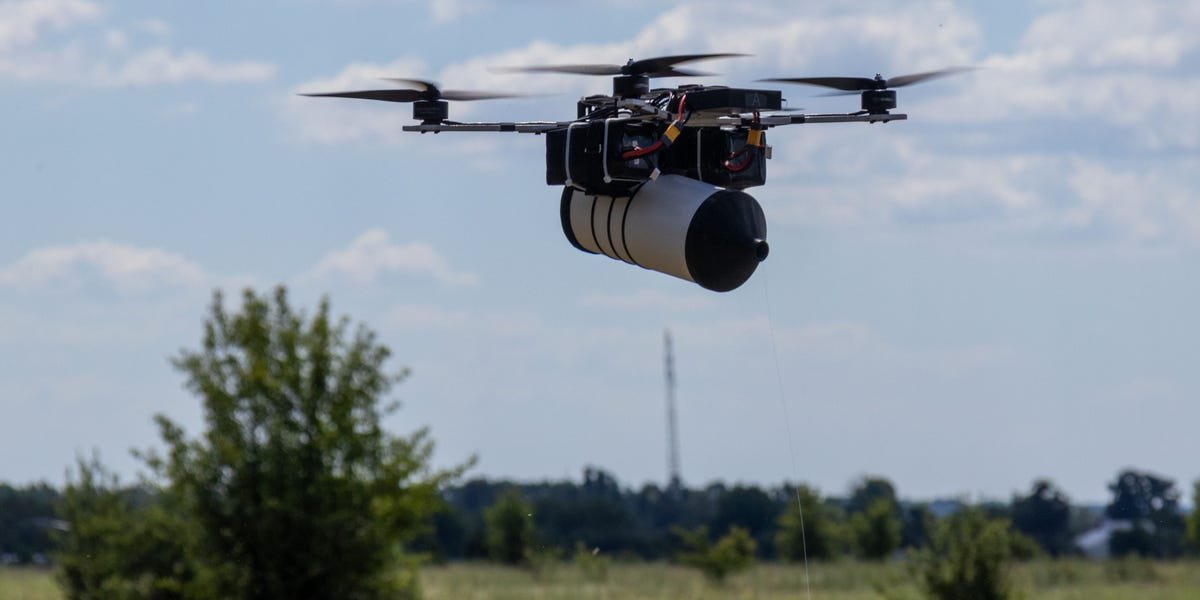
Ukrainian troops appear to be testing a new drone attachment that uses a cord or line to disable enemy propeller drones in the sky.
The tactic can be seen in a video posted on Monday by the 46th Separate Air Mobile Brigade, which published a video montage of its recent attacks against Russian infantry, vehicles, and drones.
In a caption, the brigade highlighted a “new way of capture of enemy drones in the air.”
As seen from the first-person-view camera of the Ukrainian drone, the new contraption features a rod protruding from the interceptor’s chassis.
Thin rope or cord dangles from the rod, pulled taut by a small weight that sways into view as the Ukrainian drone flies high above the battlefield.
Every time Matthew publishes a story, you’ll get an alert straight to your inbox!
Stay connected to Matthew and get more of their work as it publishes.
The brigade’s drone then appears to fly over its target — a small quadcopter — entangling the opposing device’s propellers with the attached line.
The brigade published footage of two such interceptions, as well as a third clip of a drone with the rod-like attachment attempting to crash into a fixed-wing drone.
The third target was likely a Russian Molniya one-way attack loitering munition. It’s unclear if the interception in the third clip was successful.
The novel, fishing rod-style device is another example of how the war is pushing militaries to develop new methods of physically disrupting drones as electronic warfare technology adapts.
Ukrainians and Russians have been experimenting with similar counterdrone tactics as a response to anti-jamming features on small attack drones, deploying fishing nets both on the ground and testing them on interceptors.
Some Western companies have also begun trialing drone-mounted and handheld net launchers as a defense against small quadcopters.
As Russia increasingly relies on large-scale attacks with fixed-wing Geran drones that typically fly at speeds of up to 115 mph, and in some cases even 230 mph, the war has led to the growing popularity of small, fast, and inexpensive drones acting as interceptors.
The 46th Separate Air Mobile Brigade’s fishing line apparatus, however, appears to be more suited to disabling quadcopters.
Small unjammable drones controlled by fiber-optic cables have become so integral to Russian and Ukrainian combat operations that they are leaving trails of cabling everywhere, turning areas of the battlefield into a tangled web.
As a counter to extensive electronic warfare, fiber-optic drones are becoming increasingly prevalent on both sides. And with sprawling cables stretched across the battlefield, soldiers are moving with greater caution.
“You see the little webs, and you never know — is it from the fiber-optic drone? Or it’s a part of a booby trap,” Khyzhak, a Ukrainian special operator who for security reasons could only be identified by his call sign (“Predator” in Ukrainian), told Business Insider. Mines and traps have also been prominent threats in this war.
Earlier in the war, first-person-view (FPV) drones — small quadcopter-style drones fielded by both Russia and Ukraine that often carry explosive warheads — relied on radio-frequency connections. However, both sides quickly figured out how to use signal jamming to stop them.
In response, Russia and Ukraine began developing fiber-optic FPV drones that connected to their pilots using spools of long, thin cables. The cables preserved a steady link and made the quadcopters resistant to traditional electronic warfare tactics.
The best chance that soldiers have to stop the fiber-optic drones is by shooting them out of the sky, but that requires precision, quick reaction times, and a lot of luck.
Fiber-optic drones are connected to their operators by long, thin cables.
Kostiantyn Liberov/Libkos/Getty Images
The fiber-optic cables that provide these drones with their greatest advantage are also their greatest vulnerability, as they can get tangled in the environment and bring the flight to an abrupt stop. And even if they don’t get tangled, the cabling is still left draped across the battlefield after use.
Khyzhak, a soldier in the 4th Ranger Regiment, a Ukrainian special operations unit modeled after its US Army counterparts, said it is very common to see fiber-optic cables everywhere because there are more and more of these drones in use, and the cables frequently get stuck in trees and fields.
The 4th Ranger Regiment shared combat footage earlier this month showing Khyzhak, along with two other operators and their driver, narrowly avoiding a Russian fiber-optic drone strike while speeding back to base after a front-line mission.
The footage shows fiber-optic cables strewn in the field next to the road and even on Khyzhak’s gun.
“It was everywhere,” he recalled, speaking about the September incident, where the driver skillfully maneuvered out of the path of the Russian drone, which detonated on the side of the road.
Other video footage taken from the battlefield shows how fiber-optic cables crisscross like spider webs, sometimes only visible in direct sunlight or when viewed from a certain angle.
Khyzhak said the cables are particularly annoying during nighttime missions, when special operators can’t use a lot of light. He described them as a “tactical issue.”
Fiber-optic cables are seen on the side of the road in footage shared by Ukrainian special operators earlier this month.
4th Ranger Regiment of the Special Operations Forces of Ukraine/Screengrab via X
Soldiers can’t always tell right away if it’s a harmless fiber-optic cable or something far more dangerous, like a booby trap. This forces them to think carefully about whether they should call an engineer, destroy the web with explosives, halt, or proceed forward.
It can definitely slow down the mission, Khyzhak said, and becomes a bigger concern the closer special operators get to the front lines, or if they’re working covertly in Russian-held territory.
Ukraine and Russia have expanded production of fiber-optic drones over the past year, and both sides are racing to develop variants that can fly farther across the front lines.
Russia, for instance, has begun to employ fiber-optic drones with a 50-kilometer (31-mile) range, which exceeds the distance that most known variants can travel. Cable length typically limits their range to between 10 and 25 kilometers (roughly 6 and 15 miles).
In Ukraine, fiber-optic drones have become such a threat to critical supply routes that soldiers have covered the roads with netting to protect vehicles from attacks, although it doesn’t always guarantee their safety.
Meanwhile, Ukraine’s defense industry is developing new countermeasures to defend against these drones. The innovations have also caught the attention of NATO leadership, which has been using lessons from the war to inform its own military planning.