The-CEO-of-the-World-Economic-Forum-is-stepping-down.jpeg

The CEO of the World Economic Forum is stepping down after a review of his Epstein ties

  • Børge Brende, the long-serving head of the World Economic Forum, is stepping down.
  • His resignation comes after the WEF launched an independent review into his ties to Jeffrey Epstein.
  • Emails released by the Department of Justice appeared to show Brende had dinner with Epstein three times.

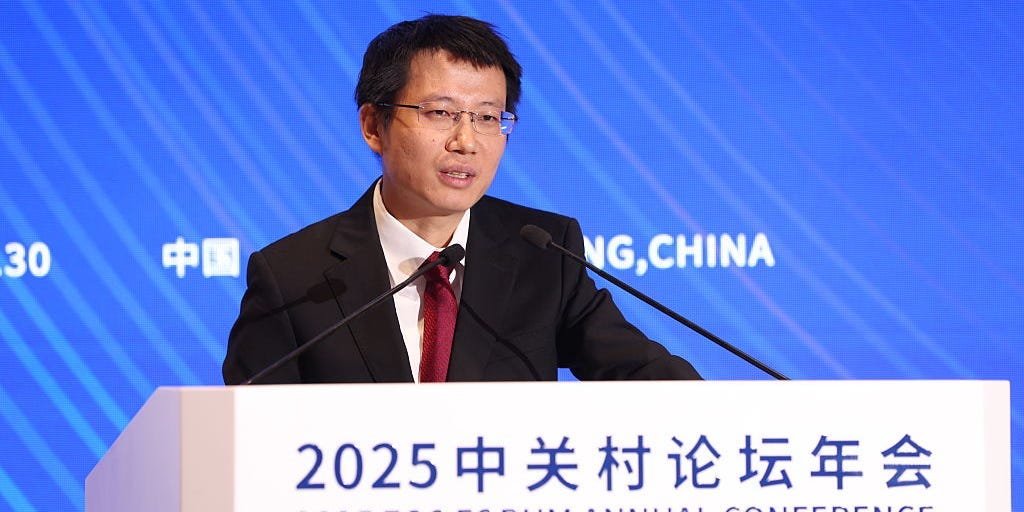
The president and CEO of the World Economic Forum, Børge Brende, has announced he will step down in the wake of an investigation into his relationship with Jeffrey Epstein.

“I believe now is the right moment for the Forum to continue its important work without distractions,” Brende, who led the organisation behind the annual Davos conference for over 8 years, said.

The WEF co-chairs, André Hoffman and Larry Fink, said the independent review, which was made public earlier in February, found “there were no additional concerns beyond what has been previously disclosed.”

Emails released by the Department of Justice appeared to show Brende had dinner with Epstein three times in 2018 and 2019.

In a statement to Reuters earlier this month, Brende said he was “completely unaware of Epstein’s past and criminal activities.”

Hoffman and Fink said Alois Zwinggi will serve as the WEF’s interim president and CEO.

This is a breaking news story. Check back for updates.


Source link

Trump-kicks-off-State-of-the-Union-touting-his-economic.jpeg

Trump kicks off State of the Union touting his economic agenda

President Donald Trump is zeroing in on what he calls America’s “roaring economy.”

The president is giving his annual speech to a joint session of Congress. He opened the event focused on his administration’s economic agenda, especially inflation rates and consumer prices.

“I inherited a nation in crisis with a stagnant economy,” Trump told lawmakers, adding that his administration has driven down inflation and mortgage rates, along with energy prices. He touted an increase in jobs in the construction sector, the strong stock market, and how the administration “lifted a record number of Americans off food stamps” with their updated SNAP rules.

The president added that he and Republican allies delivered the “largest tax cuts in American history” in their latest budget bill, alongside promises to end taxes on tips, overtime, and Social Security. And he mentioned Trump Accounts, a newly-launched federal investment account for children that will be available in July.

“A short time ago, we were a dead country,” he said. “Now we are the hottest country anywhere in the world.”

Throughout his second term, the Trump administration has leaned into affordability issues, especially high prices on consumer goods. The White House has touted budget changes in the One Big Beautiful Bill Act, tax breaks for middle- and higher-income Americans, and a recently-launched TrumpRx prescription platform. In some cases, the president has reached across the aisle for economic priorities, like a long-time Democrat-backed policy to rein in credit card rates.

As for the job market, growth has been the lowest in decades aside from recessions, and Trump’s Department of Government Efficiency took a sizable swing at the federal workforce. The administration hopes the pending appointment of former Wall Streeter Kevin Warsh to replace Federal Reserve Chair Jerome Powell will be a path toward lower interest rates in 2026, which could juice hiring — at the risk of growing inflation.

A YouGov and MarketWatch poll published February 24 found that 83% of Americans believe affordability has worsened or remained stagnant under Trump’s second term.

Trump is expected to speak for at least two hours this evening, covering topics like the Supreme Court tariff ruling, AI investment, immigration, and foreign policy.

This is a developing story. Check back here for updates.


Source link

Kalshi-may-be-more-useful-than-some-traditional-economic-forecasting.jpeg

Kalshi may be more useful than some traditional economic forecasting methods, Fed researchers find

Kalshi may be good for more than just making a quick buck.

A new research paper published by a trio of Federal Reserve economists suggests that the prediction market platform is a useful method for measuring macroeconomic expectations — and it may even be better than some traditional methods.

“Our results suggest that Kalshi markets provide a high-frequency, continuously updated, distributionally rich benchmark that is valuable to both researchers and policymakers,” the researchers wrote.

The researchers found that Kalshi actually beat traditional methods for two different purposes.

The first was on forecasting inflation. The researchers found that when it comes to headline consumer price index (CPI), Kalshi’s expectations represented a “statistically significant improvement” over the Bloomberg consensus, an oft-cited aggregation of financial analysis forecasts.

The second was on predicting Fed rate decisions. The researchers found that the median and mode of Kalshi’s prediction markets have a “perfect forecast record” on the day before the Fed meeting, which is a “statistically significant improvement” over Fed Funds futures.

Kalshi is also useful because it provides real-time responses to events, offering more up-to-date information than typical survey and forecasting methods, according to the researchers.

The paper was greeted as welcome news by Kalshi, which has long pitched itself as a source of useful information about future events, rather than just a betting platform. CEO Tarek Mansour touted the paper on X on Wednesday.

“The Federal Reserve just put out an incredible paper about Kalshi’s data,” Mansour wrote.

Investors have been on the hunt for reliable economic events forecasting tools recently, as the reliability of government data has repeatedly been called into question.

Now they may be able to ascertain valuable information from a platform that has achieved undeniable popularity. Goldman Sachs CEO David Solomon revealed in January that the bank is considering an expansion into prediction markets, which may compel similar institutions to do the same

The paper comes as public scrutiny of prediction markets like Kalshi and Polymarket picks up, with lawmakers raising concerns about potential insider trading and the proliferation of gambling.


Source link

Lauren Edmonds Profile Photo

Trump’s former chief economic advisor says workers are ‘suffering’ in America’s K-shaped economy

President Donald Trump has boasted about strengthening the US economy since returning to the Oval Office. Meanwhile, millions of Americans say they’re struggling to afford food, rent, and other basic necessities.

Gary Cohn, Trump’s former chief economic advisor, said both these realities are true right now in America.

“If you look at gross domestic product, which is the overall output of the US economy, we’re trending about 5% right now, which is a very high growth rate in the United States,” Cohn said on CBS’ “Face the Nation” on Sunday.

Cohn, who is now IBM’s vice chairman, also cited promising trends in inflation and unemployment rates.

However, those numbers don’t give the whole picture.

“That said, we’ve got an interesting economy,” Cohn said. “We have a massive wealth effect at the top end, and we have got hardworking Americans having a very difficult time paying their bills, and they are suffering in this economy.”

That’s why, Cohn said, the Trump administration is making affordability a key issue going forward.

“The White House is going on the offensive. The president is going to spend time out on the road talking about affordability,” Cohn said. “Affordability will be the issue between now and the mid-term elections.”

The widening gap between wealthy and lower-income Americans is often described as a “K-shaped economy.” That’s when people at the top see profound economic growth, while those at the bottom, who are more sensitive to economic shifts, face financial stress. Some economists have cautioned that a K-shaped economy portends bad days ahead.

“A silent majority of consumers is increasingly strained by a two-year affordability crisis and elevated borrowing costs,” Gregory Daco, a chief economist at EY, said in a recent LinkedIn post. “Slower income growth is pushing many upper-median, median, and lower-income families to draw down savings and rely more heavily on credit to sustain their habits.”

The chief economist of RSM, Joe Brusuelas, said in a recent briefing that the US would need to undergo policy shifts to reshape the economy, but that likely won’t happen in 2026.

“When I take a look at the policy landscape, it’s all tilted toward the upper spur of the K,” he said. “So I’m expecting a further widening of that fundamental inequality in coming years.”


Source link

Thibault

China’s AI push is about spreading economic gains, not enriching tech giants, a finance CEO says

Open source — that might be the clearest signal of how China wants artificial intelligence to reshape its economy.

Hisham Alrayes, the group CEO of Bahrain-based GFH Financial Group, said China is prioritizing open models and broad deployment to spread AI’s gains across the economy, instead of funneling them to a few tech giants.

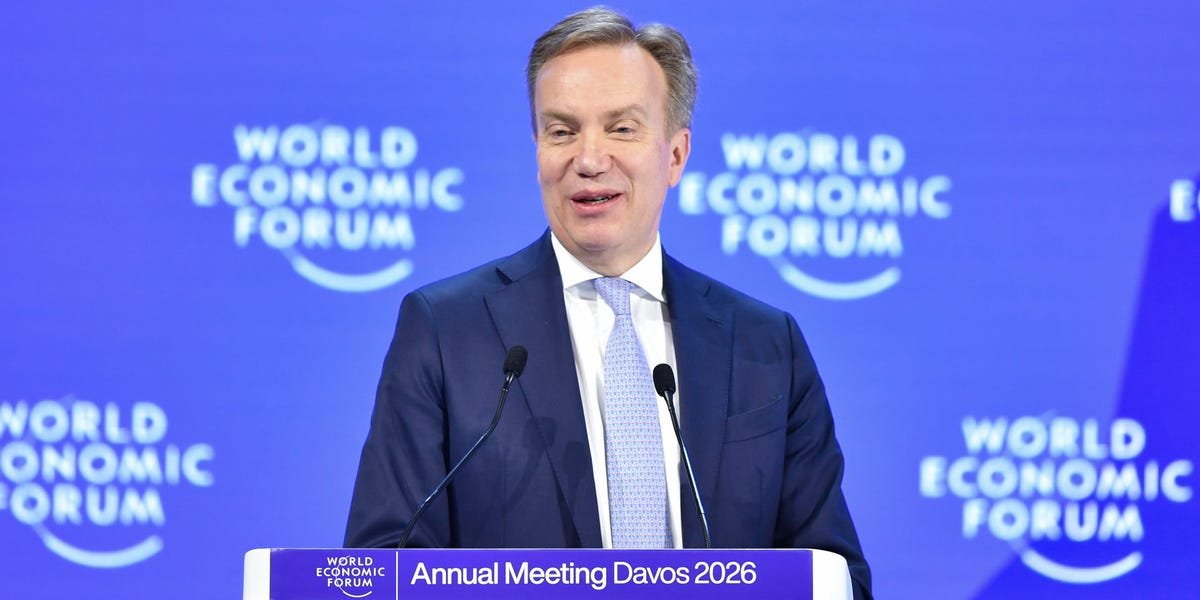
Speaking at a Davos panel on China’s “AI+ Economy” strategy on Wednesday, Alrayes said the country’s approach reflects a fundamentally different economic philosophy.

“You look at the open structure of the China AI philosophy — then you have the non-open structure,” Alrayes said. “That signals that the benefit they want to see is to trickle down into the economy, into the companies.”

Open source as economic strategy

China’s most prominent AI breakout, DeepSeek, reflects that philosophy.

It mostly uses open-source models that have drawn global attention, in contrast to many large US language models that remain closed and proprietary, reaping the benefits of tightly controlled commercial ecosystems.

Meta’s former chief AI scientist Yann LeCun, has said that a key reason behind DeepSeek’s success is its open-source model, which, he said, can outperform proprietary models in terms of efficiency and innovation by building on shared research.

Meanwhile, former Google CEO Eric Schmidt has said that China’s open-source AI models could gain an edge globally because they’re free, making them more attractive than costly proprietary US systems for governments and countries that can’t afford closed models.

Similarly, Alrayes said, China — in pursuing the open model — is aiming for affordability and scale.

“It’s not the benefit of that company, of that product, the return of that individual. It’s not an individual — it’s an economy,” Alrayes said.

That philosophy is reflected in China’s national “AI Plus” action plan, which prioritizes diffusion, said fellow panelist Gong Ke, executive director of the Chinese Institute for New Generation AI Development Strategies at Nankai University.

The policy, he said, focuses on embedding AI across manufacturing, healthcare, finance, education, and other sectors, rather than on breakthroughs such as artificial general intelligence.

He added that the plan sets explicit adoption targets, with AI agents and intelligent terminals expected to reach 70% penetration by 2027 and 90% by 2030.

AI as infrastructure, not a profit engine

Alrayes said China’s open-source tilt ultimately reflects a broader goal: making AI an economic utility rather than a profit center for a small group of companies.

“China is looking to create value throughout the economy, very clear, with very specific objectives across the economy,” he said. “Not just as a benefit to those companies. This is the difference in the philosophy.”


Source link

Chinas-economic-slump-isnt-stopping-a-billionaire-boom-in-AI.jpeg

China’s economic slump isn’t stopping a billionaire boom in AI chips

China’s deepening property crisis has crushed household wealth and dented the fortunes of some of its biggest tycoons — but a new class of AI-era billionaires is rising fast.

This year, the standout winners are coming from China’s red-hot AI chip sector.

On Wednesday, shares of MetaX Integrated Circuits Shanghai — a GPU startup founded by former AMD executives — skyrocketed as much as 755% on their first day of trading on the Shanghai Stock Exchange’s tech-focused STAR Market, before closing up about 700%.

The surge catapulted its chairman and cofounder, Chen Weiliang, into one of China’s fastest-rising tech moguls. Chen’s stake in MetaX is worth about $6.5 billion, according to the Bloomberg Billionaires Index.

Other early insiders also saw eye-popping paper gains.

MetaX’s other two cofounders and co-chief technology officers, Peng Li and Yang Jian, hold stakes worth hundreds of millions of dollars after the blockbuster debut, according to Bloomberg’s calculations.

China’s AI rush

Chen’s rise follows that of another GPU entrepreneur, Zhang Jianzhong, the founder and CEO of Moore Threads Technology.

Earlier this month, Zhang’s net worth jumped to $4.3 billion after his company’s successful IPO, continuing a wave of investor enthusiasm for homegrown semiconductor players.

The richest figure in China’s AI chip scene is Chen Tianshi, a cofounder and CEO of Cambricon Technologies — a company retail traders have dubbed “China’s Nvidia.”

Cambricon’s Chen is now worth $22.5 billion, making him the country’s 16th-richest individual on Bloomberg’s list. He is the 115th richest person in the world.

These new fortunes reflect a sharp shift in investor sentiment.

Chinese AI and semiconductor stocks have been on a tear since the breakout of the China-made DeepSeek-R1 AI model released in January. The model helped spark a rally in local tech names and pushed the Hang Seng Tech Index up more than 20% so far this year.

Washington’s tightening export controls on advanced Nvidia chips also contributed to the boom.

Such restrictions on high-end AI processors have choked China’s access to cutting-edge US hardware and pushed Beijing to lean harder on domestic suppliers.

Still, China’s new AI billionaires remain far from the top of the country’s wealth rankings. The upper tier is still dominated by long-established tycoons.

In the top spot is Zhong Shanshan, the low-key bottled-water magnate behind Nongfu Spring, with a fortune of $68.1 billion, per Bloomberg.

Pony Ma, a cofounder and CEO of Tencent, ranks second with $66.5 billion — a fortune up 38% this year, on the heels of Tencent’s AI-induced rally — while ByteDance cofounder Zhang Yiming comes in third with $65.2 billion.


Source link