
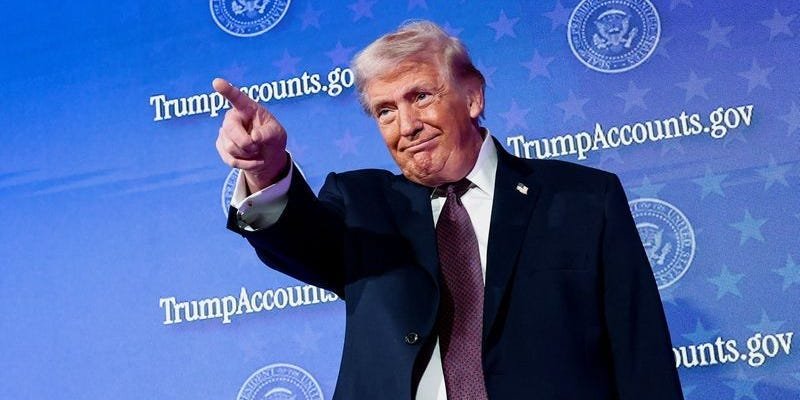
Trump-taps-a-longtime-agency-economist-as-the-next-Bureau.jpeg

Trump taps a longtime agency economist as the next Bureau of Labor Statistics commissioner

President Donald Trump’s monthslong and contentious search for a new commissioner to lead the Bureau of Labor Statistics may be ending.

On a Truth Social post on Friday, Trump announced that he intends to nominate Brett Matsumoto, a longtime agency economist, to lead the BLS.

The BLS commissioner role has been vacant since August, when Trump fired Erika McEntarfer after the release of a jobs report showing weak employment growth. Trump alleged, without providing evidence, that the data had been politically manipulated. The allegation and removal have since undermined public trust in one of the federal government’s most closely watched statistical agencies, which is supposed to remain nonpartisan.

The agency has roughly 2,000 employees, and the commissioner is its only appointed position. The commissioner’s role carries a four-year term and requires Senate confirmation.

Before Matsumoto, the White House previously nominated EJ Antoni, a Heritage Foundation economist, for the job, but later withdrew the nomination after it became clear Antoni lacked sufficient support for Senate confirmation.

Who is Brett Matsumoto?

Matsumoto is a career economist with deep ties to the agency he would lead if confirmed.

Based on Matsumoto’s LinkedIn profile, he earned undergraduate and master’s degrees at the University of Delaware before earning his doctorate in economics from the University of North Carolina in 2015. Since then, he has been working at the BLA as a supervisory research economist. Multiple academic papers under his name can be found covering issues such as consumer expenditure and inflation measurement. Over the past year, he has been on assignment at the Council of Economic Advisers.

Matsumoto is not very active on social media. A Facebook account under his name shows that his profile picture used to be a photo with Ivanka Trump back in August 2020. His most recent profile photo features him alongside a tabby cat.

In a post on Truth Social late Friday, Trump said he was confident Matsumoto had the expertise to “QUICKLY fix the long history of issues at the BLS on behalf of the American People.”

Several economists posted online that they believe Matsumoto could be the right choice.

Claudia Sahm, Chief Economist at New Century Advisors, posted on X that Matsumoto is an “excellent choice” for the commissioner position.

Skanda Amarnath, Executive Director of Employ America, echoed the sentiment on X and said that Matsumoto is “a very thoughtful person who understands the nuts and bolts of data measurement and estimation.”




Source link

AI-boom-has-4-bubble-signs-and-could-burst-in.jpeg

AI boom has 4 bubble signs and could burst in 2026, economist says

The AI frenzy that’s driving markets and corporate spending may be heading for a hard landing in 2026.

In an interview with Norges Bank Investment Management CEO Nicolai Tangen, renowned economist Ruchir Sharma said that the AI surge now checks every box on his four-part bubble checklist. And a single trigger could bring it all crashing down in 2026 — higher interest rates.

Higher rates reduce the availability of cheap capital that’s been fueling AI investment and put downward pressure on growth-stock valuations.

Sharma’s ‘four O’s’ playbook

To diagnose bubbles, Sharma uses what he calls the four O’s. He said the AI boom is flashing red on all four: overinvestment, overvaluation, over-ownership, and over-leverage.

Sharma said that AI and tech spending in the US has surged at a rate that is comparable to past bubbles, such as the dot-com era. Valuations of major AI players are also approaching bubble territory when judged by long-term earnings and free cash flow.

At the same time, Americans are holding a record share of their wealth in equities, and most of those trades are AI-related, he said.

And after years of running cash-rich balance sheets, Big Tech is now issuing massive amounts of debt to fund the AI arms race.

Over the last few months, Meta, Amazon, and Microsoft have become “the biggest issuers of debt,” Sharma said — a classic late-cycle bubble sign.

Sharma estimated that roughly 60% of US economic growth this year has been driven by AI, both through companies pouring money into new infrastructure and through the stock-market wealth effect lifting spending among high-income consumers.

But the underlying economy looks much weaker without it, he said — and that’s exactly why Sharma thinks the AI trade has become so dangerously crowded.

“Outside of AI, there’s a lot of weakness in the US economy,” he said.

“This big bet on AI better work out for America — because if it doesn’t work out, then I think there’s a lot of trouble for this country ahead,” he added.

Why 2026 could be the breaking point

Sharma doesn’t pretend he can call the exact top. But he said one thing bursts every bubble, and that is interest rates going up.

He identified three conditions that are already building. First, inflation remains “sticky,” and far from the Fed’s 2% target, he said. Second, the Fed has missed its target for five consecutive years and may soon face pressure to halt its interest rate cuts. Thirdly, AI-driven investment has sustained strong growth, which could push inflation higher again.

“At the slightest sign that interest rates are going to go up, I think that’s your sign that, ‘Okay — this is done now,'” Sharma said.

That’s because higher rates make borrowing costlier and slash the valuations of high-growth companies — the exact conditions that tend to burst bubbles.

He said he expects that moment to likely arrive in 2026 — a view shared by other veteran investors, but on different timelines.

Greg Jensen, co-chief investment officer at Bridgewater Associates, said on Tangen’s podcast last week that “the bubble is ahead of us” without giving a timeline, while Mel Williams, cofounder and partner at TrueBridge Capital Partners, warned of “a lot of carnage” over the next 10 years.

A ‘good bubble’ — but still a bubble

Sharma said the AI boom could be a “good bubble” that could ultimately boost productivity — like past tech manias that overshot but left valuable infrastructure in their wake. But that doesn’t mean investors won’t get hurt.

Still, one area he thinks could shine after the correction is quality stocks — companies with high returns on equity, strong balance sheets, and consistent earnings.

That category has badly underperformed the market during the AI frenzy, creating what he called “the single best investment idea” heading into 2026.


Source link

3-things-homebuyers-should-do-to-hack-the-unaffordable-housing.jpeg

3 things homebuyers should do to hack the unaffordable housing market, according to Fannie Mae’s chief economist

Doug Duncan, chief economist of the government-sponsored mortgage finance giant, noted the challenging environment for first-time homebuyers, with mortgage rates hovering near 20-year highs and a dearth of inventory keeping home prices elevated.

The 30-year fixed mortgage rate has been stuck around 7% all year. Single-family home prices, meanwhile, climbed 7.4% in the first quarter.

“Supply-constrained,” Duncan said of the housing market, speaking to Yahoo Finance on Thursday. “That’s been a theme for several years, it’s kind of repeating the story, but it’s the story.”

Duncan outlined his top tips for homebuyers in today’s market:

1. Have a good credit score

Mortgage rates are elevated, and having a poor credit score makes borrowing costs even steeper, Duncan said.

“No matter who you talk to, there’s different kinds of lenders. All of them are going to look, first of all, at what’s your credit? Do you have a good credit score?” he said. “They want to know, what’s your risk profile?”

Real estate economists say mortgage rates likely won’t come down significantly anytime soon. Mortgage rates are influenced by real interest rates in the economy, and Fed officials aren’t in a rush to cut rates while inflation remains above their target and the economy remains strong.

2. Shop around with multiple lenders

Homebuyers should talk to multiple lenders before locking in their mortgage. Buyers who shop around tend to score better deals and more affordable rates, Duncan said.

“Make them compete. They don’t make money if they don’t make a loan to you, so they have an interest in satisfying you, just like you have an interest in getting a good deal. So shop around for sure,” he added.

3. Don’t try to time the market

You be in the market for a home because you can afford it at the moment — not because you’re waiting for prices or mortgage rates to come down, Duncan said.

“What I always give people as advice when they ask, ‘Is now a good time to buy a house?’ is if you have a family budget or a household budget. That’s the most important clause, because any lender is going to ask you things that’s going to come out of that budget, and if you can budget it all out, you know how to immediately answer those questions and you’ll get a better deal at the end of the day,” Duncan said.

People betting that mortgage rates or home prices will come down soon are taking a gamble. Some homebuyers can afford to speculate on the market, but most first-time homebuyers cannot, Duncan noted.

“You want to take a well-educated financial management approach to that decision because you’d like to be able to sustain it,” he said.

First-time homebuyers accounted for 32% of all home sales in 2023, well below the historical average of 38%, according to data from the National Association of Realtors.

The good news is that some real estate experts see a recovery slowly forming for the housing market. Supply is expanding and home prices are starting to fall in key metros, Charles Schwab said in a recent note.


Source link