
Oracles-Larry-Ellison-downplays-software-apocalypse-fears-We-think-the.jpeg

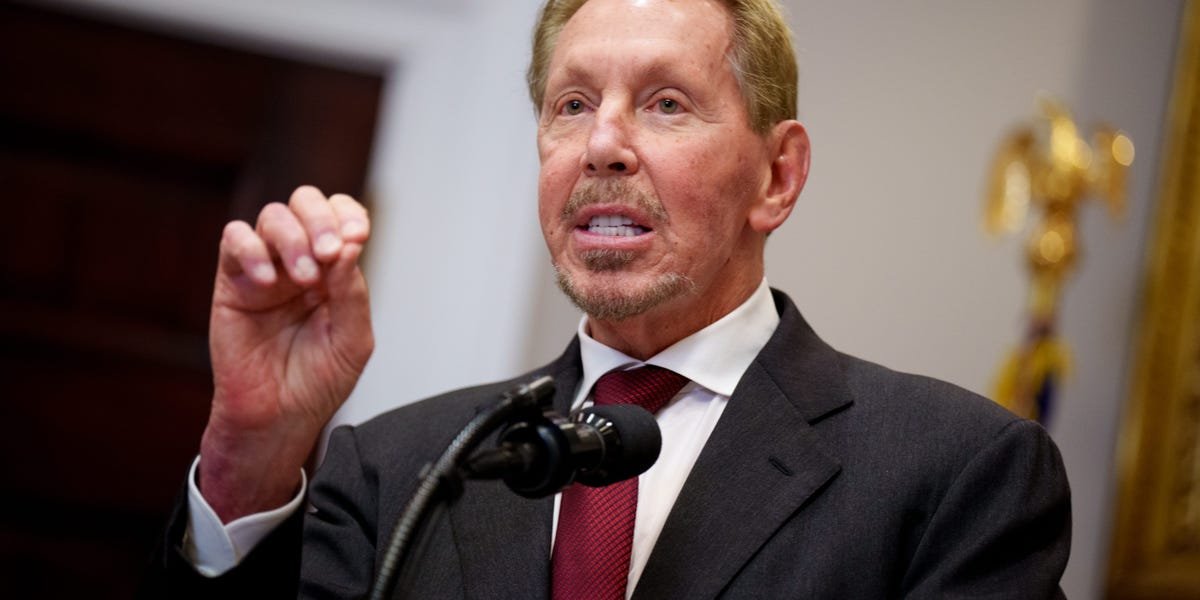
Oracle’s Larry Ellison downplays software apocalypse fears: ‘We think the SaaSpocalypse applies to others, but not to us’

Oracle executives downplayed fears that AI will spell the death of software-as-a-service companies.

Oracle Chairman Larry Ellison said during the company’s earnings call on Tuesday that he believes the so-called Saaspocalypse will be a problem for other companies, but not his.

“We have these coding tools now that allow us to build a comprehensive set of software, agent-based software, to implement to automate a complete ecosystem like healthcare or financial services,” Ellison said. “That’s what we’re doing at Oracle. That’s why we think we’re a disruptor. That’s why we think the Saaspocalypse applies to others but not to us.”

Fears that AI will replace traditional software tools have been particularly high over the past month, after Anthropic released new agentic AI tools, triggering a sell-off in software stocks, including Salesforce and Asana.

Oracle CEO Mike Sicilia also said on the earnings call that he doesn’t agree with the idea of the Saaspocalypse.

“I do think that AI tools and their coding capabilities would be a threat if we weren’t adopting them, but we are, and very rapidly,” he said. “We are building brand new SaaS products using AI and also embedding AI agents right into our existing applications suites.”

Sicilia added, “I’ve not yet met a customer who tells me they’re ready to give away their retail merchandising system, their core banking system, demand deposit account systems, electronic health record systems, and some cobbling together of niche AI features are going to replace all of that overnight. In fact, we hear quite the
opposite from the customers.”

Oracle isn’t the only company trying to downplay the fears of AI companies like Anthropic and OpenAI becoming a threat to software giants.

Salesforce CEO Marc Benioff recently tried to reassure investors that the company’s focus on AI agents would insulate it from the software apocalypse. “If there is a ‘SaaSpocalypse’, it may be eaten by the ‘SaaS-quatch’ because there are a lot of companies using a lot of SaaS because it just got better with agents,” he said.

Workday CEO Aneel Bhusri also tried to allay fears during the company’s earnings call last week that HR and business software systems require complex security and regulatory needs, and boasted that AI companies such as Anthropic and OpenAI are running its software.

Have a tip? Contact this reporter via email at astewart@businessinsider.com or Signal at +1-425-344-8242. Use a personal email address and a nonwork device; here’s our guide to sharing information securely.


Source link

David-Ellison-has-a-message-for-Paramount-staffers-tech-is.jpeg

David Ellison has a message for Paramount staffers: tech is a key to winning

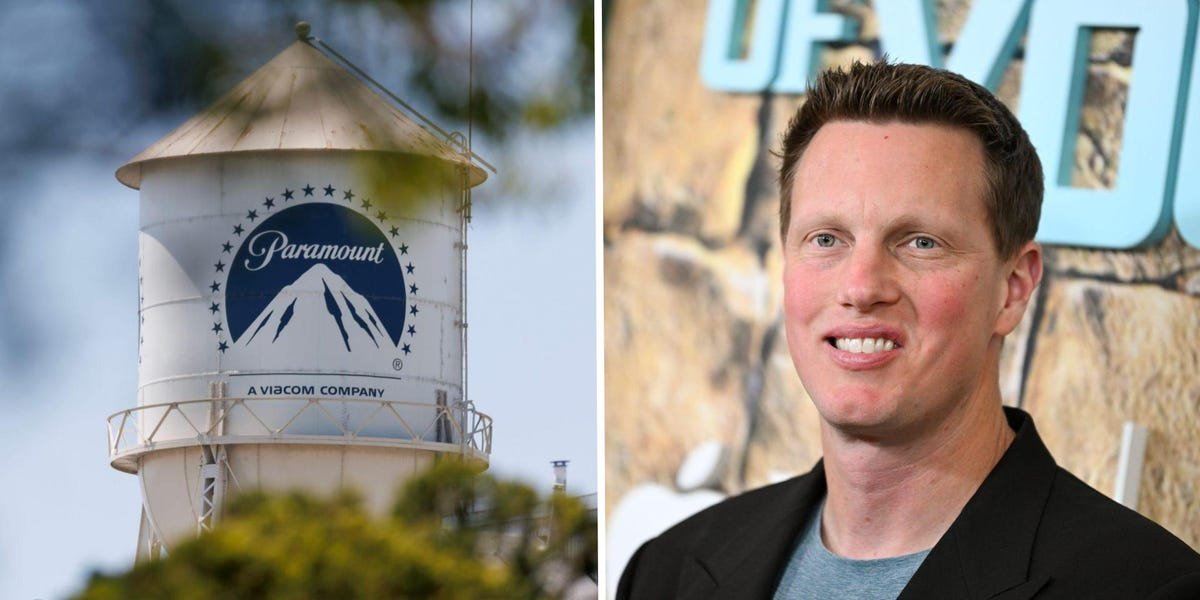
Paramount Skydance CEO David Ellison gave employees a shoutout after the media company roughly met Wall Street’s estimates in the fourth quarter.

“The progress we’ve made over the past 6+ months — from advancing our strategy to strengthening our portfolio and reorganizing our businesses to operate more efficiently and effectively — is a direct reflection of your hard work and commitment,” Ellison wrote in an email to staffers, which was viewed by Business Insider.

Ellison, who wants to turn his 114-year-old Hollywood studio into a tech-forward company, said in his memo that Paramount is focused on supercharging its tech and data capabilities.

“We recognize that in today’s highly competitive marketplace, sustainable growth depends not only on what people watch, but on the quality of the overall user experience,” Ellison wrote. “That’s why we are prioritizing investments in advanced technology and data capabilities to strengthen and differentiate our DTC offering. We are making meaningful investments across the company in innovation and technology, and we look forward to sharing more details in the coming months.”

That message comes weeks after Ellison made data a bigger part of Paramount by expanding the role of the company’s streaming data and insights team.

Paramount is planning to add short-form video to Paramount+ and is exploring ways to bring interactive features and user-generated content to its streamers, Business Insider previously reported.

In the memo, Ellison also emphasized storytelling, saying that he wants Paramount to be “the home for the industry’s leading creative talent.” While Ellison lured former Netflix original content executive Cindy Holland to run its streaming business, Paramount is losing star TV creator Taylor Sheridan to rival NBCUniversal when his contract expires.

Paramount’s biggest initiative is its quest to buy Warner Bros. Discovery, which seems increasingly open to Ellison’s advances, even though it has a signed deal with Netflix.

Paramount’s results were roughly in line with analyst expectations in its latest quarter, the first full quarter since Ellison took the helm in early August. As expected, Paramount’s full-year revenue shrank for a second straight year to $28.89 billion, just under the estimate of $28.95 billion.

Paramount+ now has 78.9 million paid subscribers, up from 77.9 million last quarter and 4% higher than a year ago. Paramount’s product chief told employees that its flagship streamer added about 1 million customers on the first day it carried UFC rights in the US, Business Insider previously reported.

Read Ellison’s memo to Paramount employees here:

Team,
Today we held our 4th quarter and fiscal year-end earnings call, where we reviewed our performance and reinforced our commitment to executing against our strategy and roadmap. Anchored by our North Star priorities, we continue to drive measurable progress across all areas of the business and remain confident that we are on the right path to deliver sustained, long-term value for our shareholders.
First and foremost, I want to take this opportunity to thank all of you. The progress we’ve made over the past 6+ months — from advancing our strategy to strengthening our portfolio and reorganizing our businesses to operate more efficiently and effectively — is a direct reflection of your hard work and commitment.
This shared commitment powers our primary focus here at Paramount: delivering exceptional storytelling. We want to be the home for the industry’s leading creative talent, ensuring they have the resources, platform and reach to bring their best stories to the broadest possible audience across film, television and streaming. Every decision we make — from capital allocation to operational priorities — is in service of this objective. And our increased investment in content creation reflects this commitment, with 11 films and 11 series greenlit since August and more to come.
We recognize that in today’s highly competitive marketplace, sustainable growth depends not only on what people watch, but on the quality of the overall user experience. That’s why we are prioritizing investments in advanced technology and data capabilities to strengthen and differentiate our DTC offering. We are making meaningful investments across the company in innovation and technology, and we look forward to sharing more details in the coming months.
One of our greatest strengths as a company is our ability to mobilize the entire ecosystem behind key priorities and events through our “Paramount One” initiative. We saw this clearly demonstrated with the launch of the UFC on Paramount+ in January. Every part of the organization — from CBS Sports to Pluto, marketing to ad sales — contributed to the promotion of this landmark partnership. This all-hands on deck mentality is a true force multiplier for the Company — and I know you’ve put the same firepower behind Survivor 50, premiering tonight on CBS!
I encourage you to review our shareholder letter for more details on our quarter and full fiscal year 2025 performance. A replay of the earnings call will be available shortly on our Investor Relations site.
I couldn’t be prouder of this team. Keep up the great work.
Let’s go!
Best,
David


Source link

Netflix-strengthens-its-Warner-Bros-bid-as-Paramounts-David-Ellison.jpeg

Netflix strengthens its Warner Bros. bid as Paramount’s David Ellison tries to wreck its deal

Netflix is breaking open its piggy bank to keep Paramount Skydance CEO David Ellison from crashing its Warner Bros. deal.

The streaming giant just sweetened its offer for the Warner Bros. studio and HBO by offering all-cash, matching a key feature of Paramount’s hostile bid. Warner Bros.’ board of directors has approved the all-cash bid, and the companies said they expect Warner shareholders to vote on the transaction by April.

“Our revised all-cash agreement will enable an expedited timeline to a stockholder vote and provide greater financial certainty,” Netflix co-CEO Ted Sarandos said in a statement announcing the news.

“Today’s revised merger agreement brings us even closer to combining two of the greatest storytelling companies in the world,” David Zaslav, president and CEO of Warner Bros. Discovery, said in a statement on Tuesday.

While Netflix isn’t raising its bid from $27.75 per share, converting $4.50 per share in stock to cash takes away a variable for Warner Bros. Discovery shareholders. Netflix shares are down 13% since the Warner Bros. deal was made public and have fallen 28% since late October.

Paramount believes its all-cash offer of $30 per share for all of WBD is superior to Netflix’s winning bid for WBD’s key assets, which include its studio, HBO, and HBO Max, but not its TV networks. Ellison has made eight bids for WBD, all of which have been rejected. Paramount is now suing WBD while fighting for spots on its board.

A key remaining point of difference between the two bids hinges on the perceived value of WBD’s networks. Paramount is looking to buy them, while Netflix is not.

If WBD’s cable channels, such as CNN, TNT, and HGTV, are valued at less than $2.25 per share, or $5.9 billion, then Paramount’s proposal appears, at first glance, to be more appealing than Netflix’s. However, WBD has said that it must knock off $1.79 per share from Paramount’s bid to account for costs it would incur by changing course, like a $2.8 billion breakup fee to Netflix. That would mean WBD’s cable networks only need to be worth $0.46 per share for Netflix’s bid to be financially superior in the board’s eyes.

Paramount has argued that the WBD cable networks it wants to buy are worth $0 per share, or only as much as the debt they’re expected to carry. Ellison and company acknowledged “the theoretical possibility” that those TV assets could be worth $0.50 per share.

Most media analysts have a rosier view of WBD’s cable business, valuing its channels anywhere from the low single digits to $3.51 per share. Even a glass-half-empty view based on the valuation of new cable company Versant would put WBD’s networks at $1.20 per share as of last week, a Business Insider analysis found.

Netflix’s updated all-cash offer helps solidify WBD’s decision to choose it, after accounting for the added costs from Paramount’s bid.

Unless WBD shareholders band against its board of directors, Paramount may face pressure to sweeten its offer by raising its bid.


Source link