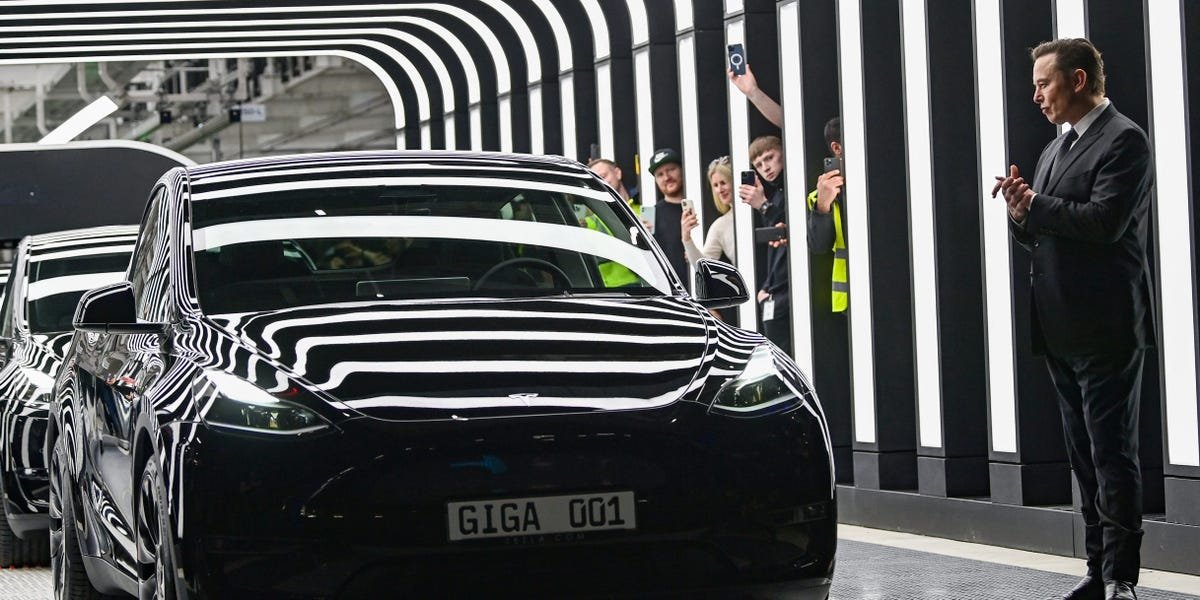
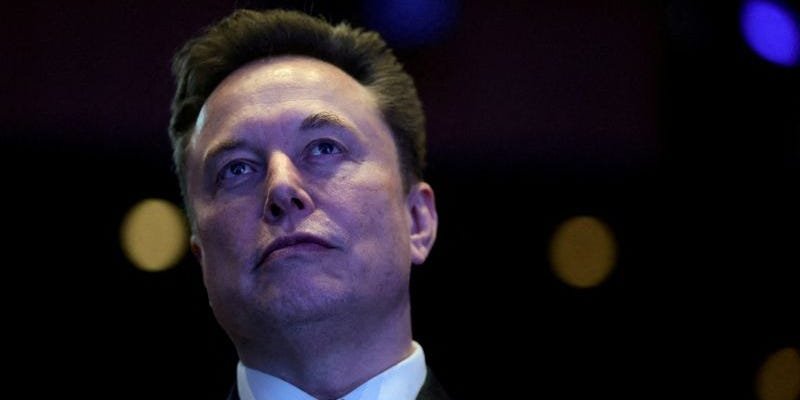
Tesla’s sales in Europe are plummeting — and now Elon Musk has a warning for employees at the company’s German megafactory ahead of crucial union elections.
In an interview with Giga Berlin senior director Andre Thierig posted on X on Thursday, Musk said Tesla would “ideally” expand its only European gigafactory and start production of its battery cells, Cybercab robotaxi, and Optimus robot at the site.
Asked if he had any advice for the team at Giga Berlin to work toward that vision, Musk said any expansion was contingent on Tesla being free from interference from “outside organizations.”
“Things certainly get harder if there are outside organizations who are pushing Tesla in the wrong direction,” said Musk.
“It’s difficult to say that then we would expand, if we had outside organizations who were making things very difficult. We’re not going to shut down the factory, but we wouldn’t expand it either,” said the Tesla CEO.
The billionaire’s comments come ahead of a crucial vote at Tesla’s German factory next week, with powerful German union IG Metall pushing to gain control of the site’s work council — an elected body of employees required by local laws that negotiates pay deals and working hours with management.
German publication Handelsblatt first reported Musk’s comments, which it said were screened for employees on Wednesday.
Tesla clashes with union
The run-up to the election has been marked by fierce disputes between the union and Tesla’s executives. Earlier this month, Tesla filed a criminal complaint against an IG Metall representative, accusing them of secretly recording an internal meeting.
IG Metall, which has frequently clashed with Tesla over working conditions at Giga Berlin over the past few years, denied the allegation and responded with its own complaint accusing Thierig of defamation. The union said Thursday that both sides had agreed on a truce ahead of the works council elections.
The debate over Giga Berlin’s future comes as Tesla’s sales in Europe have collapsed. The US automaker saw registrations of its EVs fall nearly 38% in the EU last year, as it was hit by backlash over Musk’s political interventions and backing of German far-right party AfD.
In January, Tesla’s European sales dropped to just 8,000 units, according to data from the European Automobile Manufacturers Association, less than half the number sold by Chinese rival BYD.
Musk also said in the interview that Tesla expects to receive approval to sell Full-Self-Driving driver assist technology in the Netherlands on March 20.
This story originally ran in Welt and appears on Business Insider through the Axel Springer Global Reporters Network.
“All we’ve got left now,” the Russian soldier said, “are radios, cables and pigeons.”
A decision earlier this month by SpaceX to shut down access to Starlink satellite-internet terminals caused immediate chaos among Russian forces who had become increasingly reliant upon the Elon Musk-owned company’s technology to sustain their occupation of Ukraine, according to radio transmissions intercepted by a Ukrainian reconnaissance unit and shared with the Axel Springer Global Reporters Network, to which POLITICO and Business Insider belong.
The communications breakdown significantly constrained Russian military capabilities, creating new opportunities for Ukrainian forces. In the days following the shutdown, Ukraine recaptured roughly 77 square miles in the country’s southeast, according to calculations by the news agency Agence France-Presse based on data from the Washington-based Institute for the Study of War.
Analysts in Ukraine’s Bureviy Brigade eavesdrop on Russian communications from an underground listening post in northeastern Ukraine.
Viktor Lysenko/BI
SpaceX began requiring verification of Starlink terminals on Feb. 4, blocking unverified Russian units from accessing its services. Almost immediately, Ukrainian eavesdroppers heard Russian soldiers complaining about the failure of “Kosmos” and “Sinka” — apparently code names for Starlink satellite internet and the messaging service Telegram.
Every time Ibrahim publishes a story, you’ll get an alert straight to your inbox!
Stay connected to Ibrahim and get more of their work as it publishes.
“Damn it! Looks like they’ve switched off all the Starlinks,” one Russian soldier exclaimed. “The connection is gone, completely gone. The images aren’t being transmitted,” another shouted.
Dozens of the recordings were played for Axel Springer Global Reporter Network reporters in an underground listening post maintained by the Bureviy Brigade in northeastern Ukraine. Neither SpaceX nor the Russian Foreign Ministry responded to requests for comment.
“On the Russian side, we observed on the very day Starlink was shut down that artillery and mortar fire dropped drastically. Drone drops and FPV attacks also suddenly decreased,” said a Ukrainian aerial reconnaissance operator from the Bureviy Brigade who would agree to be identified only by the call sign Mustang, referring to first-person view drones. “Coordination between their units has also become more difficult since then.”
The satellite internet network has become a crucial tool on the battlefield, sustaining high-tech drone operations and replacing walkie-talkies in low-tech combat. Since Russia’s February 2022 invasion, which destroyed much of Ukraine’s traditional communications infrastructure, Western governments have provided thousands of the Starlink units to Kyiv.
At some point, it felt like the Russians had more devices than we did,” said a Ukrainian soldier identified by the call sign Mustang
Viktor Lysenko/BI
Viktor Lysenko/BI
With the portable terminals, there is no need to lay kilometers of cable that can be damaged by shelling or drone strikes. Drone footage can be transmitted in real time to command posts, artillery and mortar fire can be corrected with precision, and operational information can be shared instantly via encrypted messaging apps such as Signal or Telegram.
At the outset of the Russian invasion, Starlink access gave Ukraine’s defenders a decisive operational advantage. Those in besieged Mariupol sent signs of life in spring 2022 via the backpack-size white dishes, and army units used them to coordinate during brutal house-to-house fighting in Bakhmut in 2023.
Satellite internet became “one of, if not the most important components” of Ukraine’s way of war, according to military analyst Franz-Stefan Gady, an adviser to European governments and security agencies who regularly visits Ukrainian units. “Starlink constituted the backbone of connectivity that enabled accelerated kill chains by helping create a semi-transparent battlefield.”
The operational advantages of Starlink did not go unnoticed by Russian forces. By the third year of the war, Starlink terminals were increasingly turning up in Russian-occupied territory. One of the first documented cases surfaced in January 2024 in the Serebryansky forest. Month by month, Ukrainian reconnaissance drones spotted more of the devices.
The Ukrainian government subsequently contacted Musk’s company, urging it to block Russian access to the network. Mykhailo Fedorov, then digital minister and now defense minister, alleged Russian forces were acquiring the devices via third countries. “Ukraine will continue using Starlink, and Russian use will be restricted to the maximum extent possible,” Fedorov pledged in spring 2024.
Yet Russian use of the terminals continued to grow throughout 2025, and their use was not limited to artillery or drone units. Even Russian infantry soldiers were carrying mini Starlink terminals in their backpacks.
“We found Starlink terminals at virtually every Russian position along the contact line,” said Mustang. “At some point, it felt like the Russians had more devices than we did.”
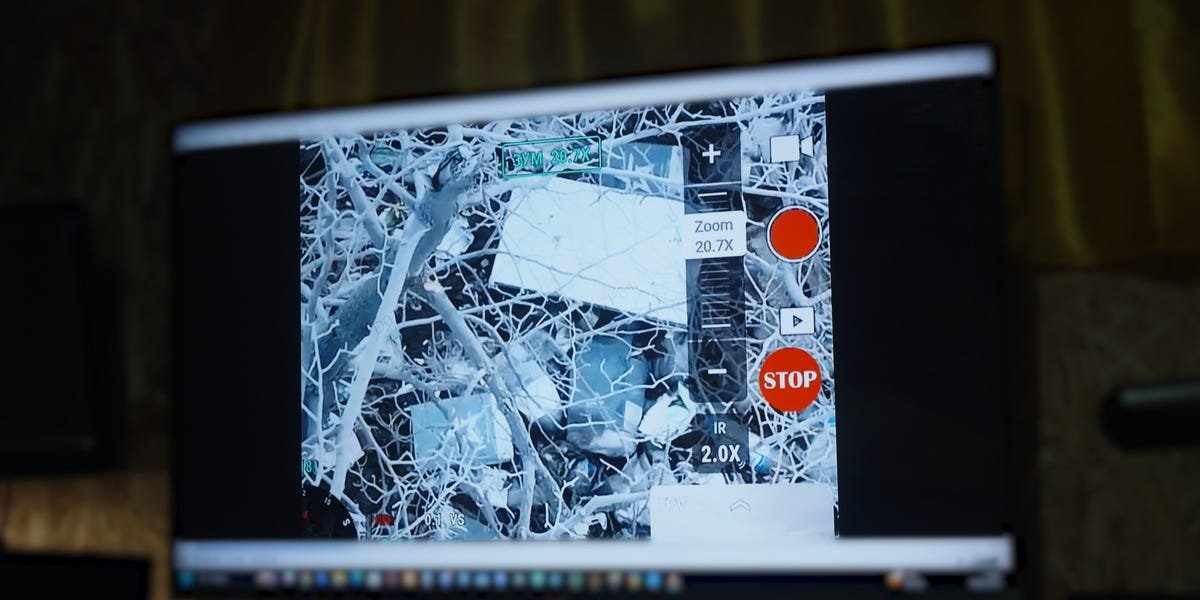
In the listening post this month, he scrolled through more than a dozen images from late 2025 showing Russian Starlink terminals set up between trees or beside the entrances to their positions.
“We targeted their positions deliberately,” Mustang continued. “But even if we destroyed a terminal in the morning or evening, a new one was already installed by the next morning.”
In the Russian-occupied eastern Ukrainian city of Kreminna, there was even a shop where soldiers could buy Starlink terminals starting in 2024. According to Ukrainian officials, these devices were not registered in Russia.
SpaceX’s move in early February to enforce a stricter verification system effectively cut off unregistered Starlink terminals operating in Russian-occupied areas. Only devices approved and placed on a Ukrainian Ministry of Defense “whitelist” remained active, while terminals used by Russian forces were remotely deactivated.
“That’s it, basically no one has internet at all,” a Russian soldier said in one of the messages played for Axel Springer reporters. “Everything’s off, everything’s off.”
The temporary shutdown allowed Ukraine to slow the momentum of Vladimir Putin’s forces, although the localized counteroffensives do not represent a fundamental shift along the front. Soldiers from other Ukrainian units, including the Black Arrow battalion, confirmed the military consequences of the Starlink outage for Russian forces in their sectors in interviews with the Axel Springer Global Reporters Network.
By mid-February, Russian shelling had increased again, though largely against frontline positions that had long been identified and precisely mapped — suggesting that Russia has yet to fully restore all of its lost capabilities.
Now, analysts from the Bureviy Brigade say Russian forces are scrambling for alternatives. They have been forced to rely far more heavily on radio communication, according to Mustang, which creates additional opportunities for interception.
Russian units will likely attempt to switch to their own satellite terminals. But their speed and connection quality are significantly lower, Mustang says. And because of their size, the devices are difficult to conceal.”The shutdown of Starlink, even if only of limited effect for now, highlights the limited ability of the Russian armed forces to rapidly implement ongoing cycles of innovation,” said Col. Markus Reisner of the Austrian Armed Forces. “This could represent a potential point of leverage for Western supporters to provide swift and sustainable support to Ukraine at this stage.”
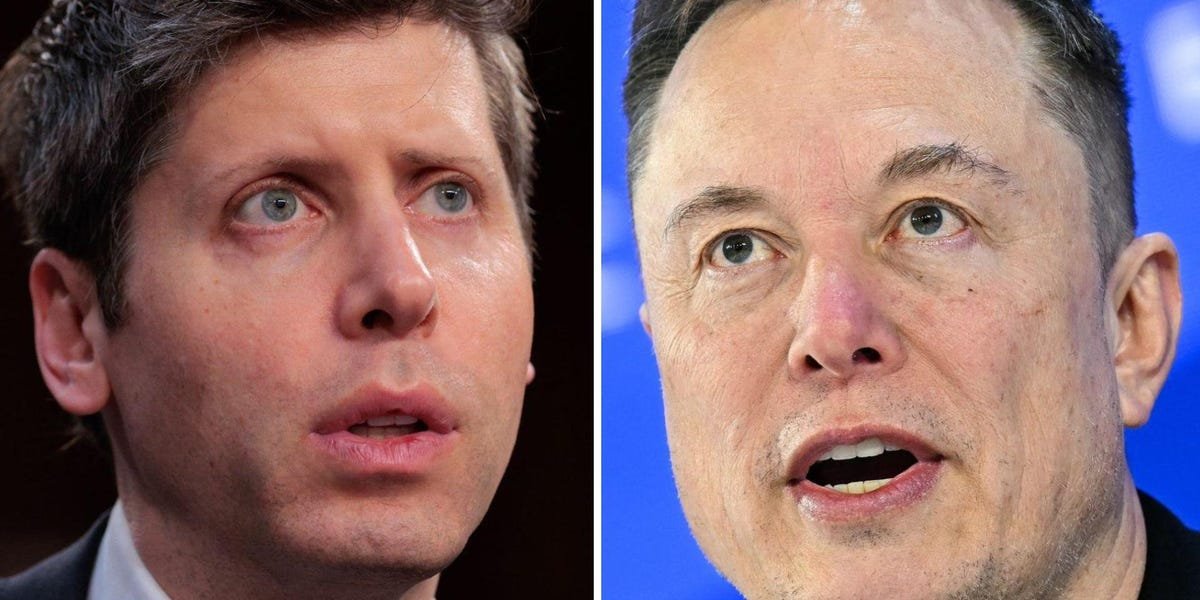
SpaceX CEO Elon Musk and OpenAI CEO Sam Altman famously don’t agree on much.
The latest point of contention: data centers in space. Musk has made it a priority. Altman thinks it’s a fantasy, at least for now.
“I honestly think the idea with the current landscape of putting data centers in space is ridiculous,” Altman said during a live interview with local media in New Delhi on Friday, causing audience members to laugh.
Altman said that orbital data centers could “make sense someday,” but factors like launch costs and the difficulty of repairing a computer chip in space remain overwhelming obstacles.
“We are not there yet,” Altman added. “There will come a time. Space is great for a lot of things. Orbital data centers are not something that’s going to matter at scale this decade.”
Musk would almost certainly disagree.
While many Big Tech and AI companies are spending billions on data center construction on Earth, Musk’s eyes are on the stars, per usual. Orbital data centers are his latest ambition, as he mentioned in an all-hands xAI meeting in December.
In February, SpaceX said its goal is to launch a “constellation of a million satellites that operate as orbital data centers.” The company has already begun hiring engineers to make that happen.
During an all-hands meeting with xAI employees this month, Musk said SpaceX’s acquisition of xAI will allow them to deploy the orbital data centers faster.
Despite Altman’s skepticism, other tech leaders are also racing to place data centers in space. Google’s Project Suncatcher, unveiled in November 2025, aims to do just that. Google CEO Sundar Pichai told Fox News Sunday the company could start placing data centers — powered by the sun — in space as early as 2027.
Tech and AI companies rely on data centers to power their products, like large language models and chatbots. Those data centers, however, can deplete water resources, strain power grids, increase pollution, and decrease the overall quality of life.
An investigation by Business Insider published last year found that over 1,200 data centers had been approved for construction across the US by the end of 2024, nearly four times the number from 2010.
Now, proposed data center campuses in Texas, Oklahoma, and elsewhere are increasingly facing stiff resistance from local communities.
The rivalry between xAI and OpenAI is heating up again — this time, over wood-fired pizza.
Over the weekend, Elon Musk and an OpenAI engineer jockeyed on X about wood-fired crusts, dough fermentation, and campus chefs.
On its face, it was a lighthearted back-and-forth about free pizza for lunch. Underneath, it encapsulates a trend playing out in Silicon Valley: rival AI companies are publicly pitching culture — and perks like free lunch — in the talent war for top engineers.
The exchange began when Musk reposted a video of an xAI engineer calling his job the “opportunity of a lifetime.”
“Join @xAI,” Musk wrote.
Every time Ben publishes a story, you’ll get an alert straight to your inbox!
Stay connected to Ben and get more of their work as it publishes.
The post quickly drew a response from xAI’s competitor, OpenAI.
“Or join Codex,” said Thibault Sottiaux, an engineering lead working on OpenAI’s Codex software agent, who is also hiring. OpenAI operates “with much of the same principles,” he wrote — before adding an increasingly common recruitment pitch.
“Join the bright side, we have pizza,” Sottiaux wrote.
Musk fired back: “But how good is your wood oven pizza?”
The pizza posturing then shifted to ingredients — and the corporate chefs preparing them.
“But how about the dough?” he wrote back. “Can’t take shortcuts, needs 24 hours at least. And our chef is 🔥.”
Our chef is so good that God looked down at the food from heaven and said you my most delicious creation 👼
“Our chef is so good that God looked down at the food from heaven and said you my most delicious creation,” Musk replied.
“And after having a bite, he wasn’t 100% satisfied and asked our chef to improve upon the SoTA,” Sottiaux said. “Our chef delivered, and created a recipe now universally credited to accelerating the AGI timeline.”
The very real fight behind the pizza posts
The tomato pie-based banter was sweet — but the subtext was spicier.
AI labs are locked in a high-stakes dash for elite engineers, with high-end compensation packages stretching into the nine-figure territory.
Companies including Amazon, Microsoft, Meta, OpenAI, and Musk’s xAI are competing for a relatively small pool of researchers capable of building the next generation of models and infrastructure.
Aside from money, two key perks have emerged in the AI talent wars, according to professional AI poacher Mark Zuckerberg: access to GPUs and fewer direct reports.
“People say, ‘I want the fewest number of people reporting to me and the most GPUs,'” Zuckerberg said in 2025 TITV interview.
At the same time, the broader tech industry has pulled back on many of the pre-pandemic perks amid cost-cutting. Remote work has narrowed, layoffs have gathered steam, and perks like pet care stipends and expansive wellness benefits are becoming less common for new hires.
But there’s one perk that has remained: the fancy lunch spread.
Elon Musk said she’s not qualified because she doesn’t have kids and no stake in the future.
Askell had thoughts.
Anthropic famously employs a Scottish philosopher named Amanda Askell.
Her job is to imbue its chatbot, Claude, with a personality and a set of moral guardrails. She is essentially teaching it to be cool and good.
Elon Musk, however, doesn’t think she’s qualified.
“Those without children lack a stake in the future,” Musk posted on X in response to a profile of Askell published by The Wall Street Journal.
The Journal profile does not say whether Askell has kids. Musk, who has imbued his own chatbot, Grok, with a distinct personality, has 14 of them. Musk is known for promoting a brand of pronatalism that’s become popular among Silicon Valley elites.
Askell responded with her trademark dry intellectualism.
“I think it depends on how much you care about people in general vs. your own kin,” Askell wrote. “I do intend to have kids, but I still feel like I have a strong personal stake in the future because I care a lot about people thriving, even if they’re not related to me.”
“I think caring about your children can make you feel invested in the future in a new and very profound way, and I do understand people wanting to convey that,” she added.
The responses to their short back-and-forth were as varied as you might expect on Musk’s social media network. A day later, Askell posted again.
“I’m too right wing for the left and I’m too left wing for the right,” she said. “I’m too into humanities for those in tech and I’m too into tech for those in the humanities. What I’m learning is that failing to polarize is itself quite polarizing.”
XAI just had its first all-hands meeting since its merger with SpaceX.
In the recorded event on Tuesday night, CEO Elon Musk outlined a new organizational structure — the main Grok product and Grok Voice, Grok Code, Grok Imagine, and the company’s Macrohard project. The all-hands was later posted on X on Wednesday.
From a plan to build a catapult, or mass driver, on the moon to soothing nerves after the restructuring, here are the main takeaways from xAI’s latest all-hands meeting.
1. Addressing the restructure
There are now only six members left of an original founding team of 12 at xAI, following two more exits earlier this week.
Musk addressed the new restructuring.
Every time Katherine publishes a story, you’ll get an alert straight to your inbox!
Stay connected to Katherine and get more of their work as it publishes.
“Because we’ve reached a certain scale, we’re organizing the company to be more effective at this scale,” said Musk. “Now, naturally, when this happens, there are some people who are better suited for the early stages of a company and less suited for the later stages.”
On Monday, Tony Wu announced his resignation in a post on X, writing that it was “time for my next chapter.” Less than 24 hours later, fellow cofounder Jimmy Ba followed suit, posting that Tuesday was his last day and thanking Musk for “bringing us together on this incredible journey.”
2. Shooting from the moon
Musk is promising the moon, literally.
“Ultimately, we see a path to maybe launching as much as a terawatt per year of compute from earth, but what if you want to go beyond a mere terawatt per year?” said Musk. “In order to do that, you have to go to the moon.”
His goal is to launch AI sattelites from the moon, he told employees.
“I can’t imagine anything more epic than a mass driver on the moon and a self-sustaining city on the moon, and then going beyond the moon to Mars, going throughout our solar system, and ultimately being out there among the stars and visiting all these star systems,” Musk added. “Maybe we’ll meet aliens.”
Google CEO Sundar Pichai is also researching the feasability of data centers in space, citing limited resources on Earth, such as water and electricity. Data centers are already facing backlash for driving up utility costs for average households.
3. Product updates and launches
A stand-alone app for XChat and a new transaction app called X Money are coming in the next few months, according to Musk.
During the all-hands meeting, Musk said that users who only want to use the messaging function could use the standalone XChat app without visiting the X platform. He said the app will also be on desktop and can handle multi-user video calls.
“For XMoney, we actually had XMoney live in closed beta within the company, and we expect in the next month or two to go to a limited external beta and then to go worldwide to all X users,” said Musk.
“And this is really intended to be the place where all the money is, the central source of all monetary transactions,” Musk added. “So it’s really going to be a game changer.”
XAI cofounder Jimmy Ba said he left Elon Musk’s startup on Tuesday.
“It’s time to recalibrate my gradient on the big picture. 2026 is gonna be insane and likely the busiest (and most consequential) year for the future of our species,” Ba wrote on X.
Ba reported directly to Musk. He ran a large portion of the company until late last year, when several of his responsibilities were split between two other cofounders, Tony Wu and Guodong Zhang, people with knowledge of the move told Business Insider.
Ba also previously ran the team that oversaw more than a thousand AI tutors, according to an org chart from earlier last year. That role was given to Diego Pasini in September, Business Insider previously reported.
Ba is the second cofounder to depart the company in less than 48 hours. Wu announced he’d resigned from the AI startup on Monday night. Wu’s Slack account was deactivated shortly before the announcement, Business Insider previously reported.
Ahead of Wu’s departure, xAI underwent another restructuring, and several of his responsibilities were shifted under Zhang.
Musk launched the AI company in 2023 with 11 other founders. Six have now left the company — five of them within the last year.
In addition to his work at xAI, Ba is an assistant professor at the University of Toronto in the computer science department. He received his Ph.D. from the school while studying under Nobel Prize winner Geoffrey Hinton, often referred to as the “godfather of AI.”
Musk has said he built xAI as an alternative to what he’s called “woke” chatbots, like OpenAI’s ChatGPT. Over the past year, the company has become known for pushing the envelope. Last July, xAI launched a sexy digital avatar called “Ani,” and its Grok chatbot went on an antisemitic rant.
Most recently, xAI has come under fire after Grok began generating nonconsensual sexual images of real people in response to X user prompts. The backlash eventually prompted the company to restrict Grok’s image-generation features on X.
Last week, Musk announced that xAI would merge with his rocket company, SpaceX. The company is reportedly gearing up for an initial public offering this year that could value SpaceX at $1.5 trillion.
Ba and xAI did not immediately respond to a request for comment.
Do you work for xAI or have a tip? Contact this reporter via email at gkay@businessinsider.com or Signal at 248-894-6012. Use a personal email address, a nonwork device, and nonwork WiFi; here’s our guide to sharing information securely.
Elon Musk says he’s happy to lose one lunar milestone if it helps him win the bigger prize.
The SpaceX chief said in a post on X on Monday that he would congratulate Blue Origin if it lands on the moon before SpaceX, as his company focuses on a more ambitious goal: building a “self-growing city” on the moon.
“What really matters for the future is being able to land millions of tons of equipment and people to build a self-growing city on the moon,” Musk wrote. “In this respect, perhaps we are be more the tortoise than the hare for now,” he added.
Musk’s comments about SpaceX being more “tortoise than the hare” came in response to an X post by Blue Origin founder Jeff Bezos, who shared a black-and-white image of a tortoise. The post on Monday appeared to be a nod to the tortoise-and-hare fable, framing Blue Origin as the slow-and-steady contender and SpaceX as the faster but more distracted rival.
Musk and Bezos have been rivals for years, frequently clashing over their space ambitions at SpaceX and Blue Origin, as well as over their fortunes.
Every time Lee Chong Ming publishes a story, you’ll get an alert straight to your inbox!
Stay connected to Lee Chong Ming and get more of their work as it publishes.
After long touting Mars as SpaceX’s main destination, Musk said on Sunday that the company has shifted its focus to the moon.
“For those unaware, SpaceX has already shifted focus to building a self-growing city on the moon, as we can potentially achieve that in less than 10 years, whereas Mars would take 20+ years,” he wrote in a post on X.
“That said, SpaceX will also strive to build a Mars city and begin doing so in about 5 to 7 years, but the overriding priority is securing the future of civilization and the moon is faster,” he added.
The Wall Street Journal reported on Friday that SpaceX told investors it is targeting March 2027 for an uncrewed landing on the moon.
In a separate post on X, Musk said on Sunday that SpaceX would “continue to launch directly from Earth to Mars while possible, rather than moon to Mars.”
“Fuel is relatively scarce on the moon,” Musk added.
Musk previously said SpaceX would send an uncrewed mission to Mars by the end of 2026.
“No, we’re going straight to Mars. The moon is a distraction,” he said in January last year in response to a post on X.
Musk is known for rolling out bold timelines for projects such as electric vehicles — only to revise or abandon them later.
Bezos has long emphasised the moon as humanity’s next destination, and has taken aim at Musk’s push to colonize Mars.
“Go live on the top of Mount Everest for a year first and see if you like it, because it’s a garden paradise compared to Mars,” Bezos said in 2019.
During a presentation for project Blue Moon, Bezos included a slide about Mars with the title “FAR, FAR AWAY,” referencing SpaceX’s Mars ambition.
Blue Origin said previously it aimed to reach the moon by 2023 — a target it did not meet.
This story is available exclusively to Business Insider
subscribers. Become an Insider
and start reading now. Have an account? .
SpaceX ran its first Super Bowl ad on Sunday, promoting its Starlink internet service.
It’s the first time any of Elon Musk’s companies have run an ad at the Super Bowl.
Tesla and SpaceX have avoided traditional advertising in the past, but that is beginning to change.
SpaceX has made its Super Bowl debut ahead of a potential record-breaking IPO.
The rocket company ran its first Super Bowl ad for its Starlink satellite internet on Sunday, the first time any of Elon Musk’s companies have run an ad at the showpiece event.
The 30-second spot features audio from a speech by legendary science-fiction author Arthur C. Clarke, set to footage of SpaceX’s Falcon 9 and Starship rocket boosters returning to Earth.
It shows Starlink operating in a series of remote locations and touts the satellite internet service’s mission of “fast, affordable internet, available everywhere.”
The ad marks a departure for Musk’s companies, which have in the past shunned advertising in favor of using the billionaire’s outspoken public persona for publicity.
Tesla reportedly laid off its entire marketing team during widespread workforce cuts in 2024, while SpaceX has typically relied on eye-catching rocket tests, such as its Starship booster catch, to boost its public profile.
Both companies have started running advertising in recent years across a number of platforms, including Musk’s X, and Starlink has previously featured in Super Bowl ads run by partners such as T-Mobile.
Fast, affordable internet. Available all around the world!
Order in less than 2 minutes by visiting https://t.co/fUko3xSviJ or, if you live in the US, by calling 1-888-GO-STARLINK to get connected with the Starlink service plan that works best for you 🛰️🌎❤️ pic.twitter.com/D17EDQi9wL
SpaceX running its own stand-alone Super Bowl ad is a significant development, with 30-second ad slots costing between $8 million and $10 million on average this year, per broadcaster NBCUniversal.
It comes as SpaceX gears up for a public offering later this year that could value the rocket company at as much as $1.5 trillion.
Last week, Musk announced that SpaceX would merge with his AI startup xAI, in a move the world’s richest man said would help launch a network of solar-powered orbital data centers to train powerful AI models.
SpaceX’s recent success has been driven in large part by Starlink, which uses a constellation of more than 9,000 low-orbit satellites to provide wireless internet. In December, the company said Starlink has 9 million customers and is active in 155 countries.
Elon Musk’s SpaceX just overhauled its to-do list.
In an X post on Sunday, the CEO said that the company is shifting its focus from Mars to creating a “self-growing city” on the moon.
“It is only possible to travel to Mars when the planets align every 26 months (six month trip time), whereas we can launch to the Moon every 10 days (2 day trip time),” Musk wrote. “This means we can iterate much faster to complete a Moon city than a Mars city.”
The announcement is a big departure from Musk’s previous comments about reaching the red planet this year.
In 2020, the SpaceX CEO said he was confident that the company would land humans on Mars by 2026.
Every time Shubhangi publishes a story, you’ll get an alert straight to your inbox!
Stay connected to Shubhangi and get more of their work as it publishes.
“If we get lucky, maybe four years,” Musk said at an awards show in 2020. “We want to send an uncrewed vehicle there in two years.”
The space company has historically delayed ambitious projects because of their complexity and regulatory challenges. Last week, the company delayed the Artemis 2 moon mission, the first human moon mission in more than 50 years.
Mars is still part of the plan
In Sunday’s post, Musk added that SpaceX would continue building a Mars city, starting in five to seven years.
“But the overriding priority is securing the future of civilization and the Moon is faster,” he wrote.
Last week, Musk announced that SpaceX would acquire xAI, his AI company behind the chatbot Grok. XAI purchased the social media platform X in March 2025.
The CEO wrote that SpaceX’s xAI acquisition would create “the most ambitious, vertically-integrated innovation engine on (and off) Earth, with AI, rockets, space-based internet, direct-to-mobile device communications and the world’s foremost real-time information and free speech platform.”
In the memo, Musk shared plans to have “self-growing bases” and factories on the moon. He also mentioned having “an entire civilization on Mars.”