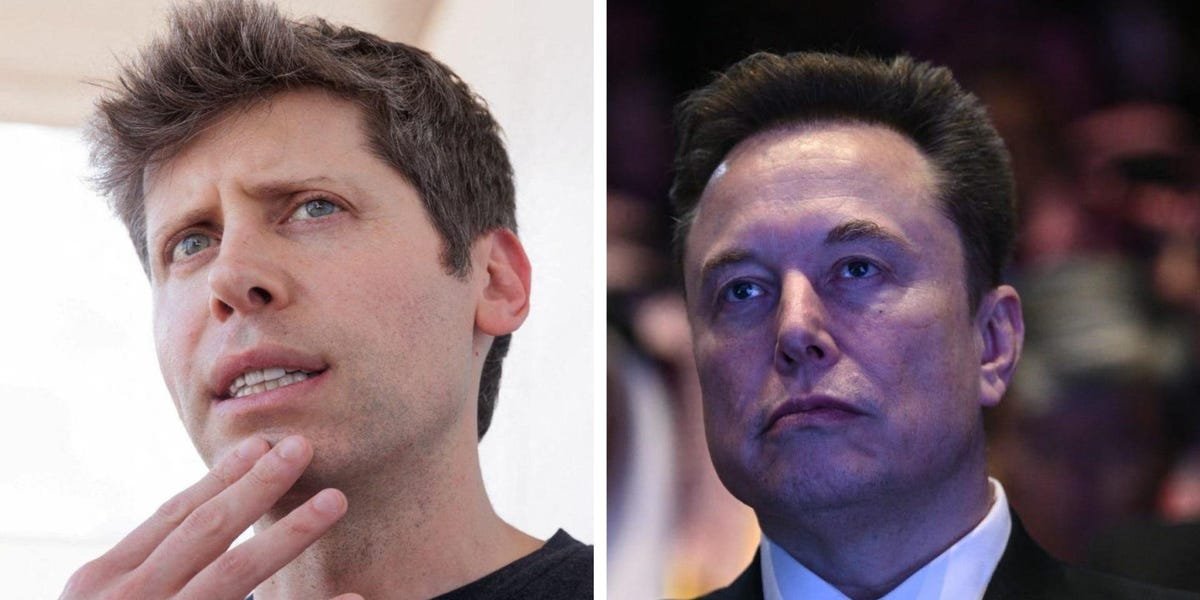
This-case-is-going-to-trial-Judge-rejects-Sam-Altmans.jpeg

‘This case is going to trial’: Judge rejects Sam Altman’s efforts to toss Elon Musk’s OpenAI lawsuit

It looks like Sam Altman and Elon Musk are headed for a courtroom showdown.

During a hearing on Wednesday, a California judge said she plans to reject Altman’s lawyers’ last-ditch efforts to end Musk’s case against OpenAI and its CEO.

“This case is going to trial,” US District Judge Yvonne Gonzalez Rogers said at a hearing to consider whether the evidence was sufficient to warrant a jury trial.

“I think there’s plenty of evidence,” she said, referring to Musk’s case. “It’s circumstantial, but that’s how these things work.”

In his lawsuit filed in 2024, Musk accused OpenAI of misleading him in its decision to abandon its original nonprofit mission and structure in favor of a profit-oriented model, including through its partnership with Microsoft.

Musk says he donated $38 million to the maker of ChatGPT over the years to support its mission to develop AI for the benefit of humankind. The Tesla CEO is seeking monetary damages, as well as a judgment to void Microsoft’s licensing agreement with OpenAI.

At a hearing on Wednesday, an Oakland federal court judge said she felt there was enough evidence that Musk may have been deceived to allow the case to move forward to a jury. A trial is scheduled for March.

“There were assurances made, and promises made, that the structure would be maintained,” she said. “There was lots of information that was not shared.”

The judge added that she also felt “there are strong arguments by the defense.”

“I think the jury is going to get to decide,” she said.

OpenAI lawyers have denied Musk’s allegations, saying Musk was aware of the company’s for-profit plans as early as 2018. OpenAI has also pointed out that it is still controlled by OpenAI’s nonprofit arm.

“Mr Musk’s lawsuit continues to be baseless and a part of his ongoing pattern of harassment, and we look forward to demonstrating this at trial,” a spokesperson for OpenAI told Business Insider. “We remain focused on empowering the OpenAI Foundation, which is already one of the best resourced nonprofits ever.”

A spokesperson for Musk did not immediately respond to a request for comment.

Musk has filed multiple lawsuits against OpenAI. Most recently, his AI company, xAI, sued OpenAI in September, accusing it of stealing trade secrets and targeting its employees for recruitment. At the time, an OpenAI spokesperson told Business that the lawsuit is “the latest chapter in Mr. Musk’s ongoing harassment.”

Musk helped found OpenAI in 2015, but left the company in 2018. At the time he said his work with OpenAI could present a conflict of interest with Tesla’s AI ambitions.

Since, Musk has repeatedly criticized Altman and OpenAI, including the company’s structure. Musk later went on to launch his own AI company, xAI, in 2023.



Source link

Chong Ming Lee, Junior News Reporter at Business Insider's Singapore bureau.

Elon Musk says China will ‘far exceed the rest of the world in AI compute’

Elon Musk says China is on track to outpace every other country in the computing power needed to run AI.

The Tesla and SpaceX CEO said in an episode of the “Moonshots with Peter Diamandis” podcast published Tuesday that “China’s going to have more power than anyone else and probably will have more chips.”

“Based on current trends, China will far exceed the rest of the world in AI compute,” he added.

Musk said China’s decisive advantage in the AI race lies in its ability to scale electricity generation. He estimated that China could reach about three times the electricity output of the US by 2026, giving it the capacity to support energy-hungry AI data centers.

Electricity generation is the limiting factor to scaling AI systems, Musk said.

“People are underestimating the difficulty of bringing electricity online,” he added.

While the US has focused on restricting China’s access to advanced semiconductors, Musk suggested those constraints may matter less over time. China will “figure out the chips,” he said.

Musk added that diminishing returns at the cutting edge of chip performance might make it easier for China to catch up, even without access to the most advanced designs.

Musk has previously pointed to China as a model in areas beyond AI infrastructure.

In an episode of the “People by WTF” podcast published in November, Musk said he wants to turn his social media platform X into “WeChat++,” referencing China’s dominant super app.

“I also like the idea of sort of having a unified app or website or whatever, where you can do anything you want there,” he said. “China has this with WeChat.”

AI’s next bottleneck is power — and China is leading

Musk’s comments come as energy supply and data infrastructure emerge as key constraints in scaling AI, rather than chips or algorithms.

Companies worldwide have rushed to build AI data centers, many of which require as much electrical power as small cities.

A report from Goldman Sachs in November said that an electricity shortage could slow US progress in the AI race.

“As AI demands massive power, a reliable and ample power supply is likely to be a key factor shaping this race, especially because power infrastructure bottlenecks can be slow to solve,” wrote Goldman’s analysts.

The report added that while pressure on the US power grid is increasing, China has been steadily expanding its energy capacity.

By 2030, China could have about 400 gigawatts of spare power capacity, according to Goldman. That’s more than three times the total electricity demand data centers worldwide need.

“We expect China’s spare capacity to remain sufficient to accommodate data center power demand growth while supporting demand in other industries,” the analysts wrote.

In his annual New Year’s address last week, Chinese leader Xi Jinping praised his country’s progress in AI in 2025, saying China had “integrated science and technology deeply with industries, and made a stream of new innovations.”

“Many large AI models have been competing in a race to the top, and breakthroughs have been achieved in the research and development of our own chips,” he said in his speech in Beijing.

“All this has turned China into one of the economies with the fastest-growing innovation capabilities,” he added.


Source link

Polly Thompson

Elon Musk’s Starlink is adding 20,000 new users a day as it hits 9 million customers

Moving at superspeed isn’t limited to SpaceX’s rockets.

Elon Musk’s satellite and rocket company has secured one million new customers for its Starlink internet in under seven weeks and is now active in 155 markets, the company wrote in a post on X on Monday evening.

“Starlink is connecting more than 9M active customers with high-speed internet across 155 countries, territories, and many other markets,” the company said.

In a similar post from November 5, SpaceX said Starlink had 8 million customers, meaning that its customer base has expanded at a rate of more than 20,000 per day since that date.

SpaceX, which uses a constellation of more than 9,000 low-orbit satellites to provide its Starlink internet connection, including to remote areas, is reportedly planning to go public next year at a valuation of $1.5 trillion.

Elon Musk, who founded the company in 2002, said this month that the satellite network was “by far” the largest driver of SpaceX’s revenue.

The numbers close an explosive year of growth for SpaceX. In a December 2024 progress report, SpaceX said Starlink had 4.6 million customers, and by August 2025, the number was up to 7 million.

Global web traffic from users on SpaceX’s satellite-based internet service more than doubled in 2025, according to data from Cloudflare, a cybersecurity company that handles tens of millions of requests between users and websites every second.

Around two dozen airlines have also announced plans to use Starlink to offer high-speed WiFi on their planes, and SpaceX has signalled it could soon launch its own mobile carrier service powered by the satellite network.

SpaceX has successfully commercialized reusable rockets, a feat previously thought impossible by many within the space industry, and now launches more cargo into orbit than any other company.

It has also capitalized on opportunities that emerged as NASA and the Pentagon moved away from government-only spaceflight, and filled a massive unmet demand in global connectivity.

Led by Musk, who is the CEO and founder, SpaceX is also known for its intense, efficiency-driven culture.

SpaceX ultimately plans to fulfill its billionaire founder’s ambitious visions of colonizing Mars and putting data centers in space with its giant Starship rocket.

SpaceX did not immediately respond to Business Insider’s request for comment.


Source link

Inside-xAIs-all-hands-Elon-Musk-says-if-the-company-can.jpeg

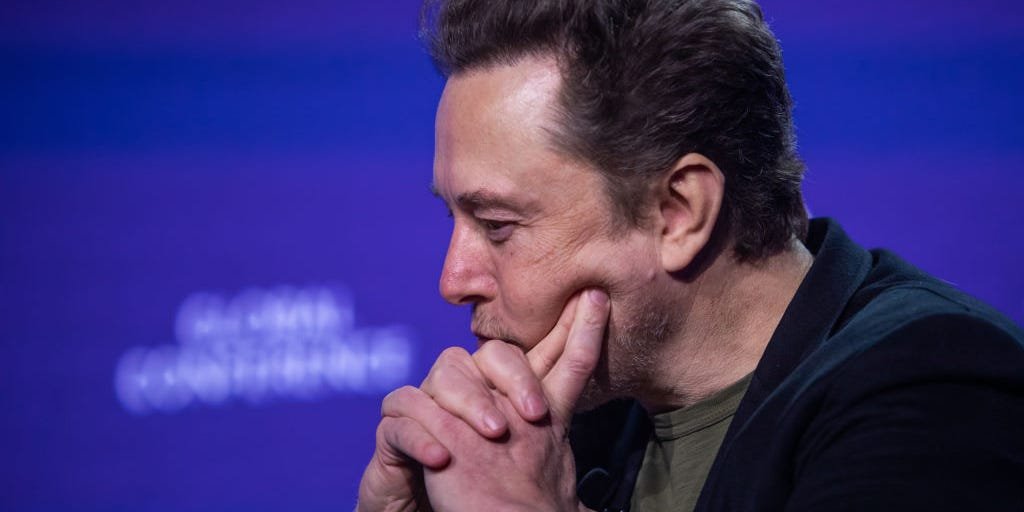
Inside xAI’s all-hands: Elon Musk says if the company can survive the next 2 to 3 years, it will come out on top

Elon Musk appears to be feeling upbeat about the future of his AI company.

At a companywide meeting at xAI’s San Francisco headquarters last week, Musk told staff that if the company could survive the next two to three years, xAI would triumph over its competitors, several sources with knowledge of the meeting said.

The xAI CEO said that the company’s ability to rapidly scale its power and data capacity would be a key ingredient in the race to achieve superintelligence — which surpasses human intelligence — and become the most powerful AI company.

Musk said that xAI could achieve artificial general intelligence, which matches or exceeds human intelligence, in the next few years, even as soon as 2026, sources said.

Musk said in November that xAI had a 10% likelihood of achieving AGI with its Grok 5 model, which he has said the company plans to release early next year.

The CEO also told staff that xAI would have an advantage over other AI companies because it would have access to around $20 billion to $30 billion in funding per year, and it could benefit from its proximity to his other companies, sources said. Tesla integrated Grok into its vehicles earlier this year.

Overall, workers said Musk appeared happy with the company’s progress. One insider described the meeting as “peppy.”

Musk also theorized about building data centers in space and his plans to colonize Mars, the sources said. He said that Tesla’s Optimus humanoid robot could eventually man such extraterrestrial data centers, the people said.

Musk has previously said that Optimus could provide support for SpaceX missions as soon as next year. Google CEO Sundar Pichai and OpenAI CEO Sam Altman have publicly talked about the possibility of building data centers in space, though Pichai acknowledged that it is a “moonshot.”

In response to Business Insider’s request for a comment, the company responded with an automated message: “Legacy Media Lies.”

Over the past year, xAI has rapidly expanded the footprint of its data centers, a project it has named Colossus. Earlier this year, the company said it had around 200,000 GPUs, and Musk has said it plans to expand to 1 million GPUs.

xAI is one of many companies racing to build AGI and justify valuations worth hundreds of billions of dollars. Despite Musk’s outsize profile, xAI is still a relatively new player in a race dominated by giants like OpenAI and Google.

The AI race shows no signs of slowing down. Earlier this month, OpenAI entered a state of emergency as it raced to push out its latest model, according to reports. Google released a new Gemini model in November, and xAI has pushed new versions of Grok in rapid succession.

During the all-hands, xAI leads demonstrated several updates to existing products, such as Grok Voice, the company’s app for Tesla owners, and its agents, sources said. Some of the updates included improvements to Grok’s ability to predict outcomes, better listening functions for Grok voice, and video editing, the people said.

Do you work at xAI or have a tip? Contact this reporter via email at gkay@businessinsider.com or Signal at 248-894-6012. Use a personal email address, a nonwork device, and nonwork WiFi; here’s our guide to sharing information securely.


Source link

What-is-Elon-Musks-net-worth-Find-out-the-wealth.jpeg

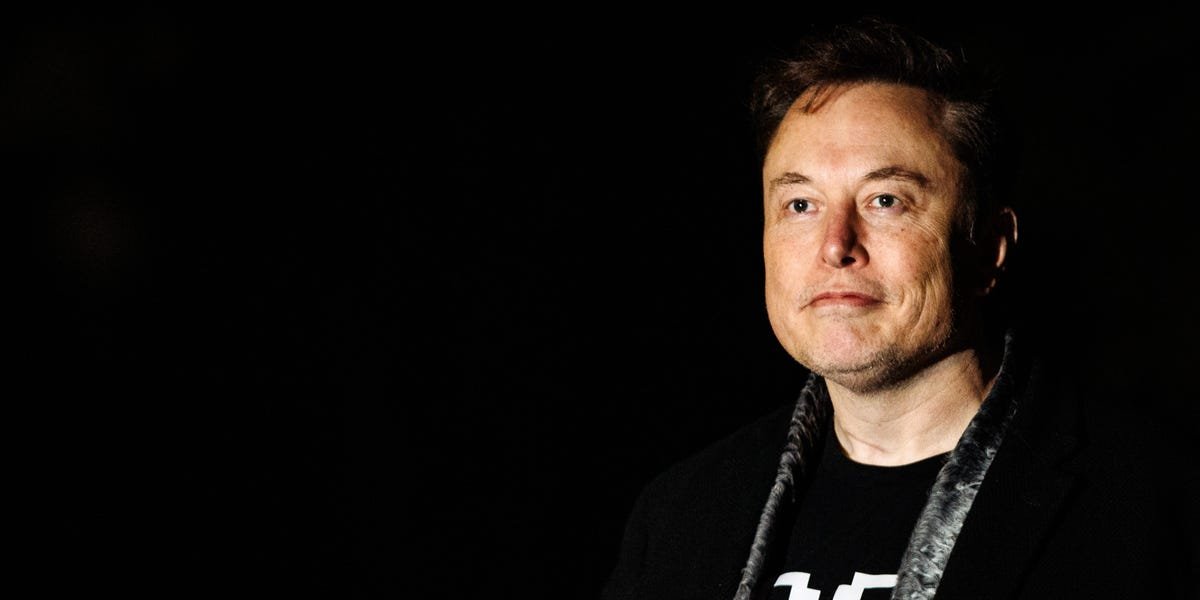
What is Elon Musk’s net worth? Find out the wealth of the Tesla, SpaceX CEO

Elon Musk has a net worth of around $638 billion, according to Bloomberg’s Billionaires Index.

His net worth is closely tied to Tesla’s share price, but the tech mogul’s wealth comes from several sources and often fluctuates. He crossed over the $600 billion threshold in December following an $800 billion valuation of SpaceX.

That means Musk regularly trades places with Amazon founder Jeff Bezos, Meta CEO Mark Zuckerberg, and Oracle CEO Larry Ellison for the title of world’s richest person.

How has Musk’s net worth changed over time?

Musk, who was born in South Africa, moved to Canada and dropped out of a Ph.D. at Stanford, became a millionaire before he hit 30. Musk started Zip2, a website that provided city travel guides to newspapers, with his brother Kimbal Musk, and sold it to Compaq for more than $300 million in 1999. Musk, then aged 27, is believed to have got $22 million from the deal.

He went on to cofound online bank X.com in 1999. It soon merged with Peter Thiel’s Confinity to become PayPal, and the company was bought for $1.5 billion by eBay in 2002. Despite having been ousted as CEO, Musk walked away with around $165 million. 

Musk cofounded space-exploration company SpaceX in 2002. In 2004, he became an investor in and the chairman of EV company Tesla.

During the financial crisis in 2008, he saved Tesla from bankruptcy with a $40 million investment and a $40 million loan. That same year, he was named Tesla’s CEO.

Musk said 2008 was “the worst year of my life.” Alongside problems in his personal life, Tesla kept losing money and SpaceX was having trouble launching the first version of its Falcon rocket. By 2009, Musk was living off personal loans.

Tesla went public in 2010, though, and Musk’s estimated net worth steadily climbed. In 2012, he debuted on Forbes’ Billionaires List with an estimated wealth of $2 billion. 

In 2016, Musk set up the tunnel-digging business, the Boring Company.

The next year, he founded the neurotechnology startup Neuralink.

Musk’s net worth began a rapid ascent at the start of the pandemic as Tesla stock prices soared. Musk started 2020 with an estimated net worth of just under $30 billion and was worth around $170 billion just a year later — a more than five-fold increase in just a year. His estimated fortune peaked at around $340 billion in November 2021.

Musk also bought Twitter for $44 billion in October 2022, serving as its CEO until he stepped down in early June 2023.

The stock is known to be volatile and has had its ups and downs since then.

The morning of Trump’s reelection on November 6, 2024, which Musk heavily campaigned for, Tesla’s stock was up about 15%, for instance.

Following an insider share sale at SpaceX, which boosted the startup to a $350 billion valuation, Musk’s wealth surged again in December 2024 by about $50 billion in one day, making Musk the first billionaire to reach the $400 billion mark.

But in the months following its election highs, Tesla’s stock dropped by over 50% following a number of factors, including a vehicle sales slump, a rising Tesla boycott movement, and Musk’s stint in the US government, which some investors felt took him away from his day-in-day-out Tesla CEO duties.

Tesla’s stock rose back up following the CEO taking a step back from his role in the Department of Government Efficiency, but it continues to have big swings. Musk had one of his single-day highest net worth losses in June 2025 following a public spat on social media with the President, in which Trump floated the idea of having his government contracts revoked, and Musk repeatedly criticized Trump’s “Big Beautiful Bill.”

The stock has since rebounded and was up over 25% in 2025 as of December.

Musk’s net worth reached unprecedented heights in December 2025, as Musk confirmed SpaceX was planning an IPO. After an insider share sale valued the private company at $800 billion, Musk’s estimated net worth surpassed $600 billion.

Musk was the first billionaire to have reached a net worth of over $500 billion, according to Forbes, making him one step closer to becoming the world’s first trillionaire.

Where does Musk’s fortune come from?

Musk’s wealth is largely dependent on Tesla shares. Though he takes no salary from Tesla, he’s awarded stock options when the company hits challenging performance metrics.

Musk’s previous $55 billion compensation plan was voided in January 2024 on the grounds that Musk had undue influence over the package and its approval due to close ties with several board members. At its annual shareholder meeting in 2024, investors voted to approve Musk’s pay package. However, the judge upheld the original ruling, and the company has since appealed the decision.

A compensation package Tesla proposed for its CEO in September 2025 could turn Musk into the first trillionaire. The unprecedented plan included a new set of 12 milestones to be completed over a 10-year period, such as boosting the company’s valuation to $8.5 trillion, selling 12 million cars, getting a million robotaxis on the road, and coming up with a succession plan.

A large part of Musk’s net worth comes from Tesla shares, while roughly over 20% comes from SpaceX stock.

The rest of his wealth comes from shares in Twitter and The Boring Company, as well as other miscellaneous liabilities.


Source link

Elon-Musk-just-hit-Sam-Altman-with-an-800-billion.jpeg

Elon Musk just hit Sam Altman with an $800 billion counterpunch

If Elon Musk and Sam Altman like each other, they hide it well.

In the latest turn in the rivalry, the two are battling over the top spot on the list of the world’s most valuable private companies.

While the two cofounded OpenAI together back in 2015, the partnership has frayed spectacularly since.

Musk left OpenAI in 2018 and later founded rival startup, xAI. Musk or his company, xAI, has filed lawsuits against OpenAI.

OpenAI held a secondary share sale in October that valued it at $500 billion, taking the lead from Musk’s SpaceX by a cool $100 billion.

Not one to cede ground to a rival, Musk is now planning his own secondary share sale at SpaceX, according to an internal letter to employees seen by multiple outlets. It would value the company at a whopping $800 billion. If that happens soon, it means Musk would have only let Altman hold the mantle for a couple of months.

Musk also confirmed on X this week that the company is exploring a blockbuster initial public offering, which might be the only way OpenAI can regain its lead as a private company. OpenAI this year restructured its business, which would allow it to also pursue its own eye-watering IPO in the future.

While this valuation battle between the two billionaires is maybe cringeworthy theater for the average earner, it underscores a significant shift: investors are pouring unprecedented money into technologies once viewed as speculative science projects.

SpaceX, which aims to make life multi-planetary and colonize Mars, and OpenAI, which seeks to develop a theoretical AI that can reason like humans, are two of the most visible examples, but they are part of a broader surge in frontier-tech valuations. AI, robotics, and defense tech startups have all notched multibillion-dollar valuations in the past year — bubble be damned.


Source link

The-history-of-Elon-Musk-and-Sam-Altmans-relationship-and.jpeg

The history of Elon Musk and Sam Altman’s relationship and feuds, which date back to the early days of OpenAI

SpaceX is planning a secondary share sale, according to an internal message to employees seen by multiple outlets, which would value the company at $800 billion, reclaiming the top spot among the world’s most valuable private companies from OpenAI.

OpenAI executed its own secondary share sale in October, valuing the company at $500 billion.

The letter to employees also says SpaceX is exploring an initial public offering to “raise a significant amount of capital,” The Wall Street Journal and other outlets reported. It would be the largest IPO in history.

“The thinking is that if we execute brilliantly and the markets cooperate, a public offering could raise a significant amount of capital,” SpaceX Chief Financial Officer Bret Johnsen told staff in the December 12 message.

Musk also hinted at an IPO earlier this week.

After journalist Eric Berger published an op-ed arguing that SpaceX is likely to go public soon, Musk replied, “as usual, Eric is accurate.”

The company is aiming to raise more than $25 billion through an initial public offering, a move that could push its valuation above $1 trillion, Reuters reported.


Source link

Some-Tesla-shareholders-say-diverting-Nvidia-chips-is-further-proof.jpeg

Some Tesla shareholders say diverting Nvidia chips is further proof that Elon Musk doesn’t deserve a multibillion-dollar pay package

Several institutional shareholders of Tesla told Business Insider that Elon Musk’s decision to redirect a shipment of valuable Nvidia chips away from the EV company is further proof the CEO doesn’t deserve a multibillion-dollar pay package.

In May, a group of eight Tesla shareholders wrote a letter urging other investors to vote against Musk’s compensation package. The group is just one faction of a growing number of investors who said they plan to vote against the deal.

This package, now roughly worth $46 billion, was struck down in January by Delaware Chancery Court Chancellor Kathaleen McCormick, who said that the process to reach this “unfair price” for Musk was “deeply flawed.”

Tesla shareholders will vote on June 13 on whether to reinstate Musk’s deal.

But less than two weeks ahead of the shareholder vote, CNBC reported that Musk diverted a $500 million shipment of Nvidia chips, which are essential for powering artificial intelligence technology, away from Tesla and to his social media platform X instead.

The internal memo from Nvidia indicating Musk’s delay of the Nvidia chips procurement was from December, CNBC reported — months before the April earnings call in which the Tesla CEO insisted the automaker is an AI company. He also stated in the call that he would aggressively expand the number of Nvidia chips at Tesla from 35,000 to 85,000 units by the end of 2024.

In response to the CNBC report, Musk said on X that “Tesla had no place to send the Nvidia chips to turn them on, so they would have just sat in a warehouse.”

“The south extension of Giga Texas is almost complete. This will house 50k H100s (Nvidia chips) for FSD training,” Musk added, referring to Tesla’s Full Self-Driving feature — a key component of the company’s promise to deliver autonomous taxis.

But some of the shareholders behind the effort to strike down Musk’s big payday are not convinced.

“The diversion of Nvidia’s processors to X and xAI is just another example of Tesla’s CEO reallocating Tesla’s resources in favor of his other businesses and treating Tesla as though it is his own coffer as a result of the lack of oversight by Tesla’s board,” Tejal Patel, the executive director of SOC Investment Group, wrote in an email to BI.

Patel added: “The key questions are why were these valuable processors ‘just sitting there’ in the first place, and if it was an operational issue, why was that not foreseen by management? Whatever decision-making there was for the processors to go unused by Tesla would have been up to CEO Musk.”

Musk did not respond to a request for comment from Business Insider.

SOC Investment Group is one of the eight shareholders that co-signed a letter urging investors to vote against the ratification of Musk’s stock options package and against the reelection of Musk’s brother, Kimbal, and James Murdoch for seats on Tesla’s board.

The group — made up of pension fund managers, an asset management firm, and a bank — also includes Amalgamated Bank, AkademikerPension, Nordea Asset Management, New York City Comptroller Brad Lander, SHARE, Unison, and United Church Funds.

In a statement to BI, Lander wrote that Musk’s decision to divert Nvidia chips away from Tesla “should be a “red flag to investors.”

“This sudden move adds to the growing concerns about Musk’s commitment to Tesla and highlights his glaring conflicts of interest,” he wrote. “There is a pressing need at Tesla for a genuinely independent board that will ensure Musk prioritizes company interests.”

Matthew Illian, the director of responsible investing for United Church Funds, similarly criticized Musk’s move to delay the shipment of Nvidia chips, stating that it was “further evidence” that the pay package “never achieved its purpose of maintaining the attention of Tesla’s CEO.”

“This is all about Elon building an empire for himself with investor money and we can’t let this happen,” he wrote in an email to BI.

It’s not immediately clear how much Tesla stock the eight shareholders own altogether.

Five of the eight shareholders, including Amalgamated Bank, Unison, Nordea, the New York City Retirement System, and United Church Funds, represent more than 4.9 million shares of Tesla stock.

As of Thursday, those shares are worth more than $878 million.

Spokespersons for SHARE, Nordea, and Unison could not be reached for comment or did not immediately respond for comment.

In addition to the eight shareholders, the California Public Employees’ Retirement System (CalPERS), which owns about 9.5 million shares of Tesla stock, signaled it would vote against Musk’s pay package.

“We do not believe that the compensation is commensurate with the performance of the company,” CalPERS CEO Marcie Frost told CNBC.

A CalPERS spokesperson declined to comment when asked about Musk’s decision to divert the shipment of Nvidia chips.


Source link