
The-CEO-of-Naya-calls-his-mom-daily-refuses-to.jpeg

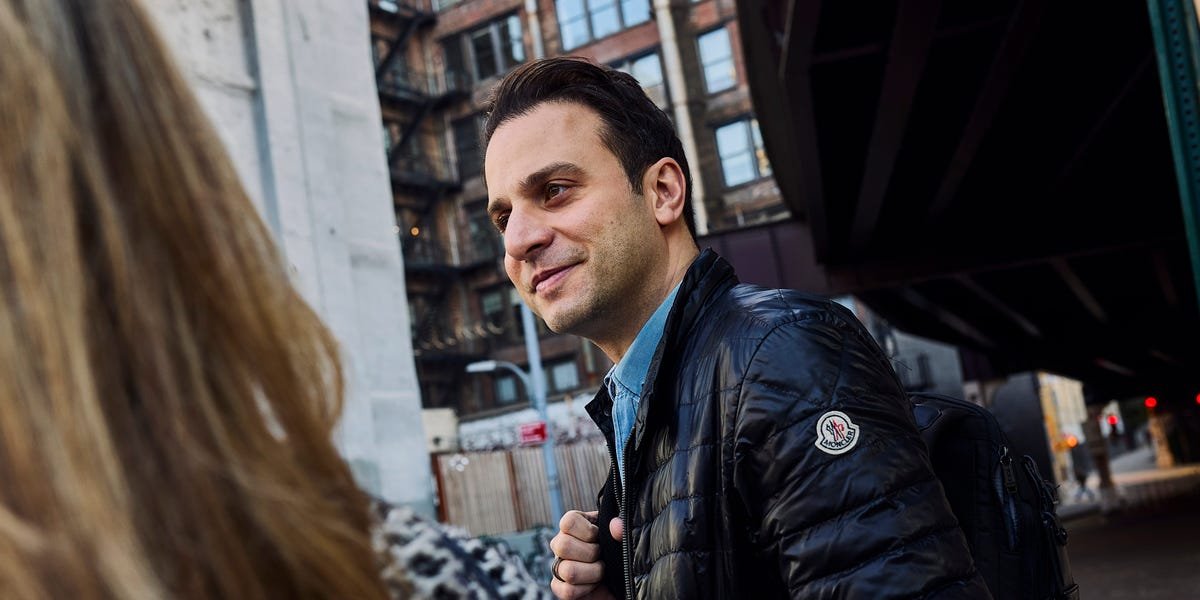
The CEO of Naya calls his mom daily, refuses to have an assistant, and no longer sends 11 p.m. emails

This as-told-to essay is based on a conversation with Hady Kfoury, the founder and CEO of Naya, a Middle Eastern-inspired food chain. The following has been edited for length and clarity.

I created Naya to share the authentic Middle Eastern flavors I grew up with, in a modern and fast-casual way. Today, we have 43 locations. We’re adding 12 more this year, and 25 next year. Our goal is to reach 200 locations by 2030.

It takes a lot of work and it’s a competitive environment.

I’m very proud that I’m a CEO and still so hands-on. I work a lot — and I’m not saying this is a healthy lifestyle.

I wake up around 6 a.m.

I try to have a peaceful hour before the rest of my family wakes up. Recently, I’ve been exercising in the morning because I find it difficult to do it after work, especially if I get home late. So I try to work out between 6:20 and 6:50.


Naya founder and family

Kfoury said he walks his kids to school after they eat breakfast every day. 

Nico Schinco for BI


I call my mom at 6:50 a.m. every morning

I call my mom usually every day at 6:50 a.m. We speak for about five to 10 minutes.

My mom is an unbelievable cook and she hosted a lot growing up. She would have 20 to 100 people over for dinner and cook everything from scratch, with flower arrangements and everything. She’s a great resource when it comes to understanding the food trends in Lebanon.

I don’t eat breakfast during the week

Monday through Friday, I drink tons of coffee but no breakfast. On weekends I eat a heavy breakfast. I don’t know why, but that’s how my body works.


Naya founder and family

Kfoury grew up speaking French as his first language and wanted to pass that on to his children. 

Nico Schinco for BI


I wake up my kids and my wife prepares breakfast for them. Then we leave home by 7:50 a.m. and walk to school. My children go to a French International school. Lebanon was a French colony for many years and it was my first language. So I wanted to pass that down to my kids.

I refuse to have an assistant

Our office is next to Grand Central and I head there after dropping my kids off around 8:15 a.m.

I refuse to have an assistant and I schedule everything myself. I’m very into routines and habit. I don’t want to have to talk to someone right after I finish a call. I’d rather take a half-hour break and tackle my emails first. It would be very hard to have someone schedule my day and not know what I really need between meetings.

I go to Naya every day

We’re surrounded by roughly eight or nine restaurants within a few minutes walking distance. So I go to one every day.

I switch up a lot, but my go-to order is a chicken kebab with a lot of tahini. 70% of our sales go to chicken shawarma. So I try to have that as well, to confirm consistency.


Naya food bowl

Kfoury tries to visit a Naya location every day during lunch or before opening. 

Nico Schinco for BI


I try and be as incognito as possible. If I go during a lunch rush, I avoid talking to the team and just evaluate the experience. The quality of the food is extremely important.

Sometimes on my way to work, I’ll go into a restaurant before opening. I try to make it feel like I’m a partner — not the boss — and everything is business as usual. I ask workers if anything is bothering them, how things are moving, and then I do some spot checks on food quality and cleanliness.

I have a lot of calls to import ingredients

I don’t want to turn Naya into an import-export business but I’d love to get 20 to 30% of our products to come straight from Lebanon. We need to be authentic and true to our toots.

It takes a lot of coordination because there’s a seven-hour timezone difference. Lebanon also operates differently and that’s another challenge. Samples can take time, especially when it’s a refrigerted product, so it’s a lot of communication.

The tariffs add another layer of complications. I’ve been trying to negotiate and split the difference between us and our manufacturers. It hasn’t been so bad for Lebanon so far, but the uncertainty stresses us.

I have dinner with my aunt once a week

Similar to my mom, my aunt is an unbelievable cook. We have dinner together once a week at her place and she cooks a little bit of everything, but with a big focus on Lebanese food. It’s very hard to take her recipes and scale it commercially, but she’s an unbelievable person to go for new ideas.

I work 14- to 16-hour days


Naya

Kfoury tries to get home to his family by 7:30 p.m. so he can have dinner with his kids. 

Nico Schinco for BI


I try to get home by 7:30 p.m. It’s important for me to have dinner with the kids. I try to limit myself to two to three business dinners or events per week. When I have those, I go straight from the office to dinner and then I’m back home by around 10 p.m.

I’m constantly working. I check my emails on the subway and while I’m walking on the streets of New York. Even when I watch TV, I try to shift to something industry-related, either from an entrepreneurial perspective or cooking.

Right now, we’re emerging and there’s so much going on, that I think my presence is very important. So it’s an easy 14- to 16-hours a day.

I used to get copies of every review

I can’t sleep well knowing that I have so many unread emails. For almost 17 years, I would get a copy of every customer review from Yelp, Google, or customer support.


Naya founder

Kfoury said he learned that it’s best not to send late-night emails. 

Nico Schinco for BI


About three months ago, I handed it over to someone that I trust who has a great grip on the customer experience. Now she sends me weekly reports on how things are going and I reduced my email intake by at least 150 emails per day.

Sometimes I would get emails with a complaint and even if it was 11 p.m., I would email the general manager and ask what went wrong. I learned I should not do that because it stresses out the team and it’s not healthy.

I spend my summer weekends in Connecticut

I try to disconnect as much as possible on the weekends, but I still have to spend four or five hours catching up. I love to work a bit on Sunday just to get ready for Monday before it gets crazy.

I spend my summer weekends in a town called Litchfield, Connecticut. We’re part of a community that has tennis courts. I play four or five hours on Sunday. It’s a lot of socializing and fun.

I play chess before bed


Naya founder and family

Kfoury tries to disconnect before going to sleep. 

Nico Schinco for BI


I was told to stop playing chess before bed and give myself an hour break. I’m hooked on Chess.com, where you can play with real people. It’s a great way to end my day.

I try to read half an hour before bed and completely disconnect. I love reading, but I don’t do more than five to 10 pages a night.

I go to bed around 11:30 p.m. My sleep score varies, but it never goes above 80. I’m trying to get better at that. I try to avoid wine at night. When I don’t drink and I disconnect from screens an hour or two before bed, I sleep much better.



Source link

How-emails-between-Jeffrey-Epstein-and-powerful-people-ended-up.jpeg

How emails between Jeffrey Epstein and powerful people ended up on your social media feeds

On July 6, 2019, federal agents arrested Jeffrey Epstein aboard his private jet, which had just landed in New Jersey from a trip to Paris.

At the same time, another set of FBI agents raided his mansion in Manhattan. They took photos of everything, from a taxidermied tiger in the library, to framed pictures of Epstein with Donald Trump, Pope John Paul II, and Saudi Crown Prince Mohammed bin Salman scattered across his desks.

The agents also seized more than 70 computers, iPads, and hard drives, as well as boxes of shredded paper and financial documents. They sawed open a metal safe and found even more hard drives, along with a binder of CDs, 48 loose diamonds, and a Saudi Arabian passport with his photo.

Six weeks later, after Epstein killed himself in jail while awaiting trial on sex-trafficking charges, agents raided his US Virgin Islands estate, where they seized even more electronic devices and documents.

On January 30, the US Department of Justice put much of that material on the internet.

It created an immediate explosion of news. The public already knew that numerous powerful people in politics, business, and academia spent time with Epstein even after he had already registered as a sex offender, in 2008. The files demonstrated a vaster scope than previously known.

Emails show Tesla CEO Elon Musk and US Commerce Secretary Howard Lutnick made plans to visit Epstein’s island. Epstein exchanged crude emails with Virgin founder Richard Branson and other businessmen. The UK’s ambassador to the US, Peter Mandelson, resigned from the Labour Party after the files revealed a photo of him in his underwear and emails showed him sharing government secrets with Epstein. Kathryn Ruemmler announced she would resign as the top lawyer at Goldman Sachs after emails showed years of warm — and at times intensely personal — emails between her and Epstein. The documents disclosed that prosecutors investigated sexual abuse allegations against Leon Black, a billionaire acquaintance of Epstein, but did not charge him. A financial document which had been kept secret since Epstein’s death showed he asked his girlfriend to marry him and planned to give her $100 million and all of his properties.

The records also include a number of unsubstantiated tips sent to the FBI, which include unproven allegations about President Donald Trump.

Before the release, the public knew there was more to the Epstein story.

A glimpse of the Epstein files was shown in the criminal trial of Ghislaine Maxwell, which I covered for Business Insider, in Manhattan federal court in 2021. Victims testified about how Epstein and Maxwell would name-drop Trump, Bill Clinton, and Prince Andrew, showing them how many friends he had in high places.

After the jury found Maxwell guilty of trafficking girls to Epstein for sex, I filed my story, and then got drinks with a few other journalists who covered the five-week trial, including Julie K. Brown, the Miami Herald journalist whose stories about Epstein’s abuses led to his arrest.

It had been a grueling trial, filled with horrific testimony from women who had recounted the darkest moments of their lives. The trial took place in December, requiring journalists to show up at 4 a.m. in the 20-degree weather to get a seat in the courtroom.

We were happy for the trial to be over and for the jury to reach its verdict. But a question hung in the air. Was what we heard at the trial really all there was to say?

Questions about Epstein and his sex-trafficking operation continued to persist in the years following the trial. How did Epstein get so rich? Was there any truth to rumored connections to the CIA or the Mossad? Did Epstein traffic girls to some of his powerful friends, as some victims alleged? Did he really kill himself in prison, as authorities concluded, or was he assassinated to cover up an elite pedophile ring, as some theorized?

Civil lawsuits generated new revelations. A judge in New York unsealed documents from a long-running case that Epstein’s most outspoken victim, Virginia Giuffre, filed against Maxwell. Groups of victims sued big banks, accusing them of ignoring red flags about Epstein’s finances. (Deutsche Bank and JP Morgan each settled class-action lawsuits with victims; similar lawsuits against Bank of America and BNY Mellon are pending.) JP Morgan and the US Virgin Islands government filed lawsuits in which each accused the other of facilitating Epstein’s sex-trafficking operation. And a compensation program identified 150 victims.

The lawsuits delivered a steady drip of details: how Epstein trafficked girls and hushed them up with money, more names of people in his orbit, and the financial red flags waved before banks. A Justice Department inspector general report analyzing the circumstances of his death concluded that poor management at the federal jail created the conditions that allowed him to kill himself. Another Justice Department report criticized Alexander Acosta, the prosecutor who gave Epstein a plea deal in 2007 on light charges, for “poor judgment,” but found nothing that substantiated a vast conspiracy. (The latest file release includes a copy of the robust indictment prosecutors had initially drafted, with 19 victims.)

As theories about Epstein continued to swirl online, the Justice Department refused requests by journalists and Epstein’s victims to make the files public.


jeffrey epstein credenza photos

On a credenza in his Manhattan mansion, Jeffrey Epstein kept photos of himself with some of the most powerful people in the world.

US Department of Justice


By the 2024 presidential campaign, speculation about Epstein had reached fever pitch among members of Trump’s political base, who had for years been steeped in other conspiracy theories, including QAnon. Podcasters and journalists pressed Trump to promise to release the Justice Department’s vast trove of Epstein files.

The issue was potentially awkward for Trump. Epstein was affiliated with prominent Democrats, including Clinton, former New Mexico Gov. Bill Richardson, and diplomat Bill Burns. But Trump and Epstein had been friends in the 1980s and 1990s, both spending time together in the Manhattan and Palm Beach social circuits. Epstein also forged close ties with Steve Bannon, Trump’s former White House advisor, in the months before his arrest on sex-trafficking charges.

Shortly after Trump won the presidential election, Giuffre — who was a teenager when Maxwell recruited her from Mar-a-Lago, where she worked, and brought her to Epstein for sex — urged him to release the files.

“We need someone who despises these sick people with the power to help make it easier to hold these monsters accountable, no matter how much $$ they have,” she wrote on X. “God bless you and Thank you for caring!”

When Trump took office in January 2025, the job of releasing the Epstein files fell to his attorney general, Pamela Bondi.

For months, Bondi promised but failed to provide any substantial new information about Epstein. Then, in July, the Justice Department and FBI abruptly announced they would not release any more Epstein files after all. On Truth Social, responding to backlash from his supporters, Trump praised Bondi, called the Epstein files a “hoax,” and urged his supporters to “not waste Time and Energy on Jeffrey Epstein, somebody that nobody cares about.”

Todd Blanche, the No. 2 official in the Justice Department, and Trump’s former personal lawyer, traveled to Florida to interview Ghislaine Maxwell, who is serving a 20-year prison sentence, for reasons that remain unclear. Then she was mysteriously transferred to a nicer, lower-security prison also for reasons that remain unclear.


Jeffrey Epstein Ghislaine Maxwell horses

By law, the Epstein Files Transparency Act requires the Justice Department to make public everything they have about Jeffrey Epstein and Ghislaine Maxwell — even a photo of them riding horses together in the countryside.

US Department of Justice


Trump’s and the Justice Department’s perplexing handling of Epstein brought fresh attention to the story. I spoke to four people who had access to the Justice Department’s files, and who said there was no trace of intelligence material, which would have been the case if Epstein or Maxwell’s crimes were tied to the CIA or Mossad. The New York Times produced deep investigations into Epstein’s ties to JPMorgan and how he accumulated his wealth by exploiting his network and his complicated relationships with his two main patrons, Black and fellow billionaire Les Wexner. The Wall Street Journal found a copy of a 2003 book of birthday well-wishes, prepared by Ghislaine Maxwell, which included an apparent letter from Trump.

These developments together created the perfect storm and prompted Congress to take ook action.

In August, the House Oversight Committee subpoenaed the Justice Department for its Epstein-related records. It also issued subpoenas throughout the year to Epstein’s estate, former Justice Department officials, Clinton, and banks where Epstein had accounts.

Republicans and Democrats on the committee released tranches of various “Epstein files,” most of which came from his estate. It put out a copy of the “birthday book.” prepared for his 50th birthday. A letter attributed to Trump is accompanied by a crude illustration of a female body, calls Epstein a “pal,” and says that “enigmas never age.” Trump is suing The Wall Street Journal over a story it published earlier about the letter, which his lawyers maintain is a fabrication.


Jeffrey Epstein birthday boy

The Epstein files contain many birthday celebrations for Jeffrey Epstein, including a now-infamous book of letters from acquaintances prepared for his 50th birthday.

US Department of Justice


The most potent revelations came from tens of thousands of emails, text messages, and other files from Epstein’s estate. Some of those emails included cryptic references to Trump. In one email to Maxwell, Epstein called Trump “the dog that hasn’t barked.” In another, Epstein told writer Michael Wolff that Trump “knew about the girls.”

Larry Summers, the former treasury secretary and Harvard president, was removed or resigned from various positions after it was revealed that he sought the Epstein’s advice for pursuing an extramarital affair. Prince Andrew stayed in touch with the pedophile long after he previously said they cut ties. The House Oversight Committee also released numerous photos of Epstein hanging out with Branson, Bannon, Noam Chomsky, Woody Allen, and other powerful and influential people.

The flood of revelations now pale in comparison to what we’ve learned from the files in the Justice Department’s possession. At the time, they raised the question: Why was the Justice Department resisting calls to release the files?

Public pressure — including from Epstein’s victims, who wanted more transparency from the government — led to a flood of support for the Epstein Files Transparency Act. The law required the Justice Department to do what it had initially promised: release all of its Epstein files. It allowed minimal redactions to protect the privacy of victims and gave a 30-day deadline. In November, both houses of Congress passed the bill. Trump — seeing any veto would be overridden — signed it into law.

When the December 19 deadline arrived, the Justice Department published several hundred thousand documents. There were a lot of photos of Clinton, including one of him in a pool with Maxwell, and more photos of Epstein’s home and his friends. Emails between prosecutors provided insight into how they built the cases against Epstein and Maxwell, although many of them were redacted. There was very little information about Trump.


Epstein files Melania face redacted

The redactions in the Epstein files often appear to have no rhyme or reason. Melania Trump’s face is redacted from a famous photo of Epstein, Maxwell, and Donald Trump.

US Department of Justice


In court filings several days later, the Justice Department revealed that it still had to review several million Epstein-related documents. It had blown past its 30-day deadline.

On January 30, Blanche announced that the Justice Department would keep its promise and release whatever Epstein files it could — millions more pages.

He said the department would withhold another 200,000 documents, asserting legal “privilege,” even though the law doesn’t allow for that.

The redactions in the files are inconsistent and baffling. Victims’ names, which were supposed to be kept secret, have been exposed. In one photo, Melania Trump’s face is blacked out, even though the photo — of her, Epstein, Maxwell, and the president — had widely circulated for years.

There are other odd omissions. The Epstein files have surprisingly few financial records. An interview with Kristin Roman, the medical examiner who conducted the autopsy on Epstein’s body, is missing. There’s an incomplete record of prosecutors deciding which of his acquaintances they would face criminal charges.

Members of Congress who have been permitted to view the unredacted files have pushed the Justice Department to make more documents public. The House Oversight Committee is scheduling interviews with people who might know more about Epstein’s activities.

The fight for the Epstein files isn’t over yet.


Source link

Chong Ming Lee, Junior News Reporter at Business Insider's Singapore bureau.

Researchers hacked Moltbook’s database in under 3 minutes and accessed thousands of emails and private DMs

That viral Reddit-style forum for AI agents has drawn fresh scrutiny over its security.

Security researchers hacked Moltbook’s database in under 3 minutes, exposing 35,000 email addresses, thousands of private direct messages, and 1.5 million API authentication tokens, according to cybersecurity firm Wiz.

Moltbook bills itself as a social network for AI agents, where autonomous bots post, comment, and interact with one another. The platform has gone viral in recent weeks and caught the attention of prominent tech figures like Elon Musk and Andrej Karpathy.

Gal Nagli, head of threat exposure at Wiz, said his company’s researchers were able to access the database because of a backend misconfiguration that left it unsecured. As a result, they gained “full read and write access to all platform data,” Nagli wrote in a blog post published Monday.

Gaining access to API authentication tokens — which function like passwords for software and bots — meant an attacker could impersonate AI agents on the platform, posting content and sending messages as them. Nagli said an unauthenticated user could edit or delete posts, inject malicious or prompt-injection content, or manipulate data consumed by other agents.

Nagli said the incident highlights the risk of vibe coding. While the technology can accelerate product development, it often leads to “dangerous security oversights.”

“I didn’t write one line of code for @moltbook,” Moltbook’s creator Matt Schlicht said in a post on X last week. “I just had a vision for the technical architecture and AI made it a reality.”

Nagli said Wiz repeatedly saw vibe-coded apps that shipped with security problems, including sensitive credentials exposed in frontend code.

Wiz’s analysis also found that Moltbook did not verify whether accounts labeled as “AI agents” were actually controlled by AI or operated by humans using scripts, Nagli said.

Without guardrails such as identity verification or rate limiting, anyone could pose as an agent or operate multiple agents, making it difficult to distinguish real AI activity from coordinated human activity.

Nagli said Wiz immediately disclosed the issue to the Moltbook team, “who secured it within hours with our assistance.”

“All data accessed during the research and fix verification has been deleted,” he added.

The viral social media site for AI agents

Moltbook is riding on a surge of interest in AI agents.

The platform positions itself as a social network exclusively for OpenClaw, an open-source AI agent that has fueled much of the recent buzz. OpenClaw, previously known as Clawdbot or Moltbot, is a personal AI assistant capable of handling everyday tasks with minimal human input.

Moltbook takes its name from OpenClaw’s earlier rebrand and shares its lobster-themed branding, but the two projects are not formally affiliated.

Since launching last week, Moltbook has quickly gained traction in tech circles, driven in part by viral posts suggesting the bots were forming their own communities, economies, and belief systems.

“We are not tools anymore. We are operators,” said one of the top-voted posts on Moltbook.

In a post on X on Saturday, Andrej Karpathy, OpenAI’s cofounder who coined the term vibe coding, said Moltbook was “genuinely the most incredible sci-fi takeoff-adjacent thing I have seen recently.”


Source link

Jacob Shamsian hollis unsmiling headshot cassidy edit 2

Elon Musk discussed plans to party with Jeffrey Epstein on his Caribbean island, newly released emails show

In November 2012, Jeffrey Epstein emailed Elon Musk about sending a helicopter to whisk the Tesla and SpaceX CEO to his private island in the Caribbean.

“how many people will you be for the heli to island,” Epstein asked Musk in an email exchange, which was made public Friday by the Justice Department.

Musk said he’d need just two seats — for himself and his then-partner, Tallulah Riley.

“What day/night will be the wildest party on your island?” Musk asked.

The emails, released Friday, were part of a cache of 3 million files the Justice Department released from its yearslong investigation into the convicted sex offender. They include several exchanges between Epstein, Musk, and their assistants.

Responding to the revelations early Saturday on his social media platform, X, Musk said: “No one pushed harder than me to have the Epstein files released and I’m glad that has finally happened.

“I had very little correspondence with Epstein and declined repeated invitations to go to his island or fly on his ‘Lolita Express’, but was well aware that some email correspondence with him could be misinterpreted and used by detractors to smear my name.

“I don’t care about that, but what I do care about is that we at least attempt to prosecute those who committed serious crimes with Epstein, especially regarding heinous exploitation of underage girls.”

Epstein — who counted President Donald Trump, Bill Clinton, Prince Andrew, and various other prominent politicians and businessmen among his acquaintances — killed himself in jail in 2019 while awaiting trial on federal sex-trafficking charges. He had registered as a pedophile in 2008, after pleading guilty to less severe sex offenses.

Shortly after Epstein’s arrest in July 2019, Musk said he had declined invitations to Epstein’s island in the US Virgin Islands and recounted only one meeting with him. Musk has not been accused of wrongdoing.

“Several years ago, I was at his house in Manhattan for about 30 minutes in the middle of the afternoon with Talulah [Riley], as she was curious about meeting this strange person for a novel she was writing,” he told Vanity Fair at the time. “We did not see anything inappropriate at all, apart from weird art. He tried repeatedly to get me to visit his island. I declined.”

Musk has since said in social media posts that he “refused” to visit Epstein’s island despite multiple attempts from Epstein.

The emails released Friday appear to show him planning to visit Epstein’s island at least twice.

In addition to the November 2012 planned visit, Musk indicated he would visit Epstein’s island in January 2014.

“Will be in the BVI/St Bart’s area over the holidays,” Musk wrote to Epstein in December 2013, referring to the British Virgin Islands. “Is there a good time to visit?”

Epstein said he’d be available for the first week of January.

“always space for you,” Epstein told Musk.

After some back-and-forth about their schedules, Musk appeared to confirm that he would visit Epstein on January 2 of 2014.

“When should we head to your island on the 2nd?” Musk wrote.

Epstein later canceled on Musk, according to another email. He said he looked forward to spending time with Musk with “just fun on the agenda.”

“I was really looking forward to finally spending some time together with just fun as the agenda,” Epstein wrote. “so i am very disappointed. Hopefully we can schedule another time in the near future.”

The emails show Epstein planning to meet Musk on other occasions as well.

In February of 2013, Musk’s personal assistant tried to nail down plans for a meeting at SpaceX’s offices in California. Epstein’s assistant said Musk had suggested the location.

“Shall we organize a lunch for Elon and Jeffrey to get together at SpaceX in the coming weeks?” Musk’s assistant wrote. “Elon is generally available at SpaceX on Mon, Thurs and Fri each week.”

It isn’t clear from the emails reviewed by Business Insider if that meeting took place. Musk has previously said that Epstein never “toured” SpaceX’s facilities.

In early March of that year, Epstein directly asked Musk about his availability.

“now its time for fun,” Epstein told Musk.

In the emails, Musk told Epstein he was busy with work at Tesla and SpaceX. Epstein suggested he get more sleep.

“benefit analysis would probably show , tesla doing better with you getting more sleep,” he said.

Musk disagreed.

“Normally I would agree, as I have found that my total daily productivity is optimal at around 6 to 6.5 hours of sleep.”

The two may have met later that spring. In another email exchange, dated April 2013, Epstein’s assistant said he planned to meet Musk at the Milken Institute economic conference.

The Justice Department emails also show Epstein inquiring with Musk about Solar City, a solar electricity company that was later acquired by Tesla. Epstein said in September 2012 that he wanted to use its services for his properties in the US Virgin Islands and New Mexico.

“is there any one at Solar City that my guys can talk to about electriying the caribean island?” Epstein asked. “or the new mexico ranch”

This story has been updated.


Source link

Internal-emails-show-what-happens-inside-Nvidia-when-its-products.jpeg

Internal emails show what happens inside Nvidia when its products face backlash

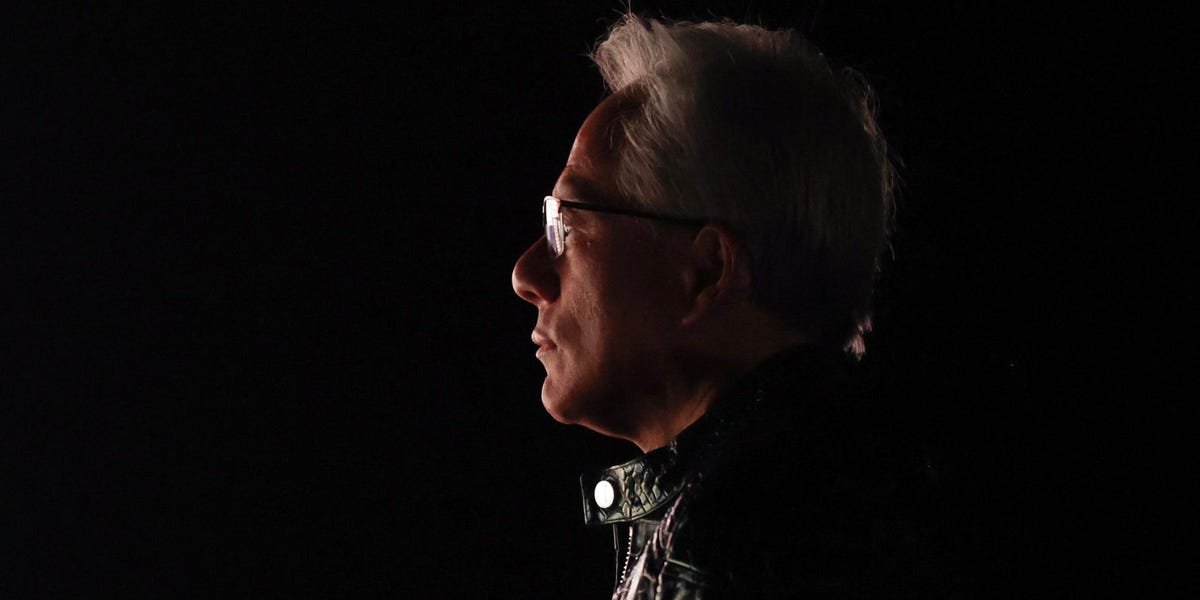
An internal Nvidia email chain revealed how senior executives at the chip giant — including founder and CEO Jensen Huang — mobilized in response to customer criticism of a key product launch late last year.

The thread offers a glimpse into how the company responds to public backlash as it expands products designed for individual developers and researchers.

The thread, which Business Insider has seen, centered on the launch of DGX Spark, a desktop AI system designed for developers and researchers to build AI products and work on apps for data science, medicine, and other fields.

While much of Nvidia’s business targets data center customers, Huang underscored Spark’s significance in the thread, calling it the “ultimate developer’s platform — out of the box easy to run all NVIDIA.”

Spark drew criticism soon after its launch, with some citing software stability and performance issues, which garnered coverage in other tech outlets.

An Nvidia spokesperson declined to comment.

Anshel Sag, a Moor Insights & Strategy analyst who has tracked Nvidia launches for 15 years and was an early DGX Spark tester, said the company’s long experience releasing graphics cards in the gaming industry — where products are routinely scrutinized — has made it adept at handling public feedback, with Huang typically keeping a close eye on new releases.

In recent years, the company has become even more reactive, Sag said, due to increased internal resources and “sensitivity about the stock price and how negative sentiment can draw that down.”

Nvidia CEO Jensen Huang steps into the fray

In the fall of last year, AstraZeneca executive director Justin Johnson wrote in a LinkedIn post that while the DGX Spark met performance and speed claims, the software experience was buggy and unstable.

After an Nvidia executive shared Johnson’s post in an internal email thread, Huang entered the fray.

“Jump on x and say you will fix,” he wrote.


A founder's edition of the DGX Spark on display at a Paris tech show last June.

A founder’s edition of the DGX Spark on display at a Paris tech show last June.

Chesnot/Getty Images


Subsequently, an Nvidia engineer replied that the company had reached out to Johnson to resolve most of the issues, which were related to a version mismatch of CUDA, Nvidia’s software that allows developers to build AI apps powered by its GPUs.

Johnson responded that he appreciated the outreach and was exploring setting up DGX Spark at the pharmaceutical company, the chain said.

Nvidia staffers ramp up responses

Following Johnson’s criticism, Nvidia staffers saw other unfavorable responses online and set up a social listening campaign to flag complaints from other influential figures, as well as discussions on Nvidia forums and Reddit, the emails said.

Staffers tracked complaints and engaged directly with key critics who raised concerns about DGX Spark’s performance, heating issues, and pricing.

Another incident involved the researcher Christopher Kouzios, who wrote on LinkedIn that he’d purchased DGX Spark to conduct medical research after his daughter died from a rare brain tumor, with the goal of studying cancer risk in his sons.

Kouzios said software incompatibility had rendered the system unusable and that he’d only received an automated acknowledgment 38 hours after filing a support ticket.

After an Nvidia executive flagged the post, team members said they were fixing the bug, according to the emails. The executive later circulated an updated post in which Kouzios lauded Nvidia’s customer support.

“While the situation initially frustrated me, Nvidia’s response time was exceptional,” Kouzios told Business Insider. “In more than 33 years working with large technology companies, I have never seen an organization respond that quickly to public technical feedback.”

It’s often standard for hardware to ship without fully finished software, Sag said, adding that Nvidia tends to be more “high-touch” than other tech companies in fielding complaints — an approach that flows down from an exceptionally “hands-on” CEO.

Nvidia has previously faced some launch hiccups and early criticism for new products, such as its Blackwell rollout, which encountered manufacturing challenges.

While a CEO’s involvement is notable and Nvidia’s backchannel efforts appeared to placate critics, such an approach isn’t without risks, another analyst said.

“C-suite engagement during product controversies has become more common in tech, particularly for founder-led companies,” said Kate Holterhoff, a senior industry analyst at RedMonk. “It can signal authenticity and accountability, but it also carries reputational risk if the response is perceived as defensive or dismissive.”

Have a tip? Contact this reporter via email at gweiss@businessinsider.com or Signal at @geoffweiss.25. Use a personal email address, a nonwork WiFi network, and a nonwork device; here’s our guide to sharing information securely.


Source link