
Business-leader-says-EV-chargers-are-a-popular-employee-perk.jpeg

Business leader says EV chargers are a popular employee perk, especially when gas prices spike

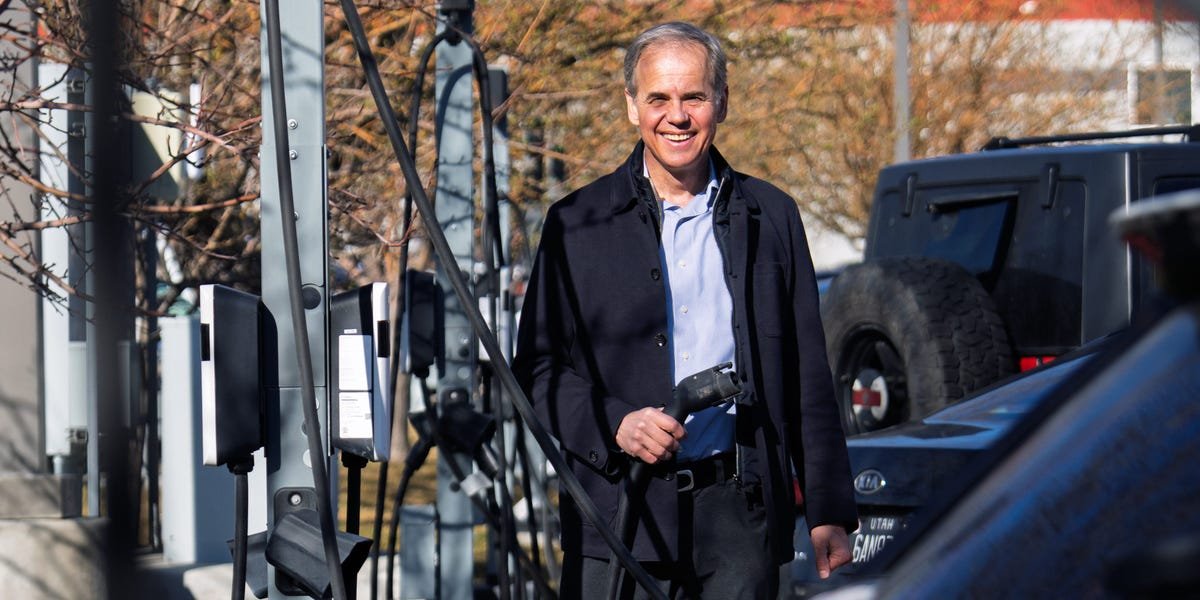
This as-told-to essay is based on a conversation with Hanko Kiessner, founder and vice chairman of Packsize, a Salt Lake City-based packaging company. This story has been edited for length and clarity.

We just had a spike in gas prices, and everyone is complaining. I see an affordable solution for employers — one that could also grow worker loyalty: adding EV charging stations to their parking lots.

This is something I discovered after moving in 2002 from Germany, where I grew up, to Salt Lake City and starting Packsize. I didn’t know about the air pollution problem here, and after a few years. I developed asthma.

I’d never had this problem before. I’m very active. I run marathons. So I did research to find out what was causing my asthma and concluded that air pollution was to blame. I also learned that air pollution largely comes from vehicles and can cause inflammation in the lungs, which can lead to cancer.

Around this time, electric cars were becoming popular. I learned so much about this disruptive technology that I started a nonprofit called Leaders for Clean Air with several other local entrepreneurs. Our mission is to raise money to buy EV charging stations and have them installed in as many places as possible. We see this as a business matter. We need to attract talent from other markets to grow, and air pollution hinders that.

I also wanted to motivate more people than just me to drive an electric car, so I asked my employees: What prevents you from buying one? And the answer was that charging stations are not ubiquitous. One of the biggest fears for people with EVs is driving to work and not finding a plug. That is scary because now you might not be able to make it home.

We initially set up just three charging stations at our Utah headquarters, where we have about 100 employees. Then all of a sudden, people got EVs, so we added more. Today, we have 53 stations and are close to a 30% EV adoption rate among staff, which means there are some extra plugs for visitors and employees at neighboring businesses. We learned that the infrastructure has to come first. Most employees switched after the charging stations were installed.

These stations are probably one of the cheapest benefits an employer can offer their staff. The cost of electricity at a corporate rate is low — for us, it’s about $3 a day per charging station. In today’s post-COVID world, it’s also a way to get people back to the office.

Here’s the really cool thing: I’m now attracting employees who drive EVs, and they’re very desirable. They typically care about the environment and understand that EV driving is cheaper than gasoline driving. They also tend to be tech-savvy.

Now that gas prices are so high, more people may consider buying EVs. Oil supply chains are fragile, and we have an abundance of cheap electricity. For employers, helping workers make that switch can be as simple as putting charging stations in their parking lots.


Source link

Meta-CTO-shares-7-traits-he-likes-to-see-in.jpeg

Meta CTO shares 7 traits he likes to see in an employee

Want to work at Meta? Boz just gave you a guide.

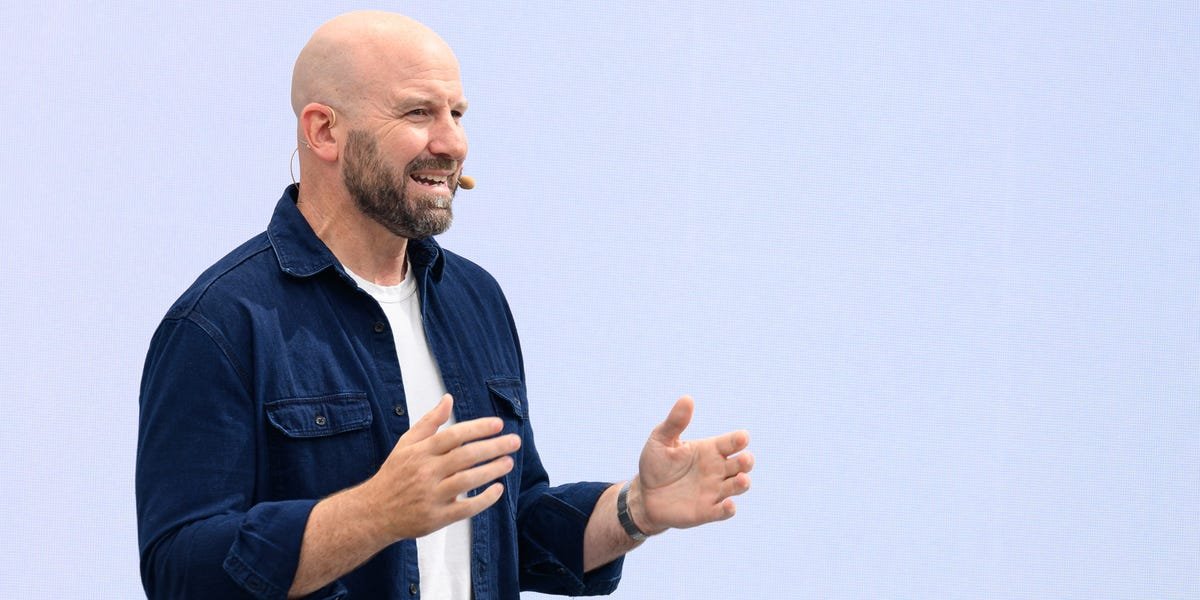
Andrew Bosworth — also known as “Boz” — is Meta’s chief technology officer, overseeing divisions from the metaverse and gaming to AI glasses. On Monday, a respondent to his Instagram AMA asked what “type of person” thrived at Meta.

“It’s a good question,” Bosworth said. “You should probably ask my org.”

Bosworth went on to share seven traits that he liked in an employee.

First, they have to be “relentless in pursuit of doing great work.” Meta employees take “pride and ownership” in their work, he said. They also “take it personally.”

Two of Bosworth’s tips were based on communication. Good Meta employees are both direct and appreciate directness in return.

Employees should take direct communication “in the spirit it’s intended and turn it into progress,” Bosworth said.

Direct communication can cause conflict. Luckily, Bosworth has a solution there, too. In a September blog post, he shared four steps for resolving workplace disputes, something that he has done “so many times” that he sometimes uses the same tools on himself.

Another trait Bosworth valued was the ability to roll with the punches. Bosworth called this being “adaptable.”

“When plans change, their first reaction isn’t a knee-jerk fear of change, but rather a tremendous curiosity and enthusiasm about what that might mean for them,” he said.

Indeed, things often change at Meta — including in Bosworth’s divisions. In his last AMA, he explained the company’s stance on VR after recent cuts. Bosworth said the company was still “bullish,” but its investment had to “match the size of growth.”

The final trait Bosworth said he looked for?

“Just a good person,” he said.


Source link

OpenAI-just-hired-another-employee-from-Mira-Muratis-Thinking-Machines.jpeg

OpenAI just hired another employee from Mira Murati’s Thinking Machines Lab

Another employee at Thinking Machines Lab is leaving to rejoin OpenAI.

It’s the latest in a string of departures from the $12 billion AI startup, which is led by former OpenAI CTO Mira Murati and lately has been the subject of high-profile poaching campaigns from bigger tech companies.

The latest employee to go back to OpenAI is Jolene Parish, who joined Thinking Machines Lab in April last year, according to her LinkedIn profile. She had worked at OpenAI for three years prior. Before that, she worked for 10 years on security at Apple, her profile says.

Other employees rejoined OpenAI last month. Two co-founders, former CTO Barret Zoph and Luke Metz, both left, along with researcher Sam Schoenholz.

Lia Guy, another researcher, also rejoined OpenAI, The Information reported. Another cofounder, Andrew Tulloch, left for Meta late last year, The Wall Street Journal reported.

OpenAI and Thinking Machines Lab declined to comment.

Thinking Machines Lab raised a monster $2 billion funding round last year, valuing the company at $12 billion, spokespeople said at the time. The startup launched its first product, Tinker, last October.

The San Francisco-based company has become known for attracting star-studded talent. It quietly hired Neal Wu, a legendary coder who won three gold medals in an Olympiad for programming, and Soumith Chintala, the creator of the open-source AI project PyTorch at Meta, who is now Thinking Machines Lab’s CTO, Business Insider previously reported.

Have a tip? Contact this reporter via email at crollet@businessinsider.com or on Signal and WhatsApp at 628-282-2811. Use a personal email address, a nonwork WiFi network, and a nonwork device; heres our guide to sharing information securely.


Source link

OpenAIs-chief-researcher-says-Mark-Zuckerberg-hand-delivered-soup-to-an.jpeg

OpenAI’s chief researcher says Mark Zuckerberg ‘hand-delivered soup’ to an employee in a recruiting effort

It’s been said that the way to one’s heart is through their stomach. It sounds like Meta CEO Mark Zuckerberg wanted to see if the AI talent war, or at least one skirmish, could be won the same way.

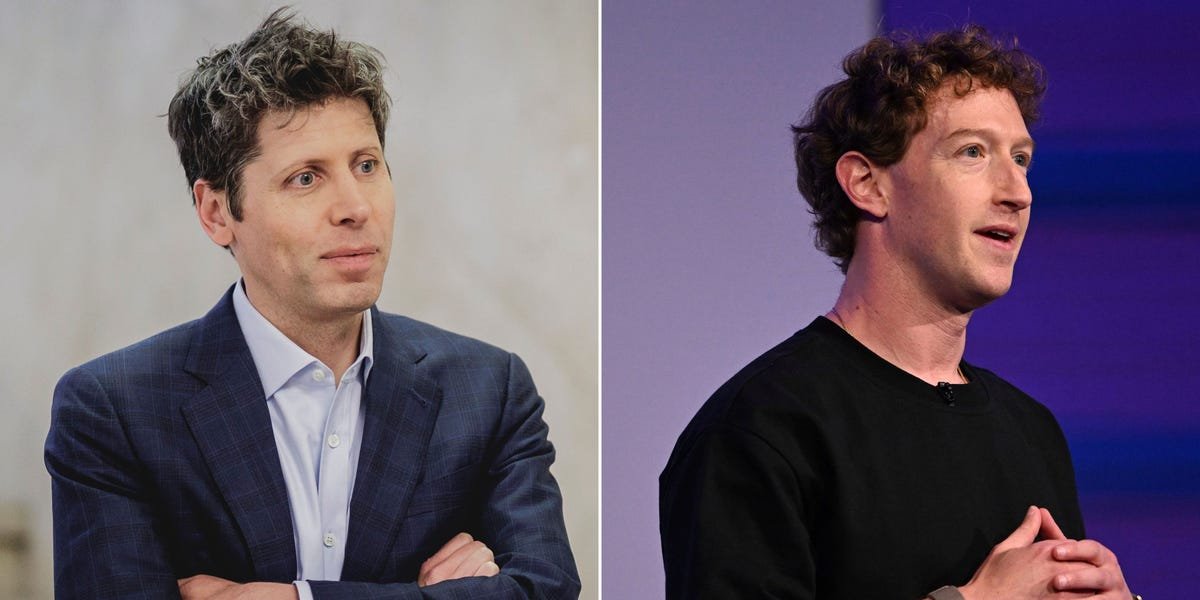
Mark Chen, chief research officer at OpenAI, recently said that Zuckerberg personally delivered homemade soup to an OpenAI employee as part of a campaign to recruit the unnamed worker to Meta.

“It’s been kind of interesting and fun to see it escalate over time. You know, some interesting stories here are Zuck actually went and hand-delivered soup to people that he was trying to recruit from us,” Chen told Ashlee Vance on the author’s “Core Memory” podcast.

Chen said Zuckerberg’s move was “shocking to me at the time” but since then, he said he’s returned the favor.

“I’ve also delivered soup to people we’ve been recruiting from Meta,” Chen said, laughing.

The poaching efforts focused on OpenAI’s researchers and engineers underscores the company’s position in the AI race, Chen said.

“We’re always under attack,” Chen told Vance. “This is how I know we’re in the lead, right? Any company starts, where do they try to recruit from? It’s OpenAI. They want the expertise, they want our vision, our philosophy of the world. And we’ve made so many star researchers, right? I think OpenAI, more than anywhere else, has been a place that makes names in AI today.”

Arguably, no other rival tech company has been as aggressive in the so-called AI talent wars against OpenAI as Zuckerberg’s Meta.

In June, OpenAI CEO Sam Altman said that Meta tried to lure some of his engineers with $100 million signing bonuses. The CEO said at the time that none of his top talent was poached, but ChatGPT co-creator Shengjia Zhao later joined Meta’s Superintelligence Lab.

Chen said that Meta tried to recruit “half” of Chen’s direct reports unsuccessfully, but that OpenAI has been “fairly good” at retaining top talent. A Meta spokesperson declined to comment.

Top AI researchers have become a hot commodity in the AI race, as it’s generally believed that there is a relatively small number of researchers and engineers capable of achieving breakthroughs or building new LLMs from the ground up.

“It’s like looking for LeBron James,” Databricks’ vice president of AI, Naveen Rao, told The Verge’s Command Line newsletter last year. “There are just not very many humans who are capable of that.”


Source link