
Lauren Edmonds Profile Photo

The US secretary of energy says Iran is not a war but a ‘temporary movement’ and that gas prices will go down in weeks

US Energy Secretary Chris Wright made the morning show rounds on Sunday to downplay concerns about surging gas and oil prices, assuring Americans that the war with Iran isn’t “long-term.”

“What you are seeing is emotional reactions and fear that this is a long-term war,” Wright told “Face the Nation” on CBS News. “This is not a long-term war. This is a temporary movement.”

Wright made similar remarks in an interview with Fox News Sunday.

“The run-up on prices doesn’t have anything to do with any shortage of barrels of oil or natural gas. It’s just fear and perception, the unknown that this could be some long, drawn-out crisis, but it won’t be,” Wright said.

After the US and Israel launched airstrikes on Iran on February 28, the Islamic Republic moved quickly to shut down the Strait of Hormuz, a narrow waterway critical to the movement of oil around the world. About 20% of the globe’s petroleum liquids pass through the Strait.

Although there are storage tanks across the Gulf, they are already nearing capacity after a week of conflict and limited shipping options, forcing producers to reduce operations. Iraq’s oil output has shrunk by 60% since last week, Bloomberg reported. Other countries, like Kuwait and the United Arab Emirates, have also reduced output.

All of this means higher gas prices for Americans. The US Energy Information Administration says gas prices averaged $2.93 on February 23. By March 2, they were at $3.15. On Sunday, they were $3.40.

During his media tour on Sunday, Wright said regular ship traffic through the Strait of Hurmoz could resume in “a few weeks,” meaning gas prices could ease sooner rather than later.

“We want it back below $3 a gallon, and it will be again before too long,” Wright told CNN’s “State of the Union.” “You never know exactly the timeframe of this, but, in the worst case, this is a weeks, this is not a months, thing.”



Source link

Sam-Altman-says-concerns-of-ChatGPTs-energy-use-are-overblown.jpeg

Sam Altman says concerns of ChatGPT’s energy use are overblown: ‘It also takes a lot of energy to train a human’

Sam Altman is pushing back on the idea that ChatGPT consumes too much energy.

“One of the things that is always unfair in this comparison is people talk about how much energy it takes to train an AI model relative to how much it costs a human to do one inference query,” Altman told The Indian Express last week on the sidelines of a major AI summit. “But it also takes a lot of energy to train a human.”

Altman suggested it’s not an apples-to-apples comparison, arguing that it’s unfair to discount the years spent nurturing and educating someone to be capable of making their own inquiries.

“It takes a lot of energy to train a human,” he said, prompting some laughter in the crowd. “It takes, like, 20 years of life, and all of the food you eat during that time before you get smart.”

Altman said the clock really began thousands of years ago.

“It took, like, the very widespread evolution of the 100 billion people that have ever lived and learned not to get eaten by predators and learned how to, like, figure out science or whatever,” he said.

Altman also called out what he said were “totally insane” claims on the internet that OpenAI is guzzling down water to power ChatGPT.

“Water is totally fake,” Altman said, when asked about concerns AI companies use too much water. “It used to be true, we used to do evaporative cooling in data centers, but now that we don’t do that, you know, you see these like things on the internet where, ‘Don’t use ChatGPT, it’s 17 gallons of water for each query’ or whatever.”

In June, Altman said that the average ChatGPT query consumes roughly the amount of energy needed to power a lightbulb for a few minutes.

“People are often curious about how much energy a ChatGPT query uses; the average query uses about 0.34 watt-hours, about what an oven would use in a little over one second, or a high-efficiency lightbulb would use in a couple of minutes,” he wrote on X.

Altman said it is fair as a whole to point out the AI industry’s overall energy consumption because of the large growth in usage. He said it’s why he and other AI CEOs have pushed alternative energy sources like solar, wind, and nuclear.

Unlike other CEOs, namely xAI’s Elon Musk, Altman is dismissive of the idea that space-based data centers are realistic in the next decade, a concept that some companies have floated as a way to reduce energy consumption.

Outside of OpenAI, Altman is a major investor in nuclear energy. He previously served as chairman of Oklo, a nuclear energy startup, and has been a major backer of Helion, which plans to build what it calls “the world’s first fusion power plant” in Washington state.

In the US, data center energy consumption is becoming a major topic. Last month, President Donald Trump said he was working with tech companies on “a commitment to the American people” to ensure that citizens don’t pay higher energy bills because of a nearby data center.

Consulting firm McKinsey & Company estimated last year that data centers could account for 14% of total power demand in the US by 2050.


Source link

Russia-says-the-US-is-pushing-its-companies-out-of.jpeg

Russia says the US is pushing its companies out of Venezuela’s energy sector

Russia said the United States is pushing Russian companies out of Venezuela’s energy sector.

“Right now, following Venezuela and what is happening there, our companies are quite openly being pushed out of Venezuela,” Russian Foreign Minister Sergei Lavrov said in an interview with RT, a state-linked media network.

The US launched a military operation in early January that resulted in the capture of then-Venezuelan President Nicolás Maduro.

In the interview published on Thursday, Lavrov linked the US’s pressure on Russian companies to broader efforts to curb Moscow’s role in global oil markets.

Lavrov cited recent sanctions against Rosneft and Lukoil, as well as tariffs and restrictions on countries purchasing Russian oil, including India.

“Everywhere it is being said that Russian oil and Russian gas will be replaced by American oil and American liquefied natural gas,” Lavrov said.

Russia’s investments in Venezuela at risk

Russia now faces the prospect of significant financial losses in Venezuela following the US operation, which has upended decades of strategic cooperation between Moscow and Caracas spanning energy, defense, and diplomacy.

Energy ties played a central role, reflecting the importance of the oil sector to Russia’s economy.

A former US ambassador-at-large for the former Soviet Union warned last month that Russia’s exposure in Venezuela could translate into concrete losses.

“Russian investments in Venezuela’s oil industry over the last twenty years will now have to be, formally or informally, written off,” wrote Stephen Sestanovich, the George F. Kennan senior fellow for Russian and Eurasian studies at the Council on Foreign Relations.

Loans for Venezuela’s purchase of Russian weapons could meet the same fate, while trade between the two countries could also come to a halt, Sestanovich added.

That would come at a sensitive moment for Russia’s economy.

As the war in Ukraine approaches its fifth year, sweeping Western sanctions and lower oil prices are weighing on budget revenues that fund President Vladimir Putin’s war chest. In January, Russia’s oil revenue plunged to its lowest level in over five years.

At least one Russian state-owned oil company has moved to ringfence its exposure. Last month, Roszarubezhneft said that all of its Venezuelan assets are owned by the Russian state.


Source link

A-Venezuela-oil-revival-could-set-up-winners-—-and.jpeg

A Venezuela oil revival could set up winners — and losers — in US energy

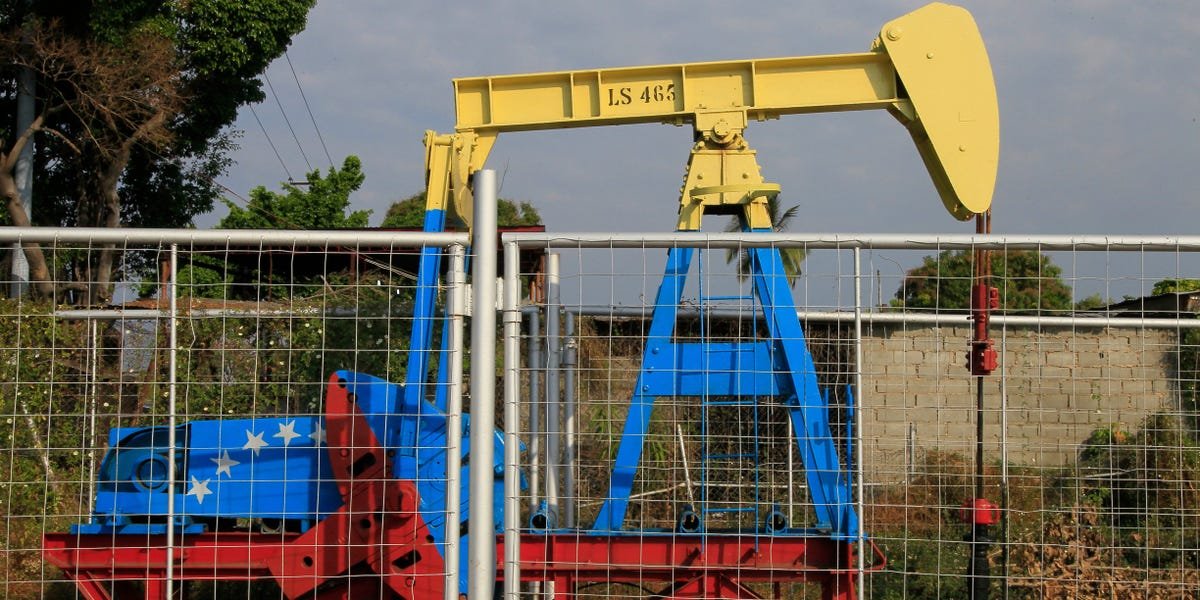
Not all American energy companies stand to benefit from a potential revival of Venezuela’s oil industry following the US’s capture of Venezuelan leader Nicolás Maduro.

Energy stocks rose on Monday as investors priced in potential gains from renewed US access to Venezuela’s massive oil reserves. But analysts say smaller companies could struggle to benefit from a recovery in the country’s energy sector.

Additional Venezuelan oil supply over the coming years could be “negative for shale producers” that don’t have a footprint in Venezuela, Daan Struyven, the head of oil research at Goldman Sachs, said on the firm’s “Exchanges” podcast, published on Tuesday.

That’s because prices and volumes could come under pressure if supply growth over the next five to 10 years comes from Venezuela rather than from US shale, he added.

The potential strain on shale reflects a key difference in oil quality. Venezuelan crude is heavy and sulfur-rich, while US shale production is dominated by lighter oil. Many US Gulf Coast refineries were originally designed to process heavier crude, making Venezuelan barrels a better fit.

Greater access to Venezuelan crude could therefore benefit refiners while undermining demand for lighter shale barrels.

While light shale oil and heavy crude like Venezuela’s are not directly interchangeable, increased supplies of heavy oil can still reshape refinery demand and pricing across the broader market. That kind of change would indirectly pressure US shale producers, who have long been the engine of America’s shale revolution.

“In the US, the first casualties would likely be some oil producers, particularly smaller shale firms with high debt and thin margins,” Philippe Le Billon, a professor at the University of British Columbia who studies the political economy of natural resources, wrote in The Conversation on Sunday.

Furthermore, oil prices have already been under pressure in recent years due to ample supply and sluggish demand growth.

US benchmark West Texas Intermediate crude futures are trading around $56 a barrel, while Brent futures are around $60 a barrel. Both are down around 2% so far this year after falling 20% last year.

Even an increase in Venezuela’s oil production in the medium term could put downward pressure on oil prices, making it harder for higher-cost US shale producers to justify new drilling, researchers at Columbia University’s Center on Global Energy Policy said in a Sunday post.

That dynamic could intensify the pressure on US shale producers.

“This complicates the notion that the US would unambiguously ‘win’ from a Venezuelan oil revival. Energy geopolitics creates winners and losers on all sides,” wrote Le Billon.


Source link