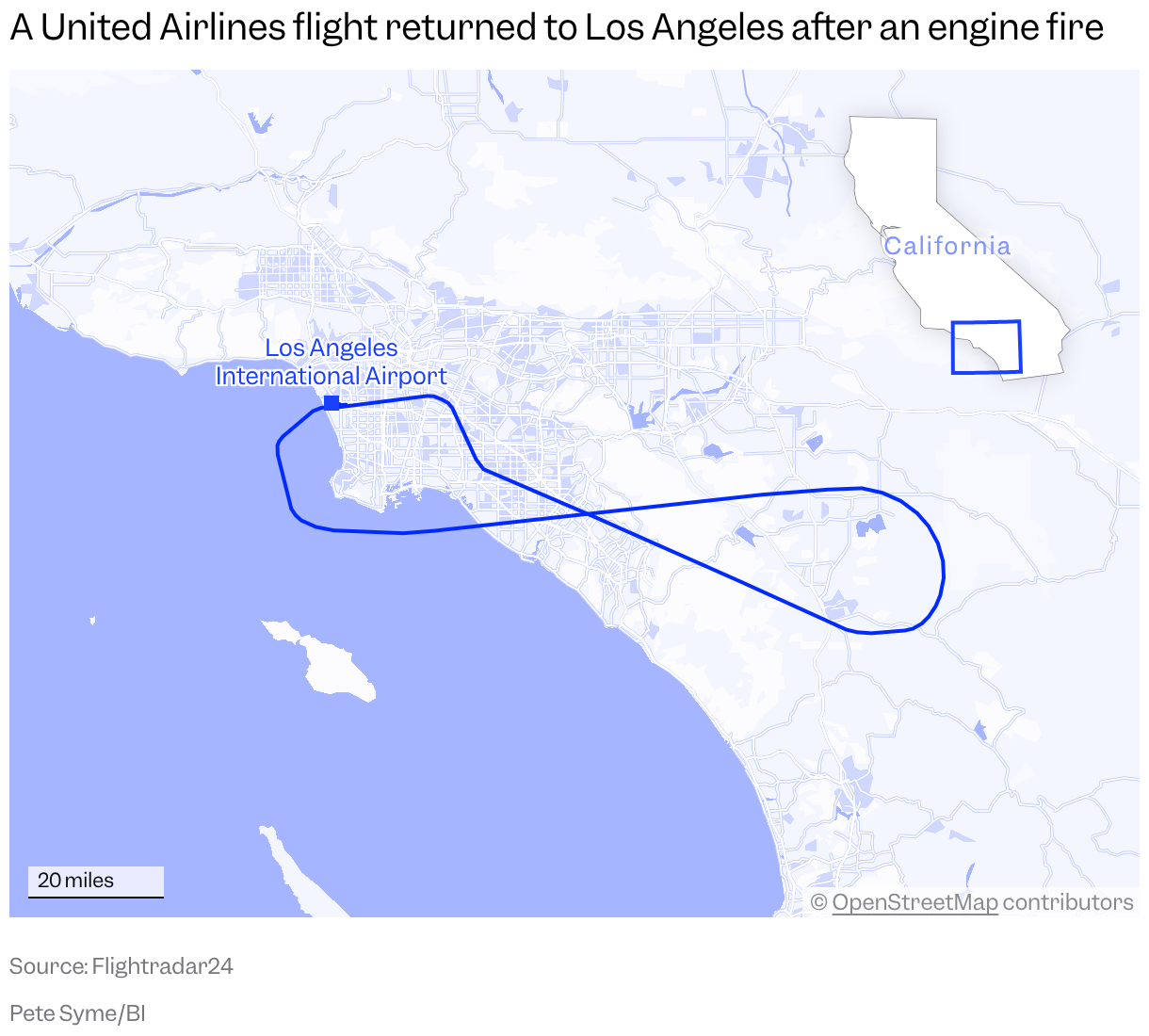
A United Airlines Boeing 787 turned around 15 minutes after takeoff from Los Angeles on Monday after smoke and alarms suggested a fire in one of its two jet engines.
United told Business Insider in a statement that there was a “possible engine fire.” It added that none of the 268 passengers and crew on board the plane were seriously injured, and that passengers were bused to the terminal and flown out on a different aircraft.
The plane was back on the ground at LAX within about 40 minutes; a replacement flight to New Jersey took off around 6:30 p.m. local time — eight hours after the originally scheduled departure, per Flightradar24.
“We are grateful to our pilots and flight attendants for their quick actions to keep our customers safe,” United said. The Federal Aviation Administration said it is investigating the incident.
It’s unclear what caused the engine issue, but previous incidents at United and other carriers involved bird strikes and metal fatigue.
Pilots are trained to handle engine failures and fires and to remain calm in emergency situations. Airliners like the Boeing 787 are designed to fly safely on one engine.
Recordings from the website LiveATC.net reveal the crew initially thought the fire was out but received additional “fire indications” for the left engine despite using the extinguishers, prompting the decision to evacuate passengers.
“People will be coming out the right side, the side toward the runway; we prefer to stay right here and just get people off,” one of the pilots can be heard telling firefighters after landing.
Videos circulating on social media show the scene from inside the jet, including smoke coming from the aircraft’s left engine and people evacuating via slides and airstairs onto a taxiway.
Some commentators have pointed out that individuals leaving with their bags is dangerous during an emergency. Aviation safety leaders have long instructed passengers to abandon their carry-on items during evacuations to avoid wasting time or clogging the aisles.
“The FAA’s message to passengers is simple: If you have to evacuate, leave your bags behind and follow crew instructions,” the agency said in a statement to Business Insider. “Airlines have policies requiring passengers to leave luggage behind to ensure they can evacuate as quickly as possible. Federal aviation regulations require passengers to obey crewmembers’ safety instructions.”
STR/JIJI PRESS/AFP via Getty Images
The warning has precedent: an Aeroflot plane caught fire during landing in 2019, and industry experts said people fleeing the blaze with their luggage partially contributed to the deaths of more than half of the passengers.
In 2024, a Japan Airlines Airbus A350 collided with a Coast Guard jet on the runway in Tokyo and caught fire. All 379 people on board survived; experts partially attributed this to passengers leaving their bags behind.