
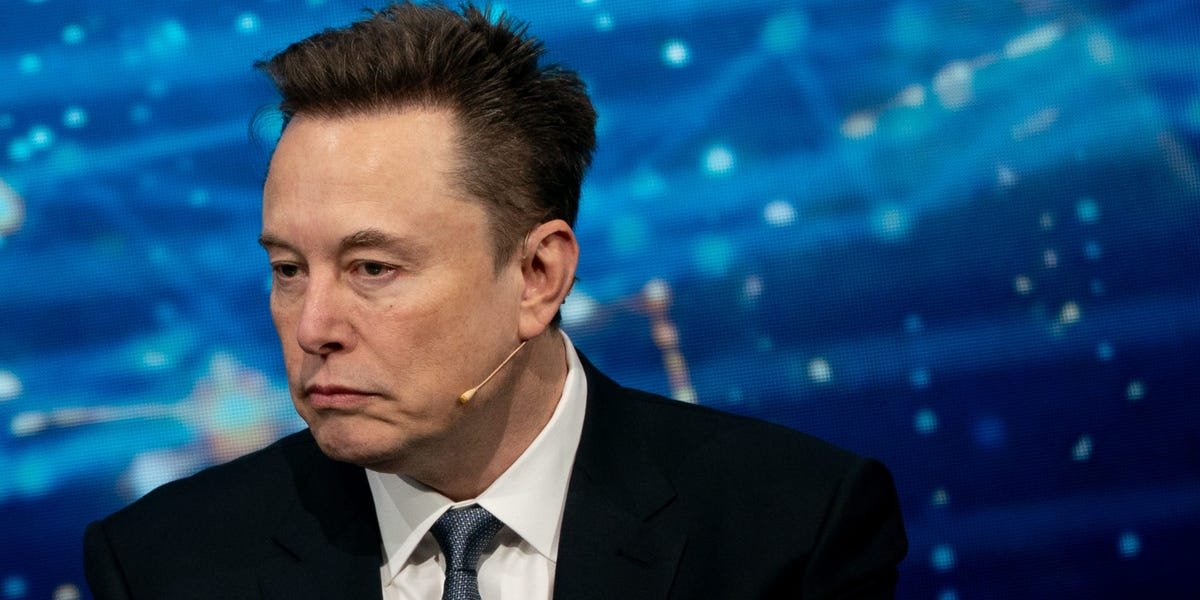
XAI-reorganizes-its-engineering-team-ahead-of-SpaceX-IPO.jpeg

XAI reorganizes its engineering team ahead of SpaceX IPO

As Elon Musk’s xAI merges more closely with SpaceX ahead of the space giant’s blockbuster IPO, the AI company is undergoing yet another major overhaul to its engineering team, according to a memo viewed by Business Insider.

SpaceX executive Michael Nicholls said the company is “clearly behind” the competition and is taking action to catch up as quickly as possible.

Nicholls, the senior vice president of Starlink at SpaceX, has taken on the title of xAI president, a person with knowledge of the change told Business Insider.

SpaceX, which acquired xAI earlier this year, is expected to file an initial public offering this year, which could value it at over $2 trillion, according to some reports.

As it merges with SpaceX, xAI has undergone a series of organizational shake-ups while racing to keep pace with AI rivals OpenAI, Anthropic, and Google. The company has lost several cofounders and senior leaders, most recently Ross Nordeen, formerly one of Musk’s closest deputies. Now, Musk is using the Tesla playbook to rebuild the company from the ground up, even as it navigates ongoing departures and layoffs. The stakes couldn’t be higher: xAI is pushing toward an IPO that could value the company in the trillions.

Model training

Devendra Chaplot, a former researcher at Facebook and Thinking Machines Labs, who joined the xAI last month, will lead pre-training, the initial phase in which a model learns general patterns from massive datasets, such as text, images, or code.

Aman Madaan will oversee model factory and tooling, including the infrastructure, data pipelines, and training workflows used to develop and improve AI models. Aditya Gupta will head post-training and reinforcement learning, the final stage in which the model is fine-tuned, aligned with human preferences, and optimized for real-world use cases like chat or coding assistance.

Beibin Li, a former researcher at Microsoft and Meta, will lead post-training for Grok Code. Xuhui Jia, who previously worked at Google DeepMind, along with Yukun Zhu, will lead video and image training.

Product and Infrastructure

The company’s product team will be led by Andrew Milich and Jason Ginsburg. The two engineers joined the company from AI coding giant Cursor in March. The product team will oversee Grok Main, Grok Voice, and Grok Imagine.

Physical infrastructure will be led by Jake Palmer, and compute infrastructure by Daniel Dueri, who is the director of software engineering at SpaceX, according to LinkedIn. Other SpaceX employees have also taken on leadership roles. Matt Monson, the director of Starlink software at SpaceX, will also be leading data at xAI.

On the compute team, the training performance of xAI’s compute is “embarrassingly low,” Nicholls said in the memo, and the company plans to improve it significantly in the next two months.

A spokesperson for xAI did not immediately respond to a request for comment.

Nicholls said in the internal memo that the changes are effective immediately and the company is working on giving staff titles that better describe their work.

Musk first reorganized the company in February, after xAI was acquired by SpaceX. Since January, eight of the engineers who helped found the company alongside Elon Musk have left the company, including cofounders Nordeen, Guodong Zhang, and Manuel Kroiss, who led Grok Code, and Toby Pohlen, who helped lead Macrohard, the company’s computer use agent project.

In the wake of the cofounder departures, the company’s structure has been in a near-constant state of flux, with Musk at times managing dozens of direct reports. Tesla and SpaceX engineers have also come into the company’s Palo Alto office to assist with the changes, people with knowledge of the issue said.

XAI has shed dozens of employees since February, Business Insider previously reported. The company cut portions of its teams working on its video and image generation tool, Grok Imagine, and Macrohard, its AI agent project, earlier this year, Business Insider also previously reported. More recently, the company has cut several members of its recruiting team, according to people with knowledge of the cuts.

In March, Musk said on X that “xAI was not built right first time around, so is being rebuilt from the foundations up.”

He has also said that the company is looking back through old xAI candidates to bring in new people.

“Many talented people over the past few years were declined an offer or even an interview @xAI,” Musk wrote on X.

Do you work at xAI or have a tip? Contact this reporter via email at gkay@businessinsider.com or Signal at 248-894-6012. Use a personal email address, a nonwork device, and nonwork WiFi; here’s our guide to sharing information securely.




Source link

Pranav Dixit

Meta is forming a new AI engineering org for its superintelligence push, with teams as large as 50 people per manager

Meta is establishing a new applied AI engineering organization designed to accelerate the company’s push toward superintelligence, according to two employees familiar with the matter.

The new organization will be headed by Maher Saba, a vice president at Reality Labs, the division responsible for Meta’s metaverse products and AI-powered smart glasses. Saba’s new group will report directly to Chief Technology Officer Andrew Bosworth. Teams within the organization will have manager-to-employee ratios of up to 1:50, the people said.

Meta declined to comment.

The group will work in close partnership with Meta Superintelligence Labs, the organization that Meta created last summer and is led by former Scale AI chief Alexandr Wang, to oversee the development of Meta’s frontier AI models. Saba’s team will build “the data engine that helps our models get better, faster,” according to an internal memo, sources said. The Wall Street Journal first reported about the memo.

The new organization will have two distinct teams: one focused on building interfaces and internal tooling, and another dedicated to helping feed the AI with data.

Saba wrote in the memo that “building great models isn’t just about researchers and compute,” according to the employees.

Saba added that the group aims to turn capable AI models into market-leading ones. He pointed to recent AI research gains in reinforcement learning and post-training as evidence that Meta has an opening to accelerate if it invests more aggressively in this area, the people said.

The unusually flat structure reflects a broader organizational philosophy that CEO Mark Zuckerberg outlined during Meta’s most recent earnings call. Zuckerberg told investors that Meta is “elevating individual contributors and flattening teams” and said the company is already seeing “projects that used to require big teams now be accomplished by a single, very talented person.”

Another Big Tech company, Nvidia, is also known for its flat structure, with CEO Jensen Huang having over 30 direct reports.

Have a tip? Contact Pranav Dixit via email at pranavdixit@protonmail.com or Signal at 1-408-905-9124. Use a personal email address and a nonwork device; here’s our guide to sharing information securely.


Source link

Shuby headshot

Anthropic’s CEO says we’re in the ‘centaur phase’ of software engineering

Dario Amodei has a novel analogy to describe how AI and humans are working together.

On an episode of the “Interesting Times with Ross Douthat” podcast published on Thursday, the Anthropic CEO compared human engineers and AI working together to the mythical horse-and-human combination known as the centaur.

He used chess as an example: 15 to 20 years ago, a human checking AI’s output could beat an AI or a human playing alone. Now, AI can beat people without that layer of human supervision.

Amodei, who cofounded AI lab Anthropic in 2021, added that the same transition would happen in software engineering.

“We’re already in our centaur phase for software,” Amodei said. “During that centaur phase, if anything, the demand for software engineers may go up. But the period may be very brief.”

He said he’s concerned about the “big disruption” entry-level white-collar work would see. The CEO added that it may be unfair to compare this to the shift from farming to factory to knowledge work revolution because that happened over centuries or decades.

“This is happening over low single-digit numbers of years,” he said.

Amodei is among the most prominent voices warning that AI could erase some white-collar work, especially in law, finance, and consulting. In a January essay, he predicted that AI could disrupt 50% of entry-level jobs in the next one to five years.

The leaders of other top AI labs, including Mustafa Suleyman and Demis Hassabis, have made similar comments about advanced AI automating service jobs within the next 18 months.

Execs at some software companies counter that AI would make engineers more productive and that companies would need more of them.

“The companies that are the smartest are going to hire more developers,” GitHub CEO Thomas Dohmke said on a July podcast. “I think the idea that AI without any coding skills lets you just build a billion-dollar business is mistaken.”

Atlassian’s CEO said that as AI advances, people will keep coming up with new ideas for the technology they want, and engineers will be needed to build it.

“Five years from now, we’ll have more engineers working for our company than we do today,” Mike Cannon-Brookes said in an October interview. “They will be more efficient, but technology creation is not output-bound.”


Source link