
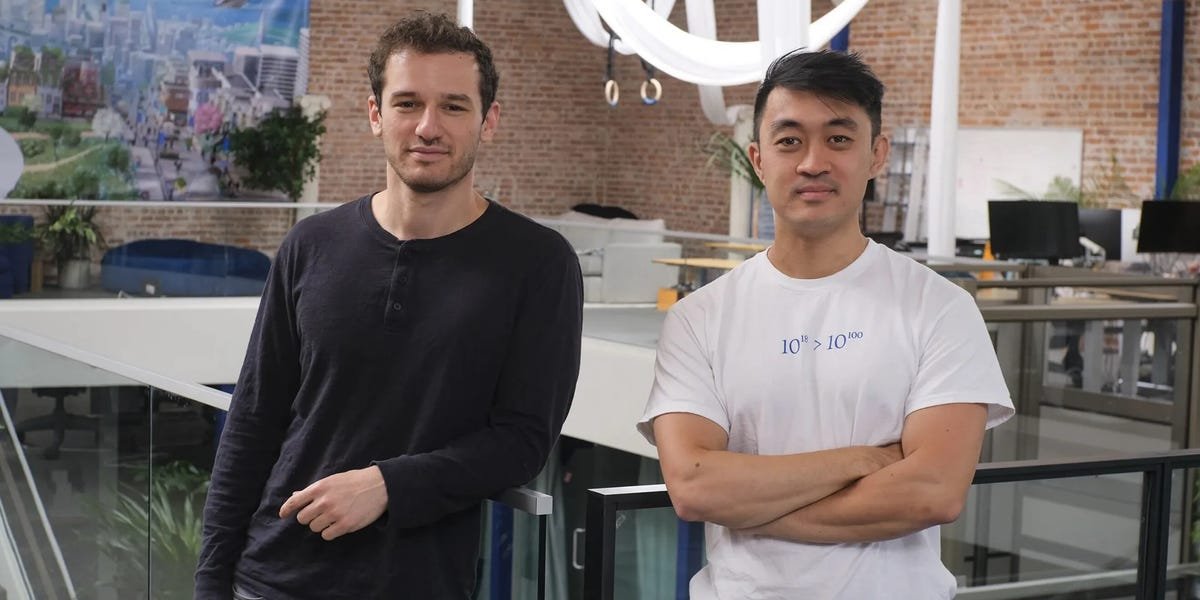
A-700M-Nvidia-backed-AI-search-startup-is-hiring-rebellious-engineers.jpeg

A $700M Nvidia-backed AI search startup is hiring ‘rebellious’ engineers, its CEO told us

An Nvidia-backed startup is looking for “rebellious” engineers to help rebuild search for the AI era.

Exa, which builds search infrastructure for AI applications, said it is opening a Singapore office on Monday as part of its push into Asia-Pacific. Exa has only a handful of staff in Asia-Pacific, and plans to hire up to 10 engineers across backend, infrastructure, and product roles in the coming months.

In an exclusive interview with Business Insider, CEO Will Byrk said he is hiring “rebellious” engineers.

“Someone who doesn’t care about the status quo, how things were done in the past, can think from first principles about everything — that’s really important,” he said.

Search systems built for AI are still new, and they require rethinking how search works because humans and AI behave differently, he added.

“I don’t believe it when people say you can’t do something. So I think we want engineers who feel the same way,” Byrk said.

Byrk also said Exa prioritizes candidates’ values above all else, and the company is open to hiring junior and senior engineers.

“Do they really have passion for building search or building large-scale systems?” he said, adding that experience is “not as important.”

To assess candidates for their character, Exa flies them to San Francisco to work with the team for one to two days. Exa has about 80 employees globally and is actively hiring in San Francisco, Zurich, and Singapore.

“That allows us to really see what a person’s like, because you don’t just get to see their output on a real project, but you also, you know, eat with them at lunch and dinner,” he said. “You really get to know a person.”

Byrk added that the best engineers should move fast and use AI tools effectively. Most of the company’s code is written by AI, he said.

Expansion into Singapore

Exa raised $85 million in a Series B round led by Benchmark in September at a $700 million valuation. Investors include Lightspeed, YCombinator, and NVentures, Nvidia’s venture capital arm.

The company, founded in 2021, said it serves web search to thousands of customers, including AI startups such as Cursor, as well as private equity and consulting firms.

“The number of searches from AIs are going to exceed the number of humans,” Byrk told Business Insider. “The whole world of search is shifting.”

Byrk said the Singapore office will serve as a “massive scale infrastructure,” including data pipelines and crawling infrastructure to gather and process information across the internet.

“Singapore has some of the best engineering talent in the world,” Byrk said. “People are really smart, and they have a lot of hustle.”

Do you have a story to share about AI startups in Asia? Contact this reporter at cmlee@businessinsider.com.




Source link

Lloyd Lee

Jack Dorsey just laid off 40% of staff. He said he’s still hiring AI engineers.

Jack Dorsey said he’s still hiring for his fintech company Block — even after he just laid off 40% of its workforce.

The cofounder said during an earnings call on Thursday that he expects to bring in more senior AI engineering talent to the team. The company’s stock was up nearly 23% after trading hours as of 7 p.m. Eastern Time.

On Thursday, Dorsey said in a memo to employees that Block was cutting its head count from 10,000 people to “just under 6,000.” The reason, he said, was because AI is unlocking “a new way of working” with “smaller and flatter teams.”

“We’re not making this decision because we’re in trouble. Our business is strong. Gross profit continues to grow, we continue to serve more and more customers, and profitability is improving,” Dorsey wrote in the memo. “But something has changed.”

Dorsey said in an earnings call on Thursday that AI tools have increased productivity at the company with a 40% increase in production code shipment per engineer since September.

“We’ve seen engineering work that would have taken weeks to complete be done by a small team in a fraction of the time with agentic coding tools,” he said.

Despite the layoffs, Dorsey said during the call that Block expects to invest in hiring.

“We see meaningful opportunity to invest in our people and invest in hiring, invest in retaining a world-class team to deliver for our customers; ultimately, we expect to hire some more senior AI engineering talent who will continue to level up our engineering and product capabilities,” he said.

Dorsey and a spokesperson for Block did not immediately respond to a request for comment.

AI’s impact is being felt across industries and roles, as companies find ways to automate work. One study by Stanford University researchers found that early-career positions in fields such as software engineering and customer service are on the decline.

Some workers have also said that their responsibilities have increased with AI. A software engineer told Business Insider that the simultaneous increase in productivity and workload is leading to “AI fatigue.”


Source link

Software-engineers-are-getting-crushed-by-AI-—-and-they.jpeg

Software engineers are getting crushed by AI — and they think you’re next.

Software engineers are getting crushed by AI, and they think you’re next.

AI’s ability to automate code is simultaneously making developers productive and overworked. One technologist said his job is harder than ever, lamenting that “AI fatigue” is real.

The good news is it won’t last forever. The bad news is that’s because most of them will be out of a job.

Software veteran Steve Yegge predicts that AI will eventually lead Big Tech companies to cut 50% of their engineers. (He wasn’t a total drag. Yegge offered advice to software engineers for avoiding the ‘vampiric effect’ of AI.)

“Ok, but I don’t work in tech. Why do I care?” you callously ask. (So cold!)

Well, according to the people in the thick of it, AI isn’t stopping with them.

Matt Shumer, the CEO of an AI startup, warned AI’s disruption will be “much bigger” than COVID. The post has racked up more than 69 million views on X, gaining traction outside traditional tech circles. Shumer spoke to BI’s Brent D. Griffiths about the post and the fact that he (surprise!) used AI to help him write it.

It’s worth noting Shumer’s company specializes in AI personal assistants. He certainly benefits from getting people on board with AI. But that doesn’t invalidate a lot of his points about workers needing to adapt to a rapidly changing environment.

There’s a counterargument to the doomsday prophecy.

Maybe engineering jobs are especially ripe for AI disruption?

The job, after all, is highly digital and requires hard skills, two factors that make it a strong candidate for AI automation.

Software engineers have also been somewhat insulated from the tech-based disruptions the rest of us have endured and adapted to during the pre-AI times. A new tool here. A new app there. At some point, many of us have gotten numb to tech disrupting what we do. You just figure out how to adapt.

Meanwhile, software engineers were living on easy street. You don’t have to worry about the tools when you’re the ones building them. For years, software developers enjoyed healthy salaries, good work-life balance, and fantastic job security.

Now the tables are turned, and suddenly it’s everyone’s problem?

I’m not suggesting AI won’t impact the rest of us. For starters, entry-level jobs across the board appear to be on the chopping block thanks to AI. Consultants also seem ripe for some shakeups. And the legal industry is certainly feeling the heat.

(I could mention journalism, but we were on the extinction list long before AI. When I started college in 2007, my professors all told me the industry was dying. Almost two decades later, we’re still here. If anything, it looks like AI has created some high-paying jobs for writers.)

AI might end up being massively disruptive for all of us, but at this point, we’re all used to it.

Where do you stand on the AI doomsday prophecy? Send me an email at ddefrancesco@businessinsider.com.


Source link

Wix-CEO-says-entry-level-engineers-need-this-trait.jpeg

Wix CEO says entry-level engineers need this trait

AI isn’t just reshaping the role of software engineers — it’s also making them more skilled.

That’s according to Avishai Abrahami, the CEO and cofounder of website management company Wix. He told Business Insider that the technology equips developers with “superpowers” and that the value of smart, talented engineers will be “dramatically enhanced” with AI tools.

“What would take you a month, you can do in a few hours,” Abrahami said, adding that not every task can be reduced in this way, but most can.

What entry-level candidates need

A Google Cloud report released in September found that AI adoption had surged to 90% among software professionals, up 14% from the year prior. Abrahami said that the emergence of AI tools means the “quality of the software engineer is more important than ever.”

He said the first thing “every company” looks for is candidates who know how to code and understand AI models. Beyond that baseline, he said Wix aims to hire entry-level candidates with a “tremendous amount of passion” for the role, which he said is essential to meeting the demands of the job [didn’t want to repeat roles] .

“Now with AI, the speed of change is so fast that you have to spend a lot of time learning and experimenting,” Abrahami said, adding that this makes passion is even more important.

John Stecher, Blackstone’s chief technology officer, similarly told Business Insider that many junior software engineers have “insane skill sets” and that the best hires are deeply passionate about their work.

As tools take on more of the coding, Stecher said companies are increasingly looking to hire those who understand how to use the tools, and recognize when they’re producing the wrong answers.

How work is changing

For more senior engineers, the role will increasingly shift toward architecture and code review, he said, rather than writing code. Abrahami said experienced engineers will need to read code “much faster,” adding that architecture, software design, and code comprehension will become even more critical.

The CEO, however, warned that AI can be a double-edged sword for engineers.

“You can do so much more if you’re smart,” Abrahami said about engineers who use AI. “And you can do really bad things if you’re not.”


Source link

Henry Chandonnet is pictured

The creator of Anthropic’s Claude Code likes to hire engineers who do ‘side quests’ like making kombucha

Want a job at Anthropic? It might help to get a hobby.

The AI boom is changing the job requirements for an engineer. Not only do they need to have coding skills, but they also must know how to operate vibecoding tools and stay up to date with new AI models.

Anthropic leader Boris Cherny looks for something else: “Side quests.”

“When I hire engineers, this is definitely something I look for,” he said on “The Peterman Pod.”

Cherny’s definition of side quests includes “cool weekend projects,” like someone who’s “really into making kombucha.” It’s a sign that the engineer is curious and interested in other things, he said.

Much of Cherny’s own growth came from his side projects. Cherny is now a key figure at Anthropic. He created Claude Code, a tool that is now popular with engineers across the country.

“These are well-rounded people,” he said. “These are the kind of people I enjoy working with.”

Cherny also said he prefers that his new hires be “generalists.”

He gave the example of an engineer who can code, but is also able to work on product and design. That all-star engineer also seeks out user feedback.

“This is how we recruit for all functions, now,” he said. “Our project managers code, our data scientists code, our user researcher codes a little bit.”

Cherny isn’t alone in pushing for jobs to become more generalist. Figma CEO Dylan Field said in October that AI was causing job titles to merge, resulting in everyone being a “product builder.”

What else is Anthropic looking for? For some time, it monitored whether candidates use AI in their applications.

In May, Business Insider reported that Anthropic asked candidates for certain jobs not to use AI in their written responses so the company could test their “non-AI-assisted communication skills.”

Anthropic changed its policy in July, allowing candidates to seek out assistance from Claude.

For the younger engineers, a job at Anthropic may be hard to come by. In May, CPO Mike Krieger said on “Hard Fork” that he was focused on hiring experienced engineers — and had “some hesitancy” with entry-level workers.

On the podcast, Cherny said that his love of generalists came from his career trajectory. Working at startups since 18, Cherny had to do everything, he said.

“At big companies, you get forced into this particular swim lane,” he said. “It’s just so artificial.”


Source link