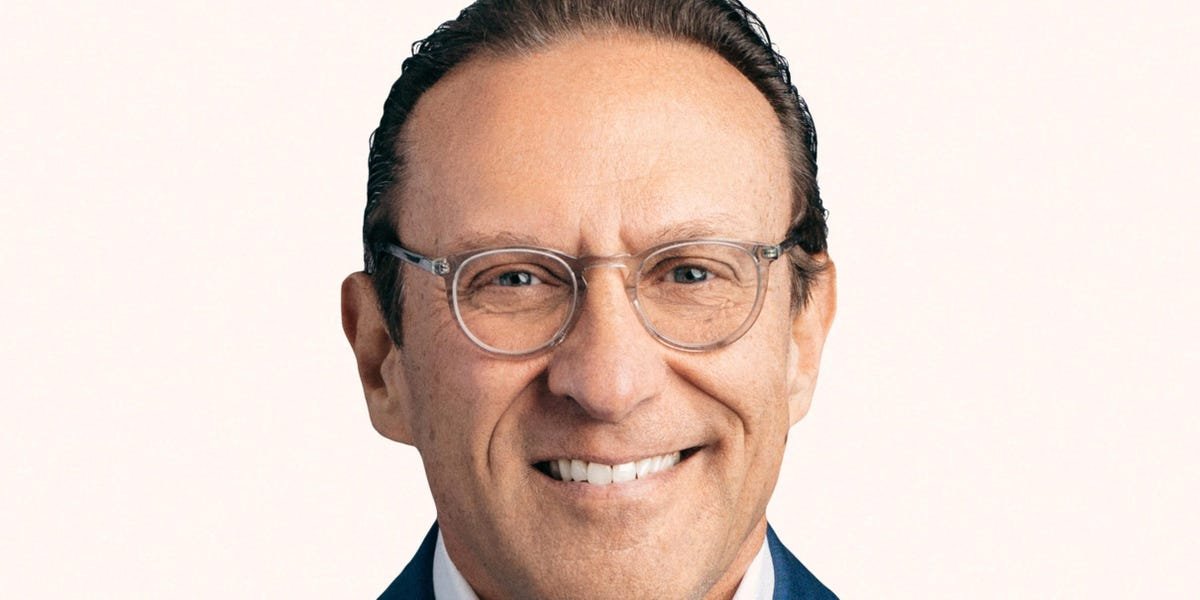
EQT is one of the largest private equity investors in the world — yet most wealthy Americans have barely heard of it. That’s the uphill battle facing Peter Aliprantis, the Swedish firm’s head of private wealth in the Americas, as EQT tries to pitch in a market dominated by Wall Street brands with plenty of CNBC airtime.
“Most people in the United States are not familiar with us, and the way we say it, we’re the best-kept secret,” Aliprantis told Business Insider.
Private Equity International ranked the firm as the second-largest private equity firm, with $312 billion of assets under management. It raised more than $113 billion in third-party private equity capital from 2020 to the end of 2024, putting it ahead of Blackstone, and just behind KKR so far this decade.
Like many of its competitors, it’s turning to private wealth as the newest source of growth. The industry’s change of fundraising focus comes as private equity firms are slow to return cash to investors, and over-allocation among institutional investors means that institutional funding is slowing.
But the same reasons that the firm isn’t as well-known in America are actually an advantage, Aliprantis said.
In a world where debt-heavy buyouts are proving more difficult and an increasingly concentrated American private market is pushing some to invest internationally, a global industrialist approach can be attractive.
EQT has returned capital at a normal pace, with $23 billion in distributions for the year ending June 2025. The firm has also been building a private wealth business for the past four years, which accounts for 10% of its current assets. The firm has a goal to reach between 15-20% during its current $100 billion fundraising cycle, according to its second-quarter report.
Aliprantis walked Business Insider through the firm’s pitch to financial advisors and private wealth distribution networks, explaining why its global reach is a significant advantage in 2025.
The key for EQT, Aliprantis said, is for the firm to offer individual investors the “exact same deals” it gives institutional investors.
EQT’s industrialist, international advantage
EQT was founded in 1994 as a spin-off from industrial holding company Investor AB, but the firm’s history stretches back to Sweden’s Wallenberg family. The Wallenbergs, called the “Rockefellers of Europe,” have created an empire of business holdings including massive stakes in Sweden’s biggest firms, like ABB, AstraZeneca, or Saab.
“The Wallenberg family has a 160-year heritage of owning and developing companies,” Aliprantis said. “We’re not financial engineers. We don’t add a lot of leverage to what we do, and we’re very, very different from what a lot of our peers on Wall Street are doing.”
Aliprantis’s comments echo a larger change in the industry, which is running out of easy money-making deals and cheap financing and now has to extract returns by actually building stronger companies.
But the firm’s biggest advantage, Aliprantis said, is its global nature.
Only 35% of its assets are based in North America, and the firm has 26 global offices where its deal teams invest in local private equity, infrastructure, and real estate deals.
“A lot of our colleagues based in New York will fly deal team partners over to different places around the world to do the deal and then get on a plan and fly home,” Aliprantis said. “Our deal teams are pretty much based in the locations where they do deals.”
This means the firm “gets the call” when local companies are looking to sell, and keeps them from larger “bake-offs” where the price might be bid-up.
This has also meant the firm can continue to provide distributions to its clients even if the market is slow in one locale.
“If you’re a US-based domicile private markets firm that has 70 to 80% of your assets in the US, guess what? If the US IPO market is slowing, you’re going to have a problem exiting,” Aliprantis said.
“Here in the US, it’s always been too much money chasing too few deals. You know what? That’s a US thing,” Aliprantis said.” If you go to Europe and you go to Asia, it’s the opposite.”
For example, Bain estimates there’s about $480 billion in dry powder for European private funds, including venture capital, compared to Pitchbook’s $914.5 billion for US-focused private equity firms, not including VC. Apollo’s Marc Rowan also recently told the Wall Street Journal that as an industry, they find themselves short ideas rather than capital.
Aliprantis said investors’ biggest reason to diversify away from the US market is its concentrated bet on AI.
“Their concern is that the Mag Seven is roughly 37% of the S&P right now, and valuations are stretched,” Aliprantis said. “Is AI really going to work? Is it not? How additive is it going to be to the bottom line? We don’t know.”
How to keep retail investors happy
Across the spectrum, Aliprantis said, the “biggest concern” is that retail investors are getting a set of less attractive deals, while institutional investors are getting a “separate set of deals.”
Aliprantis said that the firm’s six evergreen vehicles are composed of the “exact same deals” that its institutional clients invest in.
The key to doing that, and to being a responsible investor or retail capital, is “size and scale,” Aliprantis said.
Size also helps with the balance sheet necessary to launch a private wealth business. It can cost millions of dollars to hire the necessary staff to start selling to financial advisors and other wealth management channels before any revenue is returned to investors.
EQT was able to use its balance sheet, as a public company in Sweden, to build its private wealth team and now has 70 private wealth professionals globally, with 20 based in the US.
That’s not to say that smaller funds won’t succeed, but it will be much harder, Aliprantis said. With so many investors competing for retail capital, consolidation is inevitable.
“The race is on in the industry right now,” Aliprantis said.