

Gary-Marcus-calls-out-viral-AI-essay-as-alarmist-hype.jpeg

Gary Marcus calls out viral AI essay as alarmist ‘hype’

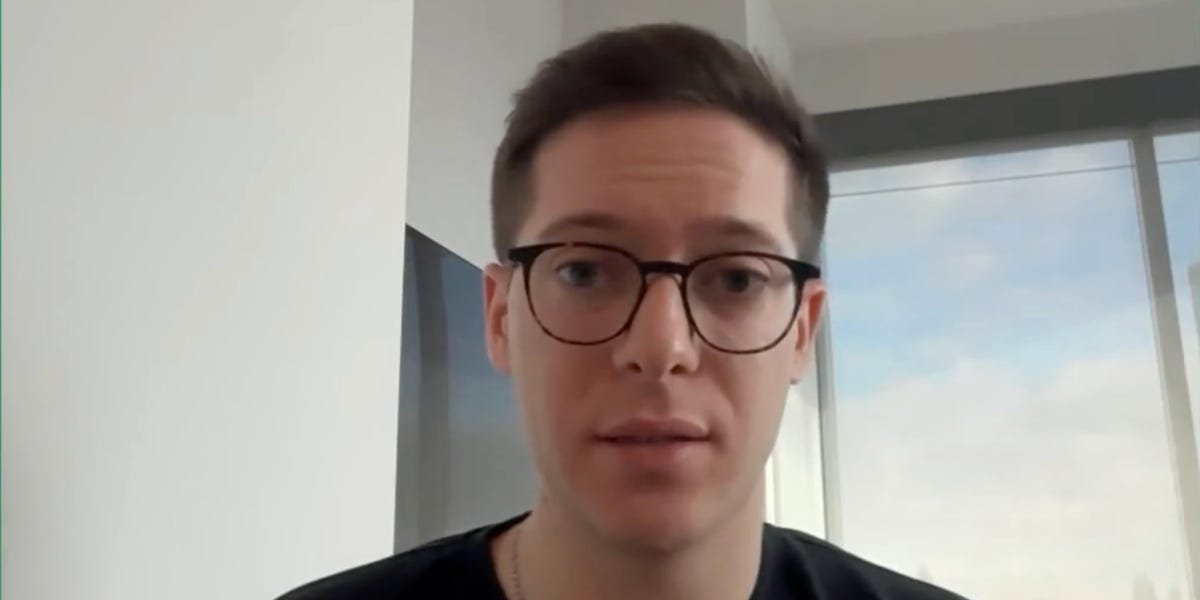
If that viral essay about AI had been printed on paper, there’s a good chance AI researcher Gary Marcus would’ve ripped it up in disgust.

Marcus acknowledges something is happening in AI — just nowhere near the scale described in the recently viral essay, which predicted a looming disruption “worse than COVID.”

Marcus, who on X criticized the essay written by entrepreneur and investor Matt Shumer as having “not a shred of actual data,” dismissed its contents as alarmist in an interview with Business Insider.

“Hyped-up views have gotten us into a bad place, possibly one that’s going to lead to a serious economic recession or something like that,” Marcus told Business Insider. “And I guess I think that one should work from the facts rather than just trying to cause an alarm.”

In his essay titled “Something Big is Happening,” Shumer, whose past startup sells a subscription-based AI-assisted writing tool, warned that AI would upend not just software engineering, but most jobs done “on a screen.” Shumer also has a small VC fund.

Marcus said that while AI will replace some labor and affect jobs, the process will be much slower than what Schumer and others are describing.

AI can do some things well and help speed up work, but it’s just not near the point of replacing humans, Marcus said.

“AI can do a small subset of the tasks, and that sometimes speeds up human beings and things like that, but it rarely does all of what a human being can do in any particular domain,” he told Business Insider. “This will change over time, just to be clear. It is likely that AI will replace most human labor over the next century, but it’s not likely that it will over the next year or two.”

Companies that move too quickly to replace jobs with AI are likely to find themselves in a similar position as Klarna, Marcus said. In 2024, Klarna touted an AI assistant that could do the equivalent work of 700 people. By May 2025, CEO Sebastian Siemiatkowski, long a proponent of AI, said that “as cost unfortunately seems to have been a too predominant evaluation factor when organizing this, what you end up having is lower quality.” He added that “investing in the quality of the human support is the way of the future for us.”

“Six months or a year later, they come back with their tails between their legs because it turns out that the AI systems don’t do things as well as the human,” Marcus said. “So, I’m not saying that there’s nothing going on. I’m not saying that there’s no value in these AI systems, but they’re premature.”

Klarna told Business Insider that the number of its customer service queries handled by AI has increased “as it gets better at more complex requests,” and the company “has not reversed or scaled back its AI strategy.”

Marcus said that the more likely outcome in the short-term is not that AI will replace junior employees but rather that executives think it’s capable of doing so — and make what could ultimately prove to be a costly gamble.

“The biggest thing I think junior people have to worry about right now is a misapprehension by the C-suite that these techniques work better than they actually do,” Marcus said.

As of Friday morning, Shumer’s post has been viewed more than 80 million times on X alone. In a Substack post expanding on his criticisms, Marcus called Schumer’s post “weaponized hype.”

“The general impression that he conveys is basically that the sky is falling now, and at most, I think what’s really happening is the junior people are under some threat, and I think that threat is actually exaggerated,” Marcus told Business Insider.

Shumer previously told Business Insider that he wrote his essay in part to reach people like his dad, who may be skeptical or avoid AI entirely. He felt compelled to warn them about what might be on the horizon, even “if there’s just a 20% chance of it happening.”

Marcus’s biggest critique of Schumer’s post is that it doesn’t take into account current data and research showing that AI still has a long way to go, and that it didn’t present the full context behind a famous Model Evaluation & Threat Research graph assessing AI progress.

He said that other studies, including a June 2025 paper published by Apple’s Machine Learning Research Group, found limitations in what current models can do.

Marcus also said that many leading AI CEOs who have made bold predictions about the future of work have failed to deliver on past ones. He points to xAI CEO Elon Musk’s frequent rosy outlook on the number of robotaxis Tesla will put on the road (Musk once said one million by 2020) and to Nobel laureate Geoffrey Hinton’s 2016 statement that the world should stop training radiologists. (Last May, Hinton told The New York Times that his prediction was poorly worded and that while he was wrong on the timeline, the general direction for AI’s capabilities in radiology was correct.)

“What they have all learned to do is to sell the rosiest picture possible, and the media rarely calls them out,” Marcus told Business Insider.

On Thursday, Microsoft AI CEO Mustafa Suleyman made waves by predicting that most, if not all, white-collar tasks could be automated within the next year and a half.

One of the industries Suleyman mentioned is accounting. Marcus isn’t convinced.

“Think about accounting in particular,” he told Business Insider. “Even one mistake can cost a client hundreds of thousands of dollars or get them sent to jail or whatever. Accounting is a business that is built on accuracy. If you’re not accurate, you don’t have a business.”



Source link

Tech-leaders-are-raising-tough-questions-over-Matt-Shumers-viral.jpeg

Tech leaders are raising tough questions over Matt Shumer’s viral essay on how AI will impact jobs.

Scientists and business leaders are responding to a viral essay warning of AI’s impact on jobs with a mix of agreement and skepticism.

The essay, titled “Something Big is Coming,” written by cofounder and CEO of OthersideAI, Matt Shumer, has racked up more than 60 million views on X as of Thursday.

In the 5,000-word post, Shumer said that AI could upend daily life on a scale “much bigger” than COVID, a comparison which drew pushback online. He wrote that the changes already unfolding in the tech sector are likely a preview of disruptions that could soon reach other industries as well.

“Even if there is a 20% chance of this happening, people deserve to know and have time to prepare,” Shumer told Business Insider’s Brent Griffiths in an interview.

Here’s what some of the sharpest minds in AI are saying about Shumer’s essay.

David Haber

Haber, a general partner at venture capital firm Andreessen Horowitz specializing in technology investments, posted on X that Shumer’s essay contains “great advice for how to get ahead in your job at any large company right now.”

“‘I used AI to do this analysis in an hour instead of three days is going to be the most valuable person in the room.’ Not eventually. Right now,” Haber quotes from the essay. “Learn these tools. Get proficient. Demonstrate what’s possible.”

Alexis Ohanian

The Reddit founder responded to Shumer’s initial post on X with a simple comment: “Great writeup. Strongly agree.”

Since 2023, Reddit has introduced a range of AI-driven tools, from search features that summarize user discussions to AI that sharpens its content recommendations and targets ads, but Ohanian recently emphasized that the platform must retain its humanity to stay competitive.

Eric Markowitz

Markowitz, the author and managing partner and director of research at Nightview Capital, a long-term-oriented investment firm, responded to Schumer with an essay almost as long, which criticized the practice of chasing speed and replacing the value of humanity simply because it could be done.

“These two worlds — Wall Street and Silicon Valley — have formed a feedback loop of short-termism so tight, so self-reinforcing, that they’ve confused efficiency with purpose, growth with meaning, and the elimination of people with progress,” wrote Markowitz.

“I have two research assistants. Could I replace them with AI? Of course. But their value extends their weekly output,” Markowitz added. “They give meaning to my work and I love seeing the excitement in their faces when they make a new discovery that I, alone, could not have found.”

“Let me say it again: we are not our tools. We never have been,” Markowitz wrote in conclusion.

Todd McLees

McLees, the founder of HumanSkills.AI, wrote on X that Shumer is not wrong, but he said that the advice Shumer provided is akin to “telling someone the floodwaters are rising and handing them a better bucket.”

“As AI grows in ability, our role in defining direction, values, and purpose only becomes more essential,” McLees said.

“What do you bring when the machine can do the work? That’s the only question that matters when intelligence is abundant,” McLees added. “Shumer wrote the alarm. It’s a good one. But alarms don’t tell you where to go. You have to find that within yourself.”

Gary Marcus

Marcus, Emeritus Professor of Psychology and Neural Science at NYU and founder of AI companies Robust.AI, has some harsh words for Schumer in his newsletter.

Marcuz called Shumer’s blog post “weaponized hype, filled with vivid narrative and marketing speech,” and said he did not provide real data to support the claim that the latest AI can write complicated apps without mistakes.

“Shumer’s presentation is completely one-sided, omitting lots of concerns that have been widely expressed here and elsewhere,” Marcus added, after discussing various studies that question the accuracy and productivity gain AI tools actually provide.

Vishal Misra

Misra, Vice Dean of Computing and Artificial Intelligence at Columbia University, responded in a lengthy Substack article that detailed why he doesn’t think AI is as scary as it sounds, at least not right now.

Misra wrote that many strange AI behaviors that make them seem sentient, such as perceived resistance and self-preservation, are simply a result of training data.

As for the possible elimination of jobs, Misra said he understands the anxiety, but history says we may not need to panic.

“When the camera was invented, portrait painters had every reason to panic. Their livelihood depended on a skill that a machine could now approximate,” Misra wrote.

“What happened? Painters didn’t disappear. They were freed from the obligation to faithfully reproduce reality and ventured into impressionism, cubism, abstract expressionism,” Misra added. “The camera didn’t kill painting. It liberated it.”


Source link

Author-of-viral-Something-Big-is-Coming-essay-says-AI.jpeg

Author of viral ‘Something Big is Coming’ essay says AI helped him write it — and that proves his point

The author of the viral essay warning about impending AI disruption says he couldn’t wait any longer to get the word out.

“Let’s say there is just a 20% chance of it happening, which is maybe realistic, maybe underselling it,” Matt Shumer, GP of Shumer Capital, said during an interview with Business Insider. “Even if there is a 20% chance of this happening, people deserve to know and have time to prepare.”

The people in tech who previously warned about AI’s impact were mostly speaking to others in the industry, he said. Shumer said he wanted something that spoke to his dad, a lawyer who is just a few years from retirement and is hopeful he can run out the clock on the potential massive change on the horizon.

He’s certainly found an audience.

His essay, titled “Something Big is Coming,” has been viewed over 60 million times on X alone, as of Wednesday evening. In the nearly 5,000-word post, Shumer wrote that AI’s disruption to people’s lives could be “much bigger” than COVID — a comparison that has drawn some pushback online. Shumer’s past controversy over an open-source model he promoted in 2024 has also come under scrutiny, after AI researchers discovered the model didn’t live up to his performance claims. He previously apologized, saying “I got ahead of myself when I announced this project.”

In his essay, Shumer also wrote that what he’s seeing in tech is likely what awaits other industries.

“I don’t know that this is coming for sure, but I think a lot of us in tech really see this progress, and it’s frankly dizzying, and there’s a good chance of this,” he said. “And the more people know, the better.”

Shumer is not alone in his fears about the future.

Anthropic CEO Dario Amodei, who is known for writing eyebrow-raising essays of his own, has said that up to half of all entry-level, white-collar jobs may be wiped out in the next one to five years. xAI CEO Elon Musk has called AI a “supersonic tsunami” that will quickly eliminate jobs that don’t involve physical labor.

Shumer said even he is unsettled about the prospects of AI. After all, he’s 26 and still near the beginning years of his career. In 2020, he cofounded OthersideAI, which later spawned HyperWrite, an AI-assisted writing tool.

“I don’t know how many more years of my career there will be if this all actually comes to pass,” he told Business Insider. “So, it’s frankly a little confusing and terrifying for someone like me.”

Part of the issue is that AI is unlikely to affect all industries in the same way or at the same time, making career advice highly dependent on a person’s specific situation.

“If you’re a nurse, you’re probably going to be fine for quite some time,” he told Business Insider, adding that junior associates at law school face significantly more risk because many of the introductory-type tasks they do are already being targeted by AI companies.

In his essay, Shumer wrote that his realization of what’s in store came after his experience with OpenAI’s GPT-5.3-Codex, which was released last week. In its release notes, OpenAI said GPT-5.3-Codex was its “first model that was instrumental in creating itself.” Shumer wrote that AI is now capable of doing his technical work.

As for the other tasks, Shumer has been quite open about how AI helped him write his viral essay about AI. He said he spent hours working with Claude to craft his message.

“It did help a lot,” he told TBPN on Wednesday, “and I think that’s kind of the point.”

It’s why Shumer’s message to everyone who turned away from AI, perhaps after a clunky experience with an early version of ChatGPT years ago, is that they should seize the opportunity to see the breadth of what the technology can do now.

“If you look back 10 years from now and this did come to pass, you’ll be very glad you did,” he told Business Insider.


Source link

7-of-the-most-interesting-quotes-from-Anthropic-CEOs-sprawling.jpeg

7 of the most interesting quotes from Anthropic CEO’s sprawling 19,000-word essay about AI

Dario Amodei still has a lot to say.

On Monday, the Anthropic CEO dropped an over 19,000-word essay entitled “The Adolescence of Technology” on the future of AI on Monday, opining on everything from his fellow CEOs to feudalism, and even the Unabomber.

Best known for his warning that AI could eliminate up to 50% of entry-level white-collar jobs in the next 1 to 5 years, Amodei has tangled with Nvidia CEO Jensen Huang and the Trump White House over his views.

Here are seven of the most alarming and surprising quotes.

‘This is a serious civilizational challenge’

Amodei remains optimistic about AI overall, but his essay detailed “an intimidating gauntlet that humanity must run” to reap the benefits of AI without letting the breakthrough technology destroy the world.

“I believe if we act decisively and carefully, the risks can be overcome — I would even say our odds are good. And there’s a hugely better world on the other side of it,” he wrote. “But we need to understand that this is a serious civilizational challenge.”

AI development can’t be stopped, Amodei wrote, a conclusion even some of AI’s skeptics share. The financial and security benefits are just too massive for the private and public sectors to pass up.

It’s why winning the AI race and doing so in an ethical way is so critical, he concludes.

‘This is like selling nuclear weapons to North Korea and then bragging that the missile casings are made by Boeing’

Jensen Huang hasn’t changed Amodei’s mind on China.

“A number of complicated arguments are made to justify such sales, such as the idea that ‘spreading our tech stack around the world’ allows ‘America to win’ in some general, unspecified economic battle,” Amodei said. “In my view, this is like selling nuclear weapons to North Korea and then bragging that the missile casings are made by Boeing and so the US is ‘winning.'”

In November, Nvidia announced a partnership with Anthropic that includes an investment of up to $10 billion in the AI startup. The news sparked speculation that tensions between Amodei and Huang might be cooling.

Whatever the status of their relationship, Amodei is resolute that it is a horrendous decision to allow US companies to sell advanced chips to China.

“China is several years behind the US in their ability to produce frontier chips in quantity, and the critical period for building the country of geniuses in a data center is very likely to be within those next several years,” Amodei wrote. “There is no reason to give a giant boost to their AI industry during this critical period.”

‘Many people have told me that we should stop doing this, that it could lead to unfavorable treatment’

Amodei would like his critics to see the scoreboard.

Anthropic’s leader hasn’t tried to curry favor with the White House, nor has he vocally embraced President Donald Trump’s AI policies to the same degree as his rival CEOs. Amodei’s outspoken call for AI regulation even led David Sacks, Trump’s AI czar, to publicly rebuke him.

None of it has changed Amodei’s view that the AI industry “needs a healthier relationship with government — one based on substantive policy engagement rather than political alignment.”

“Many people have told me that we should stop doing this, that it could lead to unfavorable treatment, but in the year we’ve been doing it, Anthropic’s valuation has increased by over 6x, an almost unprecedented jump at our commercial scale,” he wrote.

Of all of his hopes, this one appears the unlikeliest. Already, AI CEOs have formed dueling super PACs ahead of the 2026 midterm elections.

‘It is sad to me that many wealthy individuals (especially in the tech industry) have recently adopted a cynical and nihilistic attitude that philanthropy is inevitably fraudulent or useless’

The tech elite made AI, and they should help society grapple with its fallout, he wrote in the essay. Amodei has long called on governments to prepare for mass job displacement. In one of the most eyebrow-raising parts of the essay, Anthropic CEO detailed what his fellow billionaires and companies must do.

Beyond philanthropy, Amodei said companies need to be “creative” in how they stave off layoffs.

In the long term, he wrote, “It may be feasible to pay human employees even long after they are no longer providing economic value in the traditional sense.”

‘Some AI companies have shown a disturbing negligence towards the sexualization of children’

One of the biggest themes of Amodei’s essay is the risk that AI companies themselves pose. It’s a conclusion that he admits is “somewhat awkward” for him to reach. As an example, he points to the roiling topic of the sexualization of children. While he does not name xAI directly, Grok is facing investigations in multiple countries over the non-consensual sexualization of images of real people.

“Some AI companies have shown a disturbing negligence towards the sexualization of children in today’s models, which makes me doubt that they’ll show either the inclination or the ability to address autonomy risks in future models,” he wrote.

Overall, he expressed skepticism that AI companies will sacrifice profit for broader societal good. “Ordinary corporate governance,” Amodei wrote, is ill-equipped to address his worries.

Amodei said that fears that AI models may defy orders and perhaps even try to eliminate humanity are complicated by bad actors in the industry who aren’t as transparent about the risks they are seeing in their models.

“While it is incredibly valuable for individual AI companies to engage in good practices or become good at steering AI models, and to share their findings publicly, the reality is that not all AI companies do this, and the worst ones can still be a danger to everyone even if the best ones have excellent practices,” he wrote.

‘Models are likely now approaching the point where, without safeguards, they could be useful in enabling someone with a STEM degree but not specifically a biology degree to go through the whole process of producing a bioweapon’

Amodei doesn’t see the largest risks to humanity coming from AI pursuing total domination, but rather in what AI could enable humans to unleash.

Amodei described his fears that AI is lowering the barrier of entry necessary to make killer biological weapons. His greatest concern is that AI could provide the step-by-step know-how that could eventually enable even an average person to produce a bioweapon.

AI companies, Amodei said, need to ensure they create sufficient backstops to block such inquiries, including by making it difficult for hackers to jailbreak models. Adding such security is expensive, Amodei said, noting that these measures are “close to 5% of total inference costs” for some of the companies’ models.

“I am concerned that over time there may be a prisoner’s dilemma where companies can defect and lower their costs by removing classifiers,” he wrote. “This is once again a classic negative externalities problem that can’t be solved by the voluntary actions of Anthropic or any other single company alone.”

‘I would support civil liberties-focused legislation (or maybe even a constitutional amendment)’

Amodei is one of the AI industry’s most vocal proponents of AI legislation. While Meta and Microsoft supported a federal preemption of state-level AI laws, Anthropic supported AI transparency bills in California and New York that are now law.

Throughout the essay, Amodei outlined multiple areas for future legislation, including industry-wide transparency requirements like those at the state level. Even he concludes that new laws might not be enough.

“The rapid progress of AI may create situations that our existing legal frameworks are not well designed to deal with,” he wrote.

It’s why Amodei said he would go so far as to support a constitutional amendment. The US has not amended the Constitution since 1992, when the over two-century-long battle to add a limitation on congressional pay finally passed the 38th state legislature.

“I would support civil liberties-focused legislation (or maybe even a constitutional amendment) that imposes stronger guardrails against AI-powered abuses,” he wrote.


Source link