Nestlé said it was the target of a major chocolate heist last week.
“We can confirm that 12T of KitKat products were stolen while in transit between our factory in Central Italy and their destination in Poland,” KitKat said in a Sunday Instagram statement.
The company said it was working with local authorities and supply chain partners to investigate the case.
“The good news: there are no concerns for consumer safety, and supply is not affected,” it added.
Several media outlets reported that 12 tons amounts to more than 400,000 bars of the crunchy wafer chocolate, and that the robbery happened on Thursday.
The bars weren’t regular KitKats, but rather special Formula 1 bars in the shape of F1 cars, per reporting from The New York Times. KitKat announced in June last year that it was an official partner for the motorcar racing league.
Nestlé took the opportunity to make some chocolate jokes in its statements to multiple media outlets.
“Whilst we appreciate the criminals’ exceptional taste, the fact remains that cargo theft is an escalating issue for businesses of all sizes,” a Nestlé spokesperson told the LA Times.
“We’ve always encouraged people to have a break with KitKat,” a Nestlé spokesperson said to The Guardian. “But it seems thieves have taken the message too literally and made a break with more than 12 tons of our chocolate.”
KitKat is an important product for Nestlé. The Swiss food company said in its full-year 2025 report that its confectionery business grew 8.2% to 8.70 billion Swiss Francs, or about $10.89 billion. This was led by KitKat sales, the company said.
Nestlé stock price is down more than 10% in the past year.
No one really tells you how to look for a home — and I don’t mean a structure with four walls and a front door.
I mean the place you’re proud to be part of, to describe to people who’ve never been, to bond over with strangers you’ve just met.
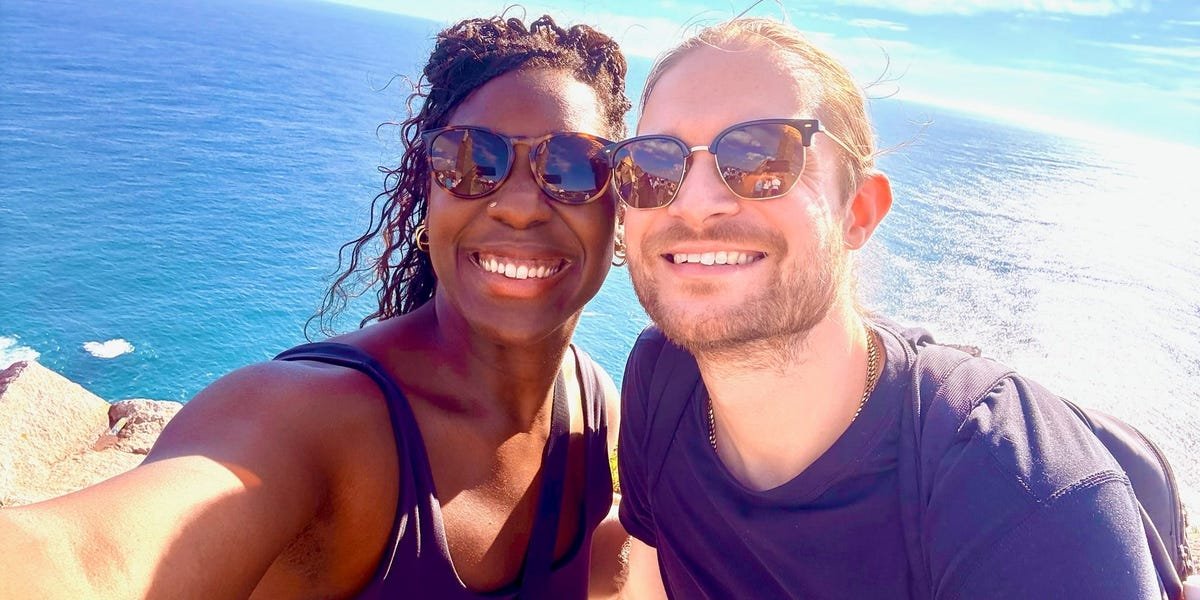
If I’m honest, my husband Cody and I started our search for a new home from vastly different perspectives: I’m a Guyanese-American Black woman raised by Caribbean parents in an eclectic corner of North Jersey.
I grew up proudly wearing my badge of independence as I took the bus and train between my hometown and New York City, the sound of different languages lulling me to sleep on the way home from Manhattan.
Cody, the firstborn in a blended, mostly evangelical family, jumped at the chance to leave rural Indiana as soon as he was able. He craved walkability, third spaces, and access to culturally diverse communities.
We met nearly 12 years ago in North Carolina and, for a while, found some common ground in Durham — its tight-knit community felt familiar to me, and the (semi) walkable neighborhoods suited him.
When remote companies became our sole source of work, we found ourselves with the freedom and opportunity to do what we hadn’t before: travel overseas.
Soon, we began to wonder if home might exist outside the contiguous US.
Throughout our summer of travel, we began looking for a place to settle
We spent time exploring London.
Ashley Stahm
We’d never been to Europe, so we took two months in the summer of 2023 to travel to Paris, Nice, and Cassis, France; Brussels, Belgium; Amsterdam, Netherlands; and London, England.
Those cities, of course, are as different as the four corners of the US, and perhaps even more so due to linguistic, cultural, and climate differences.
We packed a single checked bag and hauled it from city to city on trains and across cobblestones, shedding our crewnecks and rain jackets as we walked along Amsterdam’s canals for shorts and bathing suits in the south of France.
We loved the bicycle infrastructure in Amsterdam, the café culture in Paris, and the cultural diversity and ample green space in London.
However, our research taught us that the Netherlands, France, and the UK would not be particularly easy countries for us to immigrate to.
Not to mention, we stayed in each city during the summer, experiencing the most vibrant version of each. What would living in London feel like in winter, with the sun lost behind endless overcast skies? What would Paris be like when it rained days on end?
We enjoyed visiting Amsterdam during the summer.
Ashley Stahm
Around six weeks into our foray across those four countries that summer, we took a beat. What, exactly, were we looking for?
We’d seen Big Ben. We’d seen the Eiffel Tower. We’d biked across canals in Amsterdam, and had Belgian waffles in the place they originated because, well, of course we did.
The magic of our first European tour was captivating, sure, but we were looking for a home.
We realigned on the basics: We specifically wanted a place where we could build a childfree community. We craved places for adults to meet and support one another, with the intent of growing old together.
We never, ever wanted to own a car again. We wanted healthcare to feel accessible. We needed a feasible way to immigrate and integrate, language, bureaucracy, and all.
We wanted to be in this new home for the long haul.
As our travels continued, we found a not-so-great fit and one city that felt right
We spent our travels exploring new places and celebrating milestones.
Ashley Stahm
It was with that renewed direction that we went home and planned for our next trip across the Atlantic: this time to Lisbon, Portugal, and Barcelona, Spain.
Although their two countries shared a border, these two cities couldn’t have been more different to us.
In Barcelona, Catalan was spoken so widely that my high-school Spanish wasn’t as useful as I’d hoped. Between the stifling summer heat and what I perceived as a noticeable lack of visible representation of dark-skinned Black (and Afro-Caribbean) women like myself, the city just wasn’t a match for me.
I wasn’t expecting to see reflections of myself everywhere; I was in Europe, after all. However, knowing that Spain is home to millions of immigrants, I also hadn’t expected to feel so conspicuous and be pored over so much.
Although I left Spain feeling more alienated than ever, Portugal soon stole our hearts.
Everywhere I looked, I saw melanin. Throughout our time in Lisbon, I heard a mix of languages and accents — not just European Portuguese, but also Brazilian, Angolan, and Mozambican Portuguese, along with French and English — reflecting the diversity of the people around me.
I sat among greenery, quiosques, miradouros, and old ladies in crisp slacks with beers in hand at 11 a.m., gossiping with their neighbors before heading to the local tasca for almoço and a pastel de nata.
For us, Lisbon felt like it could be home.
After 2 years of searching, we’ve settled on Lisbon
From the north in Porto to the south in the Algarve, I couldn’t pick my jaw up off the floor.
Ashley Stahm
Eventually, we decided to move to Portugal’s capital city, where we had found walkable neighborhoods and a social community of both locals and expats — just as we’d hoped.
It’s warm and sunny year-round, so we didn’t need to worry so much about possible gloominess during other seasons.
Portugal also offers a universal public healthcare system that seems accessible, plus more visa routes than some other countries we’d considered.
Like most truly multicultural countries, though, it is grappling with geopolitical and economic friction that we’re still learning about.
However, there was what was on our list, and then there was what our hearts needed: A country willing to welcome us, teach us, and be patient (as we figured out how to file our immigration paperwork in a language we’re still learning).
We’re immigrants in a land whose respect we are still earning, alongside friends from all over the globe who are starting over, just like us. The effort is well worth it.
From where we stand, a full two years after we began our search, we’re finally home.
This story is available exclusively to Business Insider
subscribers. Become an Insider
and start reading now. Have an account? .
I spent a year hiking in 11 countries, visiting some of the world’s most beautiful natural regions.
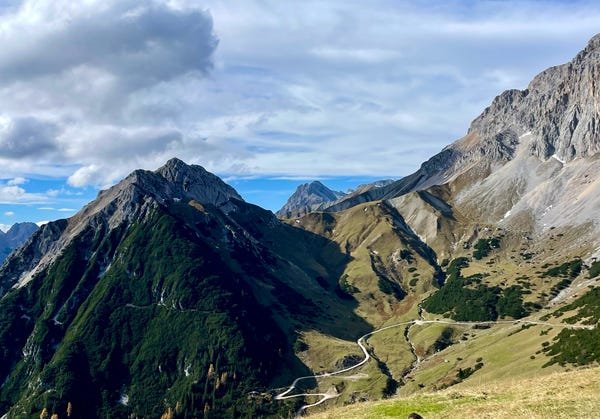
My favorite trails, including the Lago di Sorapis in Italy, had stunning views and less traffic.
Although I enjoyed every hike, there were some trails that I wouldn’t revisit because of the crowds.
Exploring the mountains is my favorite way to see a new place.
So, when I spent a year as a traveling winemaker and nomadic freelance writer in Europe and Oceania, I set out to hike in every country I visited.
I traversed narrow, rocky paths in the Dolomites, meandered through Scotland’s sweeping green valleys, and trekked past kangaroos in the Australian bush.
Now, over a year later, I can say I’ve hiked in some of the most awe-inspiring corners of the world. There are four trails I’d return to in a heartbeat, and three ticketed ones that felt crowded and overhyped.
I’d love to hike in Leutasch, Austria, again.
I hiked the Rotmoosalm-to-Wettersteinhütte loop, and found the experience so worthwhile. Sierra Newell
In the Austrian Alps, just south of the iconic Zugspitze mountain, lies Leutash, a lush, pristine alpine valley with an immense network of trails.
The circular Rotmoosalm-to-Wettersteinhütte tour was tough — the full loop is around 9 miles with over 3,000 feet of elevation gain — but in my opinion, it condensed the most idyllic aspects of the Austrian experience into one hike.
I saw dense forests, stunning craggy peaks, green meadows, mountain streams, ice-blue lakes, and traditional mountain huts, all in one day.
My hike to Lago di Sorapis in Italy was worth the effort.
I’m still thinking about my hike in the Dolomites. Sierra Newell
After traveling through the Dolomites last October with my boyfriend, I still dream about our 7.5-mile hike to Lago di Sorapis.
Carved into the rockface with a dramatic dropoff to the autumnal forest below, the technical out-and-back trail definitely required some steady footing on the ascent.
That said, the lake’s opaque turquoise waters, contrasted by pale rocky mountains, made it well worth the journey.
I’d definitely hike to the Kozjak waterfall in Slovenia again.
I loved my experiences hiking in the Soča Valley. Sierra Newell
My best friend and I road-tripped through Slovenia in the fall, traveling north to south along the Italian border. Deep within the magical Soča Valley is Slap Kozjak, a 49-foot emerald waterfall tucked inside an open gorge.
Just over 2 miles, the waterfall loop follows a scenic route along a cliff’s edge, over a wooden suspension bridge, and through ankle-high forest creeks.
Although I usually prefer longer, more challenging hikes, I loved that this route was easy enough that I still had energy to explore the area.
The iconic Hérisson waterfalls in France were stunning.
My hike to the Hérisson waterfalls was unforgettable. Sierra Newell
Over the summer, I traveled to the Jura region of France and hiked the iconic 4.3-mile trail that tours past a steep succession of seven unique waterfalls.
I found that this was the perfect time to visit — I loved watching the dappled sunlight filter through the bright green tree canopy, and almost glitter against the trail’s flowing rivers.
It’s a popular hike, though. Next time, I would start earlier to avoid the crowds and enjoy the picturesque views in solitude.
On the other hand, I’d skip the Italian Dolomites’ Tre Cime di Lavaredo next time — or plan my visit more strategically.
The Tre Cime di Lavaredo is a famous hike, but I was surrounded by tons of tourists. Sierra Newell
Most famously known as the Three Peaks of Lavaredo, this UNESCO World Heritage Site lies in the heart of the Dolomites.
I thoroughly enjoyed my fall visit here, but I made the mistake of starting in the early afternoon, and the hordes of visitors made my €40 parking fee much less worthwhile.
Even during the Dolomites’ low season, the popular, 6.3-mile trail was already filled with hikers, climbers, and beer drinkers by the time I started it.
I found the Eisriesenwelt in Austria to be too overcrowded.
This short ice-cave hike was memorable, but very crowded. Sierra Newell
The Eisriesenwelt was the first — and arguably the most memorable — hike I completed after moving abroad in August 2024.
South of Salzburg, it’s a relatively short but steep climb along an open rock face that leads to the largest ice cave in the world.
Although this hike was a fascinating and unique experience, it’s also easily accessible by cable car, which — in my experience — meant large crowds and long wait times.
The Fairy Glen trail in Scotland’s Isle of Skye was beautiful, but I wouldn’t go back.
The Fairy Glen was an easy, picturesque trail, but not one I’d necessarily visit again. Sierra Newell
My sister and I walked the Fairy Glen trail on the Isle of Skye during our Thanksgiving road trip through Scotland.
It’s an easy, mile-long path up grassy hills, past unusual rock formations and herds of roaming sheep. The views were beautiful and fairy-tale-like, but the small paid car park became flooded with visitors as the day progressed.
Between that, the short trail length, and the wet, gray weather that turned the trails into mud, I’d prefer to explore Scotland’s more dramatic and remote long-distance trails.
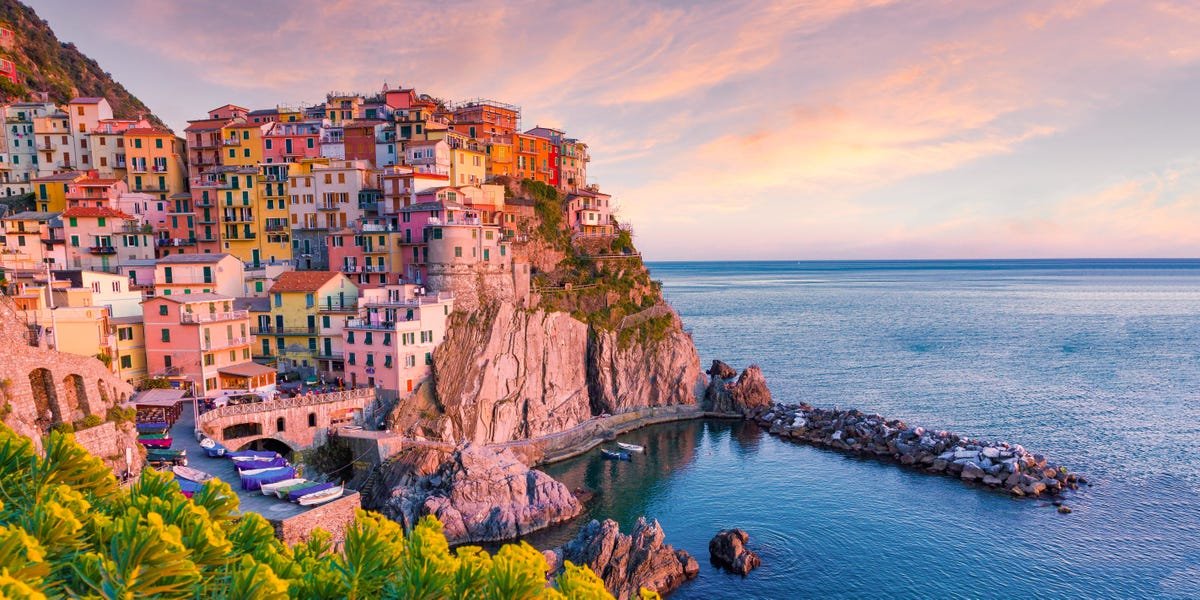
Cinque Terre is one of my favorite cities — or, more accurately, my favorite collection of five villages.
Nestled along the Italian Riviera, Monterosso, Vernazza, Corniglia, Manarola, and Riomaggiore are accessible only by train, ferry, or foot.
Each has a distinct style, and hikers flock to this region to enjoy the beautiful scenery.
Vernazza, my favorite village, is the gem of this region. I love wandering the cobbled streets to shop, snack, and explore. You can also visit the Castello Doria or the church of Santa Margherita d’Antiochia.
In the summer months, tourists sunbathe on the beaches of Monterosso or take a dip in the sea. For a history lesson, visit the remains of Castello Fieschi or the Church of St John the Baptist and the Capuchin Monastery.
In Manarola, take some time to watch locals cliff-jump into the marina. I also suggest taking a wine tour through the town to sample some local specialties. Be sure to try Sciacchetrà, a sweet but strong dessert wine produced in Cinque Terre.
Riomaggiore is also home to a castle and churches dating back to the 13th and 14th centuries. The center of the town is great for wandering, shopping, and eating.
Corniglia is probably the quietest of the five villages. There, climb the Lardarina staircase for beautiful views of the coastline or take a boat tour to fully enjoy the area’s beauty.
This story is available exclusively to Business Insider
subscribers. Become an Insider
and start reading now. Have an account? .
Trump says the US will impose new tariffs on European countries until Denmark hands over Greenland.
The president said the tariffs would start at 10% and increase to 25%.
Trump has repeatedly used tariffs as leverage on what he calls national security issues.
President Donald Trump has turned to his favorite form of leverage in his fight to annex Greenland.
Trump said on Saturday he would impose a 10% tariff on Denmark, which controls Greenland, as well as Sweden, Norway, France, Germany, the United Kingdom, the Netherlands, and Finland, unless they agree to a deal to hand over Greenland to the United States.
The president said he would raise those tariffs to 25% in June if they did not comply. All of those countries have already been paying a 10% tariff rate since Trump’s Liberation Day levies went into effect in August 2025.
“This tariff will be due and payable until such time a deal is reached for the complete and total purchase,” he said in a Truth Social post. Trump’s threat comes as world leaders and CEOs gather in Davos, Switzerland, for the World Economic Forum. The president is expected to address the conference on Wednesday.
Trump has had Greenland on his mind since his first term, but has ramped up the rhetoric since the US raid in Venezuela that netted Nicolás Maduro.
The president says US control of Greenland is a national security issue.