
Multiple-US-embassies-are-telling-Americans-they-cannot-evacuate-or.jpeg

Multiple US embassies are telling Americans they cannot evacuate or help them get out of the Middle East

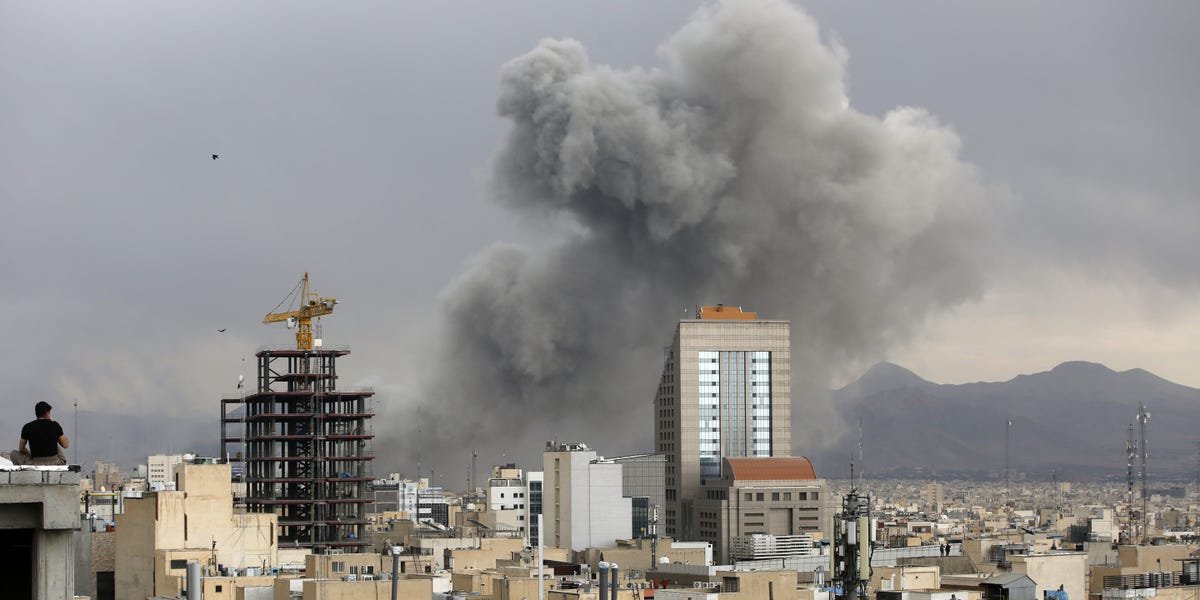
American citizens across the Middle East are attempting to follow official advice and evacuate as conflict escalates in the region following US and Israeli attacks on Iran on Saturday.

But multiple US embassies have said they are unable to help citizens trying to leave.

“The U.S. Embassy is not in a position at this time to evacuate or directly assist Americans in departing Israel,” the US Embassy in Jerusalem said in a post on X on Tuesday.

The embassy shared that the Israeli Ministry of Tourism was operating shuttles to a border crossing between Egypt and Israel at the town of Taba.

“If you choose to avail yourself of this option to depart, the US government cannot guarantee your safety,” said the US embassy, adding that they were sharing the information “as a courtesy to those wishing to leave Israel.”

President Donald Trump was asked in the Oval Office on Tuesday why evacuations hadn’t been planned beforehand, and whether he would charter planes to evacuate Americans from the region.

Trump largely didn’t address the question, other than to note how quickly the conflict broke out.

“It happened all very quickly,” Trump said. “I thought we were going to have a situation where we were going to be attacked.”

In Qatar, where Iranian retaliatory strikes have hit key energy facilities, the country’s US embassy issued a travel advisory on Tuesday, also warning American citizens they were unable to help them evacuate, saying that they should “take advantage of commercial transportation options.”

The US embassy in Qatar advised Americans who chose to stay to create a contingency plan, but said that “these alternative plans should not rely on the US government for assisted departure or evacuation.”

Most US embassies in the region have suspended normal operations as staff shelter in place, and some have shut down entirely due to heightened security risks.

On Tuesday, the US Embassy in Saudi Arabia issued a stark warning to citizens to stay away from its consulate in Dhahran, a coastal city in the east of Saudi Arabia, due to “a threat of imminent missile and UAV attacks” over the city.

“Do not come to the US Consulate,” the US Embassy in Saudi Arabia said.

On Monday, the US embassy in Jordan announced that all its personnel had temporarily departed the Embassy compound “due to a threat.” It did not specify the threat.

Iran has launched a barrage of retaliatory missiles against US allies in the region, hitting sites including US military bases, Dubai’s Burj Al Arab hotel, and the US embassy in Riyadh.

The list of countries Americans are being urged to depart from immediately is as follows: Bahrain, Egypt, Iran, Iraq, Israel, the West Bank, and Gaza, Jordan, Kuwait, Lebanon, Oman, Qatar, Saudi Arabia, Syria, the United Arab Emirates, and Yemen.

Iran, Iraq, Kuwait, Bahrain, and Qatar have closed their airspaces.

As of Tuesday, Dubai International has resumed limited flight services but continues to instruct travelers not to come to the airport unless their flight has been confirmed.

Wealthy travelers and expats in the UAE have turned to private jets and chauffeured drivers to help them flee the region, but many have been caught up in lengthy border crossings amid the rush to Saudi Arabia and Oman, where some flights were still departing.

Monica Marks, a professor at NYU Abu Dhabi, posted on X, wondering how Americans are supposed to leave the Middle East without government help.


Source link

Wealthy-people-are-chartering-planes-and-hiring-drivers-to-evacuate.jpeg

Wealthy people are chartering planes and hiring drivers to evacuate the Middle East

Six-figure private charter flights, chauffeured drives, hours-long waits to cross borders: Some wealthy travelers and expats in the UAE are doing whatever it takes to evacuate the Gulf region amid air strikes and the possibility of escalation.

“Demand is definitely increasing,” Glenn Phillips, a PR and advertising manager at global charter firm Air Charter Services, told Business Insider, adding that “there are an increasingly limited number of aircraft willing and able to fly to and from the area.”

On Monday, two days after the start of the US and Israel’s war against Iran, flights out of the United Arab Emirates — whose two main airports were damaged by Iranian air strikes — were still few and far between, and major hubs, including Qatar, Bahrain, and Kuwait, had to shut down due to airspace restrictions.

That left wealthy people in financial hotspots like Dubai and Abu Dhabi — hubs for monied tourists and Western expats in recent years — scrambling to reach Oman or Saudi Arabia, two countries that had open airspace through Monday. They spent hours in the car to reach the airports, as border-crossing waits increased by the day.

It may soon get harder for travelers to reach functioning private jets. Some commercial flying had resumed from the UAE on Monday evening, but that appears to have slowed amid new missile threats. Reported attacks on the US embassy in Riyadh have similarly forced several flights to turn around or divert from the Saudi city.

In what appears to be a warning of escalating tensions that could further snowball the conflict, the US State Department on Monday night urged Americans to evacuate over a dozen Middle Eastern nations — including those that still had their airspace open to commercial and private flights, like Oman and Saudi Arabia.

Flights out for $200,000+

Charter flights can cost as much as $200,000, Jay Smedley, the owner of luxury concierge firm Dubai Key, told Business Insider. The company has arranged short-haul private charter flights to Istanbul, Cairo, and the Maldives for clients since requests began to increase on Saturday.

Flights to Europe can cost even more, with Ameerh Naran, the CEO of Vimana Private Jets, saying the firm is pricing the flights between $175,000 and $235,000.

Air Charter Services has arranged “a number” of evacuation flights — and has more scheduled on Tuesday — out of Muscat, Oman, largely for people looking to leave Dubai, Phillips said.

The trip involves a five-hour drive, plus an additional three- to four-hour wait at the Hatta border crossing, which he expects will increase.

The demand to leave the region began last week, Naran told Business Insider, adding that there was “a noticeable increase in enquiries from Friday onwards.”

“Expect long waiting queues and security check delays,” Camille d’Harambure, a general manager at luxury travel firm Lightfoot Travel, told Business Insider.

Mike D’Souza, the operations coordinator for Dubai-based chauffeur service Indus Chauffeurs, told Business Insider that the “demand appears precaution-driven rather than panic-driven.”

“There has been a clear emphasis on speed and certainty of departure, with many clients prioritizing the earliest viable routing rather than specific aircraft types or traditional preferences,” Naran said. “We have also seen increased demand for coordinated ground support to facilitate access to airports where airspace remains open.”

Phillips echoed that clients just want to get out and are not all that concerned about where “out” is.

Prices have increased with demand, Phillips added — and in some cases, even those wealthy enough to pay their way out of the Middle East are looking twice at the price tag of departure.

“Many people are taking shorter flights to places out of the region and then picking up scheduled connections for the rest of their journey to reduce full journey costs,” he said.


Source link