

Peter Kafka

Streaming big events like an NFL game used to be question mark. Amazon just got more than 31 million people to stream the Bears-Packers.

On Saturday, the Chicago Bears beat the Green Bay Packers in an NFL playoff game that had everything: a bitter rivalry, an old-school outdoors atmosphere, and a historic comeback (or choke-job, depending on your POV).

It also happened to be a (mostly) streaming-only game. Did you notice? Or care?

I didn’t. Except for about 30 seconds, when I was trying to find out what network was showing the game, and it took me a beat to realize it was on Amazon’s Prime Video. Then I booted up my app and watched the game without any issue. Just like any other NFL game.

In 2026, “Guy doesn’t have a problem watching the Bears/Packers” is a true dog-bites-man story. But that’s why I’m writing about it here: Not very long ago, the idea of streaming a super-high-profile NFL game — and requiring NFL fans to subscribe to a streaming service in order to watch it — would have been a very big deal.

Now it’s a yawner: I was one of 31.6 million people who watched the game, the vast majority of whom streamed it (fans in local markets could use broadcast TV). That’s a streaming record for an NFL game, and it’s more than some other games got last weekend on conventional TV.

And that tells you just how far sports and streaming have come.

Flash back to 2013, for instance, and the idea of whether the “internet” — a catch-all term that included everything needed to get streaming video onto your screen, from web servers to fiber-optic lines to the router in your house — could support a big NFL game watched by many millions of people was an open question. “Why Web TV Skeptic Mark Cuban Thinks Google Can Make the NFL Work on the Web,” was an ungainly headline I tapped out at the time.

Back then, the NFL and other sports giants were routinely streaming big events like the Super Bowl and World Cup — but only as a sort of secondary outlet for weirdos who didn’t have traditional TV. And anyone who did stream sports had to expect to run into problems, like ESPN did when it streamed a World Cup game in 2014.

A year later, the NFL put on a streaming-only game for the first time — but made sure it was a relatively niche one, and made sure that people knew it was an experiment.

Cut to today, and streaming is just a way we watch some football games now. Amazon pays a gazillion dollars a year to show one game a week during the regular season; Netflix has paid up to show a couple games on Christmas Day. A new deal the NFL struck with Disney last year will give the league the opportunity to sell even more games to digital players.

And two years ago, the league passed another new threshold by moving one of its most valuable assets — a playoff game — to Comcast’s Peacock streamer, where it was only available to paid subscribers. That one generated a ton of complaints from people who said they didn’t want to pay another service to watch an NFL game — along with millions of sign-ups for Peacock, which showed they would.

The NFL is not ditching TV for streaming anytime soon. For many people, watching NFL games is the main reason to watch TV, and that gives the league a ton of leverage to extract ever-increasing fees from the likes of NBC and CBS. So they will almost certainly keep the majority of their games on old-time TV for the foreseeable future. But they’re going to sell them to streaming platforms too — because they’ll pay up to get them, and you’ll pay, too.


Source link

I-run-alcohol-free-nightlife-events-in-NYC-Most-of-my.jpeg

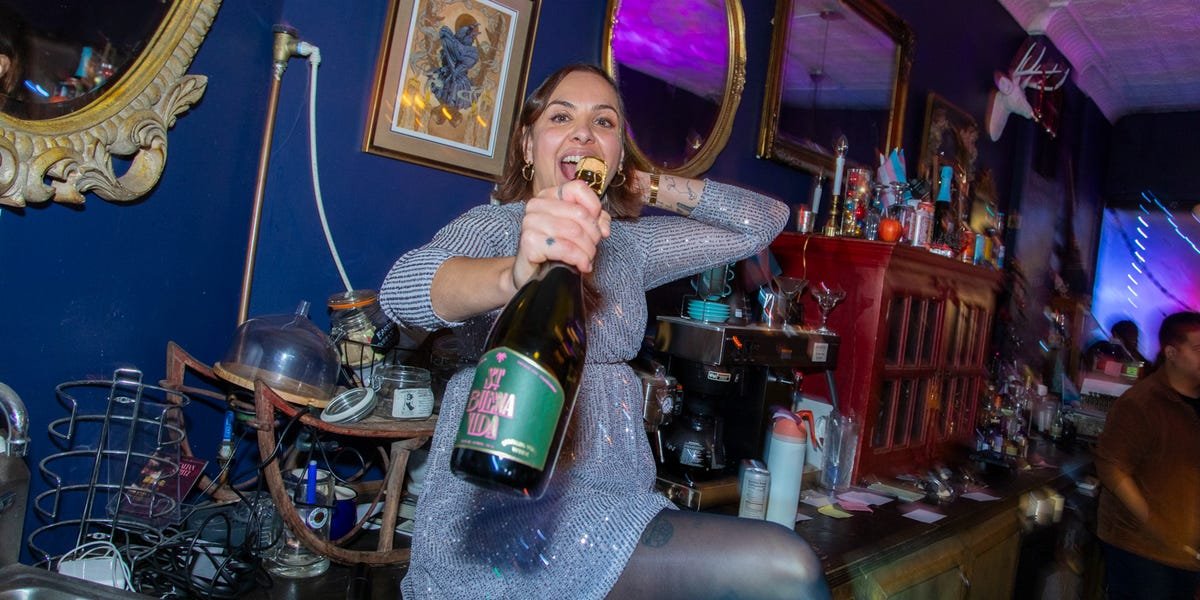
I run alcohol-free nightlife events in NYC. Most of my guests aren’t sober — they just don’t want to drink.

This as-told-to essay is based on a conversation with Sam Bail, a data engineer and the founder of the alcohol-free pop-up event company, Bright Nights Social. It has been edited for length and clarity.

Three years ago, I had the idea to open an alcohol-free bar in New York City.

I don’t drink, but I still wanted nightlife — dancing, music, meeting new people, getting out of the house on a Friday or Saturday night. What I didn’t want was another alcohol-free space that was centered on wellness, meditation, or yoga. I wanted something that still felt like real nightlife, just without booze being the main event.

Instead of signing a lease, I started testing the idea by hosting pop-up events. I’d take over coffee shops or other venues at night and turn them into alcohol-free bars for the evening.

What started as an experiment quickly took on a life of its own.

Over the past three years, I’ve collaborated with tons of venues, experimented with a variety of new formats, and thousands of people have come through our doors. That’s been the most surprising part of all of this: the demand.

What’s even more interesting? Most of the people who attend my events aren’t even sober.

Who actually comes to alcohol-free nightlife

When people hear “alcohol-free event,” they often assume the crowd is made up entirely of sober or sober-curious people. That hasn’t been my experience at all. Based on conversations with guests, I estimate that at least 75% of the people who attend my events don’t identify as sober or even sober-curious.

They’re mostly in their mid-20s to early 30s — older Gen Z and very young millennials. Gender splits depend on the event, but many of my parties are close to 50-50 men and women. What they have in common is that they want to go out, socialize, and have fun without making drinking the center of their entire social life.

I’m 40, so I’m an elder millennial who’s already done the heavy partying phase and is over it. But many of the people who come to Bright Nights Social are younger than me and feel the same way. They’ll tell me things like, “I still drink sometimes, I just don’t want to do it every time I go out,” or “Alcohol makes me feel terrible the next day.”

They’re not abstaining out of moral opposition to alcohol or because of addiction. They’re opting out because they don’t like the cost, the hangovers, or the way drinking dominates social life in cities like New York.

Experiences > drinking

What I see aligns with a broader shift happening right now, especially among younger people. There’s a growing focus on experiences rather than just going to a bar and spending money on drinks. In New York City, you can see it everywhere: pottery classes, cooking classes, rug tufting, late-night library events, group reading clubs.

Some of my favorites have been hosting cooking classes and our crafting events, like rug-making. Coming up this month, we have a tea bar, a bagel-making (and eating!) class, and a full-on dance party, complete with DJs and a full non-alcoholic bar, to close out Dry January.

People want to do something. They want to make memories. They just don’t want to wake up feeling awful the next day.

Cost is also a big factor. When cocktails are $15 or $20 each, it doesn’t take long for a casual night out to become extremely expensive. A lot of people tell me they’d rather spend their money on an experience than on alcohol that doesn’t even make them feel good.

That doesn’t mean Gen Z isn’t drinking at all. In fact, some recent data suggests younger people are actually drinking more now than they were a year or two ago. I think part of that is a post-pandemic catch-up effect — many Gen Zers reached legal drinking age during lockdowns and simply didn’t have the chance to go out.

What I see on the ground is moderation. People might have one drink at dinner and then switch to a nonalcoholic beer. Or they’ll alternate between alcoholic and nonalcoholic drinks throughout the night — what some people call “zebra striping.” They’re being much more intentional about how and when they drink.

THC, nonalcoholic drinks, and what’s next

Another huge shift I’m seeing is the role of legal THC. I don’t serve THC products at my events, but I don’t stop anyone from having one before they come, and I hear about them constantly from guests and friends who work at nonalcoholic bottle shops. THC drinks are some of the best-selling products in those stores.

People understand what THC does. They say it helps with social anxiety, takes the edge off, and feels more manageable than alcohol when used in moderation. Compared to that, there’s still skepticism around functional or adaptogenic drinks — things with nootropics, ashwagandha, or functional mushrooms. Many people aren’t convinced that those drinks actually do anything beyond being a placebo.

That said, I think we’re still early. As people learn what works for their own bodies — whether that’s L-theanine, lion’s mane, or something else — those functional beverages may gain more traction.

At the same time, I’m also seeing conversations online about people pulling back from THC after overdoing it, so I think we’ll see a similar trend as people try to find nightlife events that best suit their needs.

I don’t think most people want to be completely sober forever, but they are actively experimenting with what moderation looks like.

Alcohol-free doesn’t mean anti-fun

The biggest misconception about alcohol-free nightlife is that it’s boring or restrictive. What I’ve learned is that people don’t want to be told what not to do — they just want more options.

Bright Nights Social isn’t about sobriety as an identity. It’s about creating a space where alcohol isn’t the default. You can still dance, flirt, meet strangers, and stay out late. The only difference is that you’re not expected to drink to participate.

The fact that so many non-sober people show up tells me this isn’t a niche idea anymore. Alcohol-free nightlife isn’t just for people who’ve quit drinking entirely. It’s for anyone who wants to go out — and wake up the next day feeling like themselves.

Do you host or attend alternative nightlife events? Contact this reporter at ktl@businessinsider.com.


Source link