
At-one-of-AIs-biggest-events-the-consensus-was-clear.jpeg

At one of AI’s biggest events, the consensus was clear: Anthropic is the new favorite in Silicon Valley

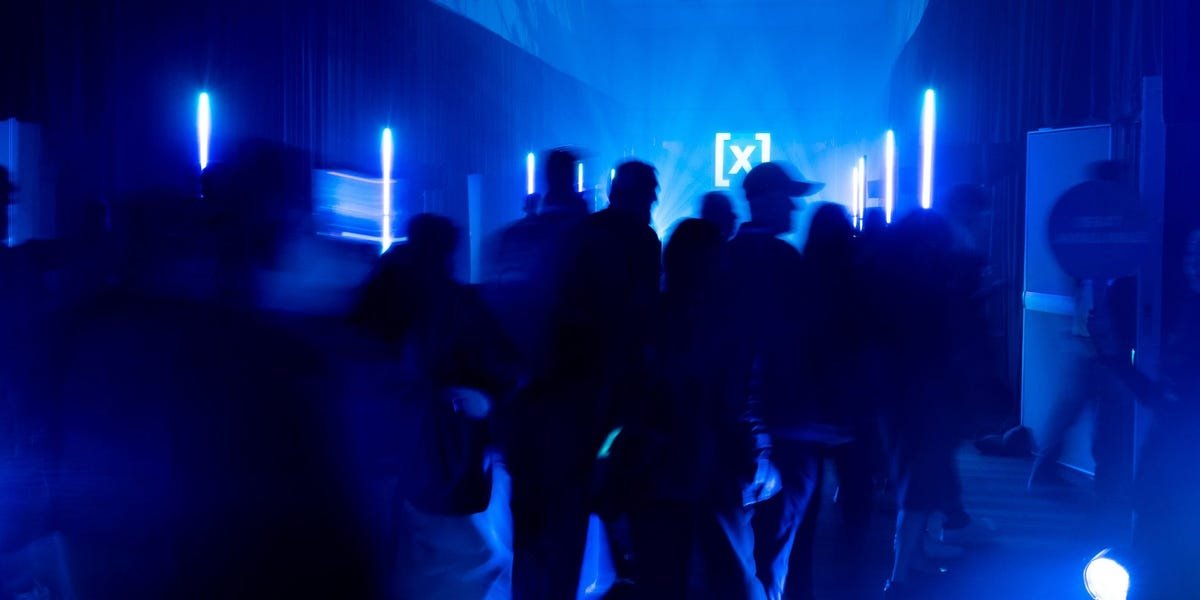
Thousands converged in downtown San Francisco this week for HumanX, one of the year’s biggest AI conferences, proving people still prefer interacting with humans rather than AI agents.

Talking to VCs and founders inside San Francisco’s Moscone Center, the consensus was clear for most: Anthropic is the new Silicon Valley favorite. That sentiment is a sharp contrast with the first HumanX last year, held in a Las Vegas casino, where most VCs were placing their chips on OpenAI.

“In Vegas last year, it felt like OpenAI was the clear winner, and now it seems like Anthropic is miles ahead,” said Roseanne Winsek of Renegade Partners. “The Anthropic product is so good.”

Last year, Anthropic had not yet widely released Claude Code or Claude 4. Now, Claude Code is a phenomenon. Both companies are preparing to go public, and Anthropic is releasing models that are the envy of the industry. Valued at $380 billion, some VCs also see it as a better bargain compared to OpenAI’s rich $852 billion valuation, especially with Anthropic announcing this week that its run-rate revenue surpassed $30 billion, up from $9 billion at the end of 2025.

“They’re crushing it,” said Jared Quincy Davis, founder and CEO of Mithril, an AI cloud platform, referring to Anthropic. “It’s pretty clear that the focus that they had on enterprise, on frontier capabilities, on coding, and making deliberate decisions not to go into some consumer use cases, were great decisions”

OpenAI and Anthropic did not respond to requests for comment.

While there was universal praise for Anthropic, it was hard to find anyone saying good things about OpenAI, whether because of bewilderment over its recent acquisition of the internet talk show TBPN or questions about CEO Sam Altman’s deal with the Pentagon. Most founders and VCs were still reluctant to criticize OpenAI on the record.

“There are quite a few people who have disagreed with Sam and what he’s been doing,” said Andy Chen, a former partner at Coatue and Kleiner Perkins, who is expecting a brain drain of talent from OpenAI. “And Anthropic has tripled its revenue in the past three months.”

As if Anthropic did not already have enough momentum, midway through the conference, it announced its latest model, Mythos, which it said is so powerful it cannot yet be unleashed upon the general public because of the risk of cyber attacks.

“The Mythos model is a huge deal, said Tomasz Tunguz, founder and general partner of Theory Ventures. “There’s a tremendous amount of excitement.”

This year’s HumanX was twice as large as last year, with some 6700 attendees paying upward of $4,000 a ticket for a chance to rub shoulders with industry heavyweights like Lovable cofounder Anton Osika or billionaire venture capitalist Vinod Khosla.


Humanoids and robot dogs at HumanX

Humanoids and robot dogs at HumanX 

HumanX/ALX MEDIA


On a vast exhibition floor, startups building AI agenetic security startups and autonomous workflows handed out branded hoodies, water bottles, and notebooks. Each day, attendees received an AI-generated list of people they should have lunch with and which sessions to attend. (The list I got was not very helpful, as it spit out a list of other VC journalists to meet.)

Robot humanoids and dogs roamed the floor, but nearby, the real dogs with their real fur at the “HumanX Dog Park” proved far more popular.

There was also a “retro lounge” with a pinball machine and jukebox, a mock New York City bodega, and a wellness lounge offering massages. The non-AI attractions seemed designed to calm the nerves of anxious attendees worried about what the AI future might hold.

“The mood I’m feeling is exuberance and existential terror,” said Stefan Weitz, a former Microsoft executive who is co-founder and CEO of HumanX. “I can’t reconcile the two.”


The dog park at HumanX

The dog park at HumanX 

HumanX/Roam Travel PR


The rapid shift in sentiment from last year reflects the dizzying pace of AI advancement, leaving VCs exhausted.

“Every day you wake up and something has meaningfully changed,” said Tunguz. “Everyone is in a rush because everything is changing so fast. “

With how quickly models are advancing, no one was ready to count OpenAI out. When HumanX returns to Las Vegas next year, the betting favorite could have changed.

“These things change so fast,” Winsek said. “OpenAI will probably be back.”


Source link

I-run-alcohol-free-nightlife-events-in-NYC-Most-of-my.jpeg

I run alcohol-free nightlife events in NYC. Most of my guests aren’t sober — they just don’t want to drink.

This as-told-to essay is based on a conversation with Sam Bail, a data engineer and the founder of the alcohol-free pop-up event company, Bright Nights Social. It has been edited for length and clarity.

Three years ago, I had the idea to open an alcohol-free bar in New York City.

I don’t drink, but I still wanted nightlife — dancing, music, meeting new people, getting out of the house on a Friday or Saturday night. What I didn’t want was another alcohol-free space that was centered on wellness, meditation, or yoga. I wanted something that still felt like real nightlife, just without booze being the main event.

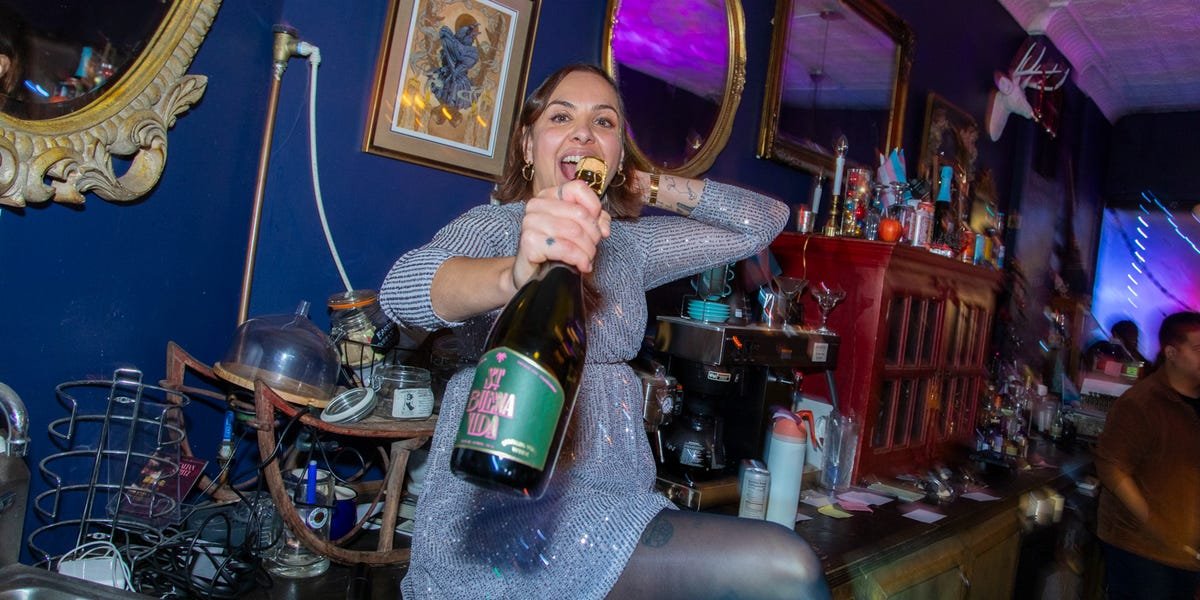
Instead of signing a lease, I started testing the idea by hosting pop-up events. I’d take over coffee shops or other venues at night and turn them into alcohol-free bars for the evening.

What started as an experiment quickly took on a life of its own.

Over the past three years, I’ve collaborated with tons of venues, experimented with a variety of new formats, and thousands of people have come through our doors. That’s been the most surprising part of all of this: the demand.

What’s even more interesting? Most of the people who attend my events aren’t even sober.

Who actually comes to alcohol-free nightlife

When people hear “alcohol-free event,” they often assume the crowd is made up entirely of sober or sober-curious people. That hasn’t been my experience at all. Based on conversations with guests, I estimate that at least 75% of the people who attend my events don’t identify as sober or even sober-curious.

They’re mostly in their mid-20s to early 30s — older Gen Z and very young millennials. Gender splits depend on the event, but many of my parties are close to 50-50 men and women. What they have in common is that they want to go out, socialize, and have fun without making drinking the center of their entire social life.

I’m 40, so I’m an elder millennial who’s already done the heavy partying phase and is over it. But many of the people who come to Bright Nights Social are younger than me and feel the same way. They’ll tell me things like, “I still drink sometimes, I just don’t want to do it every time I go out,” or “Alcohol makes me feel terrible the next day.”

They’re not abstaining out of moral opposition to alcohol or because of addiction. They’re opting out because they don’t like the cost, the hangovers, or the way drinking dominates social life in cities like New York.

Experiences > drinking

What I see aligns with a broader shift happening right now, especially among younger people. There’s a growing focus on experiences rather than just going to a bar and spending money on drinks. In New York City, you can see it everywhere: pottery classes, cooking classes, rug tufting, late-night library events, group reading clubs.

Some of my favorites have been hosting cooking classes and our crafting events, like rug-making. Coming up this month, we have a tea bar, a bagel-making (and eating!) class, and a full-on dance party, complete with DJs and a full non-alcoholic bar, to close out Dry January.

People want to do something. They want to make memories. They just don’t want to wake up feeling awful the next day.

Cost is also a big factor. When cocktails are $15 or $20 each, it doesn’t take long for a casual night out to become extremely expensive. A lot of people tell me they’d rather spend their money on an experience than on alcohol that doesn’t even make them feel good.

That doesn’t mean Gen Z isn’t drinking at all. In fact, some recent data suggests younger people are actually drinking more now than they were a year or two ago. I think part of that is a post-pandemic catch-up effect — many Gen Zers reached legal drinking age during lockdowns and simply didn’t have the chance to go out.

What I see on the ground is moderation. People might have one drink at dinner and then switch to a nonalcoholic beer. Or they’ll alternate between alcoholic and nonalcoholic drinks throughout the night — what some people call “zebra striping.” They’re being much more intentional about how and when they drink.

THC, nonalcoholic drinks, and what’s next

Another huge shift I’m seeing is the role of legal THC. I don’t serve THC products at my events, but I don’t stop anyone from having one before they come, and I hear about them constantly from guests and friends who work at nonalcoholic bottle shops. THC drinks are some of the best-selling products in those stores.

People understand what THC does. They say it helps with social anxiety, takes the edge off, and feels more manageable than alcohol when used in moderation. Compared to that, there’s still skepticism around functional or adaptogenic drinks — things with nootropics, ashwagandha, or functional mushrooms. Many people aren’t convinced that those drinks actually do anything beyond being a placebo.

That said, I think we’re still early. As people learn what works for their own bodies — whether that’s L-theanine, lion’s mane, or something else — those functional beverages may gain more traction.

At the same time, I’m also seeing conversations online about people pulling back from THC after overdoing it, so I think we’ll see a similar trend as people try to find nightlife events that best suit their needs.

I don’t think most people want to be completely sober forever, but they are actively experimenting with what moderation looks like.

Alcohol-free doesn’t mean anti-fun

The biggest misconception about alcohol-free nightlife is that it’s boring or restrictive. What I’ve learned is that people don’t want to be told what not to do — they just want more options.

Bright Nights Social isn’t about sobriety as an identity. It’s about creating a space where alcohol isn’t the default. You can still dance, flirt, meet strangers, and stay out late. The only difference is that you’re not expected to drink to participate.

The fact that so many non-sober people show up tells me this isn’t a niche idea anymore. Alcohol-free nightlife isn’t just for people who’ve quit drinking entirely. It’s for anyone who wants to go out — and wake up the next day feeling like themselves.

Do you host or attend alternative nightlife events? Contact this reporter at ktl@businessinsider.com.


Source link