Other vibe coding players are not the biggest competition, says one Lovable exec.
“I always worry about the big boys and girls in the world,” Lovable’s head of growth Elena Verna said on a Sunday episode of the “20VC” podcast. “So, OpenAIs, Anthropics, Googles, Apples, more so than our competitors that spring up from the bottom or from sideways.”
This is because the distribution power of these tech giants and frontier labs in the market is unparalleled, she said.
Stockholm-based Lovable was valued at $6.6 billion in aDecember funding round led by CapitalG and Menlo Ventures. It competes with other vibe coding startups like Cursor, Replit, and Emergent, as well as far bigger and better-funded players, including OpenAI, Anthropic, and Microsoft, that make their own AI coding tools.
Verna, who joined the startup last Mayafter a series of advisory and head of growth stintsat various startups, said that in a world where products are becoming increasingly similar, distribution and growth are winning strategies.
“Whoever has the best distribution that is earned, that is competitively defensible, that is sustainable, that is predictable, is going to be the winner in the market,” she said. “I worry about the companies that have that figured out.”
Verna’s comments about competition follow a period of brutal comparisonsbetween products made by vibe coding startups and Anthropic’s Claude Code.
After Anthropic released its latest model, Opus 4.6, founders and developers said on X that they are ditching their expensive Cursor and Lovable subscriptions for Claude Code.
Still, Lovable is going strong.
The Swedish startup’s annual recurring revenue has surged by more than 30%, from $300 million to $400 million in a single month, Business Insider reported. ARR, a key metric to gauge startup performance, refers to the predictable revenue a company expects to generate over a year.
Lovable’s chief revenue officer, Ryan Meadows, told Business Insiderthat the company plans to more than double its head count by the end of 2026, from 146 to 350 employees.
He added that Lovable, which specializes in making coding user-friendly,sees at least 200,000 new vibe coding projects created each day.
In 2021, the Barclays Center arena — home to the Brooklyn Nets and concerts ranging from Disney on Ice to Bad Bunny — decided to switch from Ticketmaster to another ticketing company, SeatGeek.
The switch didn’t go well.
Ticketmaster retaliated hard, a federal jury in Manhattan heard on Wednesday, as testimony began in a high-stakes government effort to split the ticketing giant from parent company Live Nation.
“Ticketmaster pulled up the drawbridge behind them,” refusing to help with the transition to SeatGeek, testified John Abbamondi, Barclay’s then CEO.
And soon, Live Nation retaliated as well, Abbamondi testified, supporting the federal antitrust allegation that any venue that refused to use Ticketmaster would be threatened or punished.
Every time Laura publishes a story, you’ll get an alert straight to your inbox!
Stay connected to Laura and get more of their work as it publishes.
After booting Ticketmaster in October 2021, the 18,000-seat arena saw a dramatic drop in Live Nation-promoted concerts, Abbamondi told the jury — from more than 20 a year to fewer than eight.
Abbamondi cited a Billie Eilish concert as one example of what he called “smoking gun” evidence: that Barclays was punished for quitting Ticketmaster.
Word got back to Abbamondi, he testified, that Live Nation pulled a planned Barclays concert featuring the Grammy-winning artist. A concert date for Eilish, who was promoted by Live Nation, was switched from Barclays to the USB Arena near JFK Airport in Queens, Abbamondi said.
“It was Live Nation’s decision,” Abbamondi said an Eilish manager told one of his executives of the Barclays snub.
John Abbamondi in 2019.
Dave Reginek/NHLI via Getty Images
Live Nation’s retaliation campaign did not come without warning, Abbamondi told jurors.
The ex-Barclays CEO said that six months before the switch to SeatGeek, he received a cautionary text from his friend, Patti Kim, a Live Nation vice president.
In the text, Kim warned that he “should think about the bigger relationship with Live Nation” before going with SeatGeek, according to a copy of the exchange shared with jurors.
Kim’s email was signed with “a winky face emoji,” Abbamondi noted.
“I took this as a friendly warning to me that I was about to make a big mistake,” he told jurors.
When Abbamondi called two Live Nation executives weeks later to break the news that Barclays still planned to switch ticketers, the profanities flew, he said.
Joe Berchtold, Live Nation’s Chief Financial Officer, “dropped an F-bomb on me,” Abbamondi said, when a government lawyer asked how he knew the CFO was angry.
“He told me it was going to be difficult to put concerts in Barclays Center,” Abbamondi told jurors.
Asked to elaborate on his retaliation concerns, Abbamondi said “I would describe it as a widely-shared concern in the industry.”
The answer was stricken from the record as unsupported hearsay, as was Abbamoni’s reference to a Eilish manager saying Live Nation had pulled her concert from Barclays.
Abbamondi’s testimony also supported the government’s contention that Ticketmaster’s technology is “held together by duct tape,” as a government attorney had told the ten-woman, two-man jury on Tuesday.
In his opening statements, Assistant US Attorney David Dahlquist pointed to Ticketmaster’s Taylor Swift Eras Tour crash in 2022 as evidence that a lack of competition let Live Nation get away with foisting an inferior product on fans, artists, and concert venues.
In his own opening remarks, Live Nation attorney David R. Marriott called Ticketmaster “the highest quality product that there is on this planet in terms of delivering quality ticketing services.”
But in his testimony Wednesday, Abbamondi told jurors that the decision to switch was clinched by SeatGeek’s superior technology. At one point, Abbamondi likened SeatGeek’s tech to “the Mac OS,” while Ticketmaster was more like “Windows 95.”
Abbamondi joked from the witness stand that the blinking green cursor he would see when running the Ticketmaster venue interface was “like something out of the 1980s.”
The Department of Justice has joined with a consortium of attorneys general from 39 states and the District of Columbia in pressing for the Ticketmaster-Live Nation split.
The feds say Live Nation holds a monopoly in the live music industry, which it uses to compete unfairly with its much-smaller competitors— and that Barclays’ experience is a case in point.
“They lost concerts, they lost profits, they lost revenue as a result of the move” to SeatGeek, Dahlquist told jurors in opening statements.
“And of course, because the Barclays Center wants to succeed, to be successful, they’re forced to go back,” to Ticketmaster, he said. “So today, they are a Ticketmaster entity.”
Marriott countered in his own opening statement that Barclays’ return to Ticketmaster, two years after the switch to SeatGeek, was based not on retaliation, but on Live Nation’s superior product.
“They came back to Ticketmaster not because of any threats, but because SeatGeek fell down on the job,” Marriott said.
Lawyers for Live Nation say that yes, they compete aggressively — but they do so fairly. Artists remain free to choose promoters, and arenas and venues remain free to choose who does their ticketing, they argued.
The civil antitrust trial, the culmination of a May 2024 federal and state lawsuit, is expected to last six weeks.
Google executive Yasmeen Ahmad is looking for something specific when hiring engineers — and it’s not just technical know-how.
Ahmad told Business Insider that the typical software engineering interview used to focus on detailed coding tests and test suites. Now, as she hires for a forward-deployed engineering team, which will work with customers, she said she’s prioritizing people with fresh ideas.
The strongest candidates are “able to think outside the box,” Ahmad, director of Google Cloud’s data cloud, said. “They’re able to think outside the frame of how we would have normally described a problem.”
The executive added that candidates who take a traditional approach to engineering aren’t performing as well in her team’s interviews. The ideal candidate nowadays, she said, can demonstrate creative problem-solving by using AI to reimagine traditional processes. She said she evaluates that type of thinking in two ways:
1. Constant experimentation
Ahmad said she looks for candidates who are constantly “tinkering” with new tools. That gives her an immediate signal that they’re creative thinkers.
“When you’re interviewing them, they’re naturally immediately talking about, ‘oh, last week I had tried AI in this context, and this is how it made me better at doing my job in this way,'” Ahmad said.
These candidates aren’t trying new tools because their boss told them to or because it’s the new cool thing to try,she said.
“They’re the early adopters,” Ahmad said.
Tech executives have told Business Insider that side projects are becoming increasingly common for candidates to demonstrate their aptitude in interviews. However, Ahmad said candidates don’t need to have a GitHub repository of projects they’ve worked on in their spare time.
“It doesn’t have to be pet side projects, because people are busy,” Ahmad said, adding that workers can experiment on the job by trying out new ways to speed up their work.
2. Scenario testing
AI is being used more often throughout the interview process — in some cases, illicitly by job seekers, and in others, as a way for employers to test candidates’ AI capabilities. As these tools reshape hiring, Ahmad said scenario-based testing has become central component to the interview process, giving hiring managers a better way to assess creativity.
Ahmad said she’ll ask candidates how they would approach a scenario involving AI tools in an industry where they have no domain knowledge.
For example, if the example related to healthcare, a traditional candidate might say that they would take all the patients’ unstructured PDFs, feed them into a single LLM prompt, and ask it to generate a summary for the doctor. That would be a “massive liability,” Ahmad said, because in that scenario the candidate assumes AI can inherently understand the timeline of events or clinical context of an image by looking at it.
Ahmad said she’s looking for a candidate who can “find solutions in a way that breaks the chains of how that workflow process has traditionally gone.” So someone might suggest building the semantic context for the imaging data before the model sees it. Next, they would build a specific framework to ensure the agent is operating in the right time frame of data. Then, they would recommend designing a multi-step process that includes a continuous evaluation loop.
“We aren’t just hiring people to write prompts,” Ahmad said. “We are hiring people who can foresee how a model might silently fail in a high-stakes environment, and who know how to build the automated evaluation loops to catch it before it does.”
She said asking these sorts of questions to vet creativity is especially useful as AI transforms the software engineering industry by automating core parts of the job.
“We’re seeing the human role is evolving to more of an orchestrated role,” Ahmad said. “So rather than having to write all of the detailed code, it’s ‘how do I actually express my intent to a multi-agent system now and have that multi-agent system execute on that intent?'”
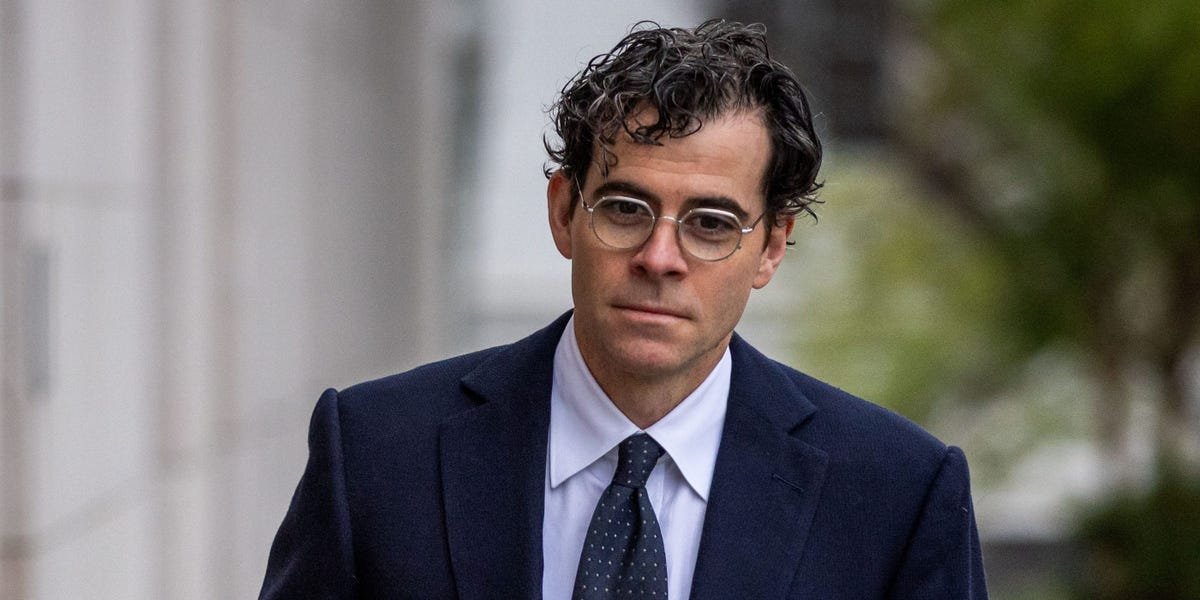
Adam Mosseri’s multimillion-dollar pay package took center stage on Wednesday as lawyers sought to link Meta’s profits to platforms that addict children.
As the first of several tech executives to testify in a social media addiction trial playing out in Los Angeles state court, the head of Instagram said he is paid roughly $900,000 a year and receives annual performance-based bonuses that can be as high as half of his salary.
Like many executives of publicly traded social media companies, Mosseri, who’s been head of Meta’s Instagram since 2018, also earns stock-based compensation.
From the witness stand, Mosseri said that his stock-based pay varies year to year but that it has been in the “tens of millions of dollars.” Some years, he said, he believes it’s been over $20 million.
Mosseri made the comments while being questioned in Los Angeles Superior Court over a lawsuit that argues Meta and YouTube knowingly engineered their platforms to addict and cause harm to kids. Snap and TikTok were also named in the lawsuit but settled before trial for undisclosed amounts.
Mark Lanier, the attorney representing the plaintiff, pressed Mosseri on how the company determined its policy on cosmetic filters, such as filters that alter users’ appearances, which was a key topic in court on Wednesday. He brought up Mosseri’s compensation again while asking whether banning filters could have hurt Mosseri’s bottom line by limiting the company’s growth.
“I was never worried about this affecting our stock price,” Mosseri said in court.
Meta declined to comment about Mosseri’s compensation.
The lawsuit centers on a 20-year-old woman, identified by the initials KGM, who says her use of social media throughout her childhood negatively affected her mental health, contributing to depression and suicidal thoughts.
The case is considered a bellwether trial that could indicate how other similar lawsuits related to social media addiction might play out.
“We strongly disagree with these allegations and are confident the evidence will show our longstanding commitment to supporting young people,” Stephanie Otway, a Meta spokesperson, told Business Insider. Otway said the company has been making ” meaningful changes—like introducing Teen Accounts with built-in protections and providing parents with tools to manage their teens’ experiences.”
As companies rethink how they train early-career workers in a job market shaped by AI, Salesforce executive Andy White said resilience is top of mind for him — both at work and at home.
White oversees Salesforce’s implementation of Slackbot, an AI personal agent that generates responses based on conversations, files, and workflows inside Slack.
As White raises his son and daughter during a period of rapid technological change, he said he preaches to his kids the importance of powering through moments that don’t go as planned. He said resilience is pivotal and that it’s important for people to focus on doing the hard things and being OK when things don’t go as expected.
The senior vice president of business technology said he recently spoke with his daughter about the importance of dealing with situations rather than merely labeling them as “good” or “bad.”
“Hard is hard,” White told Business Insider. “Hard isn’t necessarily bad.”
Every time Ana publishes a story, you’ll get an alert straight to your inbox!
Stay connected to Ana and get more of their work as it publishes.
Expectations, he said, are the “destroyer of hope and joy,” and that when things don’t go as planned, it often turns out to be a good thing down the line, even if it doesn’t seem that way in the moment.
“It’s when we look back, and it’s like, ‘Oh man, I’m glad that didn’t go the way I expected,'” White said. “But when you’re in it, it’s really hard.”
The importance of persistence
The resilience lesson is one White also thinks is relevant for entry-level workers. While junior hires often arrive ready to use new tools and deliver a “pretty high output,” he said, persistence is an area where some still need to grow.
He described today’s entry-level talent pool as “incredibly capable, very bright, and very driven,” with a stronger grasp of how to use AI tools to solve problems.
“They’re much more fluent at being able to leverage AI tooling in the flow of their work,” White said.
However, he said the group sometimes struggles when it comes to working through challenges.
“There’s more willingness to give up sooner,” he said, adding that this traitdoesn’t apply across the board.
Finding confidence
White said he’s seen AI tools, such as the company’s recently upgraded Slackbot, help boost entry-level workers’ confidence. He said they could help reduce feelings of imposter syndrome by helping early-career workers navigate challenging situations that arise at work.
With that said, White added that workers need to stay balanced and not let tools make them “overly confident.” He said workers need to bring skepticism to “any kind of information” they get, and be diligent about reviewing sources and citations when using AI.
“If you don’t believe something, read the citation, and if it doesn’t have a citation, you have to assume it’s a hallucination,” White said, adding that he tells his kids the same thing.
Ex-Microsoft exec Craig Mundie has heard this question again and again — parents asking him a version of the same worry: Their kids are heading toward college, artificial intelligence is advancing fast, and jobs feel uncertain. What, exactly, should their kids be studying?
That question — what education will matter most in five years — reflects a deeper uncertainty about the future.
Mundie, who spent 22 years at Microsoft helping steer the company’s vision toward AI and retired as the company’s chief research and strategy officer in 2014, says that parents are simply asking the wrong question.
It’s not only the students who have to change to fit the new AI era — it’s the education system itself, said Mundie, who now advises other executives on AI and public policy.
Rather than chasing down the right job, Mundie urges families to prepare kids for a world where learning itself becomes continuous, personalized, and done in partnership with intelligent machines.
AI is altering the human experience
During an interview with Business Insider’s Reem Makhoul in June, Mundie said artificial intelligence and robotics are poised to reshape work more deeply than past technologies. See the edited cut of his interview below:
That shift, Mundie said, forces a bigger question than which job skills will survive. It challenges how societies define human value. This is something Mundie’s been pondering for over a decade.
In his 2015 book “Genesis,” Mundie, with co-authors Eric Schmidt and Henry Kissinger, examined how AI could alter the human experience. “What we say is we have to think differently about how we value ourselves and what we do.”
For much of history, he said, dignity has been tied to work because people had to work to survive. AI could loosen that link by automating more tasks across both physical and intellectual labor.
Meanwhile, humans will need to learn how to work alongside intelligent machines, and the traditional higher-education system doesn’t offer a clear path toward that, right now.
He described today’s education system as sharply divided between STEM and the humanities. The liberal arts emphasize reasoning, but at the expense of special technical skills you learn in STEM fields, Mundie said.
Students will need both skills moving forward. “If I could create a new curriculum in college, it would be a liberal education in technology,” and STEM, he said.
The classroom model itself is reaching its limits
Mundie says the future of education will be driven by individuals’ motivation to learn and not standardized curricula.
Hispanolistic/Getty Images
Mundie went further, questioning whether the classroom model that dominates education today still makes sense.
He traced that structure back to the printing press, which created a surge in written information and a need for mass literacy. Schools, he said, became an efficient “machine for teaching” because societies lacked enough individual tutors.
AI changes that constraint.
We can have scalable, polymathic teachers, Mundie said. “We can have as many teachers as we want now because the AI will be the teacher.”
He said this opens the door to a more personalized, Socratic model of learning, where students can interact continuously with an intelligent system that adapts to their curiosity, pace, and interests. Progress would be limited less by standardized curricula and more by a student’s motivation and capacity.
Schools and universities have been slow to embrace this shift. Early reactions often involved banning AI tools outright. “They’ve now given up on that,” Mundie said.
That resistance, he added, is typical of incumbent systems. “The natural tendency of the incumbent is to preserve the incumbent system,” or make only incremental changes, he added. But “when you get something as powerful as these AIs, most incumbent systems are not going to be preserved.”
He also pointed to early experiments on the right track, like versions of Khan Academy, an online non-profit educational platform founded in 2008 and headquartered in California. It uses an AI tutor, named Khanmigo, designed to guide students rather than simply give answers. In those systems, he said, the AI nudges students toward better questions and deeper understanding.
“So that’s the difference between sort of a broad chat about anything interface and an AI application that was specifically oriented around teaching,” he said, adding, “That’s just one tiny example of how people will build more and more apps on these common artificial intelligence platforms.”
“We will move beyond the specific generic interface to a world of millions of applications that are really customized in some clever way to guide people to solutions in the areas they care about,” he said. These agents may, in fact, do much of the work autonomously by interacting with others, he added.
Mundie said parents and older generations may have difficulty imagining this model, while children are likely to adapt quickly. The harder question, in his view, is whether educational institutions are willing to change.
Paramount’s flagship streaming service generated about a million new subscribers on the day of its first-ever UFC event, Paramount product chief Dane Glasgow told employees in a town hall on Tuesday morning, three staffers who attended the meeting told Business Insider.
A Paramount spokesperson said: “Those numbers are unverified, and it’s against our policy to share speculative data externally.”
In August, Paramount did a deal with UFC parent TKO that will see it pay $7.7 billion to secure UFC rights in the US for seven years.
Glasgow said at the town hall that Saturday was the second-largest day of sign-ups ever for its streamer, and that UFC 324 was the second-most-streamed sporting event on the service, according to two employees.
Notably, Paramount made its UFC matches available for anyone with a Paramount+ subscription, which starts at $8.99 a month. Before the Paramount deal, many UFC matches were only on pay-per-view for around $80 each.
Paramount previously announced that its UFC broadcast had just under 5 million average viewers for the main card. Paramount CEO David Ellison told staffers in an email that it was “the largest-ever exclusive live event for Paramount+.” The streamer has drawn larger audiences to other non-exclusive live events, including NFL games that ran on both Paramount+ and CBS.
“This record-breaking performance is, above all, a testament to the extraordinary teamwork across our entire company,” Ellison told employees in his memo, which was obtained by Business Insider.
Paramount’s UFC event, which saw Justin Gaethje emerge victorious, was highly viewed, the company told employees.
Chris Unger/Zuffa LLC
For context, Netflix’s Jake Paul vs. Mike Tyson fight added about 1.4 million US subscribers to that service in November 2024, according to the subscription data firm Antenna. The firm only tracks US data.
Antenna estimated that Paramount+ reeled in an estimated 3.2 million new US customers when it hosted the Super Bowl in 2024.
Read Ellison’s full memo to employees below:
Team,
A huge congratulations to everyone who contributed to the success of our first UFC event on Paramount+! Several members of our leadership team and I were cageside Saturday night, and we were completely blown away by the experience and by the intensity, skill and heart on display across the card. We left the T-Mobile Arena in Las Vegas more excited and energized than ever about our partnership with Dana White and the entire TKO/UFC team.
I’ve heard from several executives at TKO/UFC, and they also could not be more pleased with how everything came together. It was a fantastic start to our 7-year partnership!
While we went into the weekend with high expectations, I’m thrilled to share that we exceeded them, reaching nearly 5 million streaming views — the largest-ever exclusive live event for Paramount+. And the actual audience was likely even higher, given how common co-viewing is among UFC fans.
This record-breaking performance is, above all, a testament to the extraordinary teamwork across our entire company. Every single business unit, division and team — from Paramount+, Paramount Pictures and CBS to MTV, BET, Nickelodeon and Pluto, as well as Marketing, Social, Ad Sales, Technology, Events and more — came together, rolled up their sleeves and got creative. The incredible power of Paramount One to reach the broadest possible audience was on full display companywide, and UFC 324 stands as our strongest example yet of what we can achieve when we all work together toward a common goal.
Again, hats off to everyone. With nearly 5 million streaming views and record-breaking engagement, UFC 324 set the bar high, and we can’t wait to keep the momentum going at UFC 325 next weekend in Sydney!
This story is available exclusively to Business Insider
subscribers. Become an Insider
and start reading now. Have an account? .
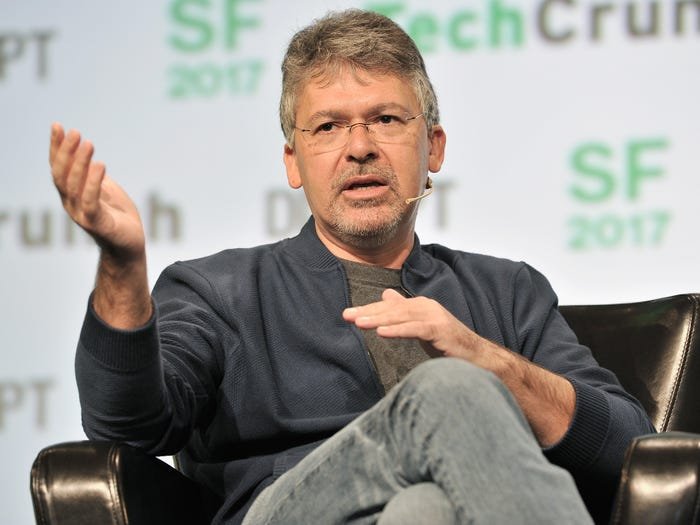
John Giannandrea, senior vice president for Machine Learning and AI Strategy at Apple, is stepping down from his role, the company announced Monday.
Amar Subramanya, an AI researcher who most recently served as a corporate vice president of AI at Microsoft, is now Apple’s vice president of AI, the company said. Prior to his time at Microsoft, Subramanya was at Google.
Giannandrea will serve as an advisor before retiring in the spring.