
What-smart-people-are-saying-about-Mythos-Anthropics-new-AI.jpeg

What smart people are saying about Mythos, Anthropic’s new AI model that has some cybersecurity experts spooked

Anthropic’s announcement about its powerful new AI model this week sparked a wave of warnings and dire predictions, but not everyone is buying into the hype.

Anthropic said Tuesday it was not releasing Mythos, its next-generation AI model, due to cybersecurity concerns. The company said Mythos was so powerful that non-experts could use it to exploit vulnerabilities in major operating systems.

Instead of a wide release, Anthropic said it was making Claude Mythos Preview available to 11 external organizations, including Google, Microsoft, Amazon Web Services, JPMorganChase, and Nvidia, as part of “Project Glasswing.”

Anthropic’s claims about what Mythos was capable of quickly sparked concern, as well as a meeting between Fed Chair Jerome Powell, Treasury Secretary Scott Bessent, and the heads of major US banks.

Some AI commentators warned about the cybersecurity implications, while others cast doubt on the significance of the Anthropic announcement, saying Mythos didn’t appear to be leaps and bounds ahead of other models and that it was more likely a matter of good PR.

Should Mythos have security execs quaking in their boots? Is Anthropic simply a master at marketing its models? We rounded up what smart people are saying as the internet debates the latest AI development.

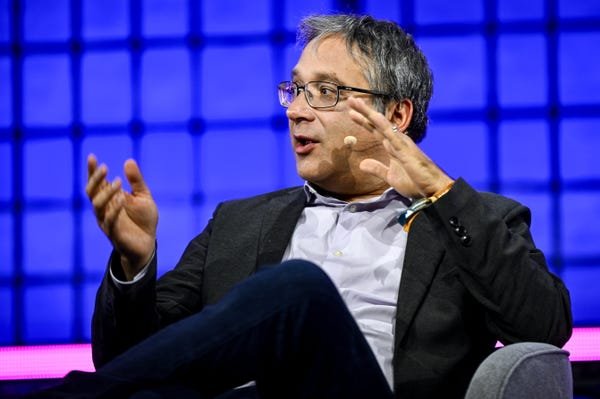
Gary Marcus

Gary Marcus called the Mythos hype “overblown.”

Ramsey Cardy/Web Summit via Sportsfile via Getty Images

Gary Marcus, an AI researcher and author, said Anthropic’s announcement on Mythos was “overblown.”

“To a certain degree, I feel that we were played,” Marcus wrote on Substack. “The demo was definitely proof of concept that we need to get our regulatory and technical house in order, but not the immediate threat the media and public was lead to believe.”

Marcus said from what he has seen, the model appears to be “incrementally better” than previous models, rather than a “breakthrough.”

Yann LeCun


Yann LeCun

Yann LeCun was the chief AI scientist at Meta.

Bloomberg/Getty Images

Yann LeCun, founder of AMI Labs and former chief AI scientist at Meta, also threw cold water on the Mythos hype.

“Mythos drama = BS from self-delusion,” he wrote in an X post.

He was responding to a post from Aisle, an AI security company, that said it tested smaller, cheaper models on the same vulnerabilities highlighted in Anthropic’s Mythos announcement and found that they could do much of the same analysis.

Jake Moore

Jake Moore, global cybersecurity specialist at ESET, previously told Business Insider there was some marketing language in Anthropic’s announcement, but that “fundamentally, this model seems incredibly impressive and will only improve over time.”

“Anthropic has built its reputation as the ‘safety first’ AI company, so announcements like this serve two purposes: genuine caution and signaling its safety-conscious stance,” Moore said.

Dave Kasten

Dave Kasten, head of policy at Palisade Research, said he thinks it’s likely that other AI models aren’t far behind Mythos.

He told CNBC in an interview on Thursday that his expectation is that “Anthropic is a little ahead, but not overwhelmingly ahead, and they don’t necessarily have much of a permanent moat here.”

He flagged a recent report from Axios that said OpenAI also has a model with advanced cybersecurity abilities that it plans to only release to a small group, rather than the general public.

Kasten also said he thinks Gemini is also probably not far behind, but the fact that Google is partnering on Mythos implies that Anthropic likely has an advantage with this particular model, at least for a couple of months.

David Sacks


David Sacks

David Sacks, former White House AI czar, expressed some skepticism over Anthropic’s mythos warnings.

Matt McClain/The Washington Post/Getty Images

David Sacks, tech investor and former White House AI czar, said Anthropic’s claims about Mythos are important but should be taken with a grain of salt.

“The world has no choice but to take the cyber threat associated with Mythos seriously. But it’s hard to ignore that Anthropic has a history of scare tactics,” Sacks said in an X post, sharing some examples of past instances when Anthropic issued alarming warnings or narratives about AI models.

T.J. Marlin

T.J. Marlin, CEO of Guardrail Technologies, who formerly worked on EY’s global forensic technology practice, said the meeting between federal officials and Wall Street was about ensuring that the banks, should a big security breach happen, couldn’t turn around and say, “We didn’t know.”

“Every CEO in that room who fails to document a board-level response is now operating in the most legally exposed position possible,” Marlin wrote on LinkedIn.

Pablos Holman


Pablos Holman

Pablos Holman said of the Mythos hype that he think cybersecurity is actually going to get better.

Eugene Gologursky/Getty Images for Fast Company

Pablos Holman, a VC at Deep Future, said cybersecurity defenders — the people who are trying to defend against digital attacks — stand to benefit more from advancements in AI than those who are carrying out the attacks.

“Now everybody is losing their minds over AI-powered attacks,” Holman said in a LinkedIn post about Mythos on April 1, before Anthropic’s announcement this week. “What they’re missing is that defenders have the same AIs. Often better ones and way more compute.”

Holman said cybersecurity defenders will have access to the same models as well as more resources to work with, like the source code.

“This is still a war of escalation, but now the defender has the advantage,” he wrote. “Security is about to get better. Not worse.”

Ben Seri

“We have entered cybersecurity’s Manhattan Project moment,” Ben Seri, cofounder of cybersecurity startup Zafran Security, said in a post.

Seri said the cybersecurity threat was real and immediate, while the defensive potential was real but would take longer to realize. He said the real challenge will be for cybersecurity defenders to work faster at scale.

“AI will find vulnerabilities faster. AI will fix them faster. But the bottleneck was never discovery or remediation alone. It is the ability to deploy fixes into production environments safely, quickly, and at scale,” he said. “Securely adopting rapid change in production is the most important shift that technology and security leaders need to take on to meet this moment.”

Alice Tecotzky contributed reporting.


Source link

One-fitness-supplement-can-help-you-build-muscle-and-maybe.jpeg

One fitness supplement can help you build muscle and maybe boost longevity without breaking the bank, according to experts

Stop wasting your time and money on subpar supplements.

One ingredient should be your first priority for building muscle, burning fat, and aging gracefully, according to exercise science pros.

Creatine is a combo of amino acids that provides energy to muscles and other tissues, like the brain. Our bodies produce it naturally, but growing research suggests supplementing with store-bought pills and powders is a smart idea.

It’s long been the uncontested king in the fitness supplement world for fueling gains, personal trainers, dietitians, and researchers told Business Insider. Now, even more studies suggest it has benefits beyond the gym, helping bolster the brain to support mental and cognitive health.

For less than 50 cents a serving, it’s the gold standard of evidence-based health hacks, with an impressive resume of potential perks.

Want to start taking creatine? Here’s how it works, and the best way to use it for peak performance, according to top researchers.

Creatine helps fuel more reps, leading to better gains

Long a staple of the sports world and bodybuilding community alike, creatine has been extensively studied as a fitness supplement for decades. It first caught on in the ’90s thanks to Olympians who swore by it for elite athletic competition.

Since then, researchers have consistently found that it’s safe to use and offers a small but significant boost to performance.

It works by providing extra fuel in the body’s energy cycle. That translates to better gains or faster fat burning if you’re working out, since you can power through more work that you might otherwise.

That makes it a standout performer in the supplement aisle. Creatine has much stronger evidence and broader benefits than products like pre-workouts, which can vary in ingredients and often don’t disclose what’s actually included.

It’s also distinct from protein shakes and powders, which offer the same nutritional benefits as food, but in a more convenient format. There is some creatine in foods like meat and fish, but it’s much harder to get than protein — you’d have to eat more than two pounds of steak to get the amount of creatine in a single scoop of supplement powder.

Other supplements are less evidence-based, less reliable, and can have more risks, particularly when bought online via grey-market websites.

The only supplement that comes close to challenging creatine in terms of wide-ranging benefit and extensive research is caffeine. While caffeine can boost workouts and is relatively safe in moderate doses, it can have serious side effects in large amounts, so you’re better off having a coffee than a concentrated supplement.

The best type of creatine to choose for muscle gains and fat loss

Not all creatine on the market is the same. The most well-researched form is creatine monohydrate, which sports nutritionists consider reliably effective and safe. If you’re worried it causes hair loss or kidney damage, don’t be: these are myths that have been debunked in reputable studies.

Creatine can have side effects like digestive upset, which is typically mild, temporary, and linked to higher doses.

It’s also safe for your wallet. Even with past shortages, creatine monohydrate tends to be the cheapest form, especially if you buy it pure instead of mixed into complicated pre- or post-workout blends.

To take creatine, researchers typically recommend a dose of between 3 to 5 grams a day (people with larger bodies need more). However, emerging studies suggest the brain can benefit from higher doses. Scott Forbes, a sports science researcher and professor at Brandon University, said he recommends around 10 grams a day for cognitive health.

Still, despite all the potential benefits of creatine, it’s not a panacea. No supplement, no matter how well-researched, can match the benefits of healthy lifestyle factors such as nutrition, sleep, and consistent exercise. Trainers recommend starting with high-value habits such as these first before trying supplements.

Once you’re nailing your workouts, diet, and recovery, creatine may be just the thing to give your routine an extra edge.


Source link

Kelsey Baker, Military and Defense Reporting Fellow

Legal experts: Veterans’ rights at stake in Kelly speech case

A new lawsuit from a Democratic senator and combat veteran at the heart of a free speech fight seeks to block the Pentagon’s intensifying crackdown.

Arizona Sen. Mark Kelly sued Defense Secretary Pete Hegseth on Monday, warning that the Pentagon’s effort to punish him “sends a chilling message” to veterans who speak out against the Trump administration.

Hegseth accused Kelly of “seditious” acts after Kelly publicly reminded US service members that they are not required to follow illegal orders. The Pentagon’s actions against Kelly have troubling implications for the political speech of millions of veterans, military law experts said.

Hegseth’s effort to muzzle a US senator “places other retirees who have spoken up potentially in jeopardy,” said Rachel VanLandingham, a professor at Southwestern Law School who is a retired Air Force JAG. “Not knowing whether or not he’s going to come after you already has a chilling effect.”

Kelly said his lawsuit is about fighting back. The Democratic lawmaker announced the federal lawsuit on Monday. His suit also named the Department of Defense, Navy Secretary John Phelan, and the Navy Department as defendants. Kelly’s video urging troops not to follow illegal orders.

Veterans who serve 20 years or more are eligible for a military pension, but those benefits can be revoked or reduced if retirees are found to have violated military law while in uniform. By contrast, Hegseth’s move seeks to punish a veteran for his speech long after serving in uniform, an approach one expert on military law called baseless.

Kelly’s lawsuit argues that using the military justice system to punish veterans’ political speech risks setting a precedent that abuses the First Amendment rights of other retired troops.


Secretary of Defense Pete Hegseth standing in front of a Department of War sign

Defense Secretary Pete Hegseth’s prosecution of Kelly has implications for veterans’ speech, legal analysts said.

DoW photo by U.S. Air Force Staff Sgt. Madelyn Keech


Legal basis in question

The lawsuit argues that nothing in the law allows the Pentagon to revisit a retirement determination based on a veteran’s speech. Such a move, the filing says, would raise “serious constitutional concerns” and leave retired service members facing a constant threat to their earned benefits.

There’s no legal basis for Hegseth’s pursuit, VanLandingham said. The defense secretary initially sought to court-martial Kelly, threatening him with the military equivalent of a criminal trial. It later opted for a lesser administrative punishment.

“The process is the punishment,” said Frank Rosenblatt, a retired Army JAG and professor at Mississippi College School of Law. “The claim against Kelly had no merit.”

“Senator Kelly’s speech is not punishable under the UCMJ,” the National Institute of Military Justice nonprofit group said in a December statement in reference to the Uniform Code of Military Justice.

The lawsuit seeks to halt actions that could reduce Kelly’s military rank and retirement pay and characterizes that effort as “unlawful.”

After filing the lawsuit, Kelly requested a temporary restraining order and a preliminary injunction from the federal court, seeking to halt the Pentagon’s actions while the case is reviewed on its merits. Both are emergency measures that ask a judge to stop government action before permanent harm occurs.

The federal government has been increasingly pushing cases important to the Trump administration onto a “rocket docket,” Rosenblatt said, accelerating litigation toward higher courts. If the judge assigned to the case, US District Judge Richard Leon, issues a ruling the government doesn’t like, “this could move very quickly to the DC Circuit and potentially the Supreme Court.”

Leon has previously ruled against the military’s authority over retirees.

“I am not concluding today that Congress could never authorize the court-martial of some military retirees,” Leon wrote in a 2019 memorandum opinion that rejected the government’s argument that military jurisdiction over all retirees was necessary to maintain good order and discipline of its active force. The judge noted he had not seen a clear argument for “why the exercise of such jurisdiction over all military retirees is necessary.”

In a post on X last week, Hegseth called Kelly’s video with five other Democratic lawmakers “reckless and seditious” and said it was “clearly intended to undermine good order and military discipline.”

The military justice provisions that Hegseth accused Kelly of violating — Articles 133 and 134 of the Uniform Code of Military Justice — are not explicitly tied to sedition and can cover a wide range of alleged misconduct.

Kelly’s lawsuit argues that allowing the executive branch to punish a member of Congress for speech is a threat to the Constitution and erodes congressional oversight of the armed services.

“We are aware of the litigation,” a Pentagon spokesperson said Tuesday when asked for comment on the lawsuit. “However, as a matter of policy, the Department does not comment on ongoing litigation.” That same day, Hegseth took aim at Kelly’s military rank in an X post: “‘Captain’ Kelly knows exactly what he did, and that he will be held to account.”


Source link