
2-charts-show-why-families-need-159000-a-year-to.jpeg

2 charts show why families need $159,000 a year to afford NYC

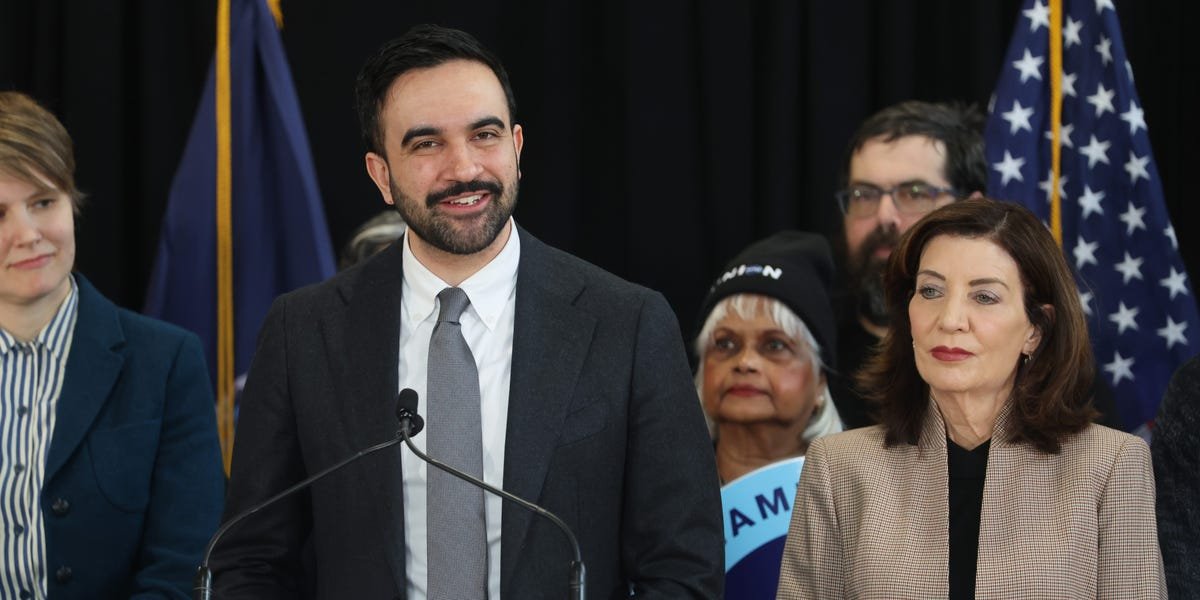
New York City Mayor Zohran Mamdani has a new warning: Living in the city with kids could cost you at least $150,000 a year.

The Mayor’s Office of Equity & Racial Justice released its inaugural “NYC True Cost of Living Measure” report Monday. The TCOL figure adapts an economic security framework used by the Urban Institute, comparing a household’s financial resources to their actual cost of living. Using 2022 data, it accounts for line items like housing, food, healthcare, childcare, transportation, and taxes.

The report found that it costs the median New York couple with kids $159,197 to live in the city, and that number varies depending on their number of children. That’s the equivalent of paying cash for a house in Rockford, Illinois, or shelling out for a four-year degree at a top university. And it’s just the price of basic bills.

For a single parent with two children, the cost is still staggering, at $114,108. Per the report, the only group in NYC who consistently makes enough income to afford expenses are dual-income households without children — who still must earn about $131,000 a year to live comfortably.

For comparison, the Urban Institute found that the median American family with kids needs $134,800.

Overall, 62% of New Yorkers — or 5 million people — do not earn enough to meet their cost-of-living threshold, according to the report, and the average person is $39,603 short. Per the report, children and communities of color are disproportionately impacted by high prices. Bronx residents are most likely to have resource gaps, followed by residents of Brooklyn, Queens, and Manhattan. Residents of Staten Island have the smallest resource gap at 48.2%.

The city’s TCOL measure is built around estimates for a typical household, and individual circumstances will vary. It doesn’t directly take into account, for example, residents’ disabilities or their student loan debt.

There are also 3.58 million New Yorkers whose income is above the federal poverty line but falls short of their cost-of-living threshold, the report said. This means that these households likely don’t qualify for aid programs like Section 8 or SNAP, but still struggle to afford housing, groceries, or other bills.

Business Insider has heard from parents trying to balance work with childcare, gig workers trying to cover their bills, creatives hustling to build a stable income, and young people splitting rent amongst roommates. Regardless of their income or profession, most are on a tight budget.

For many New Yorkers, the exorbitant cost of daily life is exhausting. In a Monday afternoon Reddit “Ask Me Anything” forum, residents posted queries and comments to be answered by Mayor Zohran Mamdani, Deputy Mayor for Housing Leila Bozorg, and Cea Weaver from the Mayor’s Office to Protect Tenants about housing.

On r/nyc, posters wrote about their steep property taxes, sky-high rents, backbreaking daycare costs, and concerns about construction zoning for affordable apartments. They asked how to navigate “bad” landlords — and what it means to be a “good” one.

“Expensive and frequent inspections that are lining pockets of scaffolders and facade inspectors. It’s extremely costly and drives up costs for renters and homeowners,” said one poster. “I’d love more generous incentives as it’s clearly a net positive for society to be producing ample housing,” said another. “I’m now within striking distance of finally being able to buy a home in NYC, something that’s been my dream for years,” said a third.

“Every one of our efforts is driven by a singular focus on making the most expensive city in the country affordable,” Mamdani wrote in one response. Alongside housing reforms, his administration has proposed universal daycare, city-run grocery stores, free buses, and additional housing construction to improve affordability. “We’re just getting started,” he added.


Source link

Kelsey Baker, Military and Defense Reporting Fellow

Thousands of military families are stuck on childcare waitlists. More spots may not be enough to fix the deeper problems.

There are an estimated 7,800 children on US military childcare waitlists. Military families and advocates say the number masks deeper shortfalls that continue to sideline working spouses and strain service members.

Lawmakers raised the issue during a recent congressional hearing, calling the persistent backlog a quality-of-life problem, even as the waitlist has notably dropped from 12,000 children in 2024.

Advocates told Business Insider that the number isn’t the whole picture and excludes families who’ve given up out of frustration or can’t use base centers that lack evening, weekend, or specialized care.

“We can’t say that we are a military that cares about our families if we pretend to provide childcare and then we’ve got a waitlist that’s got 7,800 babies waiting on it,” Massachusetts Democratic Sen. Elizabeth Warren said to service senior enlisted leaders during last week’s hearing.

None of the service leaders present disputed that figure.

Master Chief Petty Officer of the Navy John Perryman acknowledged that the Navy still has roughly 1,400 children in unmet need status, while Chief Master Sergeant of the Air Force David Wolfe said his service’s waitlist stands at around 2,700, though there are efforts underway to open new spots.

It is not clear how the remaining waitlisted children are divided between other services.

In 2022, the Air Force had 95,000 children under 5 but space for only about 23,000 in its child development centers, a 2023 service report on childcare found.

An Air Force spokesperson attributed that disparity to the number of children entering and leaving care throughout the year. “The annual number served will not correlate with daily capacity and can be significantly higher,” they said.

Not all families require on-base care. But the report added that more facility construction alone would not be a “viable solution to meet all potential demand.”

Kayla Corbitt, a military spouse and the founder of a nonprofit dedicated to helping military families find reliable childcare, told Business Insider that many families lose hope amid long waits. Staying on the waitlist, she said, requires logging on every couple of months to reconfirm before families are automatically disenrolled.

And for some families, the barriers extend beyond backlogs.


A room at the CDC at Ramstein Air Base, Germany, Jan. 14, 2026.

A room at the CDC at Ramstein Air Base, Germany.


Airman Paden Henry/US Air Force


“Anyone needing evening care, weekend care, shift work care, which is a lot of the military, they aren’t going to try to get on that waitlist,” Corbitt said, explaining that most child development centers, or CDCs, on bases don’t offer late evening or very early morning care needed for troops on 24-hour duty or for deployed service members with spouses who work unusual hours.

Additionally, children with special needs face significant obstacles in finding care, Corbitt said, as many CDCs are not equipped to provide care, and the policies sometimes vary from facility to facility, making it hard for families to know what to expect when they move.

Brigit Schneider, an Air Force spouse and mother of three children, wants to return to work as a financial planner to better support her family, but because her local childcare center won’t accept children with feeding tubes, one of her young children is shut out.

“From a special needs mom perspective, it’s an extra layer of challenge,” she told Business Insider.

Schneider pays nearly $1,000 a month for one child to receive on-base childcare, another child is receiving private care due to the severity of their disability, and a third is at home. Schneider says the third should be able to receive base care.

“A G-tube really is not a hard medical device to learn how to use,” she said.

Generally, though, military CDCs won’t accept children with gastrostomy tubes. Facilities are often unable, or unwilling, to provide higher levels of care, Corbitt said.

Air Force childcare programs are “supported by a multidisciplinary team of experts who provide consultation and support to ensure the highest quality of inclusive care,” an Air Force spokesperson told Business Insider following a query regarding the service’s childcare.

The service “offers a network of on- and off-installation care options and works closely with families to identify the appropriate setting for their child,” said the spokesperson, adding that waitlist data helps inform future allocation requirements.

Staffing shortages are another obstacle to reliable access for military personnel. Military childcare workers face unusually high attrition rates, around 50%, Warren said at last week’s congressional hearing, driven largely by meager pay.

Compounding the issue is the lack of a clear pathway that would allow qualified providers to move easily between states.

Nearly 40% of childcare workers are military spouses, said the Marine Corps’ top enlisted leader, Sergeant Major Carlos Ruiz, during the hearing. “If we can just be a little bit more smart about transferring folks and directly hiring from one CDC to another, we can reduce the attrition,” he said.

Government watchdogs have repeatedly flagged childcare accessibility as a point of concern for the US military. A 2024 Government Accountability Office report found that while the services focus heavily on recruiting new childcare workers, they do not consistently measure whether employee retention efforts are effective.

The military’s childcare shortages aren’t unique to the armed forces. Many Americans in the civilian world struggle to find reliable, reasonably priced childcare.

Often, a year of childcare amounts to an entire average salary, costing tens of thousands of dollars. The cost of childcare in the US has increased by over 150% over the last quarter-century and continues to climb, often outpacing inflation. In some areas, childcare costs can exceed rent or mortgage payments.


Source link