When-I-moved-my-family-from-the-US-to-the.jpeg

When I moved my family from the US to the Netherlands over a year ago, I wish I’d avoided these 5 mistakes

The day my son burst into tears at our kitchen table in Utrecht, I realized my meticulous spreadsheets and research hadn’t prepared us for everything.

“Mom, I’m the only one who doesn’t understand anything,” he said, pushing away his untouched dinner. “Everyone else is so far ahead, and I can’t follow anything.”

That moment, hearing him talk about feeling behind in school, crystallized my first major mistake in our move from Atlanta to the Netherlands in May 2024.

Although our relocation has transformed our lives in incredible ways — offering everything from better healthcare to true work-life balance — there were several costly missteps I wish someone had warned me about.

For one, I hadn’t anticipated how challenging it would be for my kids in the first six months as they adjusted to everything in their lives being new.

Here’s what I learned the hard way, hoping to save other American families from the same expensive and stressful situations.

Assuming we didn’t need to rush learning Dutch was a mistake


Houses along water in the netherlands

Learning Dutch has helped us feel more at home in the Netherlands.

Alexander Spatari/Getty Images


“Je spreekt Nederlands?” (“Do you speak Dutch?”) became a daily reminder of my biggest oversight.

Yes, more than 90% of the Dutch people speak English, but that comfort led me to postpone our family’s learning Dutch. Big mistake.

Those casual chats at early honkbal (baseball) games or neighborhood parties just weren’t the same when we couldn’t participate in Dutch conversations.

My teenager also spent extra months in taalschool (immersive language school), missing out on crucial social connections. Had we started learning before our move, he could’ve completed language school in one year instead of the extended period he needed.

I learned an expensive lesson about taxes and timing

In the Netherlands, the 30% ruling is a tax advantage that allows eligible highly skilled immigrants to receive up to 30% of their salary tax-free for five years.

The catch? You must apply within four months of starting work. Now picture my face when I realized I’d missed the deadline, thus leaving over 30,000 euros on the table.

Though I eventually secured this retroactively, those six months without the full benefits taught me an expensive lesson about Dutch bureaucracy timing.

Not fully understanding the Dutch healthcare system also cost me

Back home in the US, I was used to navigating complex insurance systems and retroactive claims. The Dutch healthcare system operates with different rules, though, and my failure to understand them has cost us unnecessarily.

My American insurance mindset hit a wall when my son needed to have a cavity filled.

In the Netherlands, basic healthcare is universally accessible. I pay 156 euros a month for my policy, which includes my kids at no extra cost and a 385-euro yearly deductible.

However, you have to connect your child’s BSN (Dutch Social Security number) to your insurance for them to be covered, which I didn’t know I had to do at the time.

This meant I paid out of pocket for my son’s procedure — I couldn’t get reimbursed, even after calling my insurance company.

It took too long to ditch my American work mentality


Boats in the netherland in canals at night

It took me a bit to embrace the local attitude toward work-life balance.

Amith Nag Photography/Getty Images


While my Dutch neighbors enjoyed long family dinners and evening bike rides along the canals, I was still chained to my laptop at 10 p.m., taking calls with US colleagues.

My American work habits followed me across the Atlantic like an unwanted houseguest. The stress and burnout I’d hoped to escape caught up with me within months.

It took retiring from corporate America and starting my own business to finally embrace the Dutch approach to work-life balance — and my health has thanked me for it.

Not properly planning when to exchange currency got expensive

Watching the dollar-euro exchange rate swing from about 0.98 euros per dollar highs to 0.83 euros per dollar lows over the past year and a half taught me an expensive lesson about timing.

Each major transfer — housing deposits, US credit-card payments, moving expenses — became a gamble because I hadn’t developed a proper currency strategy.

Instead of planning strategic exchanges when rates were favorable, I made last-minute transfers whenever bills came due, often at the worst possible rates and with hefty fees tacked on.

Our missteps have become valuable lessons that shaped our successful integration into Dutch life


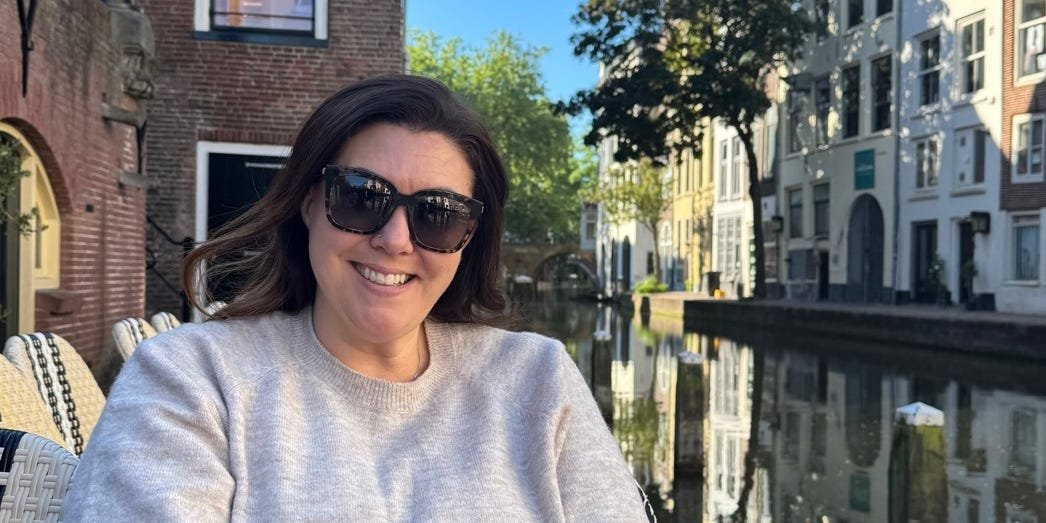
Lauren McDonnell smiling

I’m glad I moved my family to the Netherlands.

Lauren McDonnell


Despite our early mistakes, the Netherlands has given us exactly what we hoped for: a better quality of life, true work-life balance, and a fresh perspective on what’s possible for an American family abroad.

Now, a year and a half later, my sons can easily switch between Dutch and English, and those tearful kitchen moments are just memories that remind us how far we’ve come.

Moving abroad is complex, but having the right guidance can help you avoid these common pitfalls and create a smoother transition for your family.

So, if you’re considering a move to the Netherlands, learn from my mistakes.

Start preparing early (especially with language learning), understand the tax benefits available to you, research the healthcare system thoroughly, be ready to adapt your work mindset, and plan your currency exchanges strategically.

Your future self — and your bank account — will thank you.



Source link

jill robbins smiles in front of a tree

I’m a seasoned cruiser, but I still booked the wrong room for my family of 4 on a recent sailing

As our family’s primary vacation planner, I’ve found we get the most mileage out of cruises. The “most things included” pricing is easy on our budget, and we like the wide range of activities and dining options.

My kids are in high school, and we’ve been cruising together since they were in first grade. Still, I managed to make a rookie mistake with our most recent seven-night Western Caribbean Princess cruise.

I had booked it while on a Princess Alaskan cruise with my husband and got a great rate. However, I had a moment of panic when we boarded the Regal Princess weeks later and got a first look at our stateroom.

Although I’d selected a “cabin that sleeps four,” I only saw two twin beds.

Everyone ended up having a bed, but the setup was far from ideal


Two twin beds in Princess cruise cabin

When I got our first look at our stateroom on the Regal Princess, I had a moment of panic when I saw two twin beds.

Jill Ribbons


Despite the initial shock, we quickly realized our 222-square-foot cabin could indeed sleep four people. Our steward told us there were two additional beds stored in the ceiling that he would pull out every evening.

We asked if the two twin beds on the ground could be converted into a queen for my husband and me, and were told they could, but there would be no place to put the ladder for the upper bunks.

So, we left the arrangement as it was.


Beds from ceiling with ladders leading up to them

We ended up putting the ladders against the wall to give us some more room to walk.

Jill Ribbons


On the bright side, we had sufficient sleeping space, and my kids didn’t have to share a bed. Our steward set up the beds each evening while we were at dinner and put them up again after breakfast.

Despite being small, the beds were comfortable, and we all got decent sleep.

The biggest issue was that there was no room to sit up and read or watch TV in bed — the upper bunk was that close to the ceiling. The ladders also made moving around the cabin a game of Tetris, especially at night.


Beds from ceiling with ladders leading up to them

With the beds and ladders out, our path to the bathroom was incredibly narrow.

Jill Ribbons


Casualties included one head bump (me, the first night) and one kid stepping on my legs when he skipped the ladder. After that, we adjusted.

On the bright side, having a small balcony (albeit one with an obstructed view of the ocean) meant we had easy access to natural light, fresh air, and a bit of extra space, which made a difference.

Despite the drawbacks, we still had a great time


Author Jill Robbins and husband smiling with drinks on balcony on Princess Cruise

My husband and I spent some time on our obstructed balcony.

Jill Robbins


In the end, we got a good enough discount on the room that I didn’t mind a little extra inconvenience.

Though I would’ve liked a bigger bed and more room, our small stateroom didn’t stop us from enjoying the cruise. We were only in the room to sleep and shower, and after a day or two, the bunks didn’t feel like a big deal.

This was the first time my kids had sailed on Princess, and our postcard-sized digs didn’t affect how we felt about the cruise overall.

We’d 1000% do this cruise with teenagers again — just not in this stateroom.

Admittedly, I made a rookie mistake — and I know just how I’ll avoid it next time


View off of balcony on Princess cruise with lifeboat blocking part of the view

We booked a cabin with an obstructed-view balcony.

Jill Ribbons


Looking back, I can see what led me to choose the wrong cabin for our family.

While booking with a sales rep on a previous cruise, I got caught up in the moment and the good deal. I didn’t think to ask detailed questions, like the specifics of the bed arrangements.

My biggest mistake was assuming. On cruises I’ve been on with Disney and Carnival, cabins that sleep four are configured differently, with a queen bed and a couch that converts into bunks across the room.

I should’ve asked more questions and watched fellow cruisers’ cabin tour videos online before booking anything. Had I done that, I likely would’ve chosen a different cabin or adjusted my reservation before our departure.

By the time we’d boarded, our cruise was full, and even if a larger cabin had been available, it would’ve cost more.

Next time, I’d be more prepared, or just book my cruise at home, where it’d be easier to review the details on my own.

A travel advisor familiar with cruising could also have steered us toward a better option for a family of four with teens. Though I recommend them to first-timers, I don’t usually use one for cruises.

At the end of the day, even though I should have known better, I couldn’t help but laugh at myself.


Source link

Lauren Crosby

I moved away from my family in my 30s. When I called crying, my dad dropped everything and came to see me.

This as-told-to essay is based on a conversation with Ruth Davis, a Creative Director in LA. It has been edited for length and clarity.

In 2019, I relocated with my 12-year-old daughter and fiancé to Los Angeles, which is two hours away from the “family village” where I had grown up.

All my family — siblings, cousins, aunts, uncles, and grandparents — all lived within 15 minutes of each other. I knew it was going to be a hard move for our nuclear family unit, but I was convinced LA was the right place for us to be.

I didn’t fully understand the impact it would have on me.

My dad is my everything

It was my dad whom I immediately felt I had lost.

Before we moved, my dad was everything to me. He and my mom had split when I was young, so my dad had full custody. It was just the two of us all the time.

When I had my daughter, my dad moved in with us and was there to help with all the practical aspects of raising a child. But he was also just there as emotional support for me. He made me complete.

After we moved, we only saw him once a month, when he’d take the train to visit us. I missed him and felt overwhelmed without him.

In August 2025, I was grieving the loss of two family members, feeling overwhelmed with sadness, but also with life in general. I remember sitting on my bed, losing it, crying.

I called him, crying

My daughter was knocking on the door, asking me when we were leaving the house — we were going out for the day. I snapped at her. I couldn’t leave the bed. I wanted to show up for her in that moment, but couldn’t.

In that moment, I felt like a failure compared to my dad. He had lived through so much grief and so many hard times, and yet I never knew because he managed to hold everything together.

All I could think to do was to call my dad, crying as he answered. He listened to me and then told me he would call me right back.

“Everything is going to be OK,” he said before hanging up. Dad has never been a “words” person.

Not too long after, he called back and told me he had been to the train station to buy a train ticket to come visit the next day.

Knowing he was coming felt like a double-edged sword. I felt incredibly lucky to have a dad who would come and see me at the drop of a hat, but I also felt self-doubt because my elderly dad could get it together, but I couldn’t.

The next morning, when I knew my dad was on the train, bound for my house, I was certain everything would be OK. My dad was coming. With him, life feels normal and complete.

I won’t advise my daughter to move away

I don’t regret the wonderful changes the move afforded me and the position in life it put my nuclear family and me in. But had I known not seeing my dad every day would wreck me as it has, I don’t know if I would have done it the same way.

I had bought into the modern idea that decisions should always be made with the nuclear family in mind, but the distance from him made me realize how much I emotionally value my dad in ways I didn’t think imaginable.

Knowing what I know now, I would never advise my daughter to move away from her village, even if it means she’ll move closer to a partner’s village, as I did. I think as a mother, I did her a disservice by moving her away from my family, her tight-knit community.


Source link

I-thought-downsizing-would-be-hard-for-our-family-of.jpeg

I thought downsizing would be hard for our family of 4. It ended up changing our lives for the better.

In July 2025, my husband, Zach, and I moved our family of four from the suburbs of Ft Worth, Texas, to Denver.

After nearly 10 years of marriage, two kids, and three work-related moves, it was finally time to settle in a place of our choosing. This time, we didn’t just want a change of scenery; we wanted a change of lifestyle.

But finding a house in the bustling city neighborhood of our dreams within our budget meant downsizing — drastically.

Moving from our 3,300-square-foot home to a 2,300-square-foot bungalow with 1,200 square feet of actual living space (the rest being unfinished basement) wasn’t easy. It meant swapping our large kitchen island for a small dining table. It meant no more master bath soaking tub, my refuge from life’s stresses on more occasions than I could count. And it meant my kids giving up their separate rooms to share one.

But what we’ve gained in the quality and quantity of time spent together is worth every bit of lost square footage.

We’re spending our time on what matters

Our bigger house in Texas required more upkeep, and we were more than happy to give that up for extra free time on the weekends. Now, we spend our time visiting attractions such as the Denver Zoo and the Denver Museum of Nature and Science. We’re fostering our kids’ curiosity, exploring new places together. Our everyday life feels more special and meaningful because these shared experiences amplify our family connection.


Dining room

The author’s new house is about a third the size of her previous house.

Courtesy of the author


We’re also getting out in nature more. Aside from weekend hiking and skiing adventures, our days revolve around outdoor living. We walk everywhere we can, including restaurants, parks, and even Trader Joe’s, which is beneficial because driving to Trader Joe’s means parking at Trader Joe’s, and nobody enjoys that. Our moods are lighter, and our stresses are reduced.

The first time we walked to a restaurant instead of driving, it felt like we were on vacation. Our lives had always been car-dependent, but that’s no longer the case. The kids laughed and raced each other down the sidewalk. We marvelled at the mature trees and brightly colored flowers lining 7th Avenue Parkway. There was no timeline or rushing, just the joy of being present. When we made our way home after an alfresco dinner at Postino, I asked my son if he liked walking to dinner. He asked simply, “Can we do this every day?”

We’re finding connections in our community

Zach and I frequently sit on our front porch while our boys play with neighborhood kids, a first for us. Having houses so close together makes it easier to meet people and form real connections. We know almost every household on our block, and we regularly visit with our closest neighbors. We even enjoyed our first block party in August, which fell on my eldest’s birthday, and according to him, it was his “Best birthday ever!”


Birthday party

The author’s child loved his backyard birthday party.

Courtesy of the author


Our boys run between yards while we chat with new friends. They are experiencing a childhood closer to the one we grew up with. They’re building confidence and finding their place, and that’s translating to more smiles and fewer tantrums. Zach and I are finding our village, and parenthood feels less solitary.

On a recent trip back to Texas for Thanksgiving, I texted our next-door neighbor to let her know we’d be out of town. Without even asking, she offered to take in our mail. It may be a small gesture, but that sense of community is priceless to us.

My boys have more freedom

Downsizing has also allowed our kids to play more independently in an outdoor space that feels safe and protected. We have an unobstructed line of sight to the backyard, and no matter where my husband and I are in the house, we can hear them if they need us. The result has been hours of creative play, building campsites and outdoor kitchens, playing soccer and baseball, and having water balloon fights or Nerf battles.


Family at football game

The author’s kids have more freedom and can play outside in their new home.

Courtesy of the author


Most evenings, my kids are in the backyard playing games and getting dirty. When the weather is nice, they run around with their friends down the street. I would never have felt comfortable not knowing every move my kids were making before, but here, where everyone is watching out, and I can wave at my kids down the block to signal when it’s time to come home, less space means more freedom.

Our downsized life isn’t always perfect. Despite all our decluttering efforts, we’re still left with more stuff than we can accommodate. We also struggle with the lack of privacy, and at times, our smaller shared space feels more claustrophobic than cozy. However, downsizing for an urban lifestyle has given us the opportunity to live beyond our four walls, and that’s worth more than any amount of space could ever be.


Source link

I-stayed-home-while-my-family-traveled-because-I-needed.jpeg

I stayed home while my family traveled because I needed a break. I loved my alone time.

When people asked me what I was doing for the holidays, I responded almost too giddily, “I’m spending it alone.” Their eyes narrowed, “What?”

I told them I was sending my husband and the kids to his family in Massachusetts, and I’d stay back in Pennsylvania. All. By. Myself. I wouldn’t have to answer to anyone or for anything. Not requests for snacks or one more backrub. I wouldn’t have to sit rigid, wondering if one of my three kids was creeping out of a bed that wasn’t theirs. Or defend my parenting style while my oldest yelled about how life wasn’t fair and we must all really hate him, and why should he have to listen to anyone anyway.

After a beat, every single mom (and a few dads) told me: “I’m jealous. I want to do that. How did you swing that?”

I had hit a breaking point

The decision to be alone during the holidays came slowly at first and then all at once. I’d hit a breaking point that most parents, especially moms, are all too familiar with. But the moment I toyed with the idea of staying back — in a quiet, clean, empty house — that was it. It was all I could think about.


Family at the beach

The author’s spouse was supportive of her taking time off.

Courtesy of the author


I broached the topic, gently, with my husband, who couldn’t have been more supportive and emphatic. “You should take a few days away!” But I didn’t want to be away. I wanted to be home alone. That was the key.

As the days ticked closer to The Big Departure, people asked me when Jeff and the kids were leaving. “Wednesday, but I can’t ask when, specifically,” I’d laugh.

I explained to the kids that I needed some alone time; I needed to take a break. They, who are 8, 5, and 3, were relatively unfazed. My middle, big-feeling daughter made me promise to call her every two minutes. I wanted them to know that it was OK for Mom (or Dad) to step away and be alone. It didn’t mean I loved them any less. Something, something about distance making the heart grow fonder.

Self-care is crucial

Mental health experts agree. Solitude can be a crucial form of self-care (unless it makes you truly uncomfortable to be totally alone). “When you seek out intentional solitude, and the demands on your attention and focus melt away, it allows you to have a level of awareness that can support healing and growth,” Emily Moriarty, M.Ed., a licensed professional counselor and director of clinical services at Reset Outdoors, told Business Insider.

Finally, they were off. And I didn’t know what to do with myself. Everything was weirdly quiet. Clean. Empty. I loved it. I had a couple of low-key plans over the next few days, but my goal was to savor the silence and the lack of a schedule.


Living room

The author really enjoyed her time alone.

Courtesy of the author


When 5 p.m. rolled around on the first night, I started making dinner while listening to music. I danced a little. I ate while reading a book. No one argued with me that they didn’t like what was served. Cleanup was easy. I put my dishes away. I didn’t need to sweep — I don’t spill things on the floor.

I turned my phone off; I didn’t need an alarm. No one needed to reach me, and if they did, they could wait. Dad was more than capable. I slept in. I drank coffee on the couch in front of the fire in my pajamas. I forced myself to allow things to move slowly — something I have a hard time doing with or without kids.

“Solitude doesn’t include sitting alone in an office working,” Moriarty said. “It has to be non-work, non-caregiving time.”

When it was time for the Big Holiday Meal, I thought I’d feel a little lonely. But I didn’t, and that, I realized, was because this was my choice. I knew my family was enjoying themselves with relatives they don’t often see and having a little vacation. And I knew that they’d all be home before I knew it.

I had a little mom guilt

By the end of the fourth day, the air was thick with anticipation of the kids and Jeff coming home. I felt like I couldn’t watch TV fast enough. I couldn’t sit in a quiet, empty house fast enough. I couldn’t drink enough coffee fast enough. But when I started making dinner at 5 p.m., awaiting their 8 p.m. arrival, I realized if I had to keep doing this, I might get a little… bored?

I’m sure that has more to do with the stark contrast of raising three kids, co-running a household, and having a (fairly successful) career, and four days of abrupt, near-total solitude. If I didn’t have kids at all, I’m sure I wouldn’t be bored at 7 p.m.

People have since asked me if this will be my new holiday tradition. I did like it, maybe a bit too much, but it feels wrong to indefinitely celebrate the holidays without my kith and kin. Four days weren’t enough to assuage Mom Guilt, apparently.


Source link

Meet-the-newest-generation-of-the-Kennedy-family-Americas-most.jpeg

Meet the newest generation of the Kennedy family, America’s most famous political dynasty

Schlossberg, 32, is the youngest son of Caroline Kennedy, the former US ambassador to Japan and the only surviving child of John F. Kennedy, and Edwin Schlossberg, a designer and author.

In November, he announced would be campaigning for a congressional seat in New York City’s 12th district.

“I’m not running because I have all the answers to our problems,” he said in a video announcing his candidacy. “I’m running because the people of New York 12 do. I want to listen to your struggles, hear your stories, amplify your voice, go to Washington, and execute on your behalf.”

He was born in New York City and graduated from The Collegiate School, an all-boys private school in Manhattan, the New York Post reported. He later attended Yale University as an undergrad, and he graduated from Harvard in 2022. In 2023, Schlossberg told People he had passed the New York State Bar exam.

Schlossberg makes frequent media appearances and has written for publications, with op-eds in The New York Times and The Washington Post.

“I’m inspired by my family’s legacy of public service,” Schlossberg said in his first live television interview on “Today” in 2017. “It’s something that I’m very proud of.”

However, Schlossberg has been criticized in recent years for his out-there videos on social media, with even some family members criticizing his “trolling,” particularly of his cousin Robert F. Kennedy, online, The New York Post reported.

“I hope he gets the help he needs,” Kennedy’s daughter, Kathleen “Kick” Kennedy, told The Post in February.


Source link

Im-the-oldest-of-8-kids-including-5-foster-siblings.jpeg

I’m the oldest of 8 kids, including 5 foster siblings. There are pros and cons to my big family.

I remember the stares most of all.

In the grocery store, people tried to make sense of my family — how these Black, Hispanic, and white children all belonged to the same woman.

The insatiably curious strangers would stop my mother to comment on her “beautiful family,” hoping she’d explain us. She never did.

I love that she never felt she owed anyone an explanation for her children.

It started with just three of us — my biological brother, sister, and me — your average American, blue-collar family. But when my parents decided to foster kids, our world expanded.

From then on, our sibling count fluctuated. Usually, we had between four and six kids in our home. Over the years, my parents adopted five of my foster siblings, bringing our total to eight.

Growing up as the oldest in a family built through foster care and adoption shaped me in ways I didn’t understand, but I feel them everywhere now.

Not fitting in taught me empathy

We didn’t fit the box of a “nice little American family.” My younger siblings might’ve been too young to notice people’s stares, but I wasn’t. I saw the disapproving looks when my 2-year-old foster sister dumped a carton of eggs onto the grocery store floor or melted down in the cereal aisle.

It was humbling to feel different. To feel like you were “that family.” The one that stood out for the wrong reasons.

In hindsight, it taught me empathy at an early age. To this day, I try to be aware when others feel they aren’t fitting in or measuring up to some impossible standard. I want people to feel like they can be their imperfect selves around me.

I learned that just because something hurts doesn’t mean it’s not worth doing

People often told my mother, “Oh, I could never foster. I’d get too attached. My heart would break if they went home. “

My mother hated these comments. Her heart shattered every time we got a call that one of our siblings was leaving. She loved those children like her own — and then they were gone, often returning to situations that didn’t feel stable. She was powerless to stop it and grieved hard.

People don’t want to foster because it’ll be painful when the children leave, but my mother taught me that you let your heart hurt if it means you can help the hurting.

In a big family, we learned to pull our weight

I vaguely remember doing chores before my foster siblings arrived — but I vividly remember chores after. Suddenly, my mom was overwhelmed, and helping became non-negotiable. At 11, I was in charge of my 1- and 2-year-old sisters’ bedtime routine. By 12, I was the family dishwasher, and by 17, the laundress. And, of course, I babysat.

Every day was a lesson in teamwork and helping out. Not just for me, but for my siblings, too. Many of us who grew up in that house went on to pursue entrepreneurship. I don’t think that’s a coincidence.

If there’s something good, better get it before it’s gone

Scarcity mindset is real when you grow up with so many siblings. Act fast, or there won’t be anything left. Even now as an adult, I have to remind myself not to overfill my plate or worry about something running out. It took me a long time to learn to savor things and not worry about the sense of “not enough.”

Still, that mindset made me scrappy, which has come in handy over the years. When I was young and first married, we needed extra money. I began buying and selling furniture on Craigslist and renting out our home on Airbnb. My book club once voted me “most likely to survive the Hunger Games.”

The demands of parenting didn’t surprise me

My friends used to talk dreamily about their future families. I didn’t. I knew what snot-nosed temper tantrums looked like. For a long time, I wasn’t even sure I wanted kids.

Eventually, I changed my mind and became a mother. Sometimes, helicopter parents ask me how I’m so chill with my kids. Coming from a big family, I’m not worried about a little chaos. Balls and tricycles in the house? Sure. Stomp around in the mud and puddles? Go right ahead. Running around in a diaper? You do you.

In a big family, there’s always room for one more at the table

I love our loud, boisterous family gatherings — my seven siblings, their spouses, nieces, nephews, aunts, uncles, grandparents, and cousins. It’s wonderful chaos.

Whenever I ask to bring a lonely neighbor or another family along, my mom always says the same thing: “Of course! I’ll make sure we have enough chairs.”

That’s my favorite part of belonging to a big family — when you have so many, what’s a few more?


Source link

We-give-our-teenagers-more-experiences-than-gifts-for-Christmas.jpeg

We give our teenagers more experiences than gifts for Christmas. It brings us closer as a family.

When my kids were little, we embraced the magic of Santa Claus. Christmas morning meant lots of presents to unwrap, some from mom and dad, and plenty from Santa. Still, we valued giving our kids experiences, as well. When grandparents and other relatives asked for holiday gift ideas for our kids, we’d always suggest things like a membership to our local zoo or movie theater gift certificates — gifts that would provide us with time together as a family instead of sending more stuff into our house.

Our gifting style changed when my kids stopped believing in Santa. Sure, we’d give our kids a few actual presents to open on Christmas morning, but we also upped the emphasis on choosing experiences over gifts. From cruises to road trips, we started turning our focus to what we could do together to create memories over the holiday season, away from material things.

We give our kids experiences, but they still get a few things from their wish lists


The author's kids opening gifts on Christmas when they were younger.

The author’s kids have always gotten gifts, but over the years, they’ve gotten fewer presents and more experiences.

Courtesy of Terri Peters


My teenagers are now 15 and 17, and while they look forward to the items from their Christmas list that do end up under our tree, they also like finding things to experience together as a family. And it’s not always the gift of travel we bestow upon them; there’s also magic and memories to be found in the things we do together at home.

As my kids have gotten older, they’ve begun to appreciate our holiday traditions, such as assembling gingerbread houses, hopping in the car to see Christmas lights, and going to a holiday-themed theater production together just as much as they appreciate a new pair of sneakers or a video game on Christmas morning.

Travel is one of the experiences we most love giving our teens


The author with her family on a beach.

The author enjoys traveling with her family as part of their holiday gift.

Courtesy of Terri Peters


Still, travel remains a gift we love giving to our kids over the holidays. This year’s holiday trip was a trek from our home in Florida to New York City, where we stayed in a hotel within walking distance of Central Park and Times Square, saw a Broadway show every night, and ate some seriously good NYC treats all over the city.

In past years, we’ve gone on a 10-day cruise around the Caribbean and taken a 3-hour road trip to spend a few days exploring Miami. Wherever we go and however we get there, traveling helps us tuck away cherished memories of time together, and hopefully, it will teach my kids how important it is to experience the world with people you love.

We also consider holiday-season day trips part of our kids’ Christmas gifts


The author with her son and the Grinch at Univeral.

They also do day trips, including the holiday show at Universal Orlando.

Courtesy of Terri Peters


Living in Central Florida, we have lots of great day trip options, too. Often, we go on the same adventures every single year, like heading to Universal Orlando to see their Grinch-themed holiday stage show or taking a drive to do an airboat ride (a very Florida way to see nature, waterways, and yes, alligators). On these trips, we often let them bring a friend or partner along for the day, teaching them to choose time together with the people they love over spending a lot of money on gifts.

In fact, I was touched this year when my son was telling me the things he’s planning to get his girlfriend for their first Christmas together. Sure, there were some very sweet presents in the mix, but he also asked for my help in presenting her with the gift of an experience they can do together after the holidays. Seeing them pay our family traditions forward in their own ways is pretty heart-warming.

I’m so happy my family simply enjoys being together over the holidays


The author's two kids standing on a balcony.

The author’s kids enjoy spending time with each other and their parents over the holidays.

Courtesy of Terri Peters


My teens truly seem to love our family tradition of focusing on experiences more than presents during the holidays. Not only has it built us a treasure trove of memories (and family photos) throughout the years, but it’s given them a solid foundation of understanding that life isn’t about getting the next big material possession on your wish list; it’s about experiencing everything life has to offer with the people you care about most.

As a mom, I love seeing my kids open the gifts I’ve picked out for them on Christmas morning just as much as the next parent. Still, I’m OK with there being fewer presents under the tree as long as I know we truly enjoyed one another’s presence during the holiday season.


Source link

Im-61-with-16-grandkids-Instead-of-downsizing-we-bought.jpeg

I’m 61 with 16 grandkids. Instead of downsizing, we bought a bigger vacation home to finally make family trips work.

This as-told-to essay is based on a conversation with 61-year-old Doug Beachy, a Cincinnati-based business owner who bought a vacation home with Pacaso in 2022. Pacaso is a platform for fractional ownership of luxury vacation homes. The company allows multiple individuals to co-own a second home and share ownership of the property. This conversation has been edited for length and clarity.

I’ve been married to my wife, Jamie, for 37 years. We have four married children and 16 grandchildren. Our oldest grandchild is 12, and our youngest isn’t quite one yet.

Once our kids started having children, they all moved back closer to home in Cincinnati, where we live. We own a five-bedroom home that’s about 4,000 square feet. We’re empty nesters, so there’s plenty of space for us, but when the whole family is over, everyone is on top of each other.

We’ve converted one room into a kids’ playroom and another into a nursery, and we have a finished basement where the kids can play, but family gatherings are still a bit hectic.

In the past, to bring everyone together, we would either rent a large beach house or book a cabin-style retreat in the woods here in Ohio.

We did that about every other year because it’s hard to coordinate everyone’s schedules — especially with grandkids in school — and seasonal rates for a large home are expensive. It was a big chunk of money for just a week’s experience.

We bought a vacation home

Hilton Head Island has always been a fun family destination for us. It’s an island in the Lowcountry of South Carolina, just outside Savannah, Georgia, with about 12 miles of pristine beaches.

There’s so much to do here from a family activity standpoint, in addition to simply soaking up the sun and going to the beach — it’s just a great place to relax and unwind.

Homes here can be expensive, though. The average home is priced in the upper $700,000s, and properties can sell for as much as $10 million. For a while, I thought about buying a second, larger home here, but I’m not retired yet, and I realized that putting that much money into a house where I don’t live full time just didn’t make sense.


An aerial view of homes along the shore in Hilton Head.

Hilton Head Island, South Carolina.

EyeEm Mobile GmbH/Getty Images


In early 2022, I started exploring different homeownership options, including shared or fractional ownership. That’s when I found Pacaso online and saw they had some homes available in Hilton Head.

We ultimately settled on an about 5,000-square-foot home with six spacious suite-like bedrooms — five with king-sized beds, large walk-in closets, and private bathrooms, and one with several bunk beds for the children — and seven and a half bathrooms.

As you can imagine, taking 20 people out to eat all the time is not exactly fun, so we wanted a house with a large, well-stocked kitchen. Our kitchen almost occupies the entire second floor and, by my last count, it can seat 19 or 20 people. It also has a beautiful ocean view.

Co-ownership was the best fit for us

When we bought the home, it was valued at over $5 million. We own a 1/8 share — we made a 50% down payment on our portion of the home — and there are seven other owners, whom we don’t know.

Our friends will say, “It sounds like a timeshare.” But I think it’s much more transparent than a traditional timeshare. There are no extra markups or mystery fees added on top.

I also feel that, unlike a timeshare, which can leave you feeling stuck and lose value over time, this is a long-term investment. Of course, everything depends on the real-estate market, but I feel fairly confident this is an appreciating asset.


Doug Beachy's vacation home.

The Beachy vacation home.

Courtesy of Pacaso


I think going this route, instead of buying another second or vacation home, has eliminated all the concerns I had about upsizing — like having to maintain the home ourselves or deal with high HOA fees. We wanted a place we could share with family, and this setup works well for us at this stage of our lives.

We spend more time together as a family

Pacaso provides a house manager who handles everything. It’s essentially a concierge service — the home is clean when we arrive and fully stocked with towels, linens, soaps, and disposable items, such as paper towels and paper plates.

When we go, the only thing we really need to think about is what food we want to buy, depending on what we plan to cook — and we have a lot of good cooks in the family.

We have the home reserved for 44 nights a year, and we use nearly all of that time. Not everyone in the family is there for every stay, but they come as they please.

Our family gets together more often now, about twice a year. In the summer, during the high season when the kids are out of school, we typically reserve the house for a couple of weeks at a time.


Doug Beachy and his granddaughter.

Beachy and his granddaughter.

Courtesy of Doug Beachy


The grandkids look forward to each trip and talk about it all the time. Many of them are around the same age, and they love the opportunity to spend time with their cousins.

The house came with six beach cruiser bikes, which is perfect because there are plenty of biking trails on the island. It also has a private pool and hot tub, and the grandkids love that it’s fully stocked with games and puzzles.

Our favorite things to do with them are spending time in the pool, watching the sunrise, and hanging out on the beach. We also take a lot of bike rides and play pickleball. We just love how much more quality time we’re spending together as a family.


Source link

Im-choosing-to-be-a-caretaker-for-my-family-instead.jpeg

I’m choosing to be a caretaker for my family instead of having kids of my own. I’m giving back to my mom.

This as-told-to essay is based on a conversation with Kim Izaguirre-Merlos, an ICF Certified Coach and founder of How We Won. It’s been edited for length and clarity.

I’ve been in a caretaking role for most of my life. We lost my dad when I was 11, and my mom had a stroke soon after. As the only girl in a Latino immigrant family, I grew up carrying responsibility early. That early experience of taking care of my family members, coupled with my take-charge personality, has shaped every stage of my life, including my decision not to have children.

I never saw myself on a traditional path

In the town I come from, it’s really common to stay here, fall in love, get married, and start a family. But it was never a path I saw for myself, partially because my upbringing had provided me with very strong lessons about what it takes to raise kids. In high school, when everyone was dating, I remember thinking marriage and kids weren’t interesting to me.

Then, in my mid-20s, I had a spinal injury that left me learning how to walk again. The chronic pain that followed, combined with severe menstrual issues I’d spent years normalizing, made me unsure whether my body could handle pregnancy and birth. I was already living with so much pain that the idea of adding more felt like too big a sacrifice.


Kim Izaguirre-Merlos with her mom on her birthday in the early 2000s.

Kim Izaguirre-Merlos with her mom on her birthday in the early 2000s.

Courtesy of Kim Izaguirre-Merlos


I wanted to live a life where I could be there for my immediate family

I didn’t consider motherhood until my mid-30s, when I finally fell in love. For the first time, I considered building a family of my own. But going off to start my own family felt like leaving my family behind in some sense. Then my mom got really sick, and that was the crux moment for me.

I ended my personal relationship, initially telling myself it was because my mom needed me. However, I quickly admitted the truth to myself: Being a mother wasn’t what I wanted for myself. I wanted to live a life where I could be there for my immediate family and their needs, especially my mom. While I could have chosen to rise to the occasion and try to carry this double load like many other women do,  I didn’t want to.

Looking at the circumstances and being truly honest with myself showed me that becoming a mother wouldn’t let me show up at my best in this life. For me, being responsible meant making a different decision from starting a traditional family. It meant caring for my current one.


Kim Izaguirre-Merlos with her siblings during the holidays in the 90s.

Kim Izaguirre-Merlos with her siblings during the holidays in the 90s.

Courtesy of Kim Izaguirre-Merlos


I live with my family because it’s where I’m needed

Later, I learned that my former partner had a child. The amount of relief I felt after learning that told me I had made the right decision for both of us. I knew this person should be a father, and that I couldn’t provide that kind of life for him. I’m so glad he has found his path, and that I’m on mine.

It amazes me the capacity women have to care for their children, and there are times when I don’t fully feel like I’m meeting the measure of a woman in society. But I watched my mom make sacrifices for us, and while I admire her deeply, I know that I couldn’t live that way. Instead, my fulfillment comes from making sure the person who raised me can age with support and love. These days, I live with my mom and family members, not out of financial necessity but because this is where I’m needed and where I feel most fulfilled.

Choosing not to have children isn’t always about not wanting them. Sometimes it’s about opting for a different kind of family, or protecting your health, or recognizing where you’re most needed. While it’s easy to judge women who don’t have kids, we have no idea what experiences in life led to this moment. Even if we are on different paths in life, my hope is that we can all offer each other compassion in our choices.


Source link