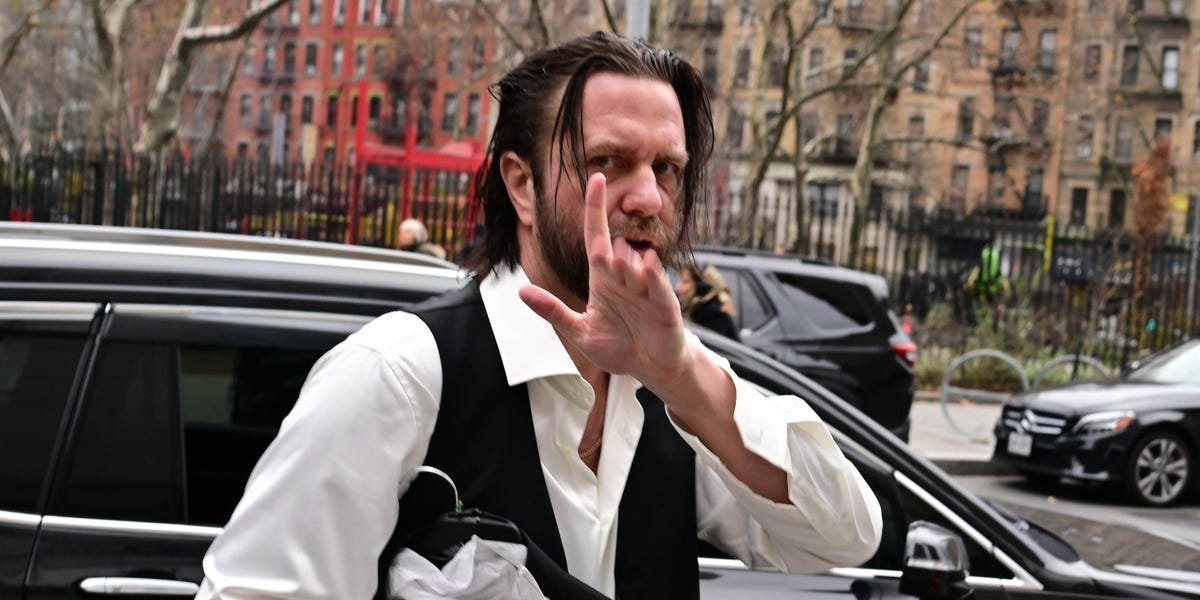
Former-FBI-undercover-agent-says-weighing-over-400-pounds-was.jpeg

Former FBI undercover agent says weighing over 400 pounds was his best disguise

Joaquin Garcia spent 24 years as an undercover agent for the FBI. During that time, his weight fluctuated by hundreds of pounds, topping out at about 500 pounds during one of his most dangerous assignments.

Garcia infiltrated everyone from the Italian Mafia and Mexican cartels to Asian and Russian organized crime groups.

“The fatter I got, the better an undercover agent I became,” Garcia told Business Insider.

When he met with criminals, he said he didn’t try to hide his stomach or shrink himself in a chair. He “let it all out.”

He knew that in criminal circles, where paranoia ran high, a heavy-set man did not fit their image of a federal agent. His weight “became like my disguise,” he said, adding that criminals, particularly drug dealers, “felt really comfortable around me.”

His weight also protected him.

“My size gave me a good excuse that I had a bad heart and therefore did not have to partake in drugs or killing or anything like that,” he said. For example, if the mob asked him to kill someone, he planned to fake a heart attack to get out of it. He was never asked, “but it was always in the back of my mind.”

The only issue was that, “unlike a disguise that you can remove, you can’t remove overweightness overnight,” he said.

See Garcia’s interview with Business Insider in the video below, and keep reading to learn about how gaining weight became a key part of his undercover identity while infiltrating the Italian Mafia.

Garcia gained 90 pounds during one of his most dangerous missions

From 2002 to 2005, Garcia infiltrated the Gambino Italian Mafia family in New York. He was the driver for Gambino captain Greg DePalma, which gave him key access to insider information, since DePalma liked to talk, Garcia recalled.

He became DePalma’s close confidant. There was even a time when DePalma pulled a practical joke on him.

Garcia had recently been diagnosed with AFib and had to wear an EKG around his chest. DePalma knew this, and one day at a diner with a bunch of mobsters, he stood up and said to the group that they had a traitor in their midst who was reporting to the feds. DePalma walked over and stood behind Garcia and ripped his shirt off, revealing the EKG. Everyone laughed it off, including Garcia, who recalls feeling very afraid in that moment.

Little did the mobsters in the diner know that some of the markings on Garcia’s skin were also from wires he had been wearing for the FBI.

Garcia said he recorded thousands of hours of conversations, many of which involved food. “Everything’s surrounded around eating,” he said of mob culture. Meetings, disputes, and everyday conversations often unfolded over coffee with biscotti or over long meals at restaurants.


Joaquin Garcia undercover

Garcia (left) weighed about 500 pounds by the end of his time with the mafia. 

Courtesy of Joaquin Garcia


That’s one thing “The Sopranos” gets right about the mafia, he said. “If you watch ‘The Sopranos’ with the ‘gabagool’, you know, and all the food. Every time you see them, they’re eating because that’s the culture.”

The food-centric culture reminded him of his Cuban heritage. “I love to eat, so to me it was perfect,” he said. “I didn’t have to act, and I found that the more I ate, the happier it made everyone because they love to feed you.” Chefs would even give him food to take home.

Garcia weighed about 400 pounds before infiltrating the mafia and said he was up to nearly 500 pounds by the time he left.

“Was it healthy? Absolutely not,” he said. “I don’t blame anyone but myself. I eat because I love to eat, and it makes me feel good. So it was not like, I’m going to blame the mob or the FBI for putting me in a situation with all these great foods that I wasn’t going to say no to.”

Garcia is grateful that his only ‘fault’ was gaining weight


Headshot of Joaquin Garcia

Garcia has lost some weight, but he aims to lose more. 

Courtesy of Joaquin Garcia


Garcia’s weight struggles began long before he infiltrated the mafia, he said. When he first entered the FBI in the 1980s, he said he weighed about 265 pounds and was told he needed to drop to roughly 240.

Over the years, especially during long undercover assignments centered on restaurants and late-night meetings, the weight crept up. He retired from the FBI in 2006, weighing over 500 pounds.

He’s since lost about 100 pounds, but aims to lose more.

He said he’s tried nearly every diet imaginable, including Atkins and other low-carb plans. It led to short bursts of weight loss but wasn’t sustainable, he said.

He also explored weight-loss medications, including Ozempic, but said his doctor told him he did not qualify because his glucose levels were normal. He said he ultimately decided against trying a different weight loss pill, preferring to lose it another way.

About three years ago, after fainting at home and spending two months in the hospital, Garcia said he began rethinking his approach.

While hospitalized, he said he learned to stick to three meals a day — a structure he has continued since leaving.

He says he typically eats oatmeal and coffee in the morning, a turkey sandwich on whole wheat for lunch, and chicken with vegetables for dinner. He avoids desserts for the most part and walks daily, using a walker to steady himself.

Today, he said his weight fluctuates between about 390 pounds and 410 pounds. His goal is to reach around 285 pounds.

“I’ve come to accept that this is a constant battle. You win some fights or some battles, but you haven’t won the war yet,” he said.

In the grand scheme of things, however, Garcia said he’s grateful that the only downside of his undercover work was gaining weight. He didn’t take up drinking or drugs. The work didn’t lead to divorce.

“My only fault is the fact that I gained weight; I’m grateful for that.”


Source link

How-infiltrating-the-mafia-actually-works-according-to-a-former.jpeg

How infiltrating the mafia actually works, according to a former FBI agent

Joaquin “Jack” Garcia is a retired FBI agent who worked 24 of his 26 years in the bureau undercover. He spent three years infiltrating the Gambino crime family under the alias “Jack Falcone.”

Garcia talks to Business Insider about his unconventional entry into the FBI, including challenges with his weight and Cuban background. He discusses the “mob school” he attended to learn about the mannerisms and foods of New York’s Italian mafia.

Garcia’s close relationship with the Gambino captain Greg DePalma and key events such as a violent assault in a Bloomingdale’s led to the indictment of 32 mobsters.

He recounts being proposed for membership in the family before the FBI prematurely ended the investigation. He contrasts the romanticized Italian mob with the greater brutality of drug cartels and discusses other major cases he worked, including police corruption in Hollywood, Florida, and Boston.

After retiring from the FBI in 2006, Jack wrote the New York Times bestseller “Making Jack Falcone: An Undercover FBI Agent Takes Down a Mafia Family.”


Source link

FBI-ups-reward-in-Nancy-Guthrie-case-to-100000-and.jpeg

FBI ups reward in Nancy Guthrie case to $100,000 and shares new details about a suspect

  • The FBI released new details on a suspect in Nancy Guthrie’s disappearance.
  • The suspect was described as a male of average build, seen carrying an Ozark Trail Hiker Pack.
  • The FBI also doubled the reward for information on the case.

The FBI has upped its reward in the disappearance of Nancy Guthrie and shared new details on a suspect.

The agency is offering $100,000, up from $50,000, for information that leads to Guthrie’s location or to the arrest and conviction of anyone involved in her disappearance, the FBI said Thursday.

Guthrie, the 84-year-old mother of “Today” show host Savannah Guthrie, has been missing since February 1. Authorities have said Guthrie, who has limited mobility and takes a daily medication for a heart condition, was abducted from her home near Tucson, Arizona.

The FBI said Thursday that identifying details about the suspect had been confirmed, describing him as a man of average build, about 5 feet and 9 to 10 inches tall. He was seen in doorbell camera footage wearing a black backpack identified as a 25-liter Ozark Trail Hiker Pack.

On Tuesday, the FBI and the Pima County Sheriff’s Department released images from Guthrie’s Nest doorbell camera showing a person at her door wearing a full ski mask. Authorities said the person was “armed.”

This is a breaking news story. Check back for updates.


Source link

A-Ferrari-and-over-480-takeout-orders-FBI-details-spending.jpeg

A Ferrari and over 480 takeout orders: FBI details spending spree of Netflix director in $11 million fraud case

In March of 2020, Netflix infused $11 million into a production company to complete the first season of “White Horse,” a futuristic sci-fi series it hoped to bring to its platform.

Carl Rinsch — the director, writer, and showrunner of “White Horse” — never finished the 12 episodes he was supposed to deliver.

But a short time after he got the cash, Rinsch spent millions of dollars on furniture, cars, credit card bills —  and a whole lot of takeout.

According to testimony at his criminal trial on Thursday, Rinsch spent a total of $9.14 million through a personal bank account with funds originally earmarked to finish “White Horse,” which had the production codename “Conquest.”

The spending included more than 480 food deliveries from Postmates and Uber Eats during a six-month span in 2022, according to a spreadsheet entered into evidence. The spreadsheet showed Rinsch sometimes making a dozen separate food purchases each day.

The most expensive category, FBI agent Michael Naccarelli testified, was for furniture, for which Rinsch spent $3.36 million.

Rinsch also spent $2.4 million on cars — including a Ferrari and Rolls-Royces — and $1.8 million on American Express bills, according to Naccarelli. He also spent money on hotels, jewelry, and art, Naccarelli said.

“Rinsch described the Ferrari as “a birthday gift to myself” in a 2021 text message to his personal assistant, which was shown to jurors later Thursday.

Attorneys for Rinsch told jurors at his trial in Manhattan federal court that the “White Horse” debacle is a civil business dispute — not criminal financial fraud.

They say Rinsch, who previously directed “47 Ronin,” starring Keanu Reeves, is a “creative genius” who was overwhelmed by the demands of directing, writing, and producing “White Horse” and left to flounder by the streaming company.

Days after Netflix sent $11 million to a bank account for Rinsch’s production company, he moved $10.5 million to a personal Wells Fargo bank account, according to Naccarelli and records entered into trial evidence.

The director then moved portions of the funds to a Kraken cryptocurrency exchange account, as well as other bank accounts, before ultimately transferring $13.7 million to a personal Bank of America account.

With his Kraken account, Rinsch purchased about a dozen different cryptocurrencies, including Dogecoin, Etherium, Bitcoin Cash, and the stablecoin Tether, trial records show.

In April 2022, Rinsch’s Dogecoin holdings were worth about $755,000, and his Etherium tokens about $939,000, according to Naccarelli.

While a financial advisor previously testified in the trial that Rinsch’s stock investments went badly, Naccarelli said the director’s cryptocurrency investments were profitable.

“The trades performed very well,” Naccarelli said as Rinsch — wearing a three-piece black suit and a patterned pink tie and matching pocket square — nodded slightly.

Allen Grove, an FBI agent who testified after Naccarelli, said Rinsch considered himself a major Dogecoin trader when they met in April 2023 regarding a dispute over one of Rinsch’s furniture purchases in Paris.

“Mr. Rinsch described to me that he became wealthy during the pandemic by investing in Dogecoin,” Grove testified. “He described himself to me as ‘The Dogecoin Whale.'”

Rinsch said in an earlier deposition, which was shown to jurors on Thursday, that his purchases of four Rolls-Royces were meant for the production of “White Horse,” and not for personal use. Netflix wrote off the production as a loss in 2020.

“That would be fraud otherwise,” Rinsch said in the deposition.


Source link