When I was in college, studying abroad in Italy was a no-brainer. My great-grandparents are from a tiny village just outside Modena, and I was curious about my heritage.
Something that took me by surprise, though, was the realization that I didn’t want to leave.
After my semester ended, I lived and worked in Rome throughout my early 20s. Eventually, I moved back to the US and became an Italian teacher.
Although I now live in Chicago, Italy still feels like my second home: I make a point to spend summers there, mainly so my daughter can bond with her nonna.
As lucky as I am to visit Italy every year, I still wish I could go more often. Thankfully, I’ve discovered a handful of places across the US that capture the energy of my favorite Italian regions.
These cities offer Americans a slice of Italian culture, minus the hourslong flight overseas — and help quench my insatiable thirst for Italy with soul-stirring food, wine, history, and charm.
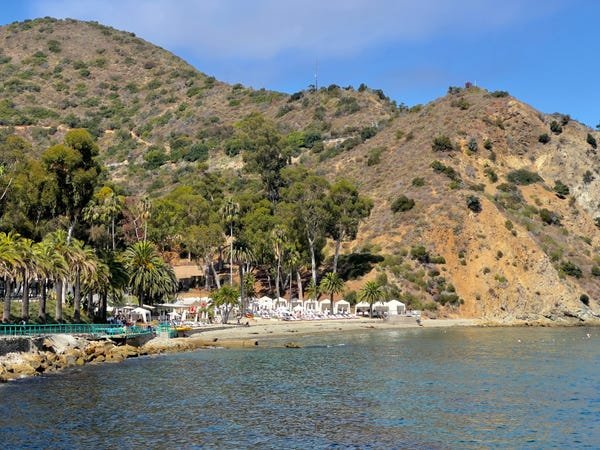
Catalina Island’s hidden coves and crystalline waters feel like Capri.
I plan a trip to Catalina Island whenever I find myself missing Capri. vesperstock/Shutterstock
Located off the coast of southern California, Catalina Island is about 22 miles long. It’s easily accessible via ferry service, which operates out of three ports near Los Angeles.
When I first visited Catalina Island, I was awed by the dramatic shorelines, crystal-clear waters, and hidden coves. I felt like I was back on Capri.
I hiked to the top of the Garden to Sky trail, catching panoramic views that felt straight out of a Mediterranean postcard. Then, I soaked up the sunshine at Descanso Beach while sipping a chilled glass of prosecco.
Florida is home to Coral Gables, a city that always reminds me of Lake Como.
Many of the homes and buildings around Coral Gables remind me of Italy. RAUL RODRIGUEZ/Getty Images
With its glamorous Mediterranean-style architecture, lush gardens, and waterfront estates, Coral Gables feels like Florida’s answer to Italy’s Lake Como.
The Italian Renaissance-inspired Vizcaya Museum and Gardens, built in the early 1900s, reminds me of the grand villas that line Como’s shores.
If you plan your own visit, don’t forget to check out the Venetian Pool — this public swimming spot was carved from a coral rock quarry, and (true to its name) feels straight out of Italy.
Chicago and Milan are “sister cities,” and it’s easy to see why.
There are a lot of similarities between the cities of Chicago and Milan. Lucky-photographer/Shutterstock
It’s no surprise to me that my hometown of Chicago and the metropolis of Milan are officially sister cities. Both feature vibrant street art, designer boutiques, and — unsurprisingly, maybe — delicious Italian food.
I always recommend that tourists plan a trip to coincide with the Randolph Street Market, a pop-up vintage extravaganza. You can also explore Chicago’s dynamic mural scene with a street art tour.
Finally, Chicago’s pizza is as hearty and rich as any slices you’d find in Italy. You can’t leave my hometown without trying our legendary deep dish.
For a classic experience, head to Giordano’s. The stuffed pizza here is a masterpiece of cheese and sauce wrapped in a golden crust.
Sonoma bears an uncanny resemblance to Tuscany.
The vineyards in Sonoma County make me feel transported to the Tuscan countryside. Robert_Ford/Getty Images
The first time I visited Sonoma, California, I was struck by how much it resembled the Tuscan countryside, from the golden hills to rustic farmhouses.
When I found myself gathered around a long wooden table at Pedroncelli Winery, surrounded by laughter, clinking glasses, and the comforting scent of fresh herbs and olive oil, I felt wrapped in the same warmth and magic of the Italian countryside.
Perhaps the most obvious similarity, though, is the locals’ deep appreciation for wine. You can even immerse yourself in vineyard life by staying at one of the several wineries that offer accommodations.
Venice Beach in California feels just like the Italian city of the same name.
I love visiting Venice Beach for a small taste of Europe. ALEXANDRE F FAGUNDES/Shutterstock
Venice Beach’s bohemian vibe and canals are an almost-perfect replica of Venice, Italy.
Developed in 1905, the canals of this coastal Los Angeles neighborhood were designed to look like those in Venice. Whenever I stroll along the picturesque bridges and waterfront homes, I almost feel like I’m in Italy … all that’s missing are the gondolas.
Frankenmuth, Michigan, reminds me of the Italian Dolomites.
If I can’t spend the holiday season near the Dolomite Alps, this city in Michigan makes me feel like I’m there. T-I/Shutterstock
This Michigan city’s Alpine-style buildings, hearty cuisine, and cozy charm really resemble the Dolomites in northeastern Italy.
Moments like browsing handcrafted wooden ornaments at Bronner’s Christmas Wonderland (the world’s largest Christmas store), enjoying a traditional Alpine feast, and setting off on a riverboat cruise on the Cass River made me feel like I was celebrating Natale — or Christmas — in Europe.
This story was originally published on August 18, 2025, and most recently updated on March 26, 2026.
For Brian Auer, the operations manager at Historic Ships in Baltimore, the video of a US Navy submarine sinking an Iranian warship this week looked strikingly familiar.
“I saw the footage of that Iranian frigate getting torpedoed, and it looks like any picture I see from World War II of a similar attack happening,” he told Business Insider of the video released by the Department of Defense on Wednesday.
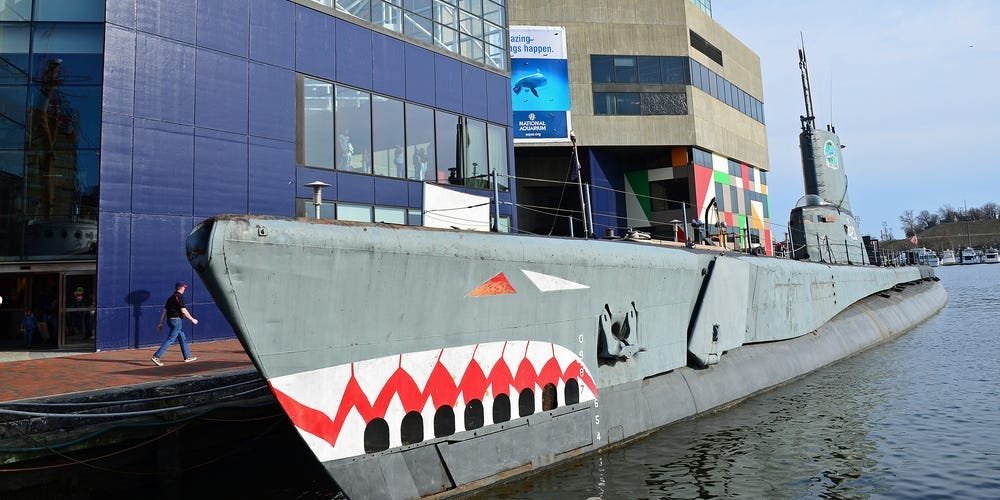
Before this week’s attack in the Indian Ocean, the last confirmed US Navy submarine to sink an enemy ship in combat was the USS Torsk, a World War II submarine that sank two Japanese vessels in 1945 before becoming part of the museum that Auer manages.
Since 1945, large-scale battles between warships have been rare. As naval warfare reemerges as a key strategy in Operation Epic Fury against Iran, museum ships that saw combat in World War II are finding new relevance, showing not just how naval war was fought, but how it might look today. Suddenly, the floating museums feel a lot less like history.
“Those of us who work on museum ships don’t like war,” Ryan Szimanski, the curator at Battleship New Jersey in Camden, New Jersey, told Business Insider. “In many cases, we work here to try and teach people about how awful wars were.
“However, the fact that the United States has fought a naval action — one of the first ones since World War II — is making museum ships like us relevant and part of the public discussion in a way that we haven’t been.”
Museum ships offer immersive experiences
Battleship New Jersey in Camden, New Jersey.
Talia Lakritz/Business Insider
There are around 75 World War II-era museum ships open to the public across the US. These decommissioned battleships, submarines, destroyers, aircraft carriers, and other vessels offer visitors the chance to climb aboard and explore the interiors themselves.
Guided tours, often led by Navy veterans with firsthand experience serving on similar vessels, take visitors through combat areas, such as torpedo rooms, gun turrets, and command centers.
Battleship New Jersey, for example, offers a rare look into Tomahawk cruise missiles as the first surface warship to carry them in 1982. The long-range missiles have also been used to sink Iranian ships during Operation Epic Fury.
The combat engagement center on board the USS New Jersey features a Tomahawk Weapons System.
Talia Lakritz/Business Insider
“Because those are contemporary systems, to be able to see a Tomahawk missile, to be able to see Tomahawk missile launchers in a museum — there’s only a handful of museum ships like us that you could come and see to get that experience,” Szimanski said.
Some ships even offer sleepover experiences where guests can eat meals in the crew’s mess and spend the night in sailors’ bunks.
“It is highly unlikely that the average person will get the chance to visit an active-duty Navy ship,” Szimanski said. “So to experience the conditions, to see what it’s like to serve on a warship, particularly one that has seen combat, visiting a museum ship is your best chance.”
‘Remarkably similar’ to modern Navy ships
The USS Torsk submarine in Baltimore.
Vacclav/Shutterstock
While some technologies and configurations found in World War II submarines may be outdated, many aspects of how they operate remain the same.
“It’s important to remember that the Navy, the military, all of us, operate in a world governed by laws of physics, and so there are some things that are just never going to change in how submarines work,” Auer said. “If you walk through a modern Ohio-class, ballistic missile submarine, you’re going to find things that are exactly the same, or done exactly the same way, on the USS Torsk. And what we can really show is where those things were first done, and why they were done that way, and why they are still done that way.”
Modern submarines still appear “remarkably similar” to their museum counterparts, Szimanski said. The layout of submarines hasn’t changed all that much since World War II. They largely still have the same spaces to eat, sleep, and fire torpedoes.
Auer says that when he leads tours of the USS Torsk for active-duty sailors, he often gets the response, “Huh, we’re still doing it this way.”
The forward torpedo room inside the USS Torsk.
Pixel Doc/Shutterstock
The biggest differences can be found in the ships’ capabilities, Hugh McKeever, the shipboard education manager at the Independence Seaport Museum in Philadelphia, told Business Insider.
Diesel-powered submarines like the USS Becuna, which sank 3,888 tons of shipping in World War II before arriving at the Independence Seaport Museum, had to spend most of their time on the surface with only about 12 hours’ worth of oxygen at a time. Today’s nuclear-powered submarines operate with an unlimited fuel supply and can stay submerged for upward of six months.
“As far as going out to sea, their ability is pretty much limited only by food,” McKeever said.
Overall, World War II-era submarines are less antiquated than one might assume. Some even still work. The USS Torsk’s sister ship, the USS Cutlass, was commissioned in 1945, sold to Taiwan in 1973, and remains operational as part of the Republic of China Navy.
“These boats, to us, are so outdated that they’re museums, but for the rest of the world, they’re relatively advanced,” Auer said. “They’re still very capable of doing the function they were originally designed for. So, were they implemented by some foreign threat, they would be a threat.”
Floating museums find new relevance
The USS Becuna, a World War II submarine, is part of the Independence Seaport Museum in Philadelphia.
Talia Lakritz/Business Insider
For ship museum curators, the resurgence of naval battles in the US war with Iran underscores the contemporary relevance of World War II museum ships and the battle stars they earned. McKeever, for one, anticipates getting more questions about torpedoes as the summer tourist season ramps up.
“For the US as a maritime power, the economic prosperity of the country is tied to the sea and the Navy,” McKeever said. “Our museum vessels represent that constant need for change and growth as a country.”
After all, as Szimanski noted, it was just days ago that no active US Navy ships had ever sunk an enemy warship — the only Navy ships that had fought a naval battle were all museum ships. Despite some rust and peeling paint, it seems they still have a lot to teach us.
On Saturday, I was standing on the beach below my home on Dubai’s Palm Crescent when I noticed thick plumes of black smoke rising from the Fairmont Hotel across the water on the trunk of the Palm Jumeirah.
I watched the dark fumes with dread as they rapidly grew thicker at sunset. The sight recalled the same images I saw from explosions in Beirut and Gaza during my own reporting in the region over the past few years.
I live in a beachfront apartment on the East Crescent, the outer arc that curves around Palm Jumeirah and shields it from the open sea.
She saw smoke when standing outside her home on Dubai’s Palm Crescent.
Provided by Rebecca Anne Proctor
I had just gotten back from visiting a friend from graduate school and her family at a beach club at the base of The Palm Jumeirah. An afternoon meant to be spent enjoying the beach and the cool waters during one of the Gulf’s best times of year, quickly turned into one of spotting numerous missiles in the sky as they were being intercepted by the United Arab Emirates’ defense system.
The US strikes on Iran, which we had anticipated for weeks, had begun, and as many in the Gulf had feared, they have led to hundreds of missile and drone attacks on Gulf soil.
After an intense few hours filled with worry, I had gone down to the beach at my home to watch the sunset and try to find a moment of calm. Others had done the same. A fisherman stood with his line in the water. Couples walked by the water’s edge as the evening light shimmered on the waves. Others lounged by the pool.
For a moment, it looked like any other Saturday.
Looking up at the sky in Dubai.
Provided by Rebecca Anne Proctor
But the smoke still spiraled into the sky, an eerie reminder that it wasn’t. People stood quietly, watching.
Then, without warning, a fast-moving ball of fire flew over our heads and our building. Instinct took over. We ran for the basement, breathless, confused, scared, and frustrated. A woman rushed in after us, crying. She said she’d just driven past The Fairmont and seen it in flames.
I’ve lived in the United Arab Emirates since 2009. I never would have imagined that the sights of bombings I have reported on in other Arab nations would be seen and experienced here, a Gulf nation considered to be one of the safest in the world.
This is a place where my friends from Lebanon, Palestine, Syria, and even Iran and parts of Africa have come to for a safer life and better work opportunities.
They did not escape war to come to experience another war.
We knew it was coming
Since mid-January, there had been growing talk of a possible military strike on Iran. For weeks, people across the Gulf — residents and visitors alike — had been bracing for it. At conferences, art fairs, dinners with friends, and even casual work meetings, the subject would come up.
People would whisper about it, sometimes even joke.
“Let’s see if it happens next week or next weekend,” someone would say.
“Let’s have lunch while we still can,” a friend in Downtown Dubai told me recently. “We may all be living in the basement soon,” they added with a laugh.
But the moment never came.
We’re now in the second week of Ramadan — a time meant for reflection, charity, community, and peace. Dubai had been full of festive iftars and suhoors, the celebratory meals where Muslims break their fast after sunset.
Until this week, the city felt joyful, as it always does during this month.
She has received texts warning her to stay away from windows and falling debris.
Provided by Rebecca Anne Proctor
Life is carrying on
The last few days have brought real fear and confusion. At times I’ve felt completely on edge. But I also feel safe. I feel grateful.
As I write this on the evening of March 3, flights across the Gulf are still suspended. The UAE says it has intercepted 186 ballistic missiles and more than 800 drones. I can hear the fighter jets roaring overhead. And yet, outside, children are playing again. Birds are chirping.
Businesses are open, even if many people are working from home. Life is going on, and I do feel safe. I’ve gone through several nights of fitful sleep, waking up to emergency texts from the government on my phone warning us to stay away from windows and falling debris.
The noise and uncertainty have been scary. But seeing how the UAE has been handling the situation — confidently and with resilience — has given me strength.
Don’t get me wrong, this isn’t easy. I have also seen commentary and reports online that have used this moment to criticize the nation, dismissing it as “glitzy,” as if it isn’t a real place where real people live. But for those of us who call it home, it’s very real.
Over the 17 years I’ve been here, I have lived through two recessions, the COVID pandemic, and several floods. During each catastrophe, the UAE has surprised its skeptics and bounced back.
I don’t know how or when this will end. I am still undecided as to when or if I will leave. I’m still nervous going to sleep at night. It’s only been a few days, and I’m still jumping at loud noises. But each hour and day that passes, I do feel calmer. We will get through this. The UAE will get through this.
When I was born in March 1999, my parents were both 25 years old. They were married and owned a house with a mortgage, and throughout my life, they’ve always seemed like “real” adults.
I’m now older than they were when they had me. I’m turning 27 and, though I don’t want children, it’s sometimes difficult not to measure my life against theirs.
They got married at 21. When I was 21, I was finishing my bachelor’s degree in the middle of a pandemic. At 25, rather than having a child, I was moving in with my girlfriend, and we became cat parents.
In some ways, and especially when I see my rent money leave my account at the start of each month, I feel like I’m falling behind.
I remind myself that life is different now
I know I’m not alone in feeling this way. Milestones that have long defined adulthood — like getting on the property ladder — don’t seem as realistic to everyone my age as they did for our parents’ generation.
While I do know people around my age who’ve been able to buy a house, for example, it’s definitely not the majority of my friends. Even if I did want kids, I wouldn’t have even considered it in my 20s, saving that conversation for my 30s.
Also, income hasn’t risen to keep pace with rising housing prices. Becoming a homeowner in your 20s is simply not realistic anymore.
Still, I sometimes don’t feel like an adult
I don’t think any of my generation, especially my friends, truly feels like we’re adults. It feels like I’m winging it most days.
I haven’t followed any traditional path. I moved to another city for university at 18, completed my master’s in another city, then shared an apartment with a friend somewhere else, and moved cities again when I moved in with my partner.
The author has cats instead of children.
Courtesy of Adam England
Sometimes it feels like I’m a teenager cosplaying as an adult. But then I remember that I do have my life together. I live with my long-term partner and our cats. I have a master’s degree. I freelance full-time for a living, my finances are stable, and I try to be reasonably healthy.
Now and again, I’ll say or do something that makes me realize I am a “real adult.” I’ll mention something about personal finance in a conversation with a friend, or get really excited about my air fryer being delivered.
In some ways, I’m further along than my parents were at this age
My dad often reminds me that I’ve had more life experience than my parents did at my age. I continued my education, I’ve lived in multiple cities across the UK, and I’m more well-traveled.
My life is richer in ways that aren’t necessarily measured by the traditional life plan. Sometimes comparing my life to that of my parents has made me feel stressed, but I’m now more comfortable embracing my own path; after all, adulthood isn’t a race.
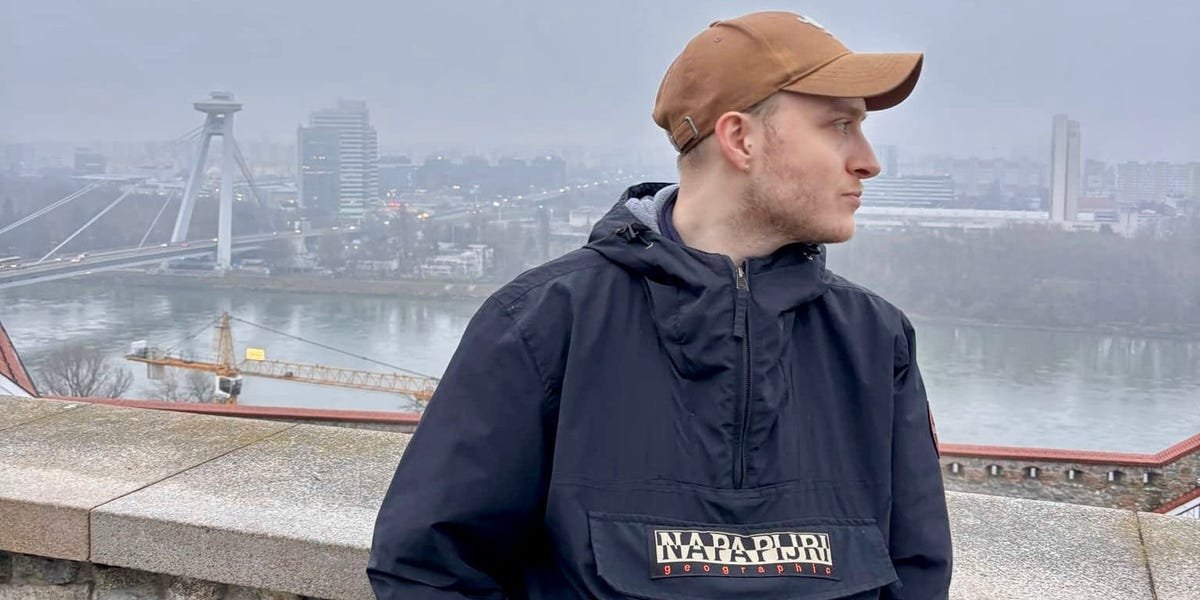
In December, I was on a boat on the Danube River with my girlfriend, drinking mulled wine and looking at Bratislava by evening as we enjoyed a well-deserved long weekend away from work before Christmas.
When my parents were the same age as us, they would have been at home with a one-year-old, and traversing adult life in a way I don’t think I’d be able to. Yet, looking back at when I was growing up, they made it seem so easy.
Neither version of your 20s is the objectively correct way to do it, but the contrast made me realize that I’m not falling behind or failing at adulthood. I’m simply doing it differently.
Starbucks CEO Brian Niccol wants his cafés to feel like Central Perk from the TV show ‘Friends.’
During an interview with The Wall Street Journal, released Monday, Niccol spoke about his “Back to Starbucks” plan, a yearlong process of turning around the brand after several quarters of declining sales amid a deteriorating customer experience.
He told Alan Murray, president of The WSJ Leadership Institute, that the name “Back to Starbucks” helped to give his baristas a “visual understanding” of the café experience he was trying to achieve.
“Because everybody remembers a ‘Friends’ episode, or that coffee house experience, by me saying ‘Back to Starbucks,’ that kind of hearkens that memory of what I would call the barista-customer connection that we’re after,” Niccol said.
The coffee shop from the ‘Friends,’ Central Perk, was a pivotal set piece throughout the sitcom’s 10-season run. Almost every episode featured the café as the characters’ favorite haunt.
Every time Aditi publishes a story, you’ll get an alert straight to your inbox!
Stay connected to Aditi and get more of their work as it publishes.
The cast was often filmed sitting on Central Perk’s mismatched sofas and chairs, ordering coffee and baked goods, and making small talk with the awkward manager, Gunther.
Niccol’s comparison of Central Perk to Starbucks comes after he spent more than a year rebranding Starbucks, from what customers and employees said was a soulless conglomerate chain, to a warm and inviting third place. He took the top job in September 2024.
He simplified the menu, introduced more seating and tables in the cafés, offered free coffee and tea refills, brought back the condiment station and ceramic mugs, and encouraged baristas to write small notes on coffee cups to interact with their customers.
However, its sales have yet to see a strong recovery. It reported a 1% increase in its global comparable sales for the fourth quarter of this year, compared to the same period last year. Its stock price is down more than 6% since the start of the year.
Dating is difficult at any age. Dating when you have a child is complicated. But, when you decide to date after the passing of your partner, there’s even more to consider. I was 48 when my husband succumbed to cancer. My daughter was almost 10.
Why would I want to date? I was heartbroken. A piece of my life and my entire vision of the future had been ripped away from me. I didn’t want love. I wasn’t interested in a replacement. I’d lost the illusion of forever.
I just wanted conversation, companionship, and a new way of looking forward and reimagining. But, any kind of reimagining requires imagination and reconciliation. I was parenting a traumatized child while also trying to care for myself.
What would my daughter think about me dating? Would she think I was betraying her dad?
I didn’t tell my daughter I was going on dates at first. I didn’t bring anyone to meet her until I’d had a few positive dates. I didn’t introduce her to anyone I didn’t think of as potential friend, a good person.
I was clear with everyone I went out with that I wasn’t looking for something permanent and that I certainly wasn’t looking for a new dad for my daughter. My daughter adored her dad, and rightfully so. She had thoughts on the few people I did introduce her to:
Every time Lisa publishes a story, you’ll get an alert straight to your inbox!
Stay connected to Lisa and get more of their work as it publishes.
“He’s too young for you.”
“He likes you too much.”
“I don’t have a good feeling about him. Even if he got me a good present.”
And, eventually, “He seems pretty chill.”
Then, when you find someone you’re interested in seeing, there’s the challenge of when and where
Solo parenting is not single parenting. My daughter didn’t split time between me and another parent. I couldn’t tell a potential date, “my daughter’s with her other parent this weekend — I’m free.”
I had to define what my boundaries were and enforce them. So, no one could be in the space I shared with my daughter. I couldn’t make him dinner, invite him in for drinks.
There’s also not a lot of free time for a solo parent with a full-time job. I needed to be there for soccer, Girl Scouts, school plays. Those were nonnegotiable. I wouldn’t date someone who wanted me to prioritize them over my daughter.
There were also internal challenges I had to settle for myself
Dating as a widowed parent means accepting a need for connection and feeling guilty for wanting it at the same time.
What did it say about me? Did it mean that my feelings about my husband hadn’t been sincere? Was it fair to the men I went out with?
I wanted conversation with people who didn’t know me in my married life, people who could see present and future me, but who also wouldn’t push too much for a future with me.
Even with so much to consider, dating has not only been possible, but it’s been positive
Despite all of the challenges, I’m not only making it work, I’m thriving. I’ve met some really good people who want connection, whatever that looks like, in this iteration of our lives.