The back-and-forth of the Iran war is creating the same repetitive market patterns day after day. As a result, investors have grown desensitized to new headlines and are beginning to shift their focus toward other potential catalysts.
This as-told-to essay is based on a conversation Dani Aravich, Paralympian and cofounder of Culxtured. It has been edited for length and clarity.
I grew up in Boise, Idaho, playing all the typical sports — soccer, basketball, softball — and eventually got recruited to a Division I school to compete in track and field.
After college, I worked for an NBA team. And while working there, I learned about the Paralympics for the very first time. It had never really been on my family’s radar growing up, so it never felt like an option for me as a kid.
Learning about the Paralympics also meant being introduced to the disability community in a way I never had before. I hadn’t grown up around many people with disabilities, and suddenly I was meeting all these athletes who, like me, had disabilities and were fiercely competitive in sport.
It was a little overwhelming at first, but also really exciting.
I started thinking about the Paralympic Games
I started diving into everything I could find about the Paralympics and eventually learned that I actually qualified for a classification.
That’s when the dream began to form. Maybe I could make the Trials for the Tokyo 2020 Paralympic Games.
In 2019, I started running again, mostly training on my own while working full-time. I went to my first para track meet that year and met other women who were missing a hand or had arm impairments like mine. For the first time, it felt like I might truly be competing on an even playing field.
But that same day, I nearly walked away from it all.
I was running well until I fell on the track with 10 meters left in the race. I remember thinking maybe that was my sign to quit and go back to the traditional career path I had been on.
My mom — who had actually been hesitant about me stepping away from my business career in the first place — was the one who told me I had already put months of work into this goal. I owed it to myself to at least see it through and not let one fall end the dream.
So I kept going.
I decided to focus on Nordic skiing
Not long after that, I was invited to try Para cross-country skiing at a camp. I had downhill skied before, but cross-country skiing is a completely different sport.
In 2021, I competed in the T47 women’s 400m at the Tokyo Paralympic Games (which were delayed a year because of COVID). Just six months later, I competed again at the Beijing 2022 Paralympic Winter Games.
After that, I made the decision to step away from track and focus fully on Nordic skiing, leading into the 2026 Paralympic Winter Games in Italy.
Dani Aravich is competing in Italy.
Mark Reis/Mark Reis
And here I am now.
The dream of becoming a Paralympian came much later in life for me than it does for a lot of athletes. Mostly because I didn’t even know it existed growing up. I had never seen it in the media, never heard about it as a possibility.
This year, I’ve been in Europe since early January, first for the World Cup season, now the Paralympics.
One of the things that’s made these Paralympics especially meaningful is being able to invite friends and family to come watch in person. Four years ago, that wasn’t possible because of Covid restrictions.
I love seeing kids watch us race
For Nordic skiing, we’re based in a tiny town in Italy, which is pretty remote from some of the other venues. But the town has completely embraced the Games. One of my favorite moments has been watching local school kids come out to watch us race.
And it really does feel like the Paralympics are growing.
More people are watching. The media is paying attention to the drama and intensity of the competition. Online engagement is growing. It finally feels like the world is starting to see these athletes the way we’ve always known them to be — elite.
Once people watch the Paralympics, they realize the competition is just as intense as the Olympics. And once they see that, they’re hooked.
More broadly, I think society is shifting in a really positive direction when it comes to diversity and inclusion. Humanizing disability and making it something we talk about openly — rather than something hidden away — is incredibly important.
Not just for the Paralympics. But for society as a whole.
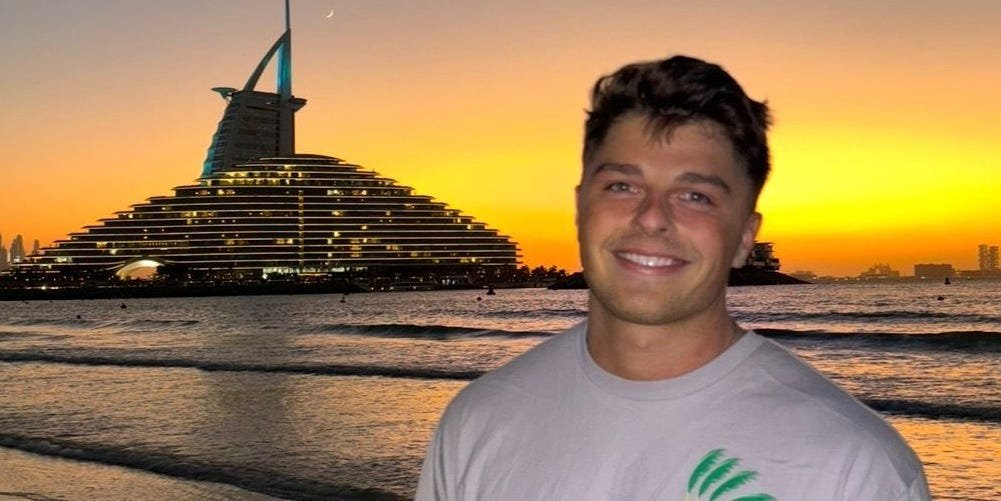
This is an as-told-to essay based on a conversation with Charlie Lovett, a British citizen in Dubai who runs a used-car marketplace. Iran has launched retaliatory strikes at sites in the United Arab Emirates after being attacked by the US and Israel. This story has been edited for length and clarity.
I have British parents and am a British citizen, but a large chunk of my life has been spent here in Dubai.
My dad’s job brought us here, so I did all my schooling here from age 3 to 18. I moved back to London for university and worked there for a few years. In the last couple years, I set up a business in the UAE, so I am back here quite a lot.
It was very surreal when everything started on Saturday.
I had some friends around, and we knew what was happening in Iran, but I didn’t think much about canceling or changing plans, which is a testament to how safe I felt here. I live in a high-rise on the Palm Jumeirah and was sitting on my balcony when I could hear a few bangs in the area.
Initially, it was quite scary and very unsettling, but very quickly, I turned to government sources about what was going on. If you live here or have lived here for a long time, you understand that it is a safe place to live and that measures are in place to protect you. There’s been a big difference in reactions between people who live here and people who are visiting.
Growing up in Dubai instilled a strong sense of safety
Before the other day, I had never heard a missile here.
Still, having grown up here, I have a deep-rooted, subconscious sense of safety that has built over time.
There is a lot of trust here within the community and in the government. Half the time, we don’t even lock our doors. The other day, I went for a run and didn’t want to carry my car keys, so I just left them in the car. You don’t have to worry about these things here. It’s the small things you notice growing up here, as a kid, being able to play outside for hours without a parent.
You also get an understanding of how the government operates. It’s very structured and organized. You feel like you’re in safe hands.For instance, during COVID, everything was handled very well.
There are protocols in place, and people here are really good at following them. If you’re told not to go into the office, for example, people don’t really kick up a fuss about that. They just crack on.
On all the official government channels, you can see almost a live breakdown of everything that’s happening and an explanation as to what’s going on — like that the sounds aren’t necessarily missiles landing, they’re just being intercepted. The government also sent out iPhone notifications, all translated into both English and Arabic.
Right now, for people who live here, I think the consensus is it’s just business as usual. Everyone’s quite calm.
It already feels normal again. There’s the occasional loud sound, but that’s mostly subsided in the last few days. There’s a mall right next to me where I work and shop, and it’s been packed. There are people out and doing things and just going about their day. I was just out for dinner with my dad.
There’s a lot of conflicting information going around
If you’re not from here or if you’re here on holiday, I get that it would be very different. You’re in an unfamiliar environment, you don’t know how things work, and you don’t necessarily have family or friends around.
I also think some people may be scrolling online or seeing rumors, rather than following the official channels. I think there’s been a lot of mixed reporting, which can also confuse things.
I’ve got family and friends in the UK, and my girlfriend’s there at the moment, so they’re seeing what’s being reported in British media and what’s surfacing online. So there’s this huge discrepancy in what’s actually happening and what’s being shared in certain places.
I got here just over two weeks ago. I’m trying to leave, not because I’m evacuating, but because I’m trying to make it to the Barcelona marathon. It’s just a matter of finding a flight that’ll get me there in time. Afterward, I’ll return here when I can.
For people who live here — about 90% of whom are expats — the thought of this happening wasn’t even in our minds until last week. But even then, it has not shifted our perspective. A lot of people feel more comfortable staying here than they would going back to their home countries.
This as-told-to essay is based on a conversation with Peter Wozny, head of legal at Btomorrow Ventures, the corporate VC arm of British American Tobacco. This piece has been edited for length and clarity.
I was flying home to Europe over the weekend from a business trip in China, connecting through Qatar, when my journey took an unexpected turn.
I landed in Doha in the early hours of Saturday morning, made my transfer, and boarded the onward flight. We took off as normal at 9:15 a.m. local time.
About an hour later, everything changed. As we approached the airspace between Israel and Iran, the plane abruptly turned around and headed back to Doha.
When we landed, we sat on the tarmac for roughly 90 minutes as the crew tried to figure out the next steps. Eventually, they sent us back into the terminal.
By then, anxiety had started to spread. Passengers were glued to their phones, reading reports that war had broken out that morning.
Peter Wozny boarded a flight to Warsaw at Doha’s Hamad International Airport early on Saturday morning.
Courtesy of Peter Wozny
Stranded in Doha
Inside the airport, it was chaotic.
Since I was traveling for work, I headed to the Al Mourjan Business Lounge, where I ran into my friend Stuart. We ended up waiting there for a few hours, trying to figure out what was happening.
While we were sitting there, we started hearing loud bangs outside. At first, I wasn’t sure what they were. Then it became clear they were missiles being fired. That’s when it really hit me — it felt ominous.
Stuart McClure and Peter Wozny at Doha’s International Airport’s lounge on February 28.
Courtesy of Peter Wozny
Qatar Airways moved us to the Fraser Suites in Doha’s West Bay area. It wasn’t great, so I decided to book my own room at the Mondrian Doha, where I’ve been staying since Sunday. It’s about $220 a night.
The authorities have said stranded passengers will be able to claim refunds for their hotel stays from Saturday until the airports reopen.
Once this is all over, I’ll need to submit expenses for flights, taxis, food, the hotel, and even basic things like toiletries and clothes.
For the first four days, we didn’t have our suitcases. I just had the clothes I was wearing and a rucksack with my work laptop.
The explosions woke me up
From the hotel, which overlooks Doha’s port, you can hear the explosions. You’ll be sitting there, and suddenly there are these loud bangs outside. Then you look up and see flashes lighting up the sky. It’s scary.
On Saturday night, I actually slept through most of the noise because I was exhausted.
But at 7:30 a.m. on Sunday, the noise woke me up. On other days, it’s sounded more distant, more muffled.
Sunday was noticeably quieter. From what I understand, Qatar has been intercepting missiles over the Gulf before they reach land. It’s not that they haven’t been fired — it’s that they’re being taken out at sea.
Even so, you can still hear them.
Stuart McClure and Peter Wozny in their hotel room on Tuesday.
Courtesy of Peter Wozny
It feels a little bit like Covid
It feels a bit like lockdown. I’m stuck, and I don’t know what’s going on. I look out on the streets, and there are barely any cars driving around.
I feel nervous. A bit unsettled. I do feel safe, but I just don’t know what’s happening.
I’m generally a glass-half-full person, but all my plans have been turned upside down. I don’t know whether it’s going to be a few more days or a few more weeks stuck out here.
Peter Wozny and other flight passengers received alert messages upon returning to Doha.
Courtesy of Peter Wozny
Reassuring friends and family
The hardest part has been friends and family constantly checking in. They’re obviously concerned and want to get updates.
They’re reading things in the news, and there’s misinformation out there. So you’re constantly responding to messages and telling everyone you’re OK.
That’s intense. But when you’re sitting in the hotel, and you’re just hearing explosions around, or you’re looking up, and you just see all the light, the sky kind of lighting up, it’s also a bit scary.
Peter Wozny is shown in the Mondrian Doha Hotel on Monday.
Courtesy of Peter Wozny
From my company’s perspective, the guidance has been straightforward: stay in touch, keep people updated, and don’t leave the hotel unless necessary.
Beyond that, we’re just waiting to see whether the situation escalates.
The last update from Qatar Airways was that there won’t be any flights out of Doha until at least Friday.
I’m now considering getting a car and driving to Riyadh in Saudi Arabia, and then flying to London from there.
For now, I’m just hoping it doesn’t escalate further, that no one gets hurt, and I can head home soon.
Growing up, I knew two things: I wanted to be a mother and to live abroad one day.
Both came true when I met my Danish husband while traveling solo almost a decade ago. Not long after, I moved from New York City to Copenhagen, which was ranked first in the Happy City Index for 2025.
We had our Danish-American son, Aksel, just over three years ago, and today we live in central Copenhagen. I now experience Danish society more fully through the reality of raising him here.
Having Aksel made me understand why Denmark earns its praise. Here, parents are encouraged to trust children’s independence and rely on community support. In the US, parenting is more often shaped by caution and a stronger emphasis on individual responsibility.
My son goes on adventures at day care
This may be my favorite example of that trust: one afternoon, when Aksel was about a year old, I picked him up from vuggestue (day care) and learned his class had gone on a field trip earlier that day. I didn’t sign a permission slip, nor did I receive an email.
Since then, I’ve been surprised by updates to Denmark’s parent-teacher app, Aula. I’ll receive photos of Aksel riding the Metro or exploring Rosenborg Castle during school hours, all without my prior knowledge.
Growing up in the Connecticut suburbs, that would have been unthinkable. I remember even a trip to the town center (just a five-minute walk from my high school) required signed permission slips and repeated reminders to parents.
This is because a stronger suing culture in the US often means safety concerns extend beyond protection to liability. Denmark operates on a different premise, with little fear of lawsuits by parents and a general trust in educators and parents to exercise judgment.
Public life in Denmark is child-centric
That child-first mentality extends into public life. When Aksel was an infant, I used to refer to Copenhagen’s mall as the “milk stop” because there were always proper family rooms for feeding and changing (including in men’s bathrooms!). Restaurants often include play areas, and even formal dining establishments have offered Aksel a highchair.
In contrast, when traveling with Aksel in the US, I always feel as if I’m somehow disrupting adult systems. For example, I remember meticulously planning subway routes in Manhattan because so few stations are stroller-friendly.
In Denmark, public spaces actively accommodate families, reducing stress by meeting children’s needs without explanation. Accessibility features like ramps built into staircases are standard, and the idea of “play” is prioritized. Copenhagen is even designed so that anyone can walk to a beach or park in 15 minutes.
That same thinking shows up in everyday transportation. Like many parents here, I take Aksel to daycare on a cargo bike (the Danish equivalent of the “soccer mom van”) because Denmark invests in supporting it.
Childcare is affordable and accessible
When I signed Aksel up for public day care, I was surprised by how straightforward and accessible the process was, thanks to a centralized system supported by government subsidies that make quality childcare affordable.
There is far less stay-at-home parenting in Denmark because childcare is treated as a public good, something families are expected to need rather than justify. In fact, Denmark leads the European Union in the share of children attending formal childcare each week.
And in this family-first society, even parents in corporate roles usually pick up their kids by 4 p.m. on weekdays, a sharp contrast to the late work hours typical in the US. Here, work simply isn’t given the same priority as family, which, as a “workaholic American,” I’m learning to adjust to.
Children are trusted to take risks
My mom group describes Danish playgrounds as coming “with a side of danger.” This is because risky play is more valued in Denmark than in the US. In day care, kids routinely use tools, work with fire, and learn by doing, because the belief is that resilience is built through experience, not by avoiding discomfort.
At first, this approach was uncomfortable for me because I was used to the American “helicopter mom” mentality. Over time, I realized what seemed like a lack of parental control in Denmark was actually just an expression of trust in educators, institutions, and, of course, children themselves.
Parenting here feels collective
A friend once told me that parenting in the US often feels like defensive driving: constantly anticipating risks and advocating for your child.
That’s a marked contrast to Denmark, where I don’t feel compelled to stay on alert all the time. Whether Aksel’s on an unannounced school field trip or learning to bike at a staffed playground (while I watch from a distance), trusting his safety is the norm, not the exception.
Denmark isn’t perfect, and parenting as an expat has its unique challenges. Still, raising my son in this trust-based, child-centered society has given us what every parent seeks: a genuine sense of community and support.