
Naydeline Mejia

My move from the US to Paris has come with a lot of benefits, but finding love has felt impossible

When I visited Paris for the first time in 2022 during my inaugural solo trip, I fell in love with the city instantly.

Sipping my chocolat chaud while reading Hemingway’s “A Moveable Feast” at the legendary Café de Flore, enveloped in the charming Haussmannian architecture the city is renowned for, I whispered to myself: “I could live here.”

It wasn’t until two years later that I would finally make the move abroad after being accepted into a graduate school program and subsequently quitting my dream job at a big-time magazine to fulfill my newest dream of living in Paris.

Although moving to France from the US has come with plenty of benefits, such as a slower pace of living and a healthier work-life balance, one part of my journey has significantly suffered: my love life.

For a city that markets itself as the City of Love, I have found building a meaningful connection with someone in Paris nearly impossible.

The language barrier has made it difficult to connect with potential partners deeply


Woman reading book outside at cafe in PAris

I can speak French, but I still feel a language barrier on dates.

Naydeline Mejia


As someone with an intermediate level of French, I knew when entering the Parisian dating scene that language would be a hurdle, especially when going on dates with non-native English speakers.

During dates with people who didn’t feel comfortable speaking English or didn’t speak the language very well, we’d mostly converse in French — I found banter to be difficult and less fluid.

My personality also took a hit. Instead of my usual, flirty self, I felt more reserved because I couldn’t express myself fully in my third language.

Even during dates where the other person did have a good command of English, I felt as though we lacked a certain access to one another as we weren’t able to express ourselves in our mother tongues.

As a result, I convinced myself our connection would never reach deeper than center ground.

I’ve had some great dates, but intimacy doesn’t always translate into romance


Woman smiling in PAris under umbrella

For me, romance has been hard to find in Paris.

Naydeline Mejia


Another barrier to finding love while dating in Paris has been the differing dating customs.

In my experience, it’s not uncommon for French partners to want to go on regular romantic dates and engage in public displays of affection, like holding hands, even if we’re only seeing each other casually.

As someone who is used to clearly defined relationship boundaries and labels, like “friends with benefits” and “exclusive,” while dating in the US, I find it a bit disorienting to receive forms of intimacy usually reserved for a serious relationship from a non-romantic partner.

I have also observed that the “what are we?” conversation is not really common in France. After a few successful dates, it’s often assumed that you and your dating partner are exclusive. In comparison, in the US, a conversation around exclusivity usually precedes becoming “official” with someone.

The lack of a clear conversation around labels has often left me feeling confused about where I stand with potential partners or the relationship feeling unbalanced.

I have considered moving back to the US for a better chance at love


Woman walking next to building in Paris

I’m not sure if I’ll find love in Paris.

Naydeline Mejia


While I can’t say my dating experience was that much better when I was living in the US, I do consider moving back home to New York to increase my chances of finding a meaningful partnership.

In my experience, there are many benefits to dating in your native country — from speaking the same language to upholding similar dating rules and customs, and, oftentimes, having shared experiences that can only be witnessed by someone from your hometown.

At the same time, some of the most beautiful love stories defy cultural and language barriers. I would be remiss not to try to work past the difficult parts of dating abroad in my search for a partner who makes my heart flutter long past the honeymoon stage.

Nevertheless, while concurrently navigating a seemingly never-ending dating pool, I have also been enjoying my alone time in this fairy-tale city.

In her essay, “Why Are All the Lonely Girls Going to Paris?,” writer Jenna Ryu argues that perhaps inhabiting this so-called City of Love is not about finding a storybook romance, but celebrating the beauty of solitude, especially as a young, single woman.

I have never felt more sure of myself and in love with life than during these past two years living in Paris. The love I would often reserve for a romantic partner, I have been pouring onto myself — and that has made all the difference.




Source link

I-did-Y-Combinator-in-2016-and-2025-The-first.jpeg

I did Y Combinator in 2016 and 2025. The first time felt more ‘family-style.’

This as-told-to essay is based on a conversation with Quang Hoang, the 37-year-old cofounder and CEO of Vybe, who lives in San Francisco. It’s been edited for length and clarity.

We started 10 years ago. We were out of college and wanted to solve a problem that we experienced ourselves. When you’re a student, you don’t have that many problems.

When we were interns, we had a lot of expense reports, but we would lose receipts and lose money. When you’re a student, you don’t have much money. One of the first problems we wanted to solve was: Let’s build a mobile app to save your receipts, a bit like Expensify.

Slack released its first API at the time. Now, we could create a bot. That was our pitch to YC: This is a new thing called a Slack bot. During the interview, they installed the Slack bot, and it pinged everyone in the YC Slack. Everyone started to use it. We got in.

It was 2016. At the time, it was in Mountain View. Sam Altman was still a partner. We had some office hours with him.

The core principle remained the same, but everything felt way less streamlined and processed than it is today. For example, the dinners were way more family-style. There weren’t any visible employees. Some of the partners were cooking sometimes. Paul Graham was there.

We still were 100 people total in the batch, which is probably 3x less than it is today. Everything was in-person. We came from France and rented a house. It was a big difference to be in Mountain View when you’ve never lived in the US, than when you already live in San Francisco, and you do YC for the second time.


Quang Hoang is pictured at Demo Day for his first startup

Quang Hoang pitched investors on his Slack bot startup at Demo Day in 2015.

Quang Hoang


The former company was bought two years ago by Coda, which was acquired by Grammarly. Then, I discovered vibe coding. I decided that Notion, Airtable, Coda, and Retool are going to be the incumbents, and that a new category of vibe-coding platforms are going to emerge.

One of the partners at YC is also a friend, Nicolas Dessaigne. He said, “You should apply to YC.” It was a big opportunity cost to leave the company that acquired me, and having something like YC is a bit reassuring.

The fundamentals are still the same. You still have to talk to users, code, and grow. You still have to grow every single week at a steady percentage growth. It was 5-10% at the time; today it’s more like 10, 12, 15%.

You have more and more young founders. It’s not something that happened in the past 10 years; it probably happened in the past two years. I was one of the old folks. It was also my second company. Many are first-time founders.

I think it was already the case that you want young founders that don’t know limits and don’t have anything that would prevent them from thinking really big. With AI, it’s the same thing.

A constant debate that you have less when you’re a first-time founder is: Should I ship this, or should I double-check it? As a younger, first-time founder, you might have less experience with technical depth because you might not have worked with bigger companies before. You say: Let’s ship this.

The batch sizes don’t feel that different. The interaction you have with your batch is through weekly dinners, group office hours, individual office hours, and Demo Day. You also have some workshops here and there. If you are 300 or 400 people in the batch, it doesn’t change that much if you’re in subgroups.

Sometimes there are events, like when Sam Altman comes to talk, or the CEO of Perplexity or Cursor, where you need to have the whole batch. But, it’s conference style anyway. You have 400 people in a room, sure, but if it’s 150 or 400, it’s the same.


Quang Hoang is pictured at Demo Day for his second startup.

Quang Hoang’s second Demo Day, this time for Vybe.

Quang Hoang


The themes changed a lot, obviously. It was a lot of mobile apps and cloud. Today, it’s a lot of AI. The brand of YC helps a lot. The brand is probably 10x better today than it was 10 years ago.

Demo Day was way more important at the time than it is today. It feels more like an anchor date. It gives urgency to investors: if you don’t invest in the hot startups now, they will meet with thousands of investors two weeks from now, and you might just lose your opportunity.

Good investors all invest before Demo Day. It’s just an anchor date to create a timeline for the investor and the startup.

If you ask me: Are you happy that you went back to YC? The answer is super straightforward. It’s 100% yes.


Source link

I-proposed-to-my-fiancee-twice-The-second-yes-felt.jpeg

I proposed to my fiancée twice. The second yes felt even better than the first.

I love my fiancée so much that I proposed to her twice.

It wasn’t because I didn’t believe my lover — who is admittedly far out of my league — the first time she said yes, nor was it my pesky perfectionism rearing its demanding head because not every detail went according to plan.

Rather, certain aspects of our engagement didn’t quite meet our expectations.

There are a lot of things my fiancée and I fondly reflect on when we talk about the day we got engaged — the location in her hometown, New York City; the perfect fit of her rose-gold ring from a nearby jeweler; the violinist who flawlessly played her favorite songs.

However, at the same time, it felt sabotaged by some people in our lives who were emotionally standing in our way instead of celebrating us. I was also at the pinnacle of my unhealthiest self, both mentally and physically.

Seeing the pain behind my eyes while looking at the photographs from that otherwise special day eventually became too much to bear.

As the weeks passed, I kept feeling that we deserved another special day, one completely focused on our love, without a damper from self-consciousness or unsupportive connections.

So, I planned a second proposal about two years after the first.

This time around, the proposal day was even more magical


Author and his fiance smiling at Disney

Our second engagement was at Disneyland.

Jamie Evan Bichelman


I felt inspired as I planned another proposal to my fiancée.

In the two or so years since the first engagement, we’d eliminated a lot of the stressors that had been holding us back. For one, I’d lost a significant amount of weight and was mentally in a much better place.

Now, I had a chance to profess my undying love for the woman of my dreams again, this time unbothered by others’ opinions and with the renewed confidence that comes with drastically improved health.

Instead of heading back to NYC, I set my sights on proposing during the Disneyland trip we’d been planning.

She had no idea what was to come as we drove to Anaheim, California, with a bubbly Disney playlist serving as the soundtrack to our adventure.


Ring with disney jewelery on image of disney castle

We had a wonderful time at Disneyland.

Jamie Evan Bichelman


Within the magical confines of Main Street, USA, I got down on one knee and renewed my commitment to the same loving promises I shared the first time around.

I expressed my excitement for our coming marriage, and once more promised her forever. Again, she said yes.

Instead of buying another engagement ring for the occasion, I surprised her with a piece of jewelry that matched the ring she already had.

Then, we headed to the Plaza Inn for a vegan meal surrounded by many of my fiancée’s favorite Disney characters. It felt magical.

A proposal doesn’t need to be a disaster to get a do-over


Man and woman kissing on bridge

Our first proposal was special, but I don’t regret doing another.

Jamie Evan Bichelman


A second proposal wasn’t necessary, but it was worth it in every way to see the bliss on my fiancée’s face as we created another beautiful moment together.

Now, we have even more wonderful memories to reflect on, and the best part is, the day was entirely about us and our love.

Truthfully, I recommend a second proposal to anyone who felt their first attempt wasn’t as magical as they deserved.

Whether you lost the ring, forgot to say the best parts of your speech, or just had an even better idea, a second proposal could show your lover that you’re recommitting to them in a romantic and innovative way.

Maybe it’s unconventional, but we live in a time when breaking free from tradition is becoming the norm, whether it’s as simple as living together before marriage or as milquetoast as having food trucks at a wedding.

So why not propose to the love of your life a second time? It’s a way to remind them how much you want to marry them — and it could be the start of another great chapter.


Source link

Amanda Goh

For this mom, moving to work in South Korea felt like a ‘full-circle moment’ — even if it came with one sacrifice

When Motolani Adedipe moved from Oklahoma to Seoul, South Korea, in August, she didn’t just pack her suitcase — she brought along her 6-year-old daughter, newborn baby, and mom.

Adedipe, who is from Nigeria and moved to the US to attend grad school in Texas, first grew curious about South Korea while interning at a biotech firm in Boston, where she shared an apartment with a Korean roommate.

“For that summer, I ate a lot of Korean food. She put me on K-dramas,” Adedipe, now 39, told Business Insider. That early curiosity soon grew into an interest in Korea’s history, economy, and language.


A woman posing with calligrpahy.

She became interested in Korean culture after sharing an apartment with a Korean roommate in Boston.

Provided by Motolani Adedipe.


Adedipe began learning Korean nine years ago online and continued after she moved to Oklahoma for work, where she became an associate professor at the University of Oklahoma Health Sciences Center.

In September 2024, Adedipe applied for a Fulbright scholarship to extend her research in prostate cancer survivorship. She already knew she wanted to go to South Korea — even as she prepared to give birth to her second child that November.

She made it through the first review in December, but when months passed with no update, she figured she hadn’t made it. So when the acceptance came through in April, the moment felt surreal.


A woman giving a presentation at a podium on stage.

Winning the Fulbright scholarship gave her a chance to further her research in South Korea.

Provided by Motolani Adedipe.


“It was like the best news and almost the worst news at the same time. Best because finally I get to do this. But of course, the anxiety, how do we start planning now?” Adedipe said.

Thankfully, her family was supportive, especially her husband.

“It required faith, sacrifice, structure, and for both of us to really imagine a life that looked very different from what we had planned,” she said.

Moving to Seoul

Her physician husband couldn’t accompany her to South Korea, but they agreed that she would bring both daughters along.

“How many of her peers would ever say, ‘Oh, I took a gap year in Korea’?” she said, referring to their 6-year-old.

Knowing the scholarship would last just one year made the decision easier. Her husband has visited them in South Korea several times and plans to make more trips over the coming months.

“I saw it as an opportunity for my children to experience another culture, language, and way of life, while still having a clear sense of return,” Adedipe said.

Now, she homeschools her daughter in the morning before sending her to a “hagwon,” a type of private academy that many Korean students attend after school.


A young girl wearing a hanbok, photographed from the back.

She says she sends her daughter to an after-school academy in Seoul.

Provided by Motolani Adedipe.


“Not all of her friends speak English, so they kind of communicate through play,” she said.

Adedipe’s mom, who had traveled to Oklahoma to help out with the kids, joined them in Seoul.

As she searched for housing, Adedipe had a long checklist: enough space for her family, easy access to the subway, flat streets her mother, in her early 60s, could navigate, and a neighborhood that felt safe for kids.

She found a two-bedroom, one-bathroom apartment in Mapo-gu, a district in western Seoul home to several universities.


A woman posing in Bukchon Hanok Village in South Korea.

Her two-bedroom apartment is about a 30-minute commute to her office.

Provided by Motolani Adedipe.


Although the apartment was smaller than she initially hoped for, it turned out to be a great fit: It’s surrounded by greenery and about a 30-minute commute to her workplace.

Her scholarship includes a housing stipend that covers her rent, which she declined to share.

Per the latest December data from the Korea Real Estate Board, the median monthly rent for an apartment in Mapo-gu is 1.39 million Korean won, or about $940.

Adedipe says her schedule varies from week to week, but her work typically starts in the afternoons. She goes into her office at Seoul National University Hospital several times a week, while continuing to supervise her lab in Oklahoma remotely at night.

Forging closer relationships with her loved ones

Data from the Ministry of Justice showed that the number of foreigners living in South Korea at the end of 2024 stood at 2.65 million, a 5.7% increase from the previous year.

A US veteran who had retired in South Korea previously told Business Insider that he appreciated the country’s safety and culture of respect. Meanwhile, a millennial who moved from Switzerland to Seoul said she valued the convenience of city life, including how most stores stay open late.


A woman posing with a famous Little Prince statue in Busan, South Korea.

She says she has been surprised by the kindness of strangers in the city.

Provided by Motolani Adedipe.


One of the biggest adjustments, Adedipe said, has been the extent to which technology is deeply woven into daily life in Seoul. Nearly everything is tied to having a registered phone number.

“Once I got my card and I got a bank account and I got a phone number that was registered, life became easy,” she said.

Even though the city is known for its fast-paced lifestyle, Adedipe says she’s been surprised by its human side.

“I lost my stylus in the bus, and I was able to get it back. It was tagged, and they verified they found it. That could never happen in the US,” she said.

Watching her daughter flourish and adapt to their life in Seoul has been especially meaningful.

“Now that I’m seeing where she’s shining. My goal is to keep encouraging her to find her passion in life and do that,” she said.


A woman wearing a traditional hanbok.

Being able to live and work in South Korea felt like a “full circle moment” for her.

Provided by Motolani Adedipe.


In addition to learning Korean, her daughter takes part in extracurricular activities, such as piano, inline skating, and Taekwondo.

“She’s doing everything that I never could have been able to give her because in Oklahoma, if you’re doing all those classes, you have to drive your kids to all those classes,” she said. “But here in Korea, because of how the education is structured, she does all of that in a school, and she loves it.”

Living abroad with her mother has brought them closer. After leaving Nigeria for the US in her 20s, Adedipe went nearly eight years without seeing her mom because of visa issues.

“And now that I get to live with her again, it’s like a dream come true,” she said.

Looking back on her own experience, Adedipe says living and working in South Korea has felt like a “full circle moment,” after years of interest in the country.

“It felt like all the pieces of my life — research, storytelling, culture, and well-being — were suddenly being invited into the same room,” she said.

Do you have a story to share about relocating to a new city? Contact this reporter at agoh@businessinsider.com.


Source link

A woman in glasses wearing a blue dress standing in front of a bush.

When I was diagnosed with low sperm count, I felt guilty and embarrassed. I want to break the taboo.

This story is based on an interview with Brian Mazza, 41, who has appeared on the cover of “Men’s Health.” Mazza was recently named “Champion for Male Fertility Advocacy” by the World Fertility Awards. The conversation has been edited for length and clarity.

Before we got married in 2014, my wife, Chloe Melas, a journalist, and I were very much aligned on wanting children in the future. It’s a huge step for anybody in a relationship, but we agreed that it would be great to start a family together.

Then, around a year after the wedding, we tried to get pregnant — without success.

The sense of disappointment each month was challenging and disheartening. Like anything else in life you want to accomplish, it becomes frustrating when it’s not working out.

It wasn’t ideal for both of us and caused a lot of issues, which weren’t fun. It was a strain and kind of brutal.

The test to determine my sperm count felt awkward

Fortunately, we were able to find a good, straight-talking doctor who ran a series of tests. Chloe was found to have a diminished ovarian reserve, but they wanted to check me out, too.

It was awkward and strange. Everybody in the waiting room knew why you were there, which was fine, but then you were ushered into a room next to the secretary’s desk. It felt a bit strange.

My test was back in 2016. Thankfully, there are now a lot of companies that allow you to sort everything out in your own home.


A man wearing a tuxedo

Mazza attends the Michael Rubin Reform Alliance Casino Night Event in September 2025 in Atlantic City, New Jersey.


Photo by Dimitrios Kambouris/Getty Images for Reform Alliance


The results showed I had a low sperm count, which proved to be the primary cause of the issues. If someone asked if I felt guilty, embarrassed, or was worried that Chloe was resentful toward me, I’d answer yes.

I was extremely fit, eating well, and doing everything to meet the expectations of an elite performer in life. I thought, “What is getting in the way of this goal?”

I began to wonder if I’d done something in the past that was responsible. It wasn’t the case, but I wanted to look at the full road map.

I went to every appointment with the fertility doctor

Then, since I’ve always been a problem solver and a reverse engineer, I thought, “How can we approach the situation?”

We had no luck with intrauterine insemination (IUI) and moved on to IVF. The process was pretty easy from a male perspective because you are physically removed.

Still, I went to every doctor’s appointment to listen to the advice. It was hard to see Chloe go through what she did, but we tried to focus on the end result.

We didn’t share our journey with family or friends at the time. It was to protect the situation and not feel like we were letting people down.


A family of four on a dinghy

Mazza and Melas with their sons.


Courtesy of Brian Mazza.


Thankfully, we got pregnant on our first round of IVF. We were thrilled, and it turned into elation when our son, Leo, was born in July 2017.

We went through the same process, and Luke arrived exactly two years later.

I advocate for increased awareness of male factor infertility

Holding Leo and Luke in my arms was every dream that I’d ever dreamed. I’d wanted to become a father so much.

I’m speaking up about male factor infertility because it’s a topic that should be openly discussed. I hope that I’m helping to remove the stigma. It’s useful when someone who has been through an experience like ours can share their story.

As the years pass, I find myself gazing at my boys — now 8 and 6 — with joy and wonder. They’re bright, athletic, and kind. Chloe and I call them our miracles.


Source link

I-moved-to-a-small-beach-town-in-another-country.jpeg

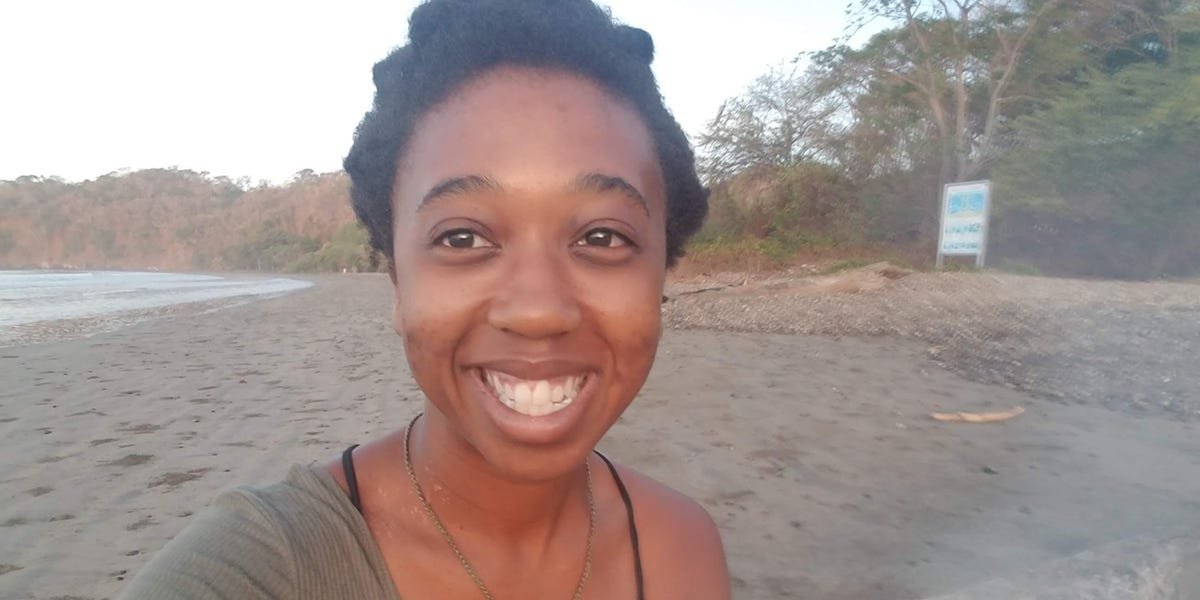
I moved to a small beach town in another country. My new home felt like paradise, but I struggled to belong.

In 2017, I moved from Los Angeles to Panama to teach English.

My first year in the country was filled with excitement. I was based in Panama City, and I found it easy to make friends through the many dance classes and meet-ups.

My social life felt full, and most weekends were spent wandering through Casco Viejo (the downtown area), trying to find the best rooftop bars and underground nightclubs playing a mix of Reggaeton and pop music.

Soon, though, the fast-paced lifestyle, combined with the constant traffic and sweltering heat, became overwhelming. I grew tired of living in a city of millions and craved a slower pace.

So, I relocated to a small coastal town called Playa Venao, which is about 200 miles and a five-hour drive from Panama City.

I hoped I could quickly build a community there as I did in the capital, but it didn’t come nearly as easily to me.

At first, my quieter town felt like paradise


Surfers on beach at sunset

Many parts of Panama have a rich surfing culture.

Kiersten Brown


Although Playa Venao is now more developed, at the time I lived there, it was primarily a handful of hotels, hostels, and homes scattered along the shoreline.

A single road split the town: real estate on one side, jungle and cow pastures on the other. Only a few hundred people called Playa Venao their full-time home.

I was living in a place where there were more trees than buildings. In fact, I could pick and eat papayas, coconuts, and mangos straight from the trees on the property of my rental.

The school I worked at was quite small and, because of our remote location, nature often became our third instructor. Children shared their outdoor play area with centipedes and howler monkeys, and splashed in the nearby stream and waterfall.

Between teaching, I spent my days peacefully walking along the beach and hiking near the river. I was no longer overwhelmed by the sounds of honking horns and revving engines. Instead, I was soothed by the songs of exotic birds.

My social life wasn’t bustling like it was before, though at first, I enjoyed meeting people from all over the world who were in the area on vacation.

But once the novelty of being somewhere new wore off, I started to see the downside of living in a place that felt like paradise.

Unfortunately, I didn’t feel like I fit in with most of the visitors or locals


Waves at Playa Venao

I didn’t have much to say about surfing — a popular topic among tourists.

helivideo/Getty Images


I struggled to find my place in a community that felt largely split between locals and tourists.

I was a bit of an in-between: I’d only been in the country for a year, so I wasn’t a local … but I’d been living in this beach town for a few months, so I wasn’t a tourist, either.

Building community with transient tourists seemed impossible.

Many tourists I met spent their time surfing or talking about surfing, not surprising given Playa Venao’s reputation as one of the best surf spots in the world.

Unfortunately, as a beginner, I couldn’t keep up with the experienced surfers during conversations or out on the water.

Whenever I’d meet someone who had more to talk about than waves, we only had a week or two to get to know each other because they were vacationing where I was living.

I felt I never had time to share more about myself beyond surface-level topics, like work, hobbies, and where I was from. These limited interactions made my relationships feel shallow and made me feel like I didn’t have any real friends.

Over time, the loneliness ate away at me, and I grew tired of reintroducing myself to a new tourist every other week. So, I tried connecting with the locals. This wasn’t an easy task.

The director of the school I was working at had warned me that locals were often closed off to newcomers. I felt it.

One night, I managed to play a game of pool with some locals at a nearby bar. I thought I’d made a breakthrough, but the next morning, the same people who had been friendly the night before wouldn’t give me the time of day — it hurt.

I could understand why a tight-knit community of people who grew up together might be wary of trusting outsiders. However, it was hard being treated like just another visitor in the place I lived.

After weeks of failing to make lasting connections, part of me wanted to call it quits and return to the city. I missed feeling like I belonged and having a calendar filled with dance classes and happy hours with friends.

However, I’d committed to working through the whole school year, and I didn’t want to walk away from the children — some of the only people I had created bonds with.

Finally, one conversation with my mom helped me reevaluate and give my new home another shot.

Focusing on gratitude and living in the moment helped me feel more at home


Cloudy day shot of beautiful Playa Venao

Panama has several famous beaches.

Piero Zanetti/Getty Images


After listening to my sorrows, my mom reminded me that life wasn’t happening to me, it was happening for me.

I needed to embrace each moment, even the not-so-great ones, and treat my situation as an opportunity. So, instead of ruminating on what I lacked, I focused on appreciating more of what I had.

To ease my frustration of not being able to pop over to a movie theater or hop into a nightclub like in the city, I found entertainment within nature.

I’d wake up early to enjoy the colorful sunrises and collect different rocks and shells along the shore. I’d pass the time by going for a swim or setting up my speaker and dancing barefoot in the sand.

Focusing on my internal peace helped me to stop forcing connections, and I allowed them to form naturally.

I stopped viewing relationships as temporary experiences. It didn’t matter if a friendship lasted five days or four months — I cherished every connection made.

Soon, routine visits to the local coffee shop led to casual chats with the barista. I ordered the same dish so often that one day, they wrote out the recipe for it and gave it to me — it kick-started our friendship.

More connections began to blossom as I prioritized attending community events, from kayak races to surfing competitions. As time passed, locals could see that I was consistently making an effort, and perhaps they started to view me as less of a tourist.

Meanwhile, I was forming stronger relationships with the parents of the children I worked with, and they helped advocate for me to the other locals. I’d also started to build a strong connection with my coworker, who became one of my first real friends in the area.

With a little bit of patience and a mindset shift, I eventually found the community I craved and ended up staying in Playa Venao for about a year.

In that time, I learned that sticking through uncomfortable situations — and staying present for both the good and the bad — can lead to unexpected peace and happiness.


Source link