
I-eat-the-same-dietitian-approved-lunch-almost-every-day-Its.jpeg

I eat the same dietitian-approved lunch almost every day. It’s got protein and fiber — and it’s a breeze to prep in advance

When I lived in a big city, I used to love treating myself to lunches at trendy salad spots. Tasty as these take-out meals were, they were terrible for my wallet, and I didn’t have full visibility into or control over the ingredients that went into them.

I’ve since turned into an avid meal-prepper and make my own lunch — almost always a fiber- and protein-packed grain bowl — for a fraction of the price.

It’s a recipe that aligns with the 80/20 nutrition principle I follow, meaning I eat nutrient-dense foods 80% of the time and don’t worry about nutrition for the other 20%.

The grain bowls are so nourishing that I feel relaxed about occasionally going out for a slightly less nutrient-dense lunch, since I know I’m hitting my nutrition goals most of the time.

Here’s how to make the everyday lunch that helps me stay on track.

The grain bowl is easy to prep and customize


rachel hosie grain bowl recipe

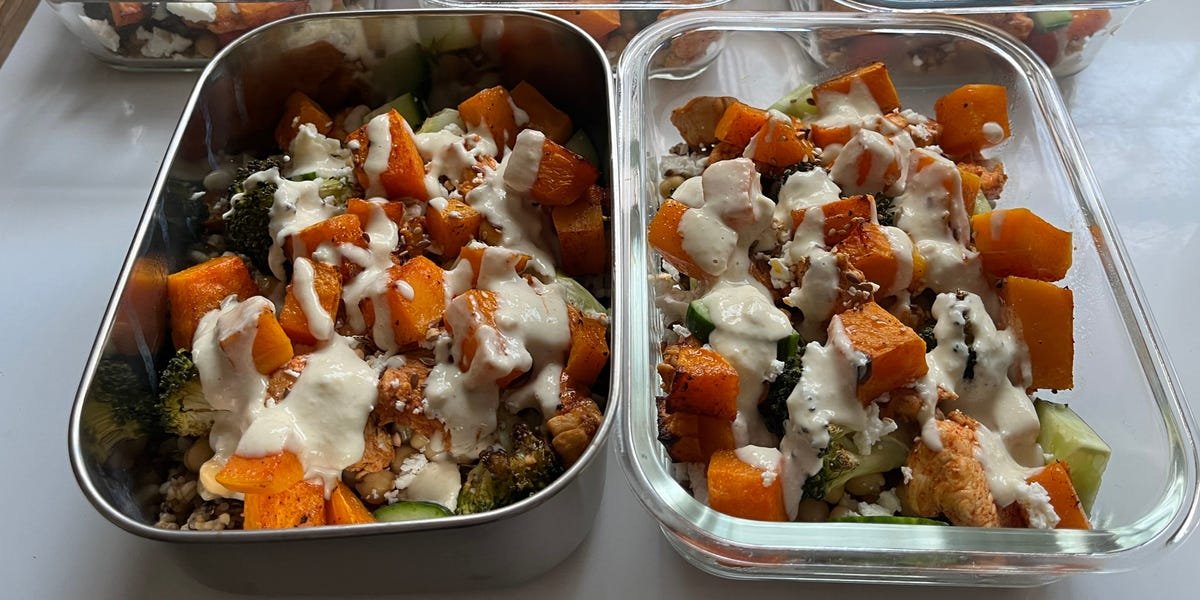
The grain bowls are nearly impossible to mess up and highly customizable.

Rachel Hosie


I play around with the ingredients I put in my grain bowls every week, but they always follow the same formula:

  • Grains, such as quinoa, buckwheat, or wholegrain rice
  • Beans or pulses, such as edamame, chickpeas, or lentils
  • A protein source, such as tofu or chicken
  • Roasted vegetables, such as butternut squash, bell peppers, cauliflower, broccoli, or zucchini
  • Raw vegetables, such as chopped cucumber, tomatoes, beetroot, or scallions
  • A flavorful add-in, such as crumbled feta, avocado, or hummus
  • Greens, such as lettuce or spinach
  • Seeds and nuts of choice
  • Spices and herbs of choice
  • A dressing of choice

The recipe is flexible, so there’s no need to add ingredients in a specific order. It’s truly hard to mess up.

You can also adjust the quantity based on your needs. I typically make six portions — three for me, and three for my husband — because there’s usually a day or two during the week when we eat with colleagues or friends.

Plus, after three days of eating the same meal, I’m typically ready to mix it up.


rachel hosie grain bowl recipe

I drizzle a tahini mixture on top of my bowl for added flavor.

Rachel Hosie


To add variety to my days, I prep these with dressings and protein sources.

When it comes to dressings, my favorite is a creamy tahini mixture. Combine tahini, Greek yogurt, lemon juice, garlic granules, salt, pepper, olive oil, and water until you get a dressing-like consistency.

I also make a satay-style sauce with crunchy peanut butter, soy sauce, garlic, ginger, lime, and sesame oil.


rachel hosie grain bowl recipe

Chickpeas and avocado are delicious, filling protein sources.

Rachel Hosie


There’s also flexibility when it comes to protein source. Nichola Ludlam-Raine, a dietitian and the author of “How Not to Eat Ultra-Processed,” recommends adding oily fish, such as salmon or tinned mackerel, for omega-3s, which support heart and brain health.

When I include meat in the grain bowls, I typically use a modest portion since I always throw in plenty of plant-based protein. This approach provides a fiber boost from plant-based proteins and keeps the ingredient list affordable.

If you’re predominantly eating plant-based, make sure you’re getting enough iodine by using dairy yogurt in your dressing or swapping in the occasional white fish.

Having a balanced lunch prepped and ready to go helps me stay consistent


rachel hosie grain bowl recipe

Incorporating a mix of roasted and raw vegetables gives the bowls texture.

Rachel Hosie


My grain-bowl formula has lean proteins, produce, legumes, and whole grains — all the workings of the Mediterranean diet.

According to Ludlam-Raine, “It’s essentially a Mediterranean-style pattern of eating in bowl form, which is linked with better cardiometabolic and long-term health outcomes.”

She added that it delivers “an abundance of plant diversity,” which is beneficial for gut health.

The well-rounded meal also has fiber-filled whole grains, slow-release carbohydrates, pulses for plant protein and additional fiber, protein for satiety and muscle maintenance, vegetables for polyphenols and micronutrients, and healthy fats from seeds, nuts, and olive oil.


rachel hosie grain bowl recipe

We store the bowls in our refrigerator throughout the week.

Rachel Hosie


Strategizing my meals in advance helps me maintain a healthy, balanced diet throughout the week, and this grain bowl is the backbone of my meal plan.

“Overall, what you’ve got is a brilliant example of a practical and sustainable approach to meal prep. It’s balanced, fiber-rich, protein-sufficient, and easy to adapt week to week, which is key for long-term adherence,” Ludlam-Raine said. “You’re making the healthy choice into the easy choice.”

The best part? I don’t get bored with eating the same thing on repeat.



Source link

A-nutritionist-who-lowered-his-cholesterol-through-diet-shared-4.jpeg

A nutritionist who lowered his cholesterol through diet shared 4 simple tips for eating more fiber

When Rob Hobson, a registered nutritionist based in the UK, found out his cholesterol levels were “really high” in June, he decided to manage them through diet, focusing particularly on increasing his fiber intake.

Six months later, when he tested again, his cholesterol levels had improved, and he’d discovered four tricks that make eating more fiber easy.

Cholesterol is a fatty substance the body needs for many bodily processes, but if a person has too much LDL or “bad” cholesterol, it can form sticky plaque in their arteries, putting them at greater risk of cardiovascular disease.

To reduce cholesterol levels, the American Heart Association recommends exercising at least 150 minutes a week, quitting smoking and vaping, maintaining a healthy weight, and eating a heart-healthy diet that’s low in saturated fats and high in fiber. If these measures don’t help, then statins, a medication that lowers LDL cholesterol, will likely be prescribed.

Hobson, the author of “Unprocess Your Life” and “The Low Appetite Cookbook,” already worked out for around an hour each morning, and ate minimal ultra-processed foods and saturated fats. So he zeroed in on fiber.

Eating at least 5 to 10 grams of soluble fiber a day can help lower total cholesterol and LDL cholesterol, according to the National Lipid Association. Quinoa, oats, avocado, sweet potatoes, carrots, and chia or flax seeds are good examples.

Here are Hobson’s tips for seamlessly adding more fiber to your diet.

Eat breakfast

Hobson is a big advocate of breakfast because it lends itself to high-fiber foods such as oats, nuts, and seeds. “It’s really easy to get plenty of fiber in at that time of day,” he told Business Insider.

He has two go-to breakfasts that he eats on repeat. The first is a Greek yogurt bowl with berries, oats, and chia seeds. The second is overnight oats, which he makes with milk, protein powder, berries, honey, nuts, and seeds.

Fiber cupboard


A cupboard with shelves of seeds, beans, nuts, and pulses.

Rob Hobson’s fiber cupboard.

Rob Hobson


Hobson created a “fiber cupboard” in his kitchen that’s packed with fibrous foods. He challenges himself to include something from the cupboard in every meal. “Then at least you know that you are making the effort to do it,” he said.

He stocks up on lentils, beans, pulses, wholegrain pasta, brown rice, as well as snacks like fruit and nut bars, rye crackers that he likes to pair with some cottage cheese, and seaweed thins.

“I’m always rooting around for stuff, and I just think having it all in one place is so much easier,” he said.

Add pulses and legumes to your meal and put the rest into a Tupperware in the fridge

The easiest way to add fiber to a meal is to pour half a can of beans or pulses into it, Hobson said. Just one cup of black beans, for example, contains 15 grams of fiber. “You can add them to anything,” he said.

Mix some into a soup, sauce, or curry, or simply sprinkle a couple of tablespoons on top of a salad.

If you’re not using the whole can, decant the rest into a Tupperware and place it in the fridge, Hobson said. That way, they’ll stay fresher for longer and be easily accessible. “Then you don’t have to worry about, ‘I’m going to waste the rest of the tin,'” he said.

Keep the food you want to eat visible

Hobson recommends keeping the foods you want to eat in a visible spot. That way, you’re more likely to reach for them. “Nuts and seeds, always keep them on the side so they’re there,” he said.

Research suggests that the foods you keep on your countertop could impact your body weight, a factor that can influence cholesterol levels. In a 2015 study published in Sage Journals, researchers at Cornell University analyzed the visible foods on 210 countertops in New York and measured their owners’ BMIs. They found that those who had just fresh fruit visible weighed an average of 20 pounds less than those who had unhealthier snacks like candy, soda, and cereals on show.

“It’s your basic See-Food Diet — you eat what you see,” Brian Wansink, the study’s lead author, said of the findings.

But if you’re not ready to make changes to your kitchen layout, Hobson said to stick to one basic principle: “Make sure that you’ve got a bit of fiber on your plate every day with every meal,” he said.


Source link