

Talia Lakritz

Who is ‘Quad God’ figure skater Ilia Malinin?

You may recognize US figure skater Ilia Malinin from his gravity-defying backflips and quadruple jumps.

Or perhaps you know him simply as the “Quad God.”

Malinin, 21, is a two-time world champion and one of Team USA’s breakout figure skating stars of the 2026 Milan Cortina Olympics.

Here’s what to know about Malinin’s background and Olympic career.

Who are Ilia Malinin’s parents?


Roman Skorniakov (left) and Tatiana Malinina both competed in the Olympics.

Ilia Malinin’s parents, Roman Skorniakov (left) and Tatiana Malinina, both competed in the Olympics.

Jamie Squire/Getty Images ; George Frey/AFP via Getty Images


Malinin’s parents, Tatiana Malinina and Roman Skorniakov, were born in Russia and represented Uzbekistan at the 1998 Olympics in Nagano and the 2002 Olympics in Salt Lake City.

Now, they serve as his coaches.

Where was Ilia Malinin born?


Ilia Malinin in the ISU Junior Grand Prix of Figure Skating in 2019.

Ilia Malinin in the ISU Junior Grand Prix of Figure Skating in 2019.

Patrick Smith – International Skating Union/International Skating Union via Getty Images


Malinin was born in Fairfax, Virginia, and began figure skating at 7 years old.

Malinin’s younger sister, Ellie “Liza” Beatrice Malinina, is also a competitive figure skater.

He trains in Reston, Virginia. When he’s not figure skating, he’s a student at the nearby George Mason University majoring in exploratory studies.

Why is Ilia Malinin nicknamed the “Quad God”?


Ilia Malinin during his short program at the 2026 Milan Cortina Olympics.

Ilia Malinin during his short program at the 2026 Milan Cortina Olympics.

Jamie Squire/Getty Images


Malinin is the first and only skater to ever land a quadruple axel in competition, and began using the nickname “Quad God” when he was 13 years old.

Malinin helped Team USA secure the gold medal in the team figure skating competition on Sunday. He landed five quadruple jumps in his free skate, but has yet to attempt a quadruple axel at the 2026 Olympics. While he had planned to execute a quadruple axel during the Team Event, he substituted a triple axel instead.

Are Ilia Malinin’s backflips allowed?


Ilia Malinin backflips on the ice.

Ilia Malinin’s routines have also included backflips.

Tim Clayton/Getty Images


Malinin has also included backflips in his Olympic routines — a feat with a complicated history.

During the 1976 Olympics, American figure skater Terry Kubicka performed the first-ever backflip, but the International Skating Union banned the move shortly thereafter in 1977, saying it was too dangerous.

In 1998, French figure skater Surya Bonaly became the first Olympic figure skater to land a backflip on one blade during her free skate, but was penalized by the judges since the move was still illegal in competition.

The International Skating Union lifted the ban on backflips in 2024. During the Team Event this year, Malinin landed a backflip on one skate just as Bonaly had, but this time, it was permitted.

How much does Ilia Malinin make?


Ilia Malinin at a press conference at the Olympics.

Ilia Malinin at a press conference at the Olympics.

Mike Lawrie/Getty Images


Malinin is believed to be the highest-paid figure skater at the 2026 Olympics with an estimated income of $700,000 from sponsorships over the last year, Forbes reported.

According to Malinin’s website, his corporate partners include Coca-Cola, Samsung, Google, Xfinity, Dick’s Sporting Goods, and Honda.

When is Ilia Malinin competing?


Olympic gold medalist Ilia Malinin.

Ilia Malinin at the medal ceremony for the Team Event at the Milan Cortina Olympics.

Andy Cheung/Getty Images


Having already won gold in the team competition, Malinin will skate in the individual Men’s Short Program on February 10 and the individual Men’s Free Skate on February 13.

See Business Insider’s full guide to watching Olympic figure skating for more information about how to catch Malinin on the ice.


Source link

Figure-AI-CEO-says-over-170000-people-have-applied-to.jpeg

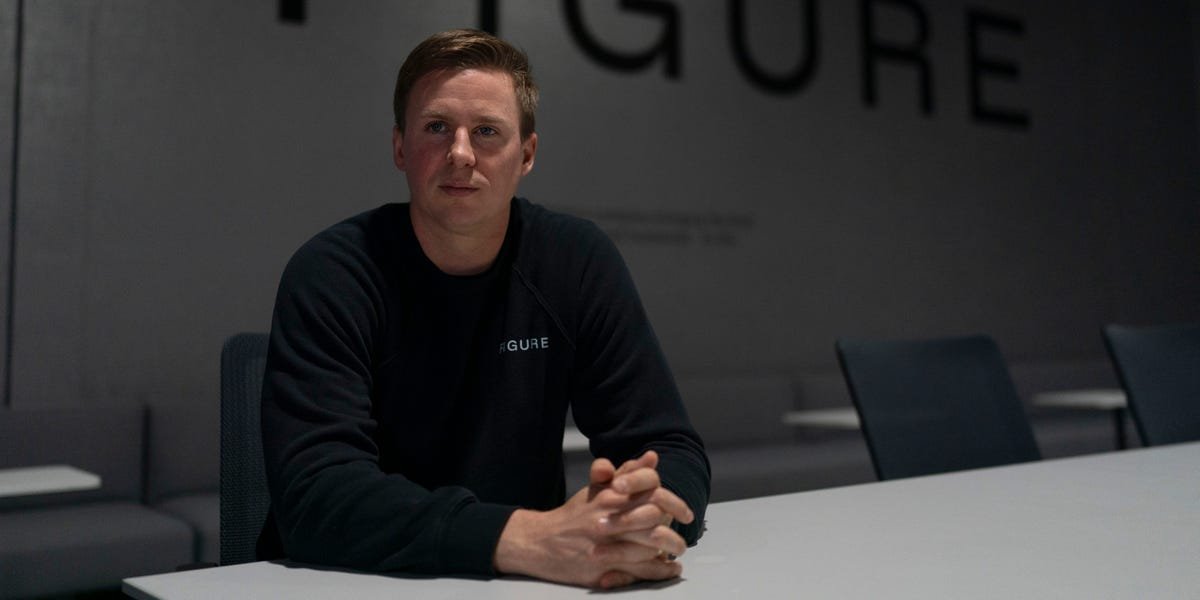
Figure AI CEO says over 170,000 people have applied to his robot company in the last 3 years. He hired fewer than 500.

A humanoid robotics startup in Silicon Valley appears to have an acceptance rate lower than any Ivy League university.

Figure AI has been flooded with résumés since its founding in 2022, according to the startup’s founder and CEO, Brett Adcock.

“Just checked, 176,000 job applications at Figure the last 3 years,” he wrote in an X post on Saturday. “We’ve hired ~425 people.”

That amounts to a hiring rate of about .24% within the three years. Adcock wrote that most of the submissions were “slop.”

The spread of the 176,000 applications over the three years is unclear. Adcock did not immediately respond to a request for comment.

Even if the number of applications were divided equally among the years Figure AI was operating — just under 59,000 applications a year — the acceptance rate would still be lower than that of the hardest university to get into. Caltech had the lowest acceptance rate of 3%, according to US News & World Report’s rankings list.

Adcock wrote in the comments of his X post that the review process has been a slog.

“We go through these one by one like a monkey — it’s incredibly time consuming,” he wrote.

According to the CEO, the “ATS” or applicant tracking system — a software employers use to sift through résumés — can’t save a lot of time if a company is being barraged with hundreds of thousands of applications.

“In the ATS it takes at least 20 seconds of button clicks per submission even if it’s garbage,” he wrote.

Adcock did not immediately respond to a request for comment.

A company like Figure AI sits right in the intersection of two trends within the job market.

Today’s job candidates aren’t applying to just a handful of roles. Business Insider’s chief correspondent Aki Ito reported that the average job opening saw 242 applications, citing data from Greenhouse, a leading ATS platform.

“Applying to a job in 2025 really is the statistical equivalent of hurling your résumé into a black hole,” Ito wrote.

On the other hand, Figure AI operates in one of the hottest spaces of the tech industry, that is, robotics and artificial intelligence.

Top tech firms like Meta and OpenAI are in the midst of an AI talent war, offering up to seven- to nine-figure pay packages just to poach superstar AI researchers.

Even tech startups are scrapping for AI talent, floating higher equity packages and other perks that may not come as easily at a big company, such as a co-founding title or more time for research.

Figure AI happens to be one of the leading names in the humanoid robotics space.

The company recently raised more than $1 billion in its Series C funding round — with backing from Parkway Venture Capital, Brookfield Asset Management, and Nvidia, among others — for a $39 billion valuation.

Adcock said on X that he may need to find another way to sift through résumés.

“Need a model to do this for us better, maybe I’ll work on one,” he wrote.


Source link