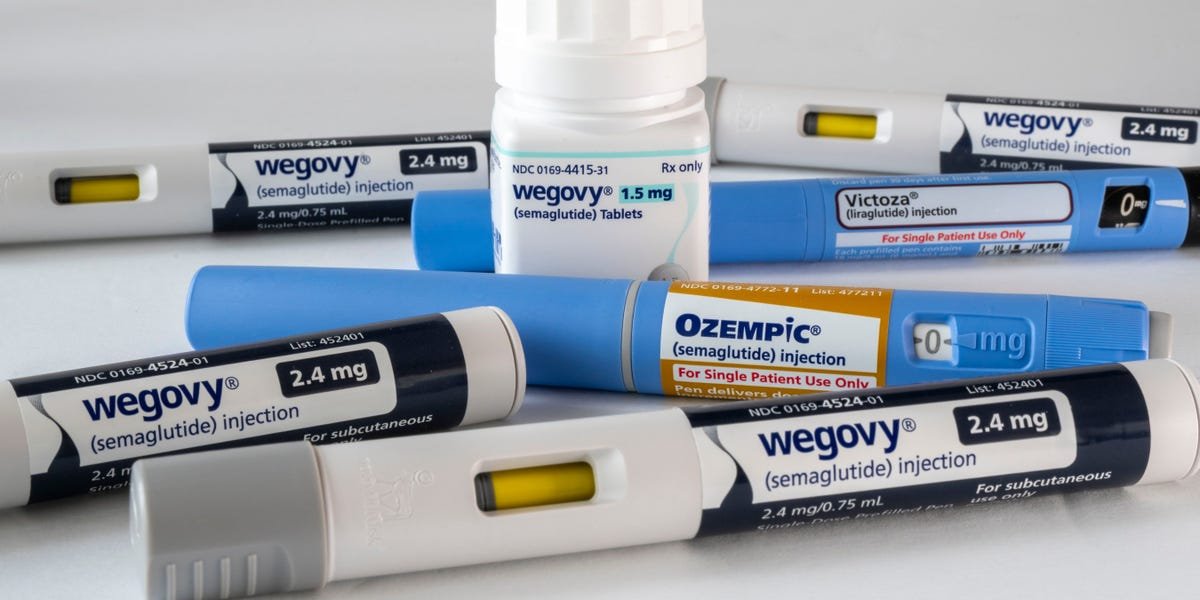
Every month, sales executive Kelly Freeman spends about $112 on Ozempic, which he started taking in 2024 for diabetes. The drug is one line item in a long list of GLP-related costs.
There are supplements, an Apple watch, a life coach, a functional physician, healthier foods, and a new wardrobe, to name a few. The spending, Freeman said, “snowballs.” He estimated he spends $700 to $1,000 a month on all his Ozempic-related costs.
“We’re going to see a kind of tectonic shift in the way people spend money,” Freeman, 55, told Business Insider.
Freeman is one of millions of Americans on a GLP-1, the class of drugs including Ozempic, Wegovy, and Mounjaro that have revolutionized weight loss and diabetes care. With new pill forms of the drug, like Eli Lilly’s Foundayo, hitting the market, that number is set to increase.
GLP-1 users’ new constellation of costs is causing ripples across industries far beyond the pharma sector.
Ulta Beauty’s CEO recently said sales of products that prevent hair loss and improve skin elasticity have spiked, citing consumers trying to combat GLP-1 side effects. The CEO of grocery chain Albertsons Companies said sales of chicken, beef, and fresh produce have increased among GLP-1 users.
It’s a windfall for some industries. GLP-1 users are flocking to personal trainers and supplement aisles, in the hopes of countering muscle loss that has been associated with the drug. Those who have lost massive amounts of weight need new wardrobes, and some opt for plastic surgery.
Here are four sectors seeing substantial gains thanks to GLP-1s.
The training boom
Many GLP-1 users risk losing muscle along with fat, potentially making them weaker and more prone to injury — not to mention less toned. Medical studies indicate that up to 40% of the weight loss with GLP-1s is from lean muscle mass.
Enter: the gym membership.
A Morgan Stanley analysis of GLP-1 prescription and credit card spending data published in March “suggests GLP-1 adoption is increasingly complementary to fitness,” and found that high-end fitness offerings are seeing the most visible benefit. Gyms across the spectrum of bougieness are capitalizing on the trend: Equinox, which costs more than $200 a month, has launched a training and lifestyle program for those on GLP-1s, and Planet Fitness, at $15 a month, publishes blogs about the best exercises for users.
Personal trainers can also be key to the GLP-1 lifestyle. Freeman began seeing a trainer after starting the medications and said he pays $400 month for three weekly sessions with his personal trainer.
Kelly Freeman
Mallory Fox, a personal trainer based in Scottsdale, Arizona, said she’s had many prospective clients ask about whether she works with people taking GLP-1s, to the point where she’s considered developing an online program for those on the medications.
She’s not alone. Of the more than 1,000 personal trainers that the National Academy of Sports Medicine surveyed in March and April, 63% work with clients on GLP-1s, and 62% plan to actively pursue working with them over the next three years. Some 40% of them have looked into education or certifications to better understand the medications, according to the survey results shared with Business Insider.
Life Time, a favorite gym among Wall Streeters, employs around 4,000 personal trainers and is hiring more each month, Ryan Sonnenburg, who oversees the trainers, said.
“Our personal training business over the last three years has seen record-breaking growth, year over year,” he said. “I couldn’t confidently say exactly how much could be attributed to the GLP-1 movement, but it’s certainly bringing people in that maybe historically wouldn’t have come in.”
The gym is also offering GLP-1s through its longevity clinics.
Whole new wardrobes
For many on the medications, a shrinking waist often means buying new jeans. And new sweaters, dresses, sports coats, and underwear.
Around 80% of GLP-1 users anticipated needing new clothing in a January survey by research firm Circana, and 55% had already bought new items, according to a July survey by the firm.
Freeman said he got rid of pretty much his entire wardrobe, apart from shoes, once his body composition stabilized.
“I just donated them all and took the tax write off and went and bought brand new ones,” he said. Between casual and work clothing, Freeman estimated he spent at least $8,000.
Those clothing calculations aren’t always simple, though.
Jessica Cadmus, a stylist, said GLP-1s have “exploded” in the past nine months among her clients, almost all of whom work in finance. She’s often helping them decide when it makes sense to tailor an item rather than buy something new, and whether it’s worth investing in a statement piece if their weight will keep fluctuating.
When one of New York City-based plastic surgeon Sachin Shridharani’s patients lost weight on a GLP-1, the patient found himself needing a house visit from a tailor.
“He said that he’s had to have over 35 pairs of pants and over 50 shirts and jackets realtered,” Shridharani said. “He had them come to the house with a tailor, and they had to take all new measurements.”
Supplement surge
For decades before GLP-1s hit the market, consumers turned to supplements that promised weight loss but often didn’t bring the promised results.
Then came Ozempic, Wegovy, and the like, which have largely been viewed as a magic bullet. But these medications come with side effects — declining muscle mass, gastrointestinal issues, bone loss — that are driving a boom in the supplement industry.
Supplement sales were up 12% in 2025, according to data from consumer insights firm Spins, which tracks point-of-sale data. While the growth can’t be entirely attributed to GLP-1 adoption, there is a correlation, Scott Dicker, Spins’ senior director of market insights, told Business Insider.
Hugh McGuire, the CEO of nutrition and supplement company Glanbia, said GLP-1 users “need energy and they need vitamin and mineral supplementation,” speaking on an earnings call last year. “We would see GLP-1 as a tailwind for the entire organization.”
Glanbia’s stock is up more than 80% over the last year. Shares of other supplement brands, such as Nature’s Sunshine Products and Herbalife, have also spiked, rising 131% and 124%, respectively, year over year.
GLP-1 “companion products” that fill nutritional gaps created when people start eating less are among the supplements gaining in popularity, Dicker said. Multivitamins to fill nutritional gaps, and prebiotics and fiber to support gut health are popular, he said.
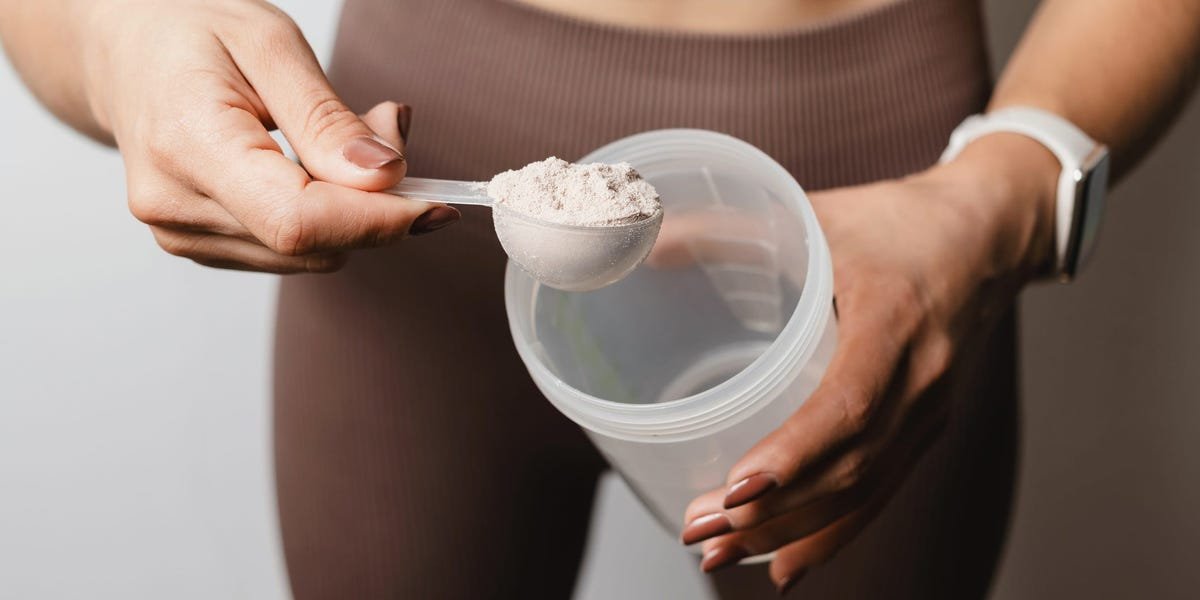
Protein — a health trend beyond GLP-1 users — had some of the biggest gains, with protein supplements and meal replacements increasing 12.4% in 2025, according to Spins data.
Kelly Freeman
Companies like The Vitamin Shoppe and Jamieson Wellness are taking advantage of the new customer base with lines of GLP-1 support products.
Freeman drinks protein shakes and takes about a dozen supplements daily, including fiber and magnesium. He estimated that they cost him thousands of dollars a year.
“I’ve always been a supplement taker, but I never really took them seriously or on a consistent basis,” he said. Now, he’s paid for “supplements out the wazoo.”
The Ozempic makeovers
Some GLP-1 side effects cannot easily be resolved with supplements or wellness regimens, and for that, there is plastic surgery.
About 20% of patients on GLP-1s have gotten plastic surgery as a result of their weight loss, according to a 2024 survey from the American Society of Plastic Surgeons.
“It’s going to really change things drastically,” Dino Elyassnia, a facial plastic surgeon in San Francisco, told Business Insider about his industry. “There’s a windfall.”
Elyassnia said he’s had patients return for more surgery after going on the medications, because they appear deflated after losing weight quickly — and “the face takes the brunt of that.”
When it comes to the body, some opt for lifts and tucks to remove excess skin, while others choose fat transfers to restore lost volume. In the industry, the procedures are collectively known as the “Ozempic makeover.”
Many never realized that being on a GLP-1 would lead them to a plastic surgeon’s office, Shridharani, the New York surgeon, said. Maybe they wanted to avoid going under the knife and having a scar, he said, but then realized the less desirable effects of losing so much weight. He said they find themselves asking, “What’s better, having a bunch of floppy loose skin or a scar that’s well concealed?”
The rise of GLP-1s is leading more men to seek cosmetic procedures, plastic surgeons said.
“It’s a whole wellness attitude and leaning in,” Shridharani said, adding that there’s less of a stigma around men receiving surgical cosmetic procedures, in part because of GLP-1 usage.
In 2024, 10% of people getting lower body lifts and thigh lifts were men, compared to 5% and 3%, respectively, the year prior, ASPS reported.
“They literally will say, in their own words. I’ve got no ass,” Shridharani said about some of his male patients who are on GLP-1s and come in for buttocks enhancements. “My trousers look like they’re falling off, or when I’m at the gym, I can’t fill out my boxer briefs.”