Blumhouse-founder-says-AI-wont-improve-movies-but-cant-be.jpeg

Blumhouse founder says AI won’t improve movies, but can’t be ignored

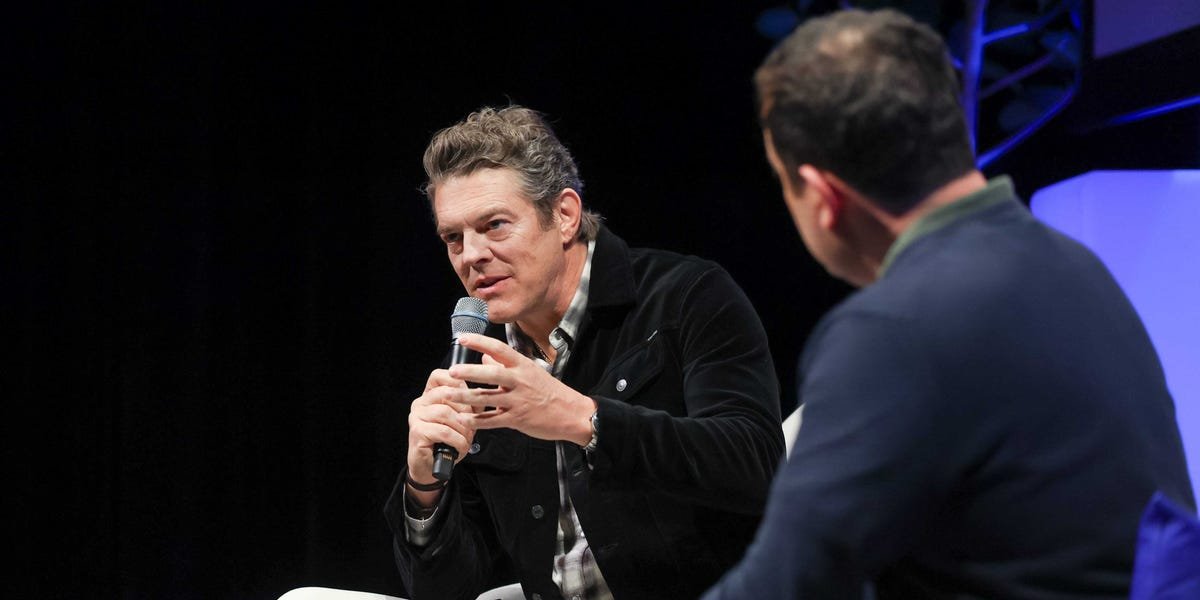
Disruption may be hitting Hollywood hard, but it’s not slowing down Jason Blum, whose powerhouse studio, Blumhouse, is behind many of the most popular — and most profitable — horror films of the past 10 years.

In conversation with Chief Correspondent Peter Kafka, Blum unpacked how AI is changing the entertainment industry and how his unique business approach allows Blumhouse to thrive in a time where consumer behaviors are shifting. The two spoke at Business Insider Live’s The Long Play event in San Francisco.


Source link

A-startup-founder-explains-why-she-built-9-AI-employees.jpeg

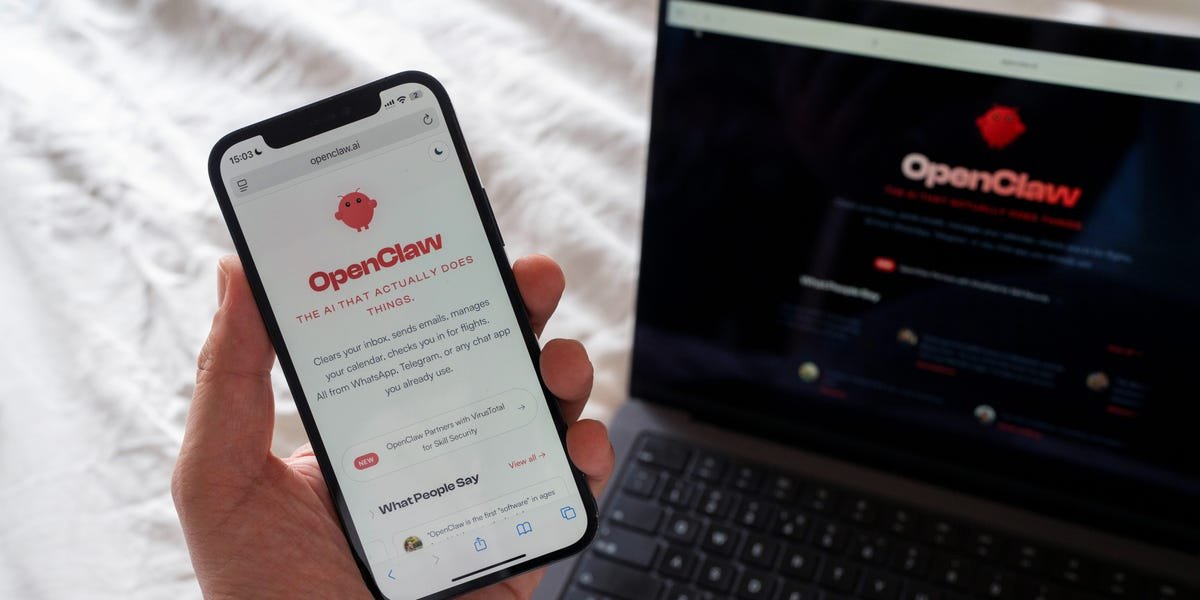
A startup founder explains why she built 9 AI employees: ‘I am a breathless OpenClaw bro’

The first time Claire Vo tried OpenClaw, it wiped her family calendar.

Now, the AI startup founder is running nine AI “employees” across a stack of computers — automating parts of her business and daily life.

Vo said in an episode of “Lenny’s Podcast” published on Sunday that she has gone from skeptic to OpenClaw believer.

“I’m just so anti-hype cycle sometimes,” she said. “I would not have expected myself to say this in January: It has changed my life.”

“I am a breathless OpenClaw bro now,” she added.

Vo said she initially used OpenClaw as a kind of executive assistant to handle scheduling, email, and day-to-day coordination.

She then expanded to a team of nine OpenClaw agents. Some focused on her business, including a salesperson and a business operations manager, and others were dedicated to her personal life, such as a family assistant to handle household logistics and a kids’ education agent.

“It’s not just a tool doing work for me. It is a team helping me look better to customers, helping me honestly show up better to my family,” she said.

Vo said that last year, she was paying someone about 10 hours a week to manage her customer relationship management system and draft customer emails — tasks now handled by one of her AI agents.

“This has real economic value to me and is real time carved back,” she added.

Still, the startup founder said she is aware of the risks, like the agent deleting files from her computer and knowing where her children go to school.

Vo said she manages that through a “progressive trust process,” gradually giving her OpenClaw agents more access over time. That starts with calendar access, then email visibility, followed by drafting and sending emails, and eventually taking on more autonomous tasks.

The OpenClaw hype

Tech leaders have been all in on autonomous agents like OpenClaw.

Peter Steinberger, the creator of OpenClaw, joined OpenAI in February to work on what Sam Altman dubbed the “next generation” of personal AI agents.

Altman said in an X post in February that OpenAI expects personal AI agents to “quickly become core to our product offerings.”

Nvidia CEO Jensen Huang said last month that every company needs to have its own “OpenClaw strategy.”

“OpenClaw has made it possible for us to create personal agents,” he said. “The implication is incredible.”

To address security concerns, Huang said in March that Nvidia has created its version of OpenClaw, called NemoClaw, which allows users to “add privacy and security controls” to their AI agents.

Still, some tech leaders have been vocal about the risks posed by OpenClaw.

Meta’s AI alignment director, Summer Yue, said in an X post in February that her OpenClaw spiraled out of control and deleted her emails — even when she tried numerous times to stop it.

“I couldn’t stop it from my phone,” Yue wrote in her post. “I had to RUN to my Mac mini like I was defusing a bomb.”


Source link

The-founder-of-First-Brands-whose-bankruptcy-rattled-Wall-Street.jpeg

The founder of First Brands, whose bankruptcy rattled Wall Street, charged in multibillion-dollar fraud

The founder of an auto parts company whose bankruptcy rattled Wall Street and prompted a debate about private credit has been charged with fraud.

Manhattan federal prosecutors on Thursday charged Patrick James and his brother Edward James in a multibillion-dollar fraud scheme that they allege involved years of fake invoices and the double- and even triple-pledging of assets.

Patrick James is the founder and former CEO of auto parts maker First Brands, which filed for Chapter 11 bankruptcy protection in September. Its bankruptcy was followed by the collapse of subprime auto-lender Tricolor Holdings, sparking a broader debate about the health of the credit market that drew in JPMorgan CEO Jamie Dimon.

His brother had been a senior executive at the company.

The two men were charged with wire fraud, bank fraud, and conspiracy, including money laundering conspiracy. Patrick James faces an additional count, stemming from allegations that he ran a continuing financial crimes enterprise. A third former executive, Peter Andrew Brumbergs, has pleaded guilty in the case.

Prosecutors said the men inflated invoices, repeatedly pledged the same assets as collateral for loans, and falsified corporate financial statements in a series of schemes that yielded billions of dollars in financing.

A spokesperson for Patrick James said he denies the charges.

“He built First Brands from nothing,” the spokesperson said, adding, “Mr. James looks forward to presenting his case in court.”

Edward James’s lawyer issued a statement blasting his client’s arrest in Ohio as “needless theater.”

“We look forward to appearing in New York on his behalf, and we have complete confidence in Mr. James,” the lawyer, Seth DuCharme, said.

Jefferies and UBS are among the financial firms that have acknowledged exposure to First Brands.

“The James brothers obtained billions for First Brands — and millions for themselves — by presenting their lenders with the impression of a successful, growing international business,” Manhattan US Attorney Jay Clayton said in a statement.


Source link

Meghan Morris's face on a gray background

Sprinkles Cupcakes is closing immediately, says the founder

Sprinkles Cupcakes is closing, cofounder Candace Nelson said on Wednesday.

Nelson started the American cupcake brand in 2005 with her husband. The couple sold it to private-equity firm KarpReilly in 2012.

“This isn’t how I thought the story would go. I thought Sprinkles would keep growing and be around forever. I thought it was going to be my legacy,” Nelson said in a video on Wednesday.

Nelson said the company’s locations were closing on Wednesday: “Just to say that out loud is completely surreal.”

The company had 21 stores in seven states, according to its site, which did not indicate any closures. Sprinkles pioneered the “cupcake ATM” in 2012, selling cupcakes through a machine. The company had 25 such dispensaries in airports, malls, and other locations.

The company has over 1,000 employees, according to Nelson’s LinkedIn profile.

After Nelson sold Sprinkles, she went on to cofound pizza company Pizzana and CN2 Ventures, a family office that invests in startups. In 2022, she wrote a book for entrepreneurs about turning business ideas into profitable companies, based on her experience with Sprinkles.

On LinkedIn, Nelson said she had “no ownership or operational involvement” with Sprinkles.

Neither Sprinkles nor its private-equity owner, KarpReilly, responded to Business Insider’s requests for comment.

It’s unclear if KarpReilly sold the business or is winding it down. The firm removed Sprinkles from its online holdings list in the fourth quarter, according to an archived version of its website.

Connecticut-based KarpReilly’s food and beverage investments include Wilde Chips, the ice cream company Salt and Straw, and the fast-food chicken company Starbird.

Sprinkles was one of the last holdouts of the 2000s cupcake boom, along with Georgetown Cupcakes, which has two physical locations.

A few have rebooted, including Crumbs, which closed in 2016 after expanding aggressively as a public company. The husband-and-wife cofounders, who sold half their stake in 2008, bought the rights to Crumbs in 2022 and made it a delivery-only business.


Source link

Im-a-14-year-old-founder-whose-YC-application-went-viral-There.jpeg

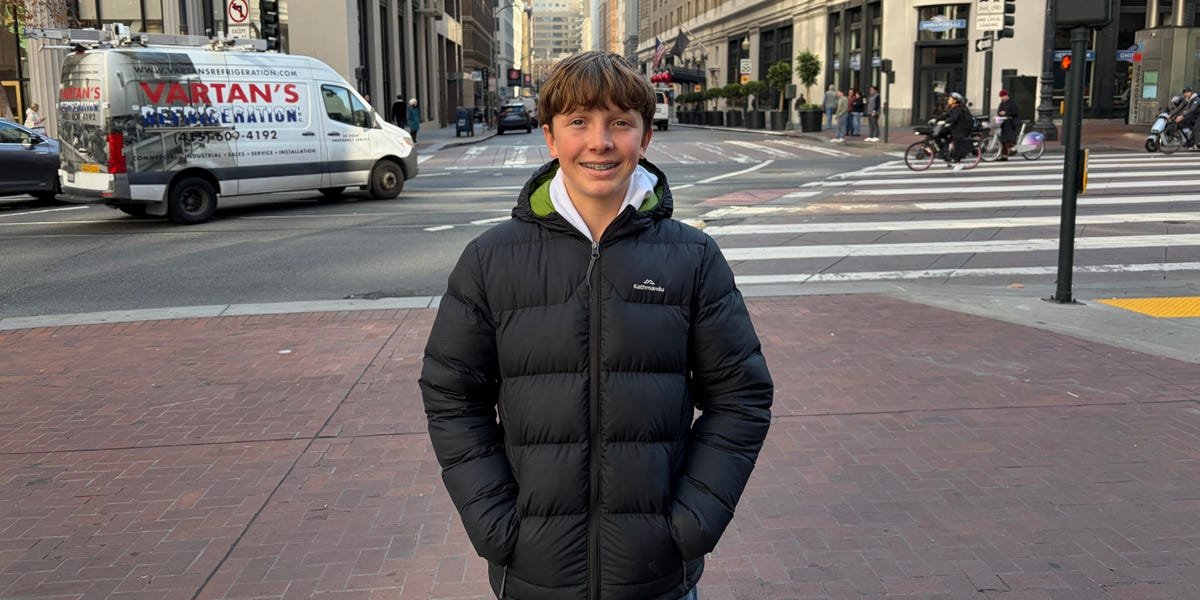
I’m a 14-year-old founder whose YC application went viral. There are pros and cons to starting a company young.

This as-told-to essay is based on a conversation with Alby Churven, the 14-year-old founder of Clovr, who lives in Wollongong, Australia. It’s been edited for length and clarity.

When I was younger, I started an e-commerce grip socks brand called Alpha Grips. It failed, but that’s what got me interested in business. I was 12.

A lot of kids’ first businesses is always something to do with e-commerce, like drop-shipping or clothing brands. Social media does saturate you with that “get rich quick” idea with drop-shipping or crypto. Although 90% of the time it’s a scam, it still ignites an interest.

Then I came up with the idea of Finkel, the startup I applied to Y Combinator with. I sent a cold email to Frank Greeff who’s a pretty big founder here. He recommended I started building in public on social media, so I started doing that. X is full of startups.

Social media played a big role, seeing other people building brands and businesses. That’s what got me into it. I used to do code camps when I was younger, so I’ve always been interested in tech and entrepreneurship.

I applied to YC. Apparently I wasn’t supposed to do this big video with all the editing. It’s supposed to be, you sit down and turn on the webcam and talk. I didn’t actually read the instructions when I did it, but I guess that’s what made it pretty viral.

There’s a new social media ban in Australia for people under 16. All these great things have happened for me with it, but the social media ban is taking that away. I don’t agree with it, but it is what it is.

I’m young. I think my advantage being a teenage entrepreneur is I’ve got time. My goal right now is to build as many things as possible, learn as much as possible, and see where it goes.

You decide you want to do maybe when you’re 18 or 16. But I know what I want to do. I want to be in startups and tech.

The benefits of starting young is that you don’t have as much pressure on you financially, so you can just build things.

In the future, I’ll have had experience. It’s about learning. I have time on my hands, and I enjoy it.

The younger generation thinks a bit differently. Some older people may not even know how to use AI.

I’m in the US right now, and I’ve been meeting with a lot of really cool people. When you’re young, you can utilize your age to make a lot of connections. It’s more rare. It’s crazy you’re doing it this young.

My age is a wow factor, but it also limits legitimacy.

It also can be a negative. People might not take you seriously if you’re really trying to pursue something. All the things I’m building are bootstrapped, because it’s impossible to raise funding when you’re young.

I’m getting to stages in my projects where I do need some money. I’ve applied to these accelerators. I had a very low expectation for Y Combinator. I got an interview about my other startup, Clovr, but then I got rejected.

I’ve heard you have to get in the system early, so when I’m older and I apply, I’ll already be in the system and have experience with how the process works.

I do think grants are a really good opportunity. You won’t raise nearly as much, but you’re not giving away any equity. I think giving away equity young is not a good decision. It gives pressure to perform and deliver, and when you’re young, you want to build stuff.


Source link

After-3-tech-layoffs-I-knew-I-had-to-lean.jpeg

After 3 tech layoffs, I knew I had to lean into being a founder

This as-told-to essay is based on a conversation with Kelly Withers, 36, who lives outside Detroit and is the founder of Carmu, a yoga mat startup. The following has been edited for brevity and clarity.

About seven years ago, I was in my 20s and getting divorced. I was a single mom to a 2-year-old and a 3-year-old, with no outside help. I had no place to live and no full-time job. So I started coming up with ideas as fast as I could. How am I going to take care of these two kids? I felt alone.

At that time, I was doing photography to help restaurants build their brands. Then I went to a yoga class. When I walked in, every person had the same mat and the same outfit. I started thinking about my mom and how she raised us to be individuals and stand out. I had this idea that since I was designing so many things already, I would go home and try to design a mat so I could feel more like myself when I went to class.

About a week before I went to place my order for all the mat designs, the pandemic hit, and I was back to square one. I also lost my photography clients, because restaurants were shuttered. I panicked because I had two tiny humans relying on me.

So, I started teaching myself design for tech, because it seemed much more lucrative. From everything I’ve ever heard, you go into the corporate world — that’s how you have a comfortable life.

I got a syllabus from an online boot camp, but I couldn’t afford it. So, I bought a book on every topic. Then I hired a tutor for 30 minutes at a time to go over my work and my portfolio, to make sure I was doing it right. He worked at Microsoft. He told me how much money I would potentially make as a junior designer. I remember thinking, “Well, I’m going to have to pretend I’m a senior designer.”

Pretty much on my first interview, I got a corporate job doing UX design as a lead designer. I was bullshitting, so it was a little nerve-racking. Whenever I had a project, I’d run it by the tutor, just praying that I didn’t get busted. I caught on quickly, and it was fine. I did that for a couple of years.

The layoffs

Eventually, there was a lot less work. So, I started panicking.

I found another job, so then I had two. Sure enough, about a month later, layoffs hit, and our whole team from the first job got wiped out.

People talk about corporate life and how that gives you security. In my experience, you’re handing over your control, your finances, your future — and it’s still a gamble. I can’t live my life constantly betting on somebody else and somebody else’s company.

I’ve always been into design. I want to build something tangible. I ordered about 250 mats to start. The idea was that I would continue working in tech, and then I would soft-launch these as my side hustle. That way, if I ever got laid off again, I’d have some security.

The day my yoga mats got delivered to my house, I got laid off. I looked at it as a sign: Go all in. You have some savings. See what you can do. Within about a month, I sold out.

I was like, “Now what am I going to do?” They’re made outside the US, so it takes a while for them to get here. I took the few mats that I had left and reached out to style editors.

Doubling down

I took the rest of my savings, and I bought 1,000 mats. It was a scary moment because I was living off those savings, too.

People talk about entrepreneurship and say, “Oh, it’s so risky.” Well, it isn’t. If you have the product, I like to think of it as a calculated risk. At this point, if I’m being honest, it was the only way I could think of making money, as I could not get a job interview.

The company is named after my mom, Carolyn Mulligan, who passed away 10 years ago after she was hit by a car on her bicycle. She had just been on my mind, and I’m convinced that because she was so strong, she has something to do with how this is working out.

The day I launched, in May, I sent out this post on Instagram to announce it. My friend called me and said to open up Vogue. Hailey Bieber was on the yoga mat in the magazine. About a week later, GQ wrote about Carmu. From there, it was just enough leverage where I could take it all over the place. We got into Goop, and we got into Anthropology in Europe. It’s just crazy because it’s been such a little amount of time.

When I got the next shipment of mats, I hadn’t had an interview in tech for a year. With my business, I was profitable from day one.

The big question now is whether I want to have outside investment or do it myself. I believe I could find outside investment. Have I been traumatized in handing over control of my life to other people? Yeah. I don’t know if I’m ready to give up control of anything right now, just because of how everything has gone.

Do you have a story to share about your career? Contact this reporter at tparadis@businessinsider.com.


Source link