
A-57-billion-AI-startup-wants-to-help-cut-government.jpeg

A $5.7 billion AI startup wants to help cut government benefit fraud. Experts aren’t so sure.

An AI startup in SF focused on identity verification has set a lofty goal: securing government contracts.

Daniel Yanisse, the CEO of Checkr, told Business Insider that the company wants to help the government reduce “fraud and waste” by not only screening new employees but also verifying people’s eligibility for benefits such as Medicare and Social Security.

Though Yanisse said the company isn’t ready to make any product announcement yet, he said a frictionless government assistance system may be just years away.

AI and safety experts, however, told Business Insider that there are legal and technical hurdles for any company to undertake the task of automating benefit and welfare systems with AI.

Checkr primarily uses AI to run background checks and surface information such as criminal records and motor vehicle reports. The company has major contracts with Uber and Lyft to screen new drivers, and is valued at more than $5.7 billion after raising $120 million in funding in 2022. In 2025, Checkr reported over $800 million in revenue and surpassed 120,000 customers.

When asked what Checkr wants to do for the government, Yanisse said that for Medicare and other programs, “there’s a lot of fraud happening and just bad actors getting the government dollars instead of the right people who need help,” adding that it’s very hard for the government to actually verify people’s employment status and income.

The Medicare Fee-for-Service program estimated that there were $28.83 billion in “improper payment” in 2025 at a rate of 6.55%, though not all such cases are the result of intentional fraud. Payments made to individuals who did not submit sufficient documentation and have unverified income levels are also considered improper by Medicaid.

“With AI, unfortunately, there’s going to be even more fraud, identity theft, and scams,” said Yanisse. “It’s a lot of friction, it’s a lot of repetition, and now there are also deepfakes.”

Checkr’s spokesperson told Business Insider that the company’s potential involvement in government is “still conceptual at this point.”

The company also pointed toward a study by Middesk, a business identity verification platform, that out of $1.09 trillion in Medicaid payments that went to around 1.6 million providers between 2018 and 2024, $563 million in payouts went to providers that are blacklisted from federal healthcare programs for criminal activity or misconduct.

Automating identity verification can be challenging

Stuart Russell, professor of computer science at UC Berkeley and an AI pioneer, told Business Insider that he is “not optimistic” that the plan to use AI to determine benefits eligibility will work as advertised.

“An AI system of this kind, some version of an LLM, is incapable of producing veridical explanations of its decisions, making it impossible to challenge false decisions,” Russell said.

Russell also cited the General Data Protection Regulation in the European Union, which bars decisions with significant legal effects on individuals from being made entirely by automated systems.

Baobao Zhang, the Maxwell Dean associate professor of the politics of AI at Syracuse University, told Business Insider that though she cannot assess exactly how good Checkr’s verification system is right now, past government attempts to mix people’s benefits with an automated system are cautionary tales.

“If the federal government or other state governments are trying to contract with a vendor to automate welfare fraud detection, they need to have a serious evaluation in the real world before they deploy it, because the stakes are high, as history has proven,” said Zhang.

In Indiana, an attempt to streamline and automate its welfare eligibility system by outsourcing a contract to IBM ended in a legal battle in which the state sued the company for $1.3 billion for the scrapped project in 2010. Based on court records, the Indiana Family and Social Services Administration said that processing errors from IBM led to faulty benefits denials that brought harm to the needy.

In Australia, an automated government plan called Robodebt, designed to detect fraud, told welfare recipients to repay benefits and sent letters claiming they owed thousands of dollars in debt, based on an incorrect algorithm. A royal commission, which is Australia’s highest form of public inquiry, found that at least three people died by suicide after being falsely told to pay back debt they don’t owe by Robodebt. The system was ruled illegal by a court in 2019.

Ifeoma Ajunwa, the founding director of the AI and the Future of Work Program at Emory University, told Business Insider that if any government agency is to adopt AI, there should be an advisory council made up of technologists and social scientists, and affected constituencies should be given a say.

“I think we need to move cautiously when delegating governmental functions to AI technologies,” said Ajunwa. “While these tools are touted to increase efficiency and lower costs, we also need to establish guardrails for their use to protect citizens.”

Source link

The-founder-of-First-Brands-whose-bankruptcy-rattled-Wall-Street.jpeg

The founder of First Brands, whose bankruptcy rattled Wall Street, charged in multibillion-dollar fraud

The founder of an auto parts company whose bankruptcy rattled Wall Street and prompted a debate about private credit has been charged with fraud.

Manhattan federal prosecutors on Thursday charged Patrick James and his brother Edward James in a multibillion-dollar fraud scheme that they allege involved years of fake invoices and the double- and even triple-pledging of assets.

Patrick James is the founder and former CEO of auto parts maker First Brands, which filed for Chapter 11 bankruptcy protection in September. Its bankruptcy was followed by the collapse of subprime auto-lender Tricolor Holdings, sparking a broader debate about the health of the credit market that drew in JPMorgan CEO Jamie Dimon.

His brother had been a senior executive at the company.

The two men were charged with wire fraud, bank fraud, and conspiracy, including money laundering conspiracy. Patrick James faces an additional count, stemming from allegations that he ran a continuing financial crimes enterprise. A third former executive, Peter Andrew Brumbergs, has pleaded guilty in the case.

Prosecutors said the men inflated invoices, repeatedly pledged the same assets as collateral for loans, and falsified corporate financial statements in a series of schemes that yielded billions of dollars in financing.

A spokesperson for Patrick James said he denies the charges.

“He built First Brands from nothing,” the spokesperson said, adding, “Mr. James looks forward to presenting his case in court.”

Edward James’s lawyer issued a statement blasting his client’s arrest in Ohio as “needless theater.”

“We look forward to appearing in New York on his behalf, and we have complete confidence in Mr. James,” the lawyer, Seth DuCharme, said.

Jefferies and UBS are among the financial firms that have acknowledged exposure to First Brands.

“The James brothers obtained billions for First Brands — and millions for themselves — by presenting their lenders with the impression of a successful, growing international business,” Manhattan US Attorney Jay Clayton said in a statement.


Source link

Guilty-on-all-counts-Jury-convicts-Netflix-director-Carl-Rinsch.jpeg

Guilty on all counts: Jury convicts Netflix director Carl Rinsch in $11 million fraud case

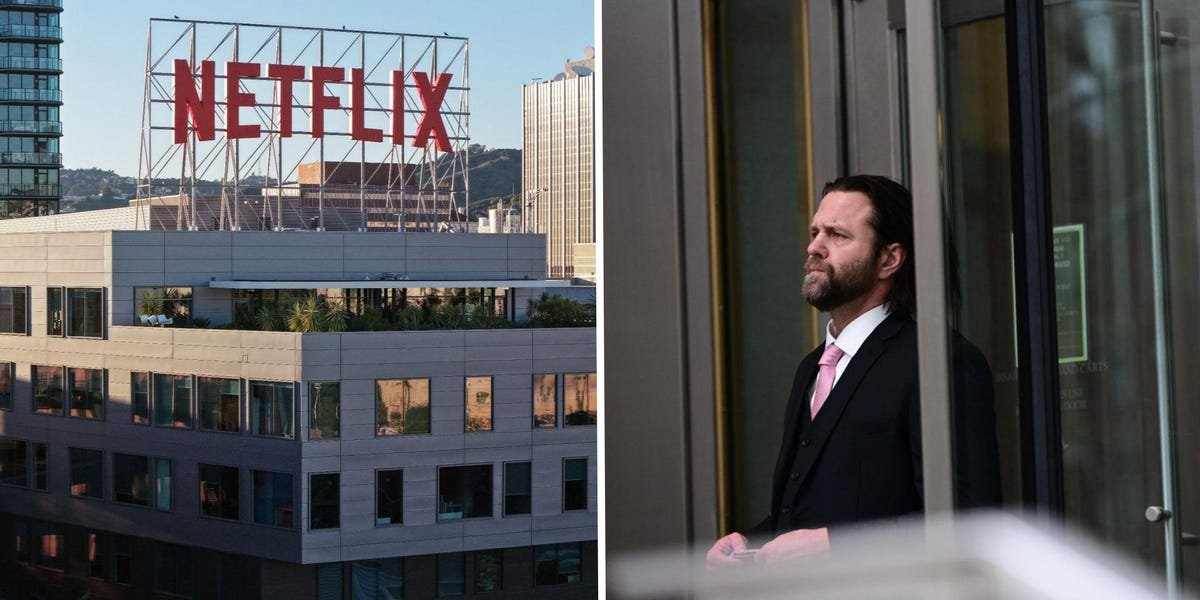
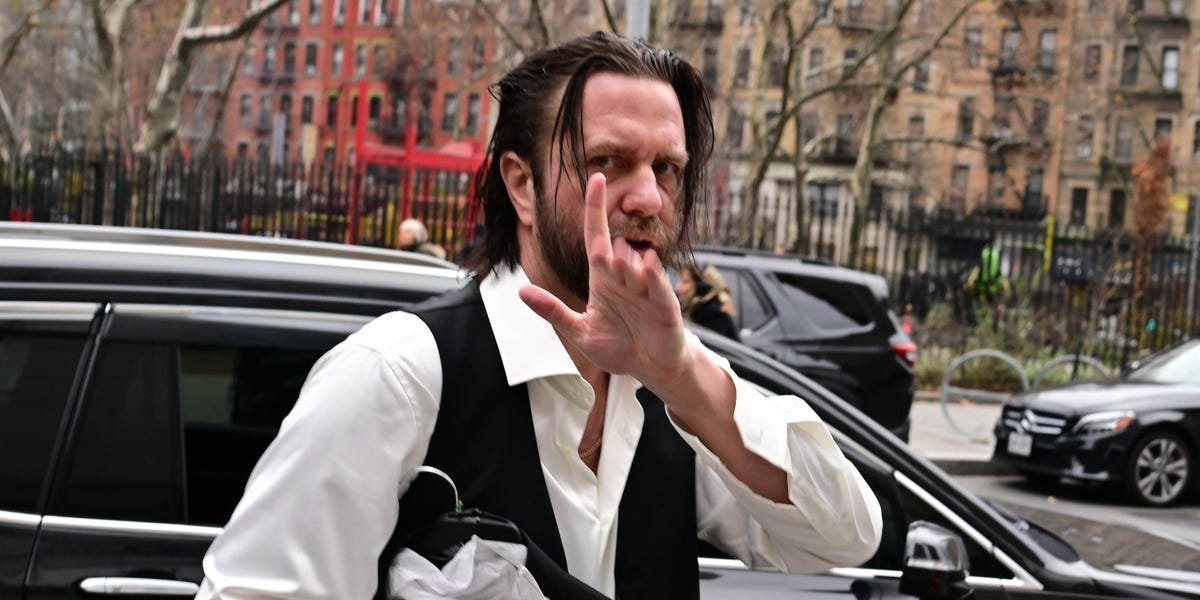
A Manhattan federal jury on Thursday found Carl Rinsch guilty on charges that he scammed Netflix out of $11 million in a lavish spending spree.

After less than five hours of deliberation, the jury said it found Rinsh guilty on all seven counts, including fraud, money laundering, and illegal money transmission. He faces up to 90 years in prison, but is expected to be sentenced to far less.

Rinsch, wearing a purple-plaid tie and matching pocket square, looked straight at the judge as the jury foreman read the verdict.

The case centered on the millions of dollars Netflix paid Rinsch to film “White Horse,” a sci-fi epic about a world where clone-like beings, after a schism with humankind, create their own society walled off from the rest of the world. Rinsch testified in his own defense earlier this week.

Rinsch — a Ridley Scott protege who previously directed the Keanu Reeves-starring “47 Ronin” — shot footage for “White Horse” on two continents. But by the fall of 2019, he exceeded the $44 million Netflix budgeted for the project and asked for more money.

Through the end of 2019 and early 2020, Rinsch negotiated with Netflix to figure out how to move “White Horse” forward and realize his ambitions. He envisioned a franchise like “Star Wars” and “Game of Thrones,” complete with an elaborate fantasy world, that could become part of Netflix’s catalogue.

In March of 2020, the streaming service agreed to give Rinsch’s production company another $11 million.

Then, everything went wrong.

On the witness stand in Manhattan federal court, he said he believed the bulk of the $11 million was meant to reimburse him for keeping the production of “White Horse” afloat the previous fall, when it had gone over-budget. According to him, Netflix expected him to conduct only “soft pre-production” on a potential second season.

Netflix balked. Former executives testified in the trial that the $11 million was meant to go toward finishing a first season that Rinsch never delivered. According to prosecutors, the entire negotiation for the $11 million was a sham, and Rinsch meant to defraud the company all along.

At closing arguments on Wednesday, Assistant US Attorney David Markewitz presented the jury with a Buzzfeed-style list of “10 Ways You Know Carl Rinsch is Guilty.” In a slideshow, he walked them through what he said were Rinsch’s contradictory claims — on the witness stand, in emails and text messages, and in prior statements in a civil legal dispute with Netflix — that he said demonstrated Rinsch wasn’t telling the truth.

He argued it was absurd to think Rinsch’s lavish purchases — like a $439,000 handmade Hastens mattress — could not have possibly been meant for the production of “White Horse.” And Rinch’s 2021 purchases of Rolls-Royces were insured in his own name, rather than insured by Netflix.

“In a TV show, a mattress is going to be covered by sheets and a blanket,” Markewitz told the jury. “No one watching ‘White Horse’ from home is going to have any idea what is under those linens.”

Daniel McGuinness, an attorney representing Rinsch, told the jury that Rinsch never had the “intent” required to find him guilty.

He showed them emails and texts leading up to the March 2020 agreement that he said demonstrated Rinsch’s negotiating posture had always been that Netflix owed him about $11 million for reimbursement. Rinsch never said he would spend all the money on additional production for “White Horse,” McGuinness said.

In reality, according to McGuinness, the situation was a “contract dispute” based on misunderstandings between Rinsch and Netflix.

“They were talking past each other, and the government has turned it into a nefarious fraud conspiracy,” McGuinness said.

This is a breaking story. Please check back for updates.


Source link

A-Ferrari-and-over-480-takeout-orders-FBI-details-spending.jpeg

A Ferrari and over 480 takeout orders: FBI details spending spree of Netflix director in $11 million fraud case

In March of 2020, Netflix infused $11 million into a production company to complete the first season of “White Horse,” a futuristic sci-fi series it hoped to bring to its platform.

Carl Rinsch — the director, writer, and showrunner of “White Horse” — never finished the 12 episodes he was supposed to deliver.

But a short time after he got the cash, Rinsch spent millions of dollars on furniture, cars, credit card bills —  and a whole lot of takeout.

According to testimony at his criminal trial on Thursday, Rinsch spent a total of $9.14 million through a personal bank account with funds originally earmarked to finish “White Horse,” which had the production codename “Conquest.”

The spending included more than 480 food deliveries from Postmates and Uber Eats during a six-month span in 2022, according to a spreadsheet entered into evidence. The spreadsheet showed Rinsch sometimes making a dozen separate food purchases each day.

The most expensive category, FBI agent Michael Naccarelli testified, was for furniture, for which Rinsch spent $3.36 million.

Rinsch also spent $2.4 million on cars — including a Ferrari and Rolls-Royces — and $1.8 million on American Express bills, according to Naccarelli. He also spent money on hotels, jewelry, and art, Naccarelli said.

“Rinsch described the Ferrari as “a birthday gift to myself” in a 2021 text message to his personal assistant, which was shown to jurors later Thursday.

Attorneys for Rinsch told jurors at his trial in Manhattan federal court that the “White Horse” debacle is a civil business dispute — not criminal financial fraud.

They say Rinsch, who previously directed “47 Ronin,” starring Keanu Reeves, is a “creative genius” who was overwhelmed by the demands of directing, writing, and producing “White Horse” and left to flounder by the streaming company.

Days after Netflix sent $11 million to a bank account for Rinsch’s production company, he moved $10.5 million to a personal Wells Fargo bank account, according to Naccarelli and records entered into trial evidence.

The director then moved portions of the funds to a Kraken cryptocurrency exchange account, as well as other bank accounts, before ultimately transferring $13.7 million to a personal Bank of America account.

With his Kraken account, Rinsch purchased about a dozen different cryptocurrencies, including Dogecoin, Etherium, Bitcoin Cash, and the stablecoin Tether, trial records show.

In April 2022, Rinsch’s Dogecoin holdings were worth about $755,000, and his Etherium tokens about $939,000, according to Naccarelli.

While a financial advisor previously testified in the trial that Rinsch’s stock investments went badly, Naccarelli said the director’s cryptocurrency investments were profitable.

“The trades performed very well,” Naccarelli said as Rinsch — wearing a three-piece black suit and a patterned pink tie and matching pocket square — nodded slightly.

Allen Grove, an FBI agent who testified after Naccarelli, said Rinsch considered himself a major Dogecoin trader when they met in April 2023 regarding a dispute over one of Rinsch’s furniture purchases in Paris.

“Mr. Rinsch described to me that he became wealthy during the pandemic by investing in Dogecoin,” Grove testified. “He described himself to me as ‘The Dogecoin Whale.'”

Rinsch said in an earlier deposition, which was shown to jurors on Thursday, that his purchases of four Rolls-Royces were meant for the production of “White Horse,” and not for personal use. Netflix wrote off the production as a loss in 2020.

“That would be fraud otherwise,” Rinsch said in the deposition.


Source link