
Im-an-American-married-to-a-French-man-We-have.jpeg

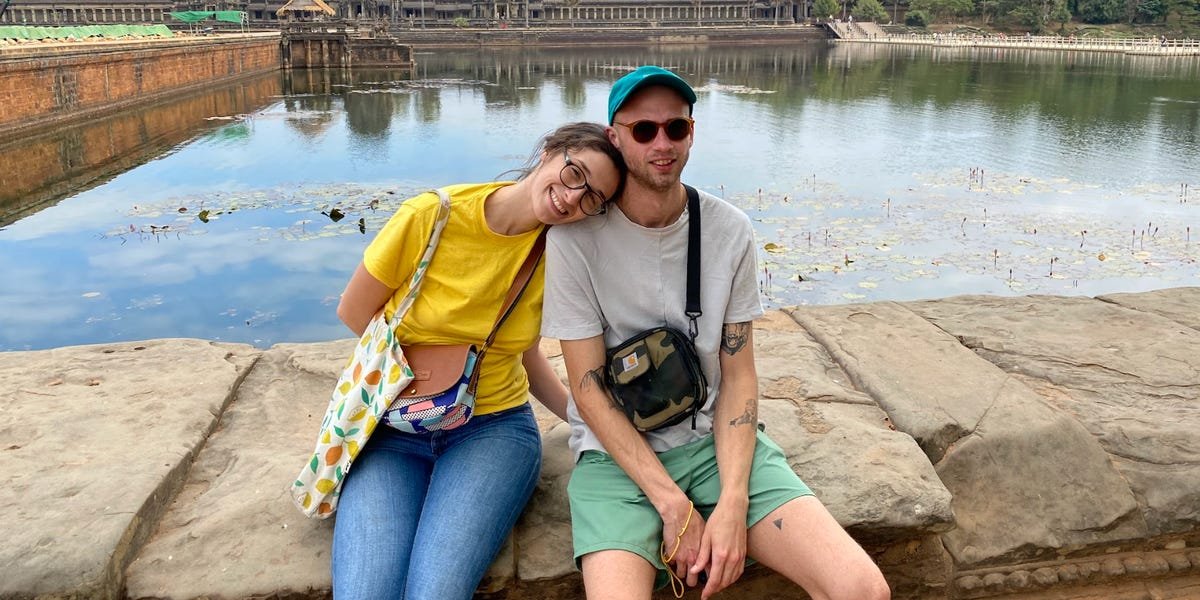
I’m an American married to a French man. We have a lot in common, but there are a few cultural divides we can’t bridge.

I moved from New York to Berlin as a single woman in 2017.

Finding love wasn’t at the top of my to-do list, but I was open to the possibility — and aware that the odds of making a dating-app match with someone of another nationality were much higher than if I had stayed stateside.

So I wasn’t exactly surprised when a dashing Frenchman, who’d eventually become my husband, whisked me off my feet.

We managed to ignore the cultural divide during those first six months of honeymoon-phase bliss. It was easy since he was fluent in English and I had a basic knowledge of French, but the longer we went on, the harder it became to pretend we hadn’t had upbringings in countries thousands of miles apart.

We’re lucky to have a lot of common interests and have agreed on our major values since day one — but we’ve come to accept that there are some ways I’ll always be a little too American for him and he a little too French for me.

We have opposite approaches to self-medication


The writer and her husband posing in the bleachers at a sporting event.

The first time my husband saw how much ibuprofen I owned, he was shocked.

Audrey Bruno


Reliable health insurance was never a sure thing for my family when I was growing up.

That meant that we’d often treat illnesses on our own when possible, keeping the medicine cabinet stocked at all times with Costco-sized bottles of every over-the-counter painkiller you can imagine.

I didn’t think twice when I packed my suitcase with several bottles of ibuprofen, but they were a shock to my husband the first time I took one out in front of him.

In France, painkillers like ibuprofen and acetaminophen aren’t easy to buy in bulk or get at the grocery store — and even at pharmacies, you can’t grab them off the shelf yourself.

Instead, you have to get them straight from the pharmacist, who will then typically debrief you on proper usage and dosage.

From his point of view, I take way too much ibuprofen … but on the other hand, the natural remedies he has always used often don’t cut it for me.

Just this week, I came down with a cold, and he brought me a homeopathic essential-oil treatment when I asked him to pick up medicine. I’ve been using it to appease him, but you better believe I also sent him back to get the ibuprofen I really needed.

My husband’s French dining habits are different from my laid-back, American approach

My husband and I often have trouble aligning when and what we eat because of our different appetites and cultural approaches to dining.

In France, eating routines tend to be pretty rigid. Lunch happens at noon sharp, breakfast is always sweet, and the only time of day most people snack is at 4 p.m. for their “goûter” — the childhood habit of taking a sugary, late-afternoon treat that many French folks, including my husband, carry with them long after they’ve left the schoolyard.

My approach, meanwhile, mirrors the free-form way I ate in the US. Snacks are always on hand, breakfast is often skipped, and dinnertime could easily take place early one night and late the next.

Neither of us has been able to fully adapt to the other’s eating style, but we try to make time to enjoy at least one meal together a day — usually dinner. That way, we can find something we agree on, and a time to eat it, and get what we both want the rest of the time.

We often don’t agree on how or when to share our personal space


The writer and her husband kissing on a pathway, with a green landscape in the background.

We’ve been able to bridge the cultural differences we have.

Audrey Bruno


I’ve always had an open-door policy for friends and family, and welcomed the opportunity to hire a housesitter or leave my apartment to a friend to watch my cats when I’m out of town.

I don’t mind if they make themselves at home while they’re at it — whether that means sleeping in my bed or using my shampoo and conditioner — possibly because I grew up watching my own parents always offer the same.

This, however, is out of the realm of possibility for my husband. The first time I proposed such an idea before a long vacation, he shut it down.

“In France, people don’t do that,” he said. “We want to sleep in our own beds at the end of the day.” Friends will swing by to feed the cats and change the litter, but that’s it.

There’s also a limit to how long he feels comfortable hosting guests when we are on the premises — but he’s learned to adapt to longer stays in order to accommodate my loved ones who have to travel from afar.

When we first met, the longest stretch he could tolerate was a long weekend, but we’ve since hosted my California-based siblings for several weeks with no complaints on his end (OK, maybe just a few).

So, although we may both never be totally on board with each other’s cultural quirks, at least we know that we’ll always try to meet in the middle.


Source link

Im-an-American-who-moved-to-a-small-French-village.jpeg

I’m an American who moved to a small French village. I tried to adjust, but learned I wasn’t built for country living.

Growing up in a remote California suburb, I spent most of my childhood counting down the days until I could leave for a big city.

When the time came to move to New York for college, I was prepared to say goodbye to country living for good. I spent six years in New York, and then another four in Berlin.

Although I loved my experiences in both cities, I was exhausted. Years of apartment hopping, navigating dirty subways, and dealing with nonstop hustle left me craving a reprieve — and wondering why I’d been so quick to swear off a quainter life in the country.

So, when my husband proposed that we move to a little village near his family in France, I surprised myself by agreeing to give it a try.

This was in 2021, when COVID-19 restrictions were making it challenging to live in Berlin, and we were both desperate for the benefits that such a relocation could offer — like more square footage, a yard, and, most importantly, proximity to our loved ones and their support.

The reservations I had about residing in the country were still nagging me, but I figured things would be different this time. I was older, wiser, and doing it in beautiful France, of all places.

I wish I had listened to my gut, though, because all my old qualms with country living ended up rearing their ugly heads — and we ended up leaving after two years.

Without a driver’s license, I felt isolated by the lack of public transit


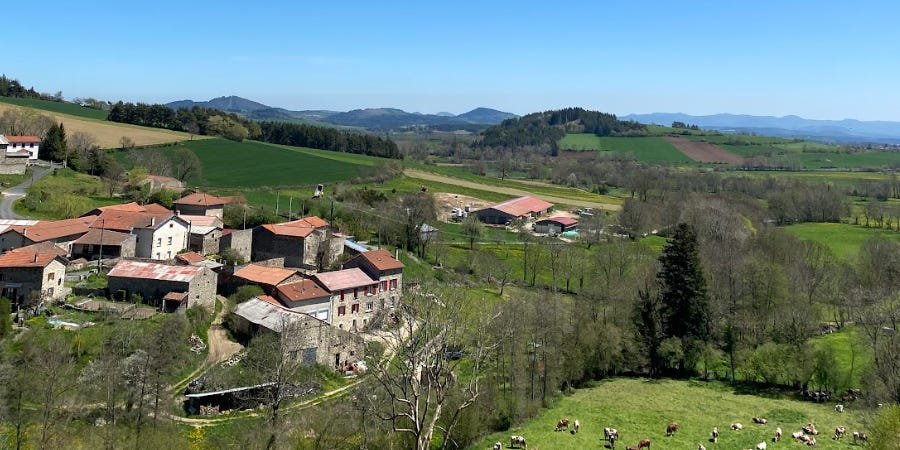
A shot of the French village where the author lived, featuring houses, fields, and a skyline.

I’d hoped my new home would be a bit more walkable.

Audrey Bruno


I never needed a driver’s license when I lived in cities, but that all changed when we moved to the French village. There, we simply couldn’t get around without a car — but we sure tried.

I knew going in that my public transportation options would be more limited than they were in a city, but I didn’t expect to be as isolated as we were.

When we first arrived, it took us over a month to work up the funds to buy a car. In the meantime, we attempted one very hilly bike ride, but had to call it quits before we’d even made it halfway to our destination.

Walking was no better — it took hours to get to the nearest shops, and sometimes they wouldn’t even be open when we finally arrived.

Even after we obtained a vehicle, I couldn’t navigate on my own without my husband, since he was the only one with a license.

He was always willing to drive me around, but I was frustrated by my newfound lack of independence. I considered getting a license of my own, but the cost of driving school was out of our budget at the time, so it really seemed like there was no way out of the situation I’d gotten myself into.

I wasn’t prepared for the demands of caring for a house after years of apartment dwelling


A snow-covered house in a French village.

Years of living in apartments didn’t prepare me for the hard work of cleaning and maintaining a house.

Audrey Bruno


Apartment life certainly has its drawbacks, but extra square footage comes with pitfalls, too.

We loved that our rental home gave us the newfound ability to stretch out and make noise without bothering each other. The downside, though, was that it was up to us to care for and maintain all that extra space.

It wasn’t just the house, either — it was also our responsibility to tend to the adjoining garden, barn, and the attached horse stables. It was a full-time job’s worth of work, and I started to miss the days when I could clean my whole apartment in just an afternoon.

Living without any takeout options was harder than I expected

Normally, I’m a proponent of cooking as much of my own food as possible, but I at least like to have the option of ordering in or eating out — especially on days full of chores and work.

Unfortunately, getting to the closest takeout restaurant took an hour round-trip, and delivery applications like Uber Eats didn’t service our small village.

What’s more, our dining options were severely limited compared to what we’d had in Berlin. I realized that I missed trying different cuisines and checking out new restaurants, and even when cooking,

I didn’t have access to the same wide variety of ingredients that I’d had in the city. One example was sesame oil — if I wanted to use this pantry staple in a recipe, I’d have to go to a big city to find it.

Connecting with neighbors wasn’t easy

Our village was extremely small — as of 2020, the population was under 400 — and many of the people I met were much older.

Needless to say, our rhythms and beliefs didn’t always match up. We often had debates over everything from politics to local initiatives — like what to do with all the feral cats — and it wasn’t always easy to argue my point in my then-limited French.

Since most folks in Berlin are fluent in English, I’d never been up against such a language barrier before. All that and more made it challenging to form true connections and further contributed to my feelings of isolation.

That said, there were things I missed about country life once I left


The writer standing outside, holding up lettuce she grew.

When I lived in the countryside, I got to grow my own fruits and vegetables.

Audrey Bruno


Despite all my frustrations, there were a few great things about living in the French countryside.

For starters, it really is beautiful, and being there allowed me to grow my own fruit and vegetables, forage wild blackberries in the forest, and perfect my French with the folks in town who were willing and patient enough to help me out.

After two years, we ended up moving to Lyon, the nearest city, because it offered the best of both worlds. At only 84 miles away, we’d have proximity to my husband’s family and access to nature, plus all the advantages of living in a major city.

I’ll always remember the beautiful memories from my time in the village — but I’ll also always prefer to reminisce about them from an apartment in a city.


Source link