
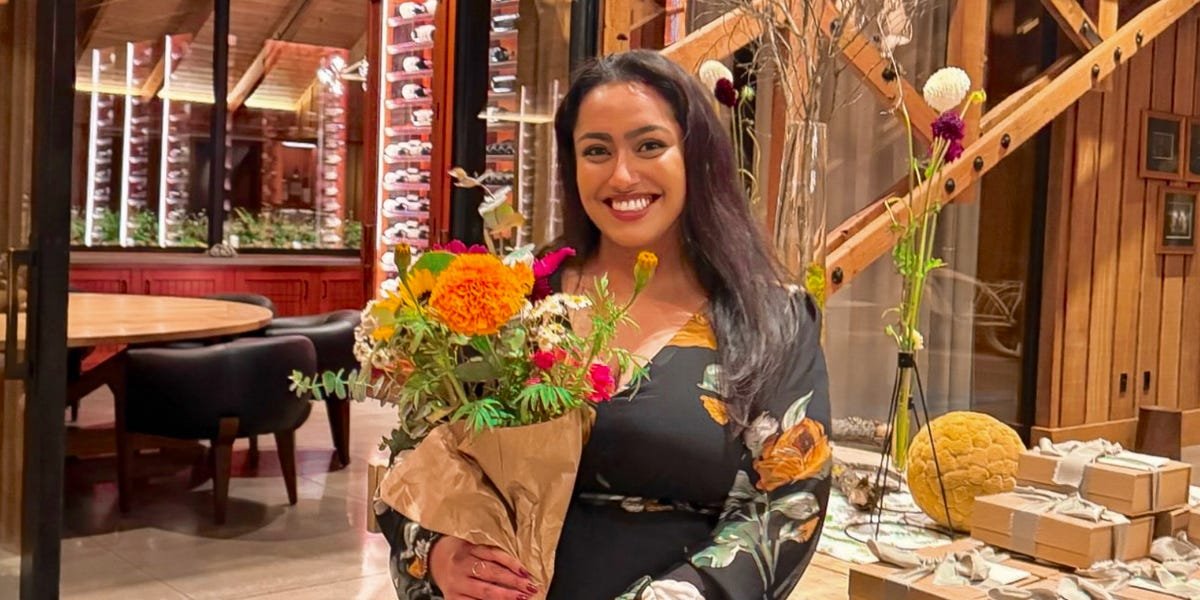
I-took-a-break-from-being-the-planner-friend-Stepping.jpeg

I took a break from being the ‘planner friend.’ Stepping back helped me learn which friendships I should prioritize.

Ever since I was little, I’ve made it my mission to find friends and build the community I wanted.

Being the first to initiate a conversation, invite people over, or organize hangouts has always felt innate to me — it’s something my parents prioritized, too, so I picked up “planner friend” tendencies at a young age.

I started hosting my annual Halloween party when I was 11. In college, I always loved planning outings with friends after a long week of studying. These days, even though it’s harder to see loved ones as we get older, I do my best to keep my current group chats going.

Now that I’m almost 30, however, I’m starting to feel the weight of being the initiator and planner. They say you can’t pour from an empty cup. Unfortunately, the water had drained from mine a long time ago.

So, for the sake of my own well-being, I temporarily took a break from reaching out to loved ones and making plans.

After taking a step back, I saw my friends much less frequently

As much as I wanted to see my friends, I no longer had the energy to always text first — and I hoped others would take the reins and make an effort to initiate plans.

When I pulled back from my usual role, though, I was pretty disappointed to see that none of my friends really stepped up.

It wasn’t radio silence: A few people checked in here and there, while a couple of friends brought up the idea of “doing something,” but never executed a plan for it. As a result, I went a couple of months without seeing my friends, aside from once at a wedding.

I began to feel like something was wrong with me. I questioned whether I was being a burden or expecting too much from friends who already had too much on their plates.

Perhaps friendship felt more integral to me because I don’t really have an extended family or a partner to turn to, but I couldn’t shake the feeling that maybe I just wasn’t an important part of my friends’ lives.

I realized that I missed making plans


The writer standing in a sweater and shorts on the beach.

Taking a break from initiating plans was important for my well-being, but it didn’t make me happy. 

Sukhman Rekhi


At first, withdrawing from making plans gave me time to care for myself and prioritize my needs, but pulling back also posed one big problem: I wasn’t happy.

I genuinely enjoy hosting, making plans, and bringing my friends together. Not doing these things made it feel like something in my life was missing.

After a couple of months, I started sending check-in texts, scheduling FaceTimes, and asking friends to grab food and catch up. I immediately felt more connected with my social circle, and it seemed like most of my friends were happy to hear from me.

Still, I wish that making plans wouldn’t fall solely on me. I understand that my friends have busy schedules and need to prioritize other things, like work, partners, aging parents, and their own well-being.

Taking a break from texting first, though, taught me that I deeply value community and need to spend less energy on people who don’t see friendship the same way.

That doesn’t mean I love these friends any less or won’t ever reach out to make plans with them again. It does mean, however, that it’s time to try having some honest conversations with friends I’d like to see initiate more.

It’s also time to put a little less effort into relationships that could be draining my energy, and create space to make more friends who prioritize community the way I do.

I wish that more people understood the work that goes into being a planner friend

I’ve learned that humans — planners and non-planners alike — are social beings and need connection.

If your planner friends are like me, they might not always mind being the person who makes the plans. Letting the planners and initiators in your friend group know that their efforts are appreciated, though, can go a long way.

It also wouldn’t hurt if, on occasion, non-planners took a little bit of time to send the text first or plan the hangout. One 2022 study, published in the Journal of Personality and Social Psychology and based on a series of preregistered experiments, found that people often underestimate how much even a quick text message can mean to a recipient.

Friendships take work, especially as we all get older and enter new life phases. I understand that sometimes, someone may not have the bandwidth to reach out, or they might be caught up with life’s ups and downs.

That said, taking a step back taught me that although I don’t need my relationships to be perfectly 50-50, they can’t be 100-zero, either.




Source link

kelly burch

I’ve been running a business with my childhood best friend. We set commandments to make sure our relationship always comes first.

This as-told-to essay is based on a conversation with Ashley Morris, CEO of Capriotti’s. It has been edited for length and clarity.

My whole career is based on a love affair with food — and a lifelong friendship. I grew up on the West Coast, but had tried cheesesteaks on trips east, and adored them. In college, I was living with Jason, who has been my best friend since we were 10. One day, he came home talking about the best sandwich he’d ever eaten. He told me I had to go to Capriotti’s.

I was busy, studying finance and working at a bank. By that Friday, when I still hadn’t gone, Jason dragged me to the sandwich shop. I was just as blown away as he was. I’d eaten a lot of cheesesteaks, but this was the best of the best. It was true love.


Men at train station

Ashley Morris went into business with his best friend Jason.

Courtesy of Ashley Morris


Jason and I went to Capriotti’s so much that when we needed a new apartment, we chose one further from school, but closer to the restaurant. That was the first sign of the role Capriotti’s would play in our lives.

My banking success helped us go into business together

I started working as a bank teller at Wells Fargo when I was 18 because it was the only finance job they’d let me do at that age. After I graduated from college, I moved to the financial services team, and by the time I was 25, I was earning more than any young kid should: about half a million a year.


Friends at restaurant

Ashley Morris and his best friend Jason went into business together.

Courtesy of Ashley Morris


Jason and I had always wanted to get into business together, and now I had the financial resources to make that a reality. We decided to spend a week thinking about business ideas, then decide what to do. When the meeting came, we each brought one idea: open a Capriotti’s franchise.

We quickly opened 3 restaurants, but wanted more

We planned to be 50/50 business partners while both maintaining our day jobs. I would put in more capital, and Jason would do more of the hands-on work, while keeping his government job.

However, we quickly learned that running a passive business just isn’t a reality. The restaurant wasn’t going to be a side hustle, especially because we were so cocky that we opened two franchises at the same time. Before long, we had a third. My girlfriend at the time (now wife) handled a lot of the operations, while Jason and I supported her as much as we could.

We wanted to own 10 restaurants, but we started butting heads with Capriotti’s CEO. I thought she had an old-fashioned mindset, and each time we asked to open another location, she said no.

After a year of that, I’d had enough. I realized if I waited for her to say yes, I’d be 40 and not living my dream. After speaking with Jason, I told the CEO we wanted to buy the whole company. It took everything Jason and I had, but we purchased Capriotti’s in 2008, when I was 27.

We established rules to protect our relationship

We’ve been running the company together since — Jason’s the CEO and I’m the president. We have a lot of the same values, probably because we forged them growing up together. We know each other inside and out, like brothers. That allows us to give really honest feedback. Jason has no problem walking into my office and saying, “You’re missing the boat on this one,” and instead of getting defensive, I immediately open my mind to what he has to say.

When we decided to buy the business, we established commandments to make sure our business partnership wouldn’t ruin our friendship. First, there’s a hierarchy: if we reach an impasse on a decision, I have the final say. That’s only happened twice, and Jason has graciously accepted my decision.

Our second commandment is that if either of us wants out, the other must be fully committed to helping him exit. Luckily, we’ve never had to use that, but we know that we could part ways amicably, fairly, and with integrity if we wanted to.

Today, Jason’s four boys are close with my sons and daughter. We all went on vacation together for New Year’s. Life is busy, and it’s not always easy to find time together outside work, but we try. It’s wonderful to see our friendship recreated with our kids.


Source link

Lauren Crosby

I bought a house with my best friend. It’s the best living situation I’ve ever had.

This as-told-to essay is based on a conversation with Sarai Saez Rogers, a 36-year-old mom. It has been edited for length and clarity.

When Claire, my best friend for over 10 years, and I laid eyes on the late-18th-century duplex with a big front yard, we knew it was the perfect house to buy together.

We’d gotten to know each other in New Mexico, where both of our husbands were stationed while in the military. For 10 years, we were each other’s community. Neither of us had family around, so we had to make our own support systems.

We both got divorced

My husband and I divorced, and there was a six-month period when Claire’s husband was deployed. The two of us practically lived together for those six months. We cooked and ate together, picked each other’s kids up from school (she has two, and I have one), worked out together, and even had family sleepovers. I found that being a single mom didn’t mean I had to shoulder the load alone.

I moved to Maryland for a new job. I quickly found out how expensive it was to be a single parent, and relocated to upstate New York to live with my parents.

Claire and her husband then divorced, and she moved in with her parents in Wisconsin.

We stayed in touch, both dreaming about what it would be like to buy a house, but knowing we couldn’t afford it as single parents. Although we both appreciated living with our parents, it wasn’t an ideal situation after being used to living independently for so long.

We bought a house together

At some point during our phone calls, we considered moving in together. We trusted, respected, and liked each other. We’d both say that for the first time in a long time, we knew what it was to feel safe with another person, to be loved for who we were, rather than for who someone wanted us to be.

I had a steady income and credit, and Claire had savings, so we’d be a team if we were to buy a house together.


Friends jumping in front of house

Sarai Saez Rogers bought a house with her bestfriend.

Courtesy of Sarai Saez Rogers


In the summer of 2024, Claire visited us in New York, and on somewhat of a whim, we decided to look at houses for sale.

We saw a happy, yellow duplex, one that our real estate agent tried to dissuade us from viewing, as it was a bit odd, and both fell in love. It was built in the 1800s with period features, located on a quiet street, with a huge yard speckled with trees. It had originally been a farmhouse with different families, so it was a perfect setup for us. There are two bedrooms upstairs, and three downstairs, with a bathroom and kitchen on each floor.

We bought it, and every day, even on the days we have arguments, I’m so glad we made the decision to live together.

I get to live with my best friend

In a world where friendships aren’t always cherished because we’re too busy, I get to see my best friend every single day. We support, love, and are there for each other at the drop of a hat.

Recently, we had gin and tonics and watched “Mulan” together, belting each song. By bucking the trend that says our setup is reserved for youth, we’re experiencing the closeness many people have when they share rooms or houses in their early 20s.

One of the questions people have asked us is what we’ll do if we develop romantic connections. I tell them we both are in romantic relationships. Claire and I have boyfriends, but why should that impact our home situation? We don’t have to move in with partners out of necessity, but only if we choose to.


Women moving washer

Sarai Saez Rogers says her friendship with Claire is one of the deepest relationships she’s had.

Courtesy of Sarai Saez Rogers


We’ve also discussed the possibility of partners moving in — splitting the house right down the middle and having separate rather than shared living spaces.

Another question people ask is what happens if and when we argue. This is an easy one. I don’t think deep, authentic relationships can exist without conflict. In any relationship, romantic or platonic, there will be disagreements. It’s healthy if it’s dealt with in a caring, respectful way.

When we argue or get on each other’s nerves, we take space and then come back together to talk it through. It’s made us closer, rather than driving us apart.

I’m never taking friendships for granted

After my divorce, I thought a lot about how, for years, romantic love had been the epitome of a relationship, the most ideal love to build a life around.

Since living with Claire, I’ve realised I was wrong. My friendship with Claire is one of the deepest relationships I’ve ever had. Why would I not move in with her? Why would I not build a life alongside her? With her, with my friend, I feel like I’m not just surviving, but thriving.

Even though I am in a romantic relationship with someone else now, I’ll never take friendship for granted again.

Bucking convention, buying a house and living with my best friend has made me incredibly happy, happier than I ever have been.


Source link

Lauren Crosby

My friend and I hold presentation nights. We get to know each other better, and it helps us understand who we are now.

This as-told-to essay is based on a conversation with Rachel Jones, cohost of the “Is It Normal” podcast. It has been edited for length and clarity.

I was recently introduced to Eloisa by a mutual friend who was certain we’d become fast friends.

That friend was right, because Eloisa and I clicked straight away. We shared similar interests — books and art — and had this chemistry that I can’t quite explain. I knew we’d be best friends.

As we began to get to know each other, both of us keen to “dig deep” and understand each other as fully as possible, we would often say things like, “To understand this part of me, you need some context.”

We started presentation nights

Although we would have liked to jump into each other’s histories, we were limited by time constraints.

I work full-time, volunteer, own a house, participate heavily in church activities, and have family and friends I’m already committed to. Eloisa has a husband and is a full-time student. We’re both very busy people, but we’re keen to connect on a deeper level because neither of us wants coffee-once-a-month friendships.

In your late teens and early 20s, forming friendships is relatively easy, as people often have less responsibility and more time. But the older you get, the harder it can be to form meaningful relationships — because there are only so many hours in a day. And yet, when you meet friends at an older age, there is so much more life to catch up on, just not the time to do it.

I’d seen on social media a trending way to get to know friends as adults — presentation evenings. Each person involved gives a short presentation about themselves, which may include both serious and humorous topics.

Typically, people create slideshows with lots of pictures to accompany whatever is being presented. I’d seen a huge range of topics: what’s my love language, favorite books, favorite memories, teenage years, and the list of ideas for these nights goes on and on.

Excited about the possibility, I asked Eloisa if she’d be up for it, and as I suspected, she couldn’t wait.

We started with our childhoods

For our first presentation night, we decided to kick off our monthly series by sharing stories about our childhoods.

Just the process of preparing my slideshow was precious. I went through dozens of photos of my family, reflecting on the significant changes I experienced as a child, and remembering how fortunate I was to grow up in such a close-knit family with my parents and three siblings.


Friendship presentation

Rachel Jones started presenting about her childhood to her new friend.

Courtesy of Rachel Jones


We planned to present after dinner one evening, both allowing each other to share without interruption.

When I’m typically getting to know a friend just through conversation, both of us are lovingly interrupting each other, interjecting thoughts in response to what the other person has said. But in presenting, you’re quiet when it isn’t your turn, so the listener has a chance to fully absorb what the other person says.

I listened to Eloise speak about her childhood, and I immediately could piece together why she is the way she is because of her history.

When I presented, I methodically talked about my birthday, my parents, my siblings, and how I had lived in several houses in multiple countries.

It was a lighthearted theme, but even so, she now understands why stability is so important to me, and why I tend to crave acceptance from people. A lot of that is down to my childhood.

We are hoping to do these monthly

As a visual learner, I found the presentation night so helpful in remembering the people Eloise spoke about. So now, when she tells me about her sister, I can visualize her sister and recall Eloise’s relationship with her growing up. Facts about Eloise get ingrained in my memory because I’ve had photos and so much context.

I expect that as we hold these presentation nights more frequently — we’re hoping to do them monthly — we’ll get to know each other better, both on a serious and a silly level.

As we continue to be friends, carrying on with these presentations, we’ll understand each other’s triggers more and be able to respond better and give informed advice.

It’s the first time I’ve had presentation nights with a friend, but I suspect I’ll bring in other friends to join us on our evenings. I also think it would be a really helpful thing to do with a boyfriend or partner in the future.

The fact that Eloise wanted to have these presentation nights with me felt like a privilege, because it’s someone who wants to know me and invest in our friendship.

To be known and feel seen is one of the greatest desires we have a humans, and these presentations provide a way to do this in our busy, modern, adulting worlds.


Source link