
The-playbook-fueling-a-bookstores-4-year-sales-streak.jpeg

The playbook fueling a bookstore’s 4-year sales streak

Kandi West has always been a huge reader.

With a background in information technology project management, West began working part-time at WordsWorth Books in 2020, while being a stay-at-home mom and caring for her parents.

When an owner decided to step back, West bought in.

Now, as co-owner and general manager of the Little Rock, Arkansas, independent bookstore, West strives to “preserve the store for the next generation.”

WordsWorth has been around for at least 30 years. In 2022, West became the managing owner and began handling the shop’s day-to-day. Two other co-owners, Lynne Phillips and Lia Lent, oversee other aspects of the business.

Since taking over, West has been dedicated to increasing revenue and putting the bookstore on a path to sustainable growth.

Independent bookstores are “resilient and a great example of the innovation, flexibility, and passion that is evident in many small businesses,” said Allison Hill, CEO of the American Booksellers Association.

“The future is indie.”

‘We needed to be profitable to grow.’

The demand for independent bookstores is growing nationwide, Hill said. About 1,500 new indie bookstores have opened over the past five years, more than 400 in 2025 alone, she added.

In a recent ABA survey, 73% of its members said their sales increased in 2025.

To grow, the WordsWorth team has revved up its online shop, added more in-store events, and created new community partnerships. But West told Business Insider the mission goes further: “The decisions aren’t just about growth, they’re about long-term sustainability. Every day, there’s something we’re deciding based on those things.”


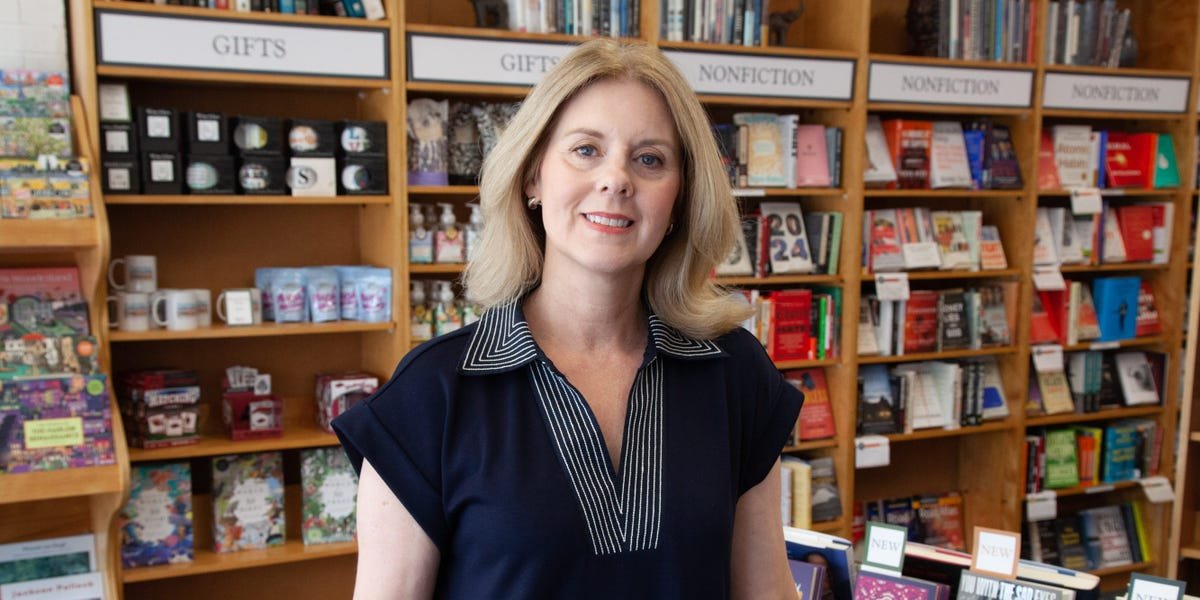
Owners and staff at WordsWorth Books in Little Rock, Arkansas.

West said the store is becoming more selective and developing a process for choosing the events most likely to succeed.

Katie Adkins for BI


This started with focusing on inventory management to better understand what was and wasn’t selling, said West, who took a course on the subject. “I was excited to see what I could do with making it more profitable,” she added. “It needed to be a little more profitable before I felt like I could push it to grow.”

This helped her realize that the books are “literally like money on the shelf,” West said. She began closely examining how often books needed to be restocked and which needed to be returned to the publishers. “I’m still learning every day,” she said.

Adopting a growth strategy

West said hosting and monetizing events, including author readings, story times, wine tastings (in partnership with a local liquor store), book clubs, and puzzle contests, has created an additional revenue stream.

She said the store receives many event requests, and they’re becoming more selective and developing a process for choosing the events most likely to succeed. In November, the bookstore hosted the launch of the latest book by best-selling author Ayana Gray, who lives in Arkansas, which West said was a ticketed event that sold out quickly.

The bookstore has also expanded its e-commerce footprint. WordsWorth uses the ABA’s IndieCommerce platform for online orders. The store also gets a percentage of sales from Bookshop.org — when shoppers select it as the bookshop they want to support — and Libro.fm, the audiobook platform.


In addition to books, WordsWorth Books located in Little Rock, Arkansas, sells gifts, cards, and puzzles to diversify their income.

Hill said offering more products can diversify an indie bookstore’s revenue.

Katie Adkins for BI


They’ve also started offering more non-book items in the store, such as cards and reading glasses, which West said comprise about 10% of sales. Hill added that carrying more products, such as art, games, and toys, is a trend that more indie bookstores are embracing to diversify their revenue streams.

“That has helped our profitability,” West said, but added, “We don’t want to be a gift shop; we want to be a bookstore.”

Marketing efforts, such as a partnership with the Central Arkansas Library System and a local TV segment, have also boosted awareness of the bookstore, West said.

WordsWorth’s sales have grown about 7% a year since 2022, which “for an indie, is good, but we’d love to get that higher.”

Hill told Business Insider that independent bookstores have faced a number of challenges recently, including “an uncertain economy, federal layoffs, the labor shortage, tariffs, free speech harassment, communities impacted by ICE raids, book bans, and Amazon’s chokehold on the book industry.”


The exterior of WordsWorth Books, an independent bookstore located in the Heights neighborhood of Little Rock, Arkansas.

WordsWorth recently expanded its e-commerce footprint.

Katie Adkins for BI


WordsWorth has experienced some of this firsthand. West said some of its main challenges include rising book prices and credit card fees.

In 2023, WordsWorth joined a lawsuit challenging a state law on how libraries handle contentious materials. The court ruled that certain provisions of the law were unconstitutional, but the state is appealing the decision.

West said she tries “never to get comfortable” and stays focused on building a community.

“We want to enhance the reading community in central Arkansas and connect readers to authors, connect readers with each other, connect readers with literature-adjacent things.”


Source link

Taco-Bells-CEO-says-the-chains-magic-formula-is-fueling.jpeg

Taco Bell’s CEO says the chain’s ‘magic formula’ is fueling growth as rivals fall flat

Taco Bell CEO Sean Tresvant has a simple explanation for why his brand keeps winning while much of the fast-food industry is struggling: it’s doing more than one thing well at once.

“When you look at being a buzzy brand, you look at value, you look at digital, you look at category entry points and innovation, and all those things are working in concert with each other,” Tresvant told Business Insider. “Other brands can do one or two. When we do it, we get all four right, and we’re very good in each part of that magic formula.”

Yum! Brands, Taco Bell’s parent company, announced during its earnings report on Wednesday that the Mexican-inspired chain delivered 7% same-store sales growth in the fourth quarter, far outpacing the rest of the segment as consumers continue to pull back on dining out.

While much of the fast-food industry is grappling with slowing traffic as customers watch their wallets, Taco Bell’s growth was driven by bigger-ticket transactions, especially among younger diners, even as competitors relied heavily on discounting.

Foot-traffic data backs that up. A Placer.ai analysis of Yum Brands’ fourth-quarter performance found that Taco Bell locations held up better than many quick-service competitors during key value-driven periods, even as broader fast-food visits softened amid inflation fatigue.

Tresvant says Taco Bell’s advantage comes from combining the things competitors often struggle to balance: offering consistently good value rather than short-term deals, rapid-fire menu innovation, and a growing loyalty program that’s actually driving incremental visits. That formula, he told Business Insider, has allowed Taco Bell to keep growing traffic and relevance “in any environment,” even as other fast-food brands fight simply to stay flat.

Taco Bell’s numbers reflect its loyalty push. Tresvant said active loyalty members climbed 31% in the fourth quarter, while digital channels grew 29%, as app-exclusive drops and rewards nudged customers to visit more often. Tresvant said the goal isn’t just engagement, but turning loyalty into repeat traffic — which keeps the brand resilient.

Although value-focused options now make up 17% of Taco Bell’s menu, like its $5, $7, and $9 bundle offerings, what especially appeals to Taco Bell consumers is its pace of menu innovation — even when they’re full price. From the return of its Quesarito and recent launch of its sauce collaboration with Frank’s RedHot, to limited-time beverage offerings at its Live Más Café locations, every new rollout, Tresvant said, is “determined on consumer needs and wants.”

Fast food’s old playbook is breaking down

Across the restaurant industry, traditional quick-service strategies aren’t working as they once did because of the uneven pressure of the K-shaped economy, where lower-income consumers have pulled back on dining out while higher-income spending remains stable.

Many chains have leaned hard into deep discounting and short-term deals to lure customers back, but analysts and industry executives warn that constant promotions can erode pricing power and fail to drive meaningful traffic growth.

At the same time, competitors like Chipotle are recalibrating for smaller, wealthier consumer segments, underscoring how uneven the recovery has been across the sector.

That’s not the strategy for Taco Bell. Instead of narrowing its focus, the chain has leaned on loyalty perks and app-exclusive offers to keep a broad range of customers coming back — particularly younger diners who are more likely to engage digitally even as they cut costs elsewhere.

“We continue to innovate on the menu, but not only on the menu,” Tresvant added. “We’re going to make sure we’re innovating from a guest hospitality standpoint, we’re going to innovate in operations and innovate around the brand, not just in food.”

That means continued exploration of voice AI ordering systems, which are being tested at 600 Taco Bell locations, as well as other efficiency-optimizing technologies to streamline back-of-house operations and improve the guest experience.

It also means giving consumers new ways to stay connected to the Taco Bell brand, like its Y2K-era cross-brand collaboration with Hollister, which sold out late last year.

For Tresvant, that momentum has created rare room to experiment at a time when much of the fast-food industry is still focused on defense.

“The things we’re doing are working, and that just gives us a little bit of permission to take big swings in 2026,” Tresvant said.


Source link