I-gave-up-my-corporate-job-to-travel-full-time-and.jpeg

I gave up my corporate job to travel full-time and live in other people’s homes for free

A few years ago, I was working a traditional 9-to-5 corporate management job in the San Francisco Bay Area.

After nearly a decade in my field, I had a car, a home, emergency savings, and no debts to pay off. I’d done everything “right” and accomplished things many strive for, but I wasn’t completely satisfied.

Then, in 2022, I left my job, booked a one-way flight to Italy, and began traveling full-time. What I thought would be a short break turned into over two years of seeing new countries while living entirely off my savings.

I kept thinking, “When am I going to get tired of constantly moving around … and how can I extend this lifestyle until that time comes?”

In an effort to stretch my savings further and extend my travels, I started house-sitting.

House- and pet-sitting has helped me keep traveling and stretch my savings


Woman smiling with cat

By 2022, I wanted something different for my life. 

Alanna Parrish


I came across the idea to house-sit while looking for ways to travel more economically. In return for looking after someone’s home while they are away, I get a place to stay.

For me, this felt like an amazing trade and a way to avoid paying for hotels or rentals. Sometimes, I’m also paid for these gigs — especially if pet-sitting is involved.


Woman smiling taking selfie while holding

I’ve watched homes and pets in many different cities. 

Alanna Parrish


Once I started, I expanded my network through travel, and I discovered a high demand for house-sitters, not only in the United States but also outside of it.

So far, I’ve watched pets and homes in more than 15 different cities, including some international ones.

I’ve woken up to ocean views in Honolulu; explored the food scene in Santa Fe, New Mexico; biked along Chicago’s Gold Coast; and discovered hidden-gem cafés throughout Greenpoint and Fort Greene, Brooklyn.

I love the freedom that comes with this lifestyle and the connections I’ve made


Woman smiling with cat on her shoulder

A lot of my house-sitting gigs involve watching pets. 

Alanna Parrish


Many people’s biggest living expense is rent or housing, but I don’t have to worry about budgeting for those. I try to line up my sits so that I don’t often need to pay for hotels or rentals, either.

This has completely changed the way I live. I love the freedom that this life brings, not only financially but also emotionally.

Since I’m staying in actual homes and often for longer periods, I’m better able to explore different cities and neighborhoods the way locals do, rather than as a tourist passing through.


Perosn holding e-reader, coffee, on sunny balcony

It’s been nice experiencing some neighborhoods as a local. 

Alanna Parrish


I get to meet homeowners from all over the world who’ve been incredibly generous and welcoming, often going above and beyond to make sure I feel at home in their space.

Building these relationships with the homeowners and their animals has been such an amazing part of this experience. I take it very seriously that people are trusting me to live in their spaces and care for every home and pet as if they were my own.

It’s not always easy to live this way, but I’m enjoying it


Woman standing in front of columns and arches

Before I started house-sitting, my life looked very different from how it looks now. 

Alanna Parrish


This lifestyle is not for everyone. I live out of a suitcase and often don’t know where I’m going next.

I am constantly planning where I will be living and how I’m going to get there. Sometimes I am booked months in advance; other times, I am figuring things out a few days before or dealing with last-minute cancellations.

The uncertainty can be stressful, but the trade-off has been worth it for me in the end.

These days, I work remotely while juggling paid sits and free ones so I can keep traveling. I don’t know when I’ll settle down and stay in one place again.

For now, this lifestyle fulfills my desire to explore, connect with others, and discover new places. And I still have a list of cities that I would love to visit — both in the United States and internationally.

Whether I see them through house-sitting or not, I don’t see myself slowing down anytime soon.


Source link

After-a-breakup-I-put-my-belongings-in-storage-and.jpeg

After a breakup, I put my belongings in storage and traveled full-time for 3 years. It was the best chapter of my life.

Three and a half years ago, I stood in my New Jersey apartment, surrounded by boxes I was about to put into storage. Tears streamed down my cheeks.

I’d recently ended a two-year, live-in relationship. We loved each other deeply, but just weren’t the right fit — and although the split was a gut-wrenching decision, we both knew it was the right move.

I had just accepted a fully remote job, which allowed me to explore moving out of the New York City area — something I had been considering for about a year.

I planned to just travel for a few months before settling down somewhere, but I ended up spending the next three years as a nomad.

Although it wasn’t quite what I’d pictured when I said goodbye to the apartment I shared with my ex, it turned into one of the most important chapters of my life.

My brief stint abroad turned into a longer chapter


A shot of a building and Mexican flag in Mexico City.

My time in Mexico City taught me about my own resourcefulness and independence.

Samantha Caffrey


My post-breakup plan was to put all of my belongings into a storage unit and spend a few months in Tulum.

After that, I would travel to Miami and Los Angeles, “interviewing” both cities as candidates for a longer-term move. I was about seven months into this plan when I learned my role was going to be eliminated.

Luckily, I was able to secure freelance work, so I decided to continue my travels since I wasn’t needed in one particular place for my job.

From Tulum, I headed to Mexico City. After just a few days, I fell in love with the food, vibrancy, people, and culture. My one-week vacation turned into an almost three-month stay.

During my time in Mexico City, I explored art galleries and museums, learned some Spanish, made friends, went on dates, visited small shops, and tipped local people well.

These little moments helped me learn how adaptable I truly was. I realized I could make friends anywhere, stay disciplined with my work even while exploring a new place, safely navigate dating as a solo traveler, and be extremely resourceful.

I kept exploring. I took the nomad life slowly, spending about four or five months abroad at a time in places like Paris, Lisbon, Málaga, London, Melbourne, Miami, and Tulum.

Between travels, I’d spend a few months recharging in a sublease (or a friend’s apartment) in New York City.

I felt my confidence grow as I navigated new cities and connected with inspiring women from all over the world


The writer roaming a hallway in Versailles.

I traveled the world, from France to Mexico to Australia.

Samantha Caffrey


When traveling solo, every choice you make is yours, from where you eat to how you spend your days. I felt immensely grateful for this freedom — every day, it struck me how lucky I was to have every minuscule decision be solely my own.

That’s not to say I felt lonely, though. With each new city and country I stayed in, I was delighted by the magic of connecting with strangers.

One time, I struck up a conversation with another woman at a particularly intense yoga class in Tulum. She was visiting from Canada, and we ended up spending a whole day together.

I had another memorable experience in Europe. I had been traveling by myself for about three years at that point, and although it was incredible, I was exhausted. I felt ready to return to New York City, but I wasn’t sure I could afford to do so.

Then, one afternoon, my spirits were lifted when I found myself in a café in Paris, enjoying a chocolate-chip cookie and a latte. An older woman started chatting with me, and soon, another young woman traveling solo from Korea joined in.

We all shared stories and giggled as we sipped our coffees. As the older woman left the café, she said, “You two girls exchange numbers now, and spend time together.”

We laughed at the gentle demand, but wound up spending that evening — and the next day, too — exploring the city as a pair. I may or may not ever see her again, but she told me that if I ever visit Seoul, I’ll be welcomed with open arms.

Best of all, this time in my life helped me stay open and live in the moment


The writer standing in front of buildings in London on a sunny day.

One of the best parts of traveling was connecting with people from around the world.

Samantha Caffrey


I learned that not every place has to be a permanent home, and not every relationship has to last forever; in fact, some friendships might just last for the span of a trip.

The memories I made during this time will stick with me, though I’ve since emptied out my storage unit and settled into a one-year lease in New York City.

My nomadic chapter is closed for now, but my encounters with strangers, small moments in new cities, and solo time with myself left me changed for the better — and will surely inspire my next adventure.


Source link

Were-full-time-travelers-in-our-50s-whove-been-to-over.jpeg

We’re full-time travelers in our 50s who’ve been to over 50 countries. Here are 5 of the biggest mistakes we’ve made.

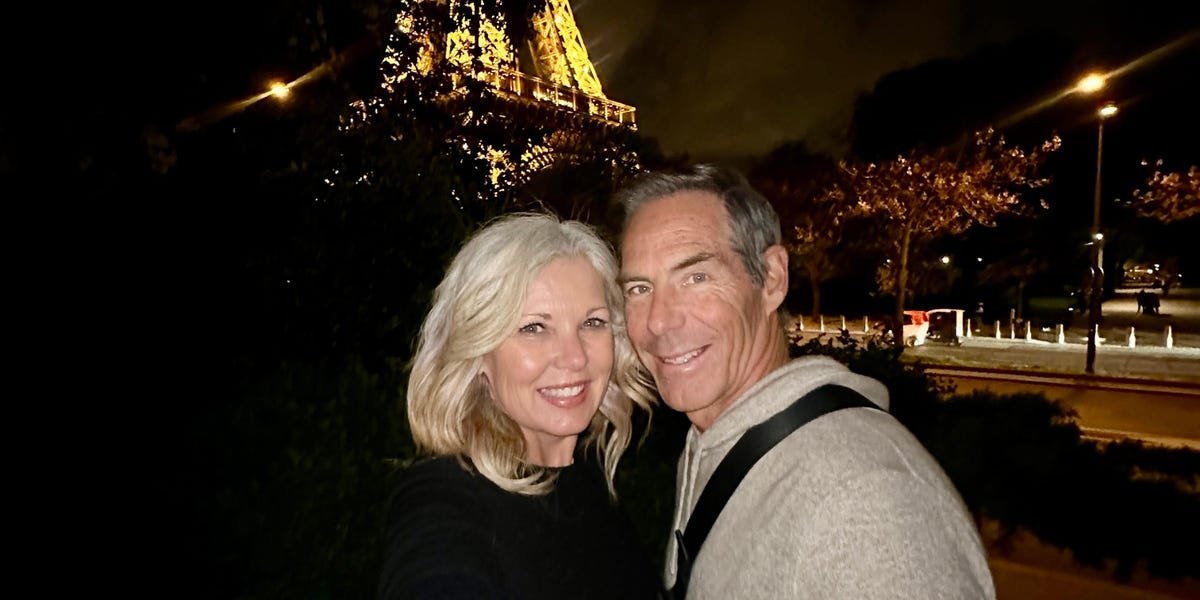
When my husband Shayne and I sold nearly everything we owned to travel the world full-time, we thought we were ready for anything. We had spreadsheets, backup plans, a carefully managed budget, and, as two adults in our 50s, decades of experience behind us.

What could go wrong? Turns out, plenty.

Over the past two and a half years, we’ve lived in more than a dozen countries and traveled thousands of miles. We’ve hiked to waterfalls in Bali, wandered the streets of Barcelona, and eaten our way through Thailand.

But we’ve also made mistakes that cost us time, money, and more than a little peace of mind. Some were honest slip-ups, while others came from overconfidence, but they all taught us lessons we’ll never forget. Here are five of the biggest mistakes we’ve made.

Overplanning made us feel burned out


The author and her husband in Singapore.

We’ve learned to leave room for spontaneity when traveling.

Shelly Peterson


At first, we packed every destination with nonstop activities. Sunrise temples, food tours, museums, waterfalls, cultural shows — we didn’t want to miss anything.

But within a few months, we were running on fumes. The pace was unsustainable, and on some days, it felt like we weren’t even enjoying ourselves.

These days, we travel more slowly. We leave room for naps, long walks, and spontaneous days with no agenda.

Some of our best memories now come from lazy mornings and quiet moments, not the things we planned, but the ones we stumbled into.

We underestimated how hard it is to build a real community

We assumed full-time travel would mean constantly meeting fascinating people and forming deep connections around the globe.

Although we’ve met plenty of kind and interesting travelers, most friendships are fleeting, shared over a meal or a few days before everyone moves on. We didn’t expect how lonely it can feel to always be “the new people.”

Now, we intentionally choose places with digital nomad scenes, coworking spaces, and expat meetups. In Vietnam, for example, we love that locals and expats gather for weekly street-food tours and surf lessons.

It takes effort, but building community on the road is possible. We just had to actively seek it out.

One time, we misread our visa and had to change plans at the last minute


The author and her husband in Angkor Wat, Cambodia.

We’ve learned to always double-check visa rules.

Shelly Peterson


When traveling to Vietnam, we completely misunderstood how our visa worked and accidentally arrived in the country on the day it expired.

Immigration let us in, but warned us we had to leave almost immediately and apply for a new visa. We scrambled to book a last-minute flight to Cambodia and ended up paying a fine.

It was stressful, chaotic, and expensive. Oddly enough, though, our visit to Cambodia became one of our favorite unexpected adventures. But now, we double and triple-check visa rules and requirements ahead of time.

We’ve also let our guard down


The author and her husband posing outside The Louvre.

Travelers should always be aware and alert to their surroundings.

Shelly Peterson


In Paris, Shayne had his crossbody bag slung around his back while boarding a crowded metro train. Seemingly within seconds, his phone was gone.

It was a rookie mistake, and we knew better, but sometimes travel lulls you into a false sense of security.

That one slip-up cost us days of frustration replacing his device and updating accounts, not to mention a chunk of money.

Even seasoned travelers need to stay alert, especially in busy cities and transit hubs.

Choosing accommodations with zero walkability made exploring more difficult

When we started traveling full-time, our first stop was Bali. We booked a picture-perfect villa with sweeping ocean views and dreamy Instagram potential. What we didn’t realize, though, was that it was over an hour away from the nearest town.

It was beautiful, but it made everyday activities like walking to cafés, exploring neighborhoods, or talking with locals nearly impossible.

Now, we prioritize location over aesthetics. Being able to walk out the door and explore a neighborhood, find a local market, or grab lunch at a street stall makes us feel like we’re actually living somewhere, not just passing through.

Despite the bumps in the road, traveling full-time has been incredibly rewarding

The mistakes we’ve made haven’t just taught us how to travel smarter. They’ve reminded us to stay humble, adaptable, and patient with ourselves.

We’ve learned to slow down, embrace the unexpected, and let go of the need for every day to be perfect, because no matter how experienced you are, travel always has something new to teach you.

And often, the detours become the best parts of the journey.


Source link

I-moved-to-France-after-falling-in-love-with-it.jpeg

I moved to France after falling in love with it during summer visits. Nothing could’ve prepared me for living here full-time.

I’m originally from the Bahamas, but my love for France began while working there as an English language camp counselor every summer from 2011 to 2014.

Year after year, I fell more in love with the country — and, soon, the seed of a plan to live here began to sprout its roots. In August 2015, I finally packed my bags and made my dream of living in France a reality.

However, no amount of prior experience coming here for short spurts could’ve prepared me for moving to France and actually living there.

I underestimated how tough navigating the language barrier would be


Woman with hands in air smiling on stone path with flowers, building behid her

I wish I’d learned more French before I moved.

Nicole Bedford


Living in a foreign country can be a daunting shock to the system when you don’t speak the native language.

I knew my French being limited to phrases like “hello” and “thank you” would put me at a disadvantage — but I still wasn’t prepared for the frustration I’d feel and the judgment I’d get for being no better than a toddler trying to communicate.

Once I arrived in Rennes, where I’d chosen to move, it became clear to me English was not prevalent, and that I would need to navigate all my administrative procedures with limited French.

To navigate day-to-day transactions, such as opening a bank account, I used Google Translate to create a script. It was challenging, but I managed to get things done.

This experience taught me to never underestimate a language barrier or assume you can rely on English abroad — not even in big cities.

As a word of advice, if you plan to move to France or any country where you do not speak the native tongue, be sure to take classes in that language for six months to a year before you go.

Doing so will help you navigate day-to-day life and ensure a more seamless integration — especially when navigating the paperwork and administrative tasks that come with moving.

The slower pace of life has been nice, but it took me a bit to adjust to shops’ limited hours


Woman smiling at vineyard

It’s been nice getting to relax more often.

Nicole Bedford


Europe is known for having a slower-paced lifestyle than much of North America. However, I still couldn’t believe how relaxed my day-to-day life became after I moved — or how quickly I was able to get used to it.

My first summer living in France without having to work the whole time was the most surprising. During August, entire businesses close for summer holidays and cities feel emptier as locals go on vacation for two or three weeks at a time. It was refreshing.

I’ve grown to really appreciate how the French know how to relax and enjoy life. However, it did take me a little longer to get used to shops here having limited hours.

Businesses like pharmacies, grocery stores, clothing shops, and even private clinics often close before or just after sunset throughout France — even in many major cities.


Woman sipping from mug in front of Le Scoop

I’ve learned to check the hours on a business before I check it out.

Nicole Bedford


A lot of businesses are also closed on Sundays, as it’s meant to be a countrywide day of rest.

This was a bit jarring since I come from a country where many stores are open late for convenience — some are open 24/7, seven days a week.

However, I’ve since learned how to plan accordingly and mark which errands are time-sensitive on my to-do list.

Ultimately, though, this experience reminded me that no amount of research can prepare you for moving to a new country. There will always be surprises around the corner — but, for me, moving here has been worth it.


Source link

My-husband-and-I-left-our-jobs-to-travel-full-time.jpeg

My husband and I left our jobs to travel full-time in our 30s. Transitioning back into the workforce has been hard.

When one of my favorite graduate school professors died just weeks into her retirement, it hit me: I didn’t want to spend my life working toward a future I might never get to experience.

I started my career in education as a high school counselor. My husband, Sam, was a self-published author who could work from anywhere, so we took full advantage of my school holidays and long summer breaks, jetting off to new places whenever we could. We created a travel blog, ForgetSomeday, to share our stories.

But the trips we took during school breaks left me yearning for more, and I approached my husband about taking a year off from our careers to travel full-time.

It didn’t take much convincing. We didn’t own a home and hadn’t yet started a family, so the timing seemed right.

I submitted a request for a year of leave, but it was denied due to pending budget cuts. We decided to move forward with our plan anyway, not wanting to wait until retirement to make this dream a reality.


Man in a campervan in Scotland.

The couple’s adventures included a road trip through Scotland.

Provided by Toccara Best


Time for an adventure

Over the next year, we slashed our spending and saved more than $30,000 by cutting out anything nonessential.

We sold our car for $5,000 and brought in a bit more by selling smaller items, storing the rest in a 10×10 unit because we thought we’d be gone for just a year.

By June 2015, we had about $40,000 in the bank, walked away from our lease, and flew to Prague on one-way tickets.

We ate our way through Central and Eastern Europe and Southeast Asia, partaking in bucket-list festivities like Oktoberfest in Munich and St. Patrick’s Day in Dublin along the way.


Two women doing crafts in Mai Chau Village, Vietnam.

Best visited more than a dozen countries, including Vietnam (pictured).

Provided by Toccara Best


We visited more than a dozen countries — island-hopping in Croatia, Thailand, and Portugal; exploring Cambodia’s temples; soaking in Hungary’s thermal baths; and driving 500 miles through Scotland in a campervan.

From hiking in Austria and Slovakia to swimming with seals in Sweden, the year became a crash course in adventure travel.

As our official gap year came to an end, our bank account was still surprisingly healthy, thanks to housesitting opportunities and blog partnerships that helped stretch our budget. And because I didn’t have a job to go back to, we decided to keep traveling.

Little did we know, our biggest adventure was right around the corner: 6 months later, we found out we were expecting.


Pregnant woman posing in Iceland with snow in the background.

Iceland was Best’s final stop before returning to the US.

Provided by Toccara Best


And then we were three

We returned to the US to have our son, but just a few months after his birth, we began traveling full-time again, this time exploring America.

By his third birthday, my son had already visited 27 states. Eventually, the pandemic put a halt to our full-time travels, and we took that as a sign to settle down.

We returned to California five years after the adventure started.

When we planned our gap year, it was supposed to be just that, a year. But as time went on, the gap on my résumé grew, and my motivation to return to the career I once loved began to fade. My husband was also trying to figure out what he wanted to pursue next.


Small boy walking down a trail at Quinault Rain Forest, Olympic National Park, Washington.

The couple continued to travel around the US after having their son.

Provided by Toccara Best


Reentering the workforce

We didn’t realize that our global adventure would end with such a hurdle — a career pivot after five years away, right in the middle of a global pandemic.

Maybe it was the break we both needed to reevaluate our next steps, but it has taken us both quite a while to get back in the saddle.

Once our son started preschool, I transitioned back into the workforce as an executive personal assistant for a busy entrepreneur, putting my organizational skills to good use.

When the executive moved out of state just over a year later, I quickly found a new role as operations manager at a nonprofit organization, where I’ve worked part-time for nearly four years. I’ve been searching for meaningful full-time employment for the past year and a half, which has been especially challenging in today’s competitive job market.

Was our gap year impulsive? Not exactly. We spent a year saving and planning. Was it risky? Definitely. More so than we imagined. Would we do it all over again? Absolutely.

That said, if we were to do it again, we’d probably just stick to a year.

Do you have a story about taking a gap year that you want to share? Get in touch with the editor: akarplus@businessinsider.com.


Source link