F-15E-Strike-Eagles-deployed-during-Operation-Epic-Fury-can-fly.jpeg

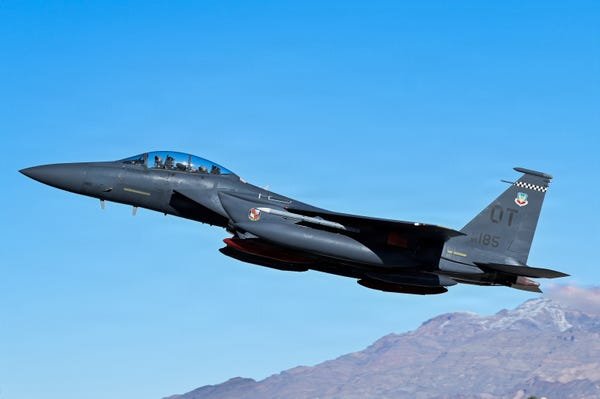
F-15E Strike Eagles, deployed during Operation Epic Fury, can fly 2.5 times the speed of sound. Take a closer look.

  • The US Air Force deployed F-15E Strike Eagles during Operation Epic Fury against Iran.
  • The fighter jets are designed for air-to-air and air-to-ground combat in all weather, day or night.
  • Kuwait mistakenly shot down three F-15E Strike Eagles in a “friendly fire” incident, CENTCOM said.

F-15E Strike Eagles, fighter jets designed for air-to-air and air-to-ground combat, are usually a dominating force in the skies.

When three F-15E Strike Eagles were mistakenly shot down by Kuwait during Operation Epic Fury, it brought renewed attention to one of the Air Force’s fastest, most versatile aircraft.

Here’s a closer look at the F-15E Strike Eagle, an advanced aircraft the US is using to destroy Iran’s missile arsenal and drone bases from the skies above Iran.

The F-15E Strike Eagle has been in service in the US Air Force for nearly 40 years.

An F-15E Strike Eagle at Nellis Air Force Base in Nevada. 

U.S. Air Force photo by Airman 1st Class Jasmine Thomas

The first F-15A model flew in 1972, and the first F-15Es were produced in 1988, according to the US Air Force.

It’s the fastest crewed aircraft in the US Air Force.


An F-15E Strike Eagle flies through the sky.

An F-15E Strike Eagle during an exercise at Gando Air Base in Gran Canaria, Spain. 

U.S. Air Force photo by Staff Sgt. Elizabeth Davis

The air-to-air and air-to-ground attack aircraft can fly at 1,875 miles per hour, or 2.5 times the speed of sound.

The F-15E Strike Eagle’s high thrust-to-weight ratio enables it to accelerate during vertical climb.


An F-15E Strike Eagle.

An F-15E Strike Eagle in flight. 

U.S. Air Force photo by Staff Sgt. Tylin Rust

The high thrust-to-weight ratio also allows the F-15E Strike Eagle to execute tight turns without sacrificing speed. It has two Pratt & Whitney F100 engines, each producing over 23,000 pounds of thrust.

Another distinguishing capability is the plane’s head-up display, which projects flight and tactical information directly on the windscreen.


The head-up display on a C-17 Globemaster III.

The head-up display on a C-17 aircraft. 

U.S. Air National Guard photo by Tech. Sgt. John Linzmeier

Pilots can track and attack targets, check the status of weapons, and see other tactical and flight information without taking their eyes off the windscreen.

The fighter jet also includes a low-altitude navigation and targeting infrared for night (LANTIRN) system.


The underside of an F-15E Strike Eagle.

The underside of an F-15E Strike Eagle. 

U.S. Air Force Photo by Airman 1st Class Olivia Gibson

The LANTIRN system allows the planes to fly in any weather and attack ground targets at low altitudes. The system consists of two pods, a navigation pod and a targeting pod, mounted under the plane.

F-15E Strike Eagles can carry both nuclear and conventional weapons.


Loading an AIM-120 missile onto an F-15E Strike Eagle

US Air Force crew members load an AIM-120 missile onto an F-15E Strike Eagle aircraft at Mountain Home Air Force Base in Idaho. 

Airman 1st Class Donovin Watson/366th Fighter Wing

Its armament includes an internally mounted 20-millimeter gun with 500 rounds of ammunition, AIM-9 Sidewinder missiles, and AIM-120 AMRAAMs, an acronym for the radar-guided Advanced Medium-Range Air-to-Air Missiles.

The F-15 also regularly carries ground attack weapons like the Joint Direct Attack Munition, or JDAM, a kit that adapts an unguided munition into a “smart” bomb with fins and GPS guidance.

F-15E Strike Eagles are flown by a pilot and a weapons systems officer.


The cockpit of an F-15E Strike Eagle.

The cockpit of an F-15E Strike Eagle. 

U.S. Air Force photo by Airman 1st Class Aidan Martínez Rosiere

The weapon system officer sits directly behind the pilot, and closely manages the plane’s sensors and weapons.

Two variants of the F-15 are single-seaters: the F-15A and F-15C.

The planes can fly 2,400 miles without refueling, and can be refueled in flight.


An F-15E Strike Eagle receives in-flight refueling from a KC-135 Stratotanker.

An F-15E Strike Eagle receives in-flight refueling from a KC-135 Stratotanker during an exercise over the Atlantic Ocean. 

U.S. Air Force photo by Senior Airman Cody J. A. Mott

F-15E Strike Eagles have a fuel capacity of 35,550 pounds.

The fighter jets can be refueled in flight by KC-135 Stratotanker aircraft, which Boeing developed from its “Dash 80” prototype in the 1950s.

KC-135s were also deployed to Israel as part of Operation Epic Fury. One crashed in western Iraq on Thursday, killing six US service members. United States Central Command said the circumstances of the crash were under investigation, but it “was not due to hostile fire or friendly fire.”

Each F-15E cost $31.1 million to produce in 1998, according to US Air Force figures. That would be around $62.3 million when adjusted for inflation.


F-15E Strike Eagles at Travis Air Force Base in California.

F-15E Strike Eagles parked at Travis Air Force Base in California. 

U.S. Air Force photo by Kenneth Abbate

Newer F-15 models cost around $100 million, The Wall Street Journal reported.

The newest version of the aircraft is the F-15EX Eagle II, which features more advanced controls and upgraded engines.

On March 1, Kuwait’s air defenses mistakenly shot down three American F-15Es during Operation Epic Fury in what US Central Command described as a “friendly fire incident.”


F-15E Strike Eagles in the Middle East.

F-15E Strike Eagles at an undisclosed base in the Middle East. 

U.S. Air Force photo by Senior Airman Jared Brewer
All six crew members ejected safely. The incident is under investigation.

“Kuwait has acknowledged this incident, and we are grateful for the efforts of the Kuwaiti defense forces and their support in this ongoing operation,” CENTCOM said.


Source link

This-Pentagon-announcement-on-an-Operation-Epic-Fury-soldiers-believed.jpeg

This Pentagon announcement on an Operation Epic Fury soldier’s ‘believed to be’ death is very unusual

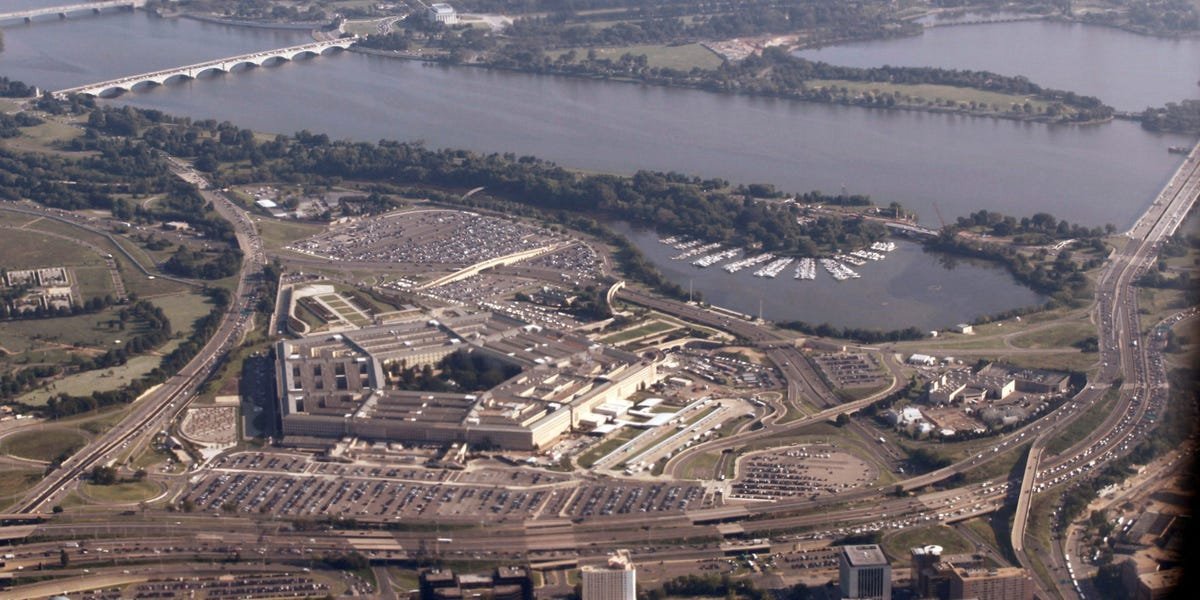
The Pentagon last week announced the death of a US Army soldier killed while supporting Operation Epic Fury before a medical examiner had positively identified them. Former military spokespeople said that it was an unusual and awkwardly phrased departure from standard procedures.

In a press release titled, “DOW Identifies An Army Believed to Be Casualty,” the Department of Defense announced “the believed to be death” of Chief Warrant Officer 3 Robert M. Marzan, an Army reservist who died during an Iranian strike that also killed five other troops in Kuwait.

According to the release, Marzan, a soldier with the 103rd Sustainment Command, “was at the scene of the incident on March 1, 2026, and is believed to be the individual who perished at the scene. Positive identification of Chief Warrant Officer 3 Marzan will be completed by the medical examiner.”

A defense official told Business Insider a medical examiner has since confirmed Marzan’s identity.


Screenshot of the DoD announcement.

Screenshot of the DoD announcement.

war.gov/screengrab


Prematurely announcing a death risks misidentification, which can erode public trust if corrections are later required, two former military spokespeople told Business Insider. They also said attention to detail and clarity in these communications shows respect.

“When a service member is killed in combat, they deserve better than this,” Joe Plenzler, a retired Marine lieutenant colonel who worked in public affairs during the Global War on Terror, wrote in a post to LinkedIn.

He told Business Insider separately that “it’s a simple matter of respect to make sure that everything is accurate.”

US Central Command, which oversees American military operations in the Middle East, has reported seven US service members killed in action in the Iran war that began in late February. The fatal strike in Kuwait came as Iranian forces launched missiles into countries across the region. Marzan is the only service member in this conflict so far who has been described as “believed to be” dead.

Asked about the statement, the Office of the Secretary of Defense referred Business Insider to the Army, saying, “DOW announces, all follow-on questions go to the Army.” The Army did not provide comment to Business Insider.

Why the Pentagon statement was unusual

Typically, the military refers to a service member whose death has not yet been confirmed as “DUSTWUN,” short for “duty status — whereabouts unknown,” a retired Army spokesman who served during the wars in Iraq and Afghanistan told Business Insider. The term is used when a service member’s absence is involuntary and their status cannot yet be confirmed.

Announcing a death before positive identification by a medical examiner marks a break from norms that governed casualty reporting over two previous decades of war, the former spokesman said. The DUSTWUN designation is intended for situations where ongoing rescue efforts prevent an immediate determination, though recovery of remains is not always required to declare a service member deceased, according to military policies outlining casualty procedures.

“We had thousands of casualties throughout the conflicts in Iraq and Afghanistan and Syria,” said the retired Army official. “I don’t recall ever announcing someone as ‘believed to be a casualty.'”

Few communications are as important or sensitive as announcing a casualty, he said, describing a somber process honed after more than 7,000 US service member deaths during the Global War on Terror, according to Brown University’s Costs of War project.

Plenzler, the former Marine public affairs officer, told Business Insider that all communications related to sensitive topics, including casualties, were generally examined by at least three people before publication because of the heavy impact on public trust.

In his LinkedIn post, he recalled seeing “people removed from leadership positions for getting names incorrect during memorial services.”

While the former Army spokesman expressed disappointment in what they characterized as an awkwardly written DoD announcement, he also noted that many of the personnel who oversaw casualty communications during the height of the previous wars in the Middle East have since left the service, leaving newer troops to manage hard notifications and public messaging.

“We have been sort of out of this business now for several years,” he said.

Marzan, 54, lived in Sacramento and was assigned to an Iowa-based logistics unit. Business Insider could not reach a Marzan family member for comment.

Communicating casualty updates comes with a learning curve, the former Army spokesman said. The details of this release are unclear, but he said he hopes “they’ve learned a lesson from this.”

The announcement comes amid broader shifts in how the military communicates during fast-moving combat operations, including increased reliance on social media updates from combatant commands and the Pentagon. Communications once known for staid military-speak now often feature videos of US missile strikes or jets taking off, strong wartime rhetoric, or posts debunking Iranian “bogus claims.”


Source link

Epic-Fury-Video-shows-US-and-Israel-attacks-on-Iran.jpeg

‘Epic Fury’: Video shows US and Israel attacks on Iran as Tehran retaliates

Explosions were heard in Tehran on Saturday, Feb. 28, as the US and Israel launched a joint “preemptive” attack, called “Epic Fury” by the Pentagon

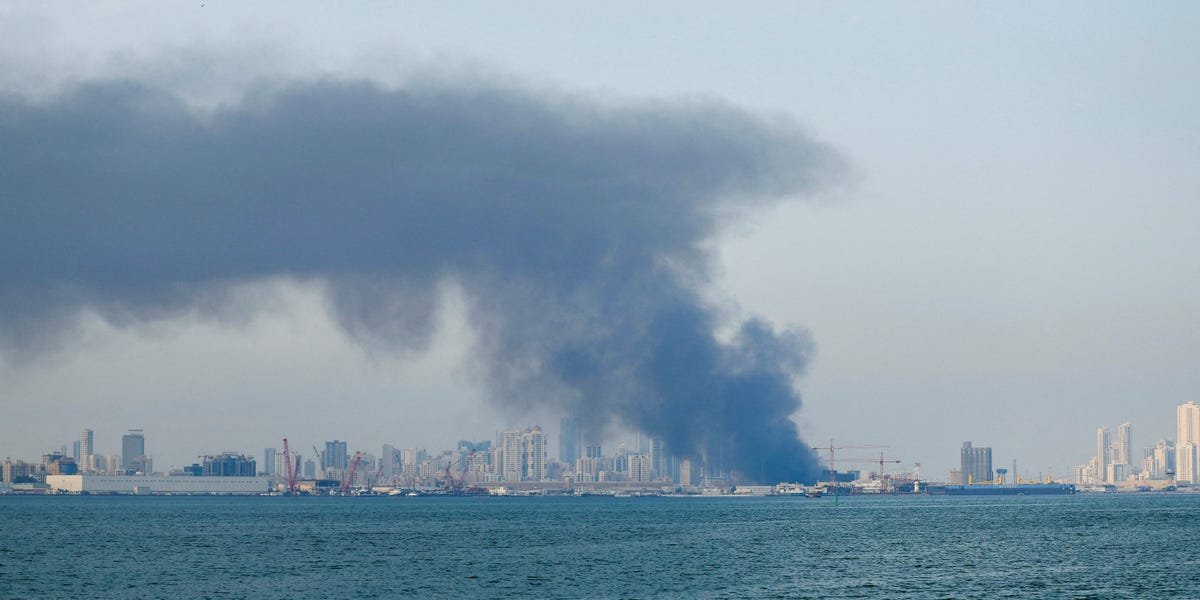
Iranian forces say they struck a US naval base in Bahrain, as the country launched strikes across the region in retaliation.

The attack come amid diplomatic efforts between US and Iranian officials over Iran’s nuclear program.


Source link