
Trumps-signature-to-appear-on-future-currency-as-part-of.jpeg

Trump’s signature to appear on future currency as part of the 250th anniversary of American independence, Treasury says

The US Treasury Department announced Thursday that President Donald Trump’s signature will appear on future US paper currency, marking the first time a sitting president’s name will be printed on American bills.

Treasury Secretary Scott Bessent, in a press release, framed the move as symbolic, saying US currency should reflect the country’s economic standing under Trump’s leadership and serve as a marker of the nation’s “fiscal strength and stability.”

The decision breaks with longstanding precedent. For more than a century, US banknotes have carried the signatures of Treasury officials — not the president.

The Treasury said the move, in part, was to commemorate the coming 250th anniversary of American independence, as the administration pursues a broader effort to mark the milestone through currency and coin redesigns.

The Treasury said new bills bearing Trump’s signature, along with that of the Treasury Secretary, will begin being issued at the semiquincentennial, though it is unclear which bills will bear Trump’s signature or how long the initiative is expected to last.

“The decision for Trump to end years of precedent of Treasury Secretaries signing bills is another piece of evidence that Trump is trying to brand everything in his name, even though it is unusual and in the mold of what more undemocratic leaders typically do in other countries,” Christian Grose, a professor of political science and public policy at the University of Southern California, told Business Insider.

Grose said the move risks making using cash a partisan act, potentially making Trump’s supporters more enthusiastic about cash payments, and Democrats more likely to use electronic payments. However, Grose added, he wasn’t sure how effective the move would be.

The US is currently facing a tougher economic climate.

The US dollar has faced downward pressure in recent months, driven in part by sweeping tariffs that have rattled global trade and increased import costs, as well as the ongoing war in Iran, which has heightened geopolitical risk and unsettled currency markets.

Economists have warned that both factors can weaken demand for the dollar by slowing growth and increasing uncertainty.

The currency change is the latest example of Trump placing his imprint on federal institutions and national symbols, following efforts to feature his likeness on commemorative coins and other government-backed projects.



Source link

Amazons-cloud-reboot-shows-the-future-of-consulting-in-the.jpeg

Amazon’s cloud reboot shows the future of consulting in the AI era

My youngest daughter, Tessa, just accepted an internship with PwC in San Francisco. We’re overjoyed she’ll be home for a few months after heartlessly leaving us 18 months ago to study accounting at Wake Forest in North Carolina.

What surprised me: her internship isn’t until summer 2027. I had no idea these things were locked in so far ahead.

With AI reshaping so much, I can’t help wondering what consulting will look like by the time she starts. This week brought some clues, via another megascoop from Business Insider’s Eugene Kim.

He reported on ProServe, Amazon’s in-house cloud consulting arm. The unit influences more than $10 billion in annual revenue for AWS. Read the full story, but here’s the big takeaway: AI is driving radical change inside ProServe, offering a glimpse of where the broader consulting industry may be headed.

I asked Polly Thompson, who covers the Big Four at Business Insider, for her view:

  • This confirms many trends I’ve heard from these firms. How to deliver value and how to charge for it in the AI era — that’s the big question.
  • ProServe focuses on technical consulting for AWS clients, while the Big Four span audit, tax, risk, and strategy. That diversification could make them more resilient. AI isn’t the only force at work: global instability is increasing demand for complex risk consulting, for example.
  • AI’s ultimate impact on consulting remains unclear. Firms are embracing the technology and adapting their business models, but unevenly.
  • Hiring shows the divide. McKinsey, Accenture, and PwC are reducing hiring. EY is generally increasing entry-level hiring. KPMG isn’t making hiring changes.

Sign up for BI’s Tech Memo newsletter here. Reach out to me via email at abarr@businessinsider.com.


Source link

I-tested-3-popular-ways-to-batch-cook-eggs-—.jpeg

I tested 3 popular ways to batch cook eggs — there’s just one method I’ll use for all of my future meal prepping

  • I used the same few ingredients to batch prepare eggs three ways, testing each method’s results.
  • During the experiment, I baked egg muffins, cooked a large omelette, and made a sheet pan of eggs.
  • I’d skip the egg muffins and omelette next time but gladly repeat the sheet-pan method.

Every morning, at least one person in my family cooks eggs.

Whether they make them scrambled or sunny-side-up, the results tend to be inconsistent. One day, the eggs are runny; the next, they’re sticky. It’s a complete gamble.

In search of a fail-proof method for making eggs that allows me to avoid chaotic, messy morning breakfasts, I attempted to meal-prep them three different ways: baking them as muffins, frying them into an omelette, and cooking them in the oven on a sheet pan.

For each method, I used the same ingredients — six eggs, ¾ cup egg whites, 1 cup of chopped red bell peppers, a small onion, and 2 ounces of crumbled feta cheese. Each batch yielded between eight and 12 servings.

Here’s how the eggs stacked up in terms of flavor, texture, and cook time.

Oven-baked egg muffins seemed like an easy-to-prep meal.

I divided the ingredients into 12 sections using the muffin pan.

Jennifer Messineo

I combined all the ingredients in a bowl, then used a ladle to distribute them evenly into a 12-cup muffin pan.

It proved difficult to distribute the ingredients evenly between the cups without making a mess. Some ended up with extra feta, and others got more peppers.

I planned to cook the muffins for 20 minutes at 350 degrees Fahrenheit, but they were done after 15.

After this test, I’ll never make these egg muffins again.


egg muffin plated

My muffins were too puffy and had too many air pockets.

Jennifer Messineo

I used to make eggs in a muffin tin sometimes, and the results from this test reminded me why I stopped.

Although I liked that they cooked quickly and were easy to portion, the muffins puffed up more than I expected, creating a fluffy egg with a few too many air pockets.

Also, the ingredients didn’t distribute evenly (disappointingly, I had a bite with no cheese!).

The cleanup wasn’t ideal either, as most of the egg stuck to the pan. After soaking it for days, I considered throwing it out.

By the time I finally got it clean, I’d lost the time I saved cooking eggs to scrubbing the muffin pan.

Cooking the eggs into one big omelette should’ve been straightforward.


eggs from meal prep raw but cooking in pan

I kept the eggs cooking over very low heat.

Jennifer Messineo

When it came time to use the stovetop, I decided to make a large omelette in a 12-inch pan using the same five ingredients.

I poured the mixture into the hot, buttered pan and realized how tricky it would be to manage. To accelerate the cooking process and create a fluffy, layered dish, I tilted the pan to lift the edge of the omelette, letting the uncooked egg flow underneath.

I kept the heat low so the bottom wouldn’t overcook. After 10 to 15 minutes, I covered the pan so the center would cook through. Then, I cooked it for about 10 more minutes until the center looked firm.

I ended up having a hard time handling so many eggs in one pan.


eggs from meal prep test in pan

The omelette’s consistency and flavor left much to be desired.

Jennifer Messineo

Lesson learned: Omelettes aren’t meant to be batch-cooked.

I knew cooking a large volume of eggs might be an issue on the stovetop, but I was still surprised that this method took the longest, clocking in at almost 25 minutes from start to finish.

It had an overcooked, eggy smell and taste, and the texture was inconsistent, with a crispy bottom layer and soft center.

Even though I usually fry my eggs on the stovetop, this test made me reevaluate my ways. I also found it difficult to portion the omelette into equal pieces for storage.

I didn’t know what to expect when I pulled out the sheet pan.


sheetpan eggs  in oven

The ingredients spread out evenly in the pan.

Jennifer Messineo

Before this test, I’d never made eggs in a sheet pan. I poured the combined ingredients into the greased, stainless-steel pan and was pleased to see the vegetables and cheese spread evenly.

After baking it for 18 minutes at 350 degrees Fahrenheit, the mixture was cooked through.

It was by far my favorite way to meal-prep eggs.


sheetpan eggs cut into squares

I found it easy to portion and store the sheet-pan eggs.

Jennifer Messineo

The eggs cooked evenly in the sheet pan, and the results had a perfect consistency.

I liked their texture, as they were fluffy but still denser than the airy muffins and omelette. The vegetables weren’t quite as soft as they were in the other methods, but they tasted fine.

I also found it so easy to remove the egg from the pan. The stainless-steel sheet’s surface distributed heat evenly and prevented any crusty edges from sticking to the pan, so cleanup was very easy.

Moving forward, I’ll skip the muffins and omelette and stick with the sheet-pan eggs.


comparison of meal-prepped eggs

I didn’t have to clean very much after making sheet-pan eggs, which I consider a huge bonus.

Jennifer Messineo

As I expected, this test reinforced my belief that eggs are tricky to prepare.

The large omelette I made on the stovetop tasted overcooked and lacked the height I got from the oven. All factors considered, it was my least favorite (although I was nearly as disappointed by the airy, messy egg muffins).

After extensive testing, I can confidently say the sheet-pan eggs were the meal-prep winner. They stayed firm, were easy to divide into 12 even squares, and stayed in one piece when I transferred them to the freezer.


Source link

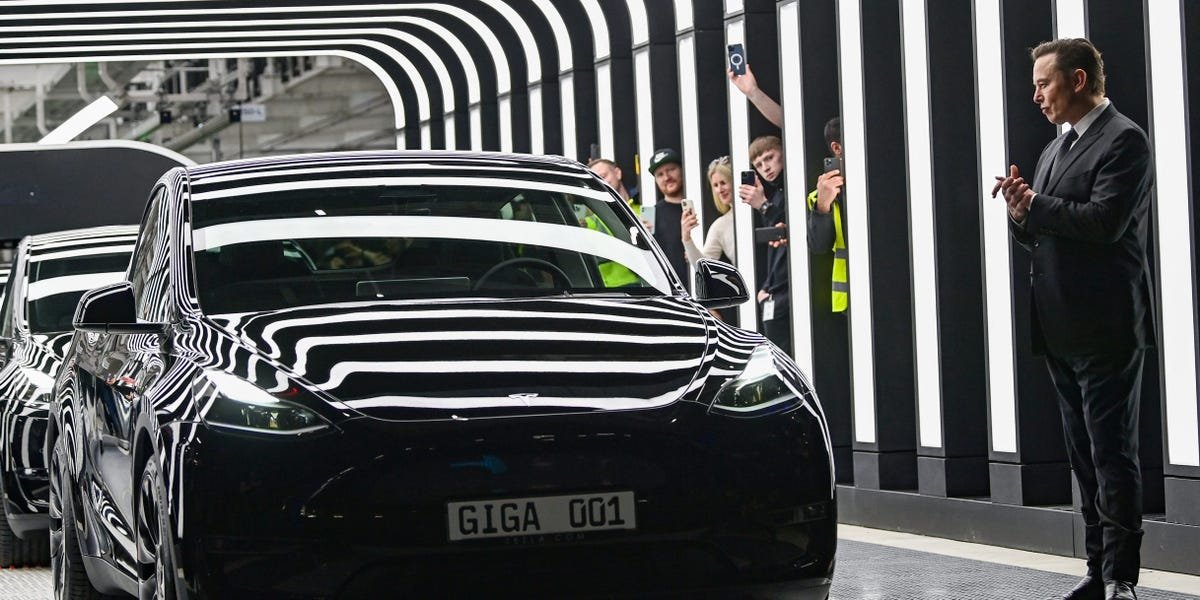
Elon-Musk-warns-Tesla-employees-over-future-of-German-megafactory.jpeg

Elon Musk warns Tesla employees over future of German megafactory ahead of union election

Tesla’s sales in Europe are plummeting — and now Elon Musk has a warning for employees at the company’s German megafactory ahead of crucial union elections.

In an interview with Giga Berlin senior director Andre Thierig posted on X on Thursday, Musk said Tesla would “ideally” expand its only European gigafactory and start production of its battery cells, Cybercab robotaxi, and Optimus robot at the site.

Asked if he had any advice for the team at Giga Berlin to work toward that vision, Musk said any expansion was contingent on Tesla being free from interference from “outside organizations.”

“Things certainly get harder if there are outside organizations who are pushing Tesla in the wrong direction,” said Musk.

“It’s difficult to say that then we would expand, if we had outside organizations who were making things very difficult. We’re not going to shut down the factory, but we wouldn’t expand it either,” said the Tesla CEO.

The billionaire’s comments come ahead of a crucial vote at Tesla’s German factory next week, with powerful German union IG Metall pushing to gain control of the site’s work council — an elected body of employees required by local laws that negotiates pay deals and working hours with management.

German publication Handelsblatt first reported Musk’s comments, which it said were screened for employees on Wednesday.

Tesla clashes with union

The run-up to the election has been marked by fierce disputes between the union and Tesla’s executives. Earlier this month, Tesla filed a criminal complaint against an IG Metall representative, accusing them of secretly recording an internal meeting.

IG Metall, which has frequently clashed with Tesla over working conditions at Giga Berlin over the past few years, denied the allegation and responded with its own complaint accusing Thierig of defamation. The union said Thursday that both sides had agreed on a truce ahead of the works council elections.

The debate over Giga Berlin’s future comes as Tesla’s sales in Europe have collapsed. The US automaker saw registrations of its EVs fall nearly 38% in the EU last year, as it was hit by backlash over Musk’s political interventions and backing of German far-right party AfD.

In January, Tesla’s European sales dropped to just 8,000 units, according to data from the European Automobile Manufacturers Association, less than half the number sold by Chinese rival BYD.

Musk also said in the interview that Tesla expects to receive approval to sell Full-Self-Driving driver assist technology in the Netherlands on March 20.


Source link

Shield-AI-says-its-Hivemind-AI-pilot-just-flew-a.jpeg

Shield AI says its Hivemind AI pilot just flew a drone vying to become a future Air Force uncrewed wingman

Shield AI’s artificial intelligence pilot has flown one of the US Air Force’s next-generation drone wingman contenders for the first time, the company announced this week.

Shield AI’s Hivemind, the same AI program that previously went head-to-head with a crewed fighter aircraft in aerial combat, was picked by the Air Force for autonomy testing as part of its Collaborative Combat Aircraft, or CCA, effort earlier this month. Now, it has flown Anduril’s CCA competitor, an achievement for the software that could pilot future uncrewed aircraft built to fly and fight alongside crewed US combat aircraft.

The US defense company said Hivemind, piloting Anduril’s Fury drone, also known as YFQ-44A, completed its first flight test over the Mojave Desert. The AI pilot met all required test points, including mid-mission updates and basic operational maneuvers, the company said.

The successful test opens the door for expanded mission autonomy testing with Hivemind, Shield AI said.

“This flight test showcases the potential of airpower built on mission autonomy,” Christian Gutierrez, vice president of Hivemind Solutions, said.

“Across platforms, domains, and environments, Hivemind provides resilient mission autonomy, proving that software is central to the future of airpower,” Gutierrez said, adding that “our collaboration with Anduril reflects a new era of defense acquisition, where autonomy is treated as a foundational warfighting capability on par with the aircraft itself.”

Shield AI has spent more than a decade developing Hivemind’s AI software, which is designed to perform many of the tasks of a human pilot. Unlike autopilot or other autonomous features, Hivemind is built to make real-time decisions, adjusting flight routes depending on conditions or obstacles to continue a mission, the company says.

The same AI software was used in the Air Force’s AI-enabled X-62A VISTA, a modified F-16 that flew simulated dogfights against a crewed fighter aircraft in 2024. The service has not publicly revealed which aircraft emerged victorious in those engagements.

Hivemind is also the AI pilot behind Shield AI’s new X-BAT fighter aircraft, which the company unveiled in October. Shield AI says that the X-BAT can operate without human intervention and take off without runways, as well as in contested environments where GPS and reliable communications might not be available.

Anduril’s Fury aircraft is one of the competitors for the CCA program, a priority of the Air Force that envisions uncrewed aircraft operating alongside crewed aircraft with some mixture of autonomy and human direction. Earlier this month, a test flight saw a CCA stand-in aircraft communicate and fly with an Air Force F-22 Raptor, marking another step forward in the CCA program.

On Wednesday, Col. Timothy Helfrich, the Air Force’s portfolio acquisition executive in fighters and advanced aircraft, commended the speed of work being done on autonomous pilots flying CCAs. “Quite an accomplishment going so quickly,” he said at a panel, “but we’ve got a lot ahead of us though.”


Source link

Headshot of Chris Panella.

A US Air Force F-22 Raptor just showed off how it might work with a loyal wingman-type drone in a future air war

A crewed US Air Force fighter and an uncrewed jet-powered aircraft flew together recently, communicating and showing how autonomous drones might fight in a future air war alongside human pilots.

US defense firm General Atomics, a competitor in the Air Force’s Collaborative Combat Program aimed at developing and fielding loyal wingman-type drones, said on Monday that its MQ-20 Avenger, long a CCA stand-in, flew with an F-22 Raptor.

During the test at Edwards Air Force Base earlier this month, the stealth fighter’s pilot commanded the test drone to carry out tactical maneuvers, perform combat air patrols, and execute airborne threat engagement tasks.

The most recent demonstration is an advancement of a similar test in November 2025, when an F-22 pilot used a tablet to control an MQ-20, a test aircraft being used to demonstrate CCA-style teaming. The tablet allowed the pilot to communicate with the drone and send commands during flight.

The flight test earlier this month saw the Raptor pilot use government-provided autonomy software on the F-22 and a tactical data link to pass commands in real time to the drone.

“This demo featured the integration of mission elements and the ability of autonomy to utilize onboard sensors to make independent decisions and execute commands from the F-22,” David Alexander, the president of General Atomics Aeronautical Systems, Inc., said in a statement.


An F-22 flies in a blue and cloudy sky.

The Air Force views CCAs as an attritable force multiplier that will be used with manned aircraft and autonomy.

US Air National Guard photo by Staff Sgt. John Macera


General Atomics said the latest demonstration showed how CCA-type platforms could increase the combat power available to human pilots in a future war.

The Collaborative Combat Aircraft program is a priority for the Air Force as a way to bolster American airpower. These drones are meant to fly alongside advanced fighters, including the coming sixth-generation F-47 being developed by Boeing.

Air Force officials say CCAs aren’t disposable, but they’re cheaper than fighters like the F-35 Lightning II Joint Strike Fighter. They are built to be attritable so they can be risked in combat instead of a human-piloted aircraft.

Testing with the MQ-20 is helping inform the Air Force’s CCA program, which is focused on General Atomics’ YFQ-42, Anduril’s YFQ-44, and Northrop Grumman’s YFQ-48A. The air service envisions these systems as easily upgradable platforms compatible with high-end crewed aircraft.

CCA-type drones, which include designs beyond those with dedicated Air Force program designations, are designed to carry out missions on their own, from air-to-air combat to strike and intelligence roles, while also boosting the power of a formation by adding more sensors and weapons without another pilot in the cockpit.

The Air Force says that CCAs are not intended as replacements for its crewed jets but are rather partners that will change how pilots work with artificial intelligence and drones — and expand US airpower in a fight, especially against a near-peer adversary.


Source link