
Jake Epstein

A US Navy oiler ran hard aground after its captain urged a last-minute shortcut: ‘Let’s try to shoot the gap’

“Let’s try to shoot the gap there.”

Just after noon in the northern Arabian Sea, the captain of a US Navy fuel ship gave the order to take a shortcut through risky waters rather than take a longer, safer route to their destination.

Two hours later, the 677-foot replenishment oiler USNS Big Horn struck the sea floor at high speed, shaking violently as the vessel ran aground. Music was audible on the bridge as sailors missed key navigational warnings.

The Navy command investigation obtained by Business Insider said that the September 2024 incident, initially characterized as an allision, was caused by “a series of poor decisions, failure to follow procedure, application of open water navigation to restricted waters, and failure to exhibit proper risk calculation.”

The ship suffered more than $20 million in damage.

The Navy’s investigation, the details of which have not previously been made public, reveals that the captain and his watchstanders failed to prepare for the shortcut and failed to monitor navigation alerts that could have averted disaster at the last minute.

“The grounding was preventable,” investigators wrote.

The investigation recommended administrative or disciplinary action against Big Horn’s captain and several officers. Military Sealift Command said that both the captain and the ship’s navigator are still employed. It is unclear if they will be permitted to hold their positions again.

“Pursuant to the investigation, all administrative and disciplinary matters were submitted for appropriate review,” command spokesperson Jillian Morris said in response to Business Insider’s query on accountability and discipline. “However, to protect employee privacy, we do not comment on, nor share the details of, the outcome of those matters.”


The Henry J. Kaiser-class fleet replenishment oiler USNS Big Horn (T-AO 198) sails alongside the Nimitz-class aircraft carrier USS Abraham Lincoln (CVN 72) during a replenishment-at-sea.

The Big Horn during a replenishment-at-sea with the aircraft carrier USS Abraham Lincoln.

US Navy photo


Making a risky choice

Shortly after 12 p.m. local time on September 23, the Big Horn was wrapping up its final replenishment-at-sea with ships from the Abraham Lincoln Carrier Strike Group.

The next move for the Henry J. Kaiser-class replenishment oiler, which refuels warships at sea, was to sail from the northern Arabian Sea to the Duqm port in Oman for a scheduled visit.

The new navigator was drafting route options for the captain to get the Big Horn to a pickup point, where the oiler would embark a harbor pilot to guide the ship into port.

During a conversation with another officer, the transcript of which is included in the Navy’s investigation, the navigator expressed concerns about running aground on a particular route and said they preferred an option through deeper water.

The navigator told the officer that they could take the riskier shortcut and save time. “I’m just scared of right here,” they said, “scared of these shallow points.” The officer said they should present the shortcut to the captain.

The officer said “ask the captain and say, ‘This route is about 10 miles shorter but goes through this. Do you feel comfortable?'”

One route, known as Duqm A, was shorter but ran through known shoal areas. Duqm B was a “deep water” path that added several miles to the journey to the rendezvous point.

Just before 12:30 p.m., with the last replenishment-at-sea ongoing, the navigator asked the captain which route they preferred.

“Let’s try to shoot the gap there,” the captain told the navigator, selecting the Duqm A route, even though it threaded a gap between charted shoals dangerously close to the oiler’s draft. The navigator said that they had checked on the under keel clearance, to which the captain replied: “Rad.”

The Navy investigation into the grounding that followed that decision said that there was no indication that the captain reviewed a paper chart during the decision-making process.

‘Slow down, slow down, slow down’


The Arleigh Burke-class guided-missile destroyer USS Daniel Inouye (DDG 118), right, sails alongside the Henry J. Kaiser-class replenishment oiler USNS Big Horn (T-AO 198) as it transfers fuel to the Arleigh Burke-class guided-missile destroyer USS John S. McCain (DDG 56), July 20.

The Big Horn sails between Navy destroyers in July 2024.

US Navy photo


About an hour later, at roughly 1:30 p.m., the Big Horn completed its final replenishment-at-sea and set out for the pick-up point for the harbor pilot. Pilots are standard for most harbor approaches because they have the local knowledge to help ship captains navigate through tight channels.

Duqm A took the Big Horn through a gap between two charted areas of shoal — or shallow — water known as the San Carlos Banks that were not deep enough for the oiler.

Navy investigators wrote that “attention to detail and consideration of the risks should have negated Duqm A as an option.”

The Big Horn sailed through the San Carlos Banks at 17 to 18 knots. In transit, the ship’s system triggered safety alarms. They were silenced but had visual cues; there is no indication that they were acknowledged.

Meanwhile, the ship’s fathometer — which measures water depth under the hull — showed the water growing progressively shallower.

At 2:12 p.m., the vessel began vibrating as it struck the sea floor.

“Slow down, slow down, slow down,” the captain said.

“We must have hit a shallow spot somewhere, but there is nothing on the chart,” he said moments later as the ship came to a full stop.

Crew members reported fuel leaks on both main engines.

“We must have hit a shallow spot. We must have hit a sand bank,” the captain said.


The Arleigh Burke-class guided-missile destroyer USS Chung-Hoon (DDG 93) conducts an emergency breakaway drill with the Henry J. Kaiser-class fleet replenishment oiler USNS Big Horn (T-AO 198). Chung-Hoon, part of the Nimitz Carrier Strike Group, is in U.S. 7th Fleet conducting routine operations.

The grounding cost the Navy more than $20 million.

US Navy photo


The damaged oiler was anchored and later towed into Duqm.

A ‘preventable’ blunder

Investigators found that the members of the bridge team appeared “unreasonably” focused on meeting a 3 p.m. harbor pilot pick-up time, which contributed to the decision to take the risky shortcut at high speeds.

“We gotta haul ass,” the navigator told an officer at one point. In a separate conversation with the captain, they said they believed they could make it, if only slightly behind schedule.

“If we cut corners we’ll get there,” the captain said, per the investigation.

“Yes sir!” the navigator replied. That was minutes before the ship ran aground.

Although the captain later said he did not believe he was operating in restricted waters and was unaware of any safety hazards or navigational concerns, investigators concluded that the Duqm A track met the definition of restricted waters under Navy policy, meaning a formal navigation brief should have been conducted before entering the area.

“However, no members of the bridge team, including the Captain and Navigator, seemed to realize they were steaming into restricted waters,” the investigation said. “No consideration was given for a required navigation brief, a more detailed plan, or thorough review of the proposed track prior to steaming through.”

The command investigation also found that, when the Big Horn ran aground, the ship was operating with two separate electronic navigation chart databases, and there was some confusion among the officers about which one was in use at the time. Safety contours and the shoal area were not clearly displayed.

Records indicate there was music was playing on the bridge up until the grounding. Tug boats brought the Big Horn into port the following day.

The grounding caused extensive damage to the Big Horn’s hull, internal support structures, port propeller, and port rudder. According to Navy cost breakdowns, expenses included roughly $7.5 million for towing, $8.6 million for services in Oman, $1.9 million for fuel offloading, and $2.4 million in additional costs in the US — totaling more than $20 million.



Source link

The-economy-grew-strongly-last-year-but-hiring-stagnated-Its.jpeg

The economy grew strongly last year, but hiring stagnated. It’s making the gap between the rich and everyone else worse.

The data is in, and last year presents an economic conundrum: Overall growth was relatively strong, but job growth was virtually nonexistent. It bodes ill for the gap between the rich and everyone else.

Newly released data showed the US economy grew 2.2% in 2025. That’s a respectable pace, although cooler than the past few years. Economic activity was affected by the record-long government shutdown in the fall, businesses figuring out how to handle trade announcements, and new investments.

Meanwhile, the US added the fewest jobs since 2003 outside recessions. While unemployment stayed low, hiring and job openings fell, meaning plenty of people couldn’t find a job. It’s an unfortunate situation for new graduates looking to get on the first rung of the career ladder, job switchers eager for a fresh opportunity, and basically anyone looking to land a job quickly outside the in-demand healthcare and social assistance sectors.

The divide between output and jobs is widening another divide: some call it a “K-shaped economy” where the rich are earning and spending more, while everyone else is stagnating. And it doesn’t look like 2026 will be much better.

“Consumers are feeling the weight of the price increases, and combined with the jobs outlook that’s worsening they say, ‘OK, when I look out, I don’t see prices going down that much, but I do see my wage is not growing and my job not being as reliable or secure as it once was,'” Atsi Sheth, the chief credit officer at Moody’s Ratings, told Business Insider.

A historical divide between job and output growth

Economist Mohamed El-Erian said in a Financial Times opinion piece before the newest GDP figures that while this “decoupling of job growth from economic growth” has happened before in the US, it’s typically occurred during recession recoveries and “not in the midst of a prolonged period of robust growth such as the one we are experiencing today.”

“We’re in this unusual environment where economic activity has remained quite robust, and yet job gains have fallen to near zero,” Gregory Daco, the chief economist at EY, told Business Insider.

The US added a measly 181,000 jobs last year; annual figures are often at least a million. It’s comparable to 2003, when the US only added 124,000 jobs in the wake of the 2001 recession.

Daco said GDP’s strength is “masking a growing bifurcation” and thinks the polarization will persist and maybe worsen because supply shocks, such as trade and tax policies, AI, and demographic changes, aren’t reversing.

“In some cases, we’re seeing a more significant effect on economic activity,” Daco said.

Some economic experts are optimistic about the year ahead. “We expect a strong year of economic growth in 2026, driven by business investment, consumer spending and fading trade headwinds,” said Rick Gardner, chief investment officer of RGA Investments. ZipRecruiter economist Nicole Bachaud thinks the job market could be at a “pivot point” after stronger hiring in January.

“Demand in other sectors that are more cyclically based instead of demographically based is starting somewhat to show signs of growth,” Bachaud said.

The gap between the rich and everyone else

The strength in the economy isn’t being felt by all. People at the top are feeling much better than pretty much everyone else. They don’t have to worry as much about rising prices of necessities and slowing wage growth.

“The wealthier, more affluent consumers are benefiting from wealth accumulation, allowing them to still spend relatively freely,” Daco said. “They’re also enjoying faster wage growth, while lower-income families are seeing reduced wage growth, near-zero real wage growth, and not much wealth appreciation outside of real estate, if they have that.”

Sheth said the benefits of GDP growth have been higher for those who earn from investments and capital gains. “They’ve benefited a lot from financial market booms, whereas those who earn their income primarily by wages have benefited some, but not as much,” she said.

Diane Swonk, chief economist at KPMG, told Business Insider that “What productivity growth we’ve seen since basically the turn of the century has accrued mostly to the owners of capital, not rank and file workers. And that means we’ve seen wealth compound, but also income inequality worsen.”

Sheth said regardless of how people refer to the disconnect happening in the economy, the “real trouble” is that wages are no longer keeping up with the rising cost of living and that people are having to pay a lot more to buy essentials.

Swonk said inflation is “the most regressive tax” because of how much lower-income households have to spend on necessities relative to their earnings.

“When those goods go up in price, obviously that affects them even harder, and so it’s a very regressive tax,” Swonk said, adding, “Oftentimes, we lose sight of the fact that it really is the level of prices that people are still reacting to.”

The Federal Reserve Bank of New York said in a report that inflation-adjusted consumer spending has increased for high-income households since 2023, but low-income household spending has mostly trended down. “The trend since 2023 is different from the trend during the pandemic recession and recovery, when consumption growth was similar across income groups,” the report said.

Amid those price increases and changes to spending habits, wage growth has drastically cooled for lower earners. Lower-income wage growth surged between 2021 and 2022, but has since cooled down a lot from the late 2022 peak. Sheth also pointed out that wage growth for hourly workers, who she said are likely “subject to much more fluctuation and downside risk than if you have a steady salary,” has also been falling faster than those not paid hourly.

Sheth said another issue is that the lower end of the wage spectrum is under more credit stress.

“We’re seeing greater credit stress in subprime auto, for instance, some parts of borrowing, but again at the lower end of the spectrum,” Sheth said. “But overall, if you compare household balance sheets today to, say, the pre-global financial crisis era, they’re generally stronger — much stronger at middle- and upper-income levels, of course, but generally stronger.”

Where we’re going in 2026 and how AI could keep widening the gap

El-Erian said in the Financial Times piece that, “This period of decoupling of employment from growth may prove more persistent and more consequential,” partly because the effects of AI are still unfolding.

AI-related investments have already made a dent in real GDP growth based on findings from the Federal Reserve Bank of St. Louis. “As firms continue integrating AI into their operations and building the infrastructure required to support it, these categories are likely to remain significant drivers of investment well into 2026 and beyond,” the authors wrote.

Laura Ullrich, the director of economic research in North America at the Indeed Hiring Lab, described a “precarious balance” between GDP and the job market. Ullrich is unsure whether employers will decide they should hire more to keep up with the relatively robust economic growth or make job cuts because they aren’t keeping up.

“I do think the uncertainty about the role AI plays adds in another interesting pivot,” Ullrich said. “Because if AI is able to take on the work of humans, then we could see economic growth without hiring picking up much. But, I’m skeptical that that’s happening in big ways right this second.”

Aside from the impact of AI, the US doesn’t need as many jobs to hold unemployment stable at a time when the population isn’t growing as quickly, so it’s possible job growth continues to be lower than previously experienced.

“The low-hire, low-fire job market isn’t just about policy changes in the new administration or about AI,” Jed Kolko, senior fellow at the Peterson Institute for International Economics, told Business Insider. “So, there may not be a quick fix.”

Even the Fed is cautious.

“While participants generally assessed that, under appropriate monetary policy, the labor market likely would stabilize and then improve this year, they continued to note that the outlook for the labor market remained uncertain,” minutes from the January Federal Reserve meeting said.


Source link

Gap-CEO-has-3-rules-for-cutting-down-meetings-—.jpeg

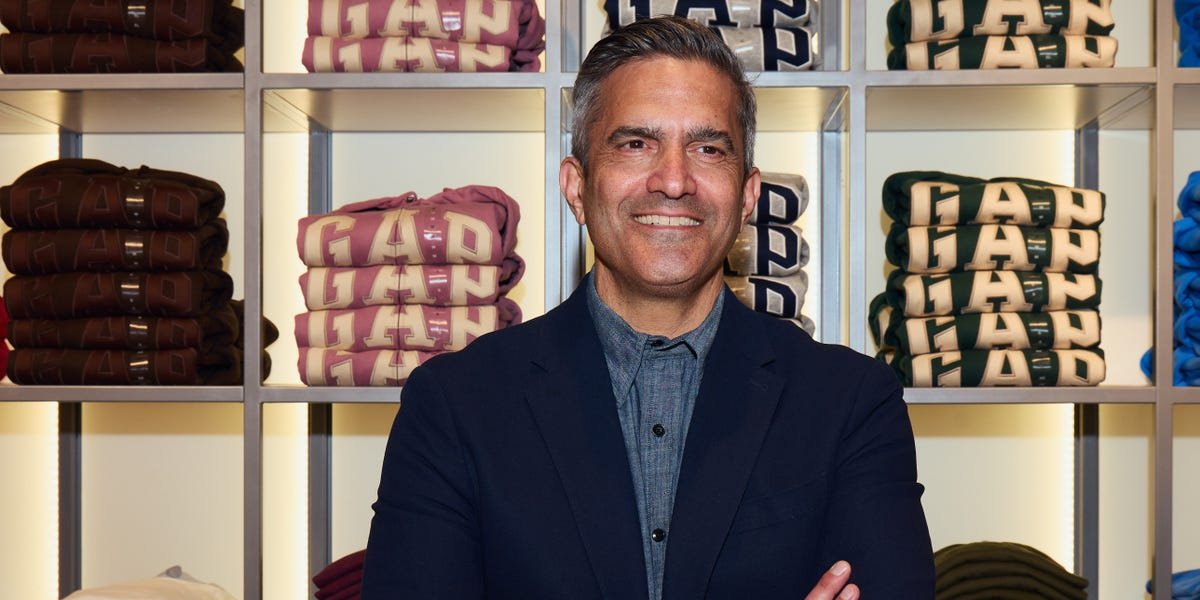
Gap CEO has 3 rules for cutting down meetings — and asking if he’s on the invite list breaks one of them

In an era of hyper-efficiency, leaders are taking a close look at the meetings on their calendars — and Gap’s CEO is no exception.

Since returning to lead Gap’s global brand in 2020, CEO Mark Breitbard told Business Insider he’s been focused on restoring the brand’s relevance, and part of that has included stripping away bureaucracy and unnecessary layers.

Meetings are often viewed as the pinnacle of corporate bureaucracy, — and Breitbard said he follows three rules to keep them in check.

The 3 rules

Breitbard said that if no one is sure why a recurring meeting is happening, it should be examined critically.

“If it’s a default meeting, like it happens every single week, then I feel like we need to question it,” Breitbard told Business Insider.

His second rule is to keep the invite list tight. Breitbard said it’s a red flag when he walks into a meeting, and someone asks, “Oh, are you in this meeting?”

“If you ask, the answer is ‘no.’ I clearly don’t need to be here if you have to ask,” Breitbard said, suggesting that the meeting shouldn’t be so big that people are invited without having a clear purpose for attending.

His third habit rule is to end on time — or early. He said when it’s near the end of a meeting, there often comes a time when people say something along the lines of, “Well, we have five more minutes…”

“We don’t have five more minutes,” Breitbard said. “We’re done now.”

Breitbard said that people often book 30-minute meetings, but he’s inclined to finish earlier if the purpose of the discussion has been accomplished.

“At minute 24, I say, ‘OK, good, this was great. Thanks, everyone,'” Breitbard said, adding that when people question if it’s really time to end, he says, ‘Yeah, we got what we needed.'”

Cutting down on meetings

The debate over meetings and how they should be run isn’t new. In 2018, Elon Musk said in an email that large meetings should be scrapped or kept “very short,” and billionaire investor Mark Cuban has similarly said they get in the way of his productivity.

But in today’s results-driven work culture, the push to rein in the amount of time spent in meetings in has taken on a new form of urgency.

Snowflake CEO Sridhar Ramaswamy told Business Insider in December that “meetings are like bureaucracies,” and he has four rules for managing his own, which involve keeping gatherings short, ensuring there’s a purpose, and making sure there’s an agenda and notes.

Instagram chief Adam Mosseri, also recently announced that recurring meetings would be canceled every six months and only re-added if “absolutely necessary.” He also encouraged making recurring one-on-ones biweekly “by default” and said workers should decline meetings that interfere with “focus blocks.”


Source link

They-quit-traveled-and-rethought-their-lives-—-meet-the.jpeg

They quit, traveled, and rethought their lives — meet the adults taking gap years

In my early 30s, I was working long hours as the editor in chief of a magazine, juggling deadlines and the looming “should we have kids?” question — all while feeling completely wrung out. I drafted a resignation email.

When my boss called me in, she surprised me: “Take some time off,” she said. “Come back to manage a new launch later this year.”

My plan for a year off collapsed into two months.

It began quietly in India at a yoga retreat near Kerala and ended with an adventure in Indonesia, climbing Mount Bromo and motorbiking through Yogyakarta.

It wasn’t a true gap year, but it was long enough to reset. The next year, I stepped into my boss’s role, leading the creative team I’d almost left behind.

That experience made me realize that time off doesn’t have to derail a career — it can redefine it.

I wasn’t a student with few obligations or a 20-something who hadn’t settled on a career path. I was an established professional stepping away when the stakes were high.

Extended time off can carry long-term costs — lower earnings, disrupted savings, slower compounding — but for some, the benefits outweigh the risks.

David Burkus, an organizational psychologist and author, began researching sabbaticals in 2015.

“People report better mental and physical health, increased confidence, and a greater sense of purpose after an extended break,” Burkus told Business Insider.

He also notes the benefits for employers: Teams cross-train, share knowledge, and become less dependent on a few “indispensable” people.

Paid sabbaticals are still a rarity in the US. Society for Human Resource Management data showed that 5% of companies offered them in 2019, rising to 7% by 2023.

And despite employers not rolling them out broadly, employees are increasingly seeking time off. In SHRM’s 2025 benefits survey, leave was the second-highest priority for workers — trailing only health benefits — for the fourth year in a row.

A peer-reviewed study published in the Academy of Management in 2022 interviewed 50 professionals who had taken extended time off. All interviewees said they came back as better leaders.

DJ DiDonna, a senior lecturer at Harvard Business School and coauthor of the study, says everyone he interviewed wished they had taken one earlier.

DiDonna told Business Insider that the best times for a sabbatical often coincide with natural life transitions, like a honeymoon, a newly empty nest, or the “twilight career” stage before retirement.

This collection brings together people who took that pause at different ages, for different reasons, and for vastly different lengths of time.

If you’ve taken an adult gap year yourself, I’d love to hear from you at akarplus@businessinsider.com.


Source link

The-gap-between-Gemini-and-ChatGPT-is-narrowing.jpeg

The gap between Gemini and ChatGPT is narrowing

Gemini is on a roll.

After a slow start, Google’s AI chatbot is rapidly gaining users, topping AI benchmark leaderboards, and forcing its biggest competitor, OpenAI’s ChatGPT, into “code red” emergencies.

Now, in another big leap, Walmart, the world’s largest retailer, is partnering with Gemini on a new shopping experience — similar to one it struck with ChatGPT in October.

When people use Gemini to ask questions or search, the assistant will now automatically recommend relevant products from Walmart and Sam’s Club, drawing on users’ past online and in-store purchases, Walmart said in a press release on Sunday.

For users who have linked their Walmart accounts, Gemini can tailor recommendations based on purchase history and enable delivery of in-store items within three hours, or as little as 30 minutes.

Walmart CEO John Furner said the partnership marks a shift in how people shop.

“The transition from traditional web or app search to agent-led commerce represents the next great evolution in retail. We aren’t just watching the shift, we are driving it,” Furner said in the press release.

In recent years, discovery-led shopping experiences on social media platforms like TikTok Shop, Instagram Shopping, and live shopping services like Whatnot have disrupted the traditional digital shopping experience.

AI is reshaping the discovery process even further.

Gemini 3 plays catch-up

While Gemini still trails ChatGPT in overall number of users by a significant margin, it’s closing the gap and even outperforming OpenAI in other key ways.

In November, after years of taking heat as the slow-moving leviathan in the AI race, Google redeemed itself with the launch of Gemini 3.

The latest version of Google’s chatbot was well received by both consumers and industry leaders. Its stock price surged in the weeks following the rollout, and Salesforce CEO Marc Benioff said he would switch from ChatGPT to Gemini, calling the latter “insane” in a viral post.

The hype forced OpenAI CEO Sam Altman to declare a “code red” at his company.

Gemini also benefits from Google’s larger ecosystem of products, like Search, Workplace, Android, and Google TV.

The protocol battle

Another promising development for Gemini, underpinning its partnership with Walmart, is the launch of a new retail protocol, which Google refers to as the Universal Commerce Protocol.

“AI agents will be a big part of how we shop in the not-so-distant future,” Google CEO Sundar Pichai said in a post on X on Sunday. “To help lay the groundwork, we partnered with Shopify, Etsy, Wayfair, Target and Walmart to create the Universal Commerce Protocol, a new open standard for agents and systems to talk to each other across every step of the shopping journey.”

Protocols have long served as the invisible scaffolding of the digital realm, and streamlining a new era of agent-to-agent communication is a critical step in unlocking an agent-powered world, founders building AI protocols previously told Business Insider.

OpenAI unveiled its own commerce protocol in September, following the launch of Instant Checkout. The new feature lets users buy items directly in ChatGPT from Etsy and over a million Shopify merchants, the company said in a blog post announcing the feature.

OpenAI also said the protocol behind it, the Agentic Commerce Protocol, is “an open standard for AI commerce that lets AI agents, people, and businesses work together to complete purchases.” It was developed alongside Stripe.

Google’s mission appears to be similar.

In response to a request for comment, a Google spokesperson referred Business Insider to a blog post Pichai wrote about its new Unified Commerce Protocol.

In it, he explains how the new protocol will change the consumer shopping experience.

He said if a shopper is looking for a suitcase, the protocol allows retailers to instantly offer a new-member price or prompt loyalty enrollment. Returning customers might see tailored discounts or product suggestions, such as packing cubes, when they check out. The transaction can then be completed in just a few taps through Google Pay — without leaving the chat, Pichai said.


Source link

I-tried-on-coats-at-Gap-Banana-Republic-and-Old.jpeg

I tried on coats at Gap, Banana Republic, and Old Navy. The experience reminded me that a great piece is worth investing in.

  • I tried on similar black peacoats at Gap, Banana Republic, and Old Navy.
  • I compared each winter coat based on the design, fabric, price, and overall quality.
  • I wasn’t a fan of how the Gap coat felt, but really loved the option from Banana Republic.

I recently moved from Southern California to the more chilly and gloomy Bay Area. In other words, I was in dire need of a good winter coat.

So, I turned to three trusted Gap Inc. retailers — Gap, Banana Republic, and Old Navy — to find a one that’ll keep me warm throughout this season and beyond.

I compared similar styles based on the design, fabric, price, and overall quality. Here’s how it went.

I started my day with a trip to Gap.

I had no trouble finding what I was looking for at Gap.

Chloe Caldwell

I started my search for a stylish and well-constructed peacoat at Gap.

When I walked in, I appreciated that the store was easy to navigate and neatly organized. Plus, I found the coat I was looking for almost immediately.

However, I wasn’t blown away by this option.


Chloe wears a long black peacoat in a fitting room.

I thought this coat looked a bit like a bathrobe.

Chloe Caldwell

I tried on the wool-blend wrap coat and could tell right away that it offered a nice shape and structured fit that would fit easily over layers.

I liked the thick-notch lapels, and thought the material (52% recycled wool, 40% recycled polyester, 8% other) felt warm without being overly bulky. However, the wool blend felt a bit itchy, especially around the neck area where it directly touched my skin.

Plus, there were no buttons and the pockets were hidden, making it look somewhat like a bathrobe.

Although it was a good, basic option, I wanted something with a little more flair. I also had a hard time justifying the price of $248 for a coat that was 40% polyester.

Next, I went to Banana Republic.


Coats, jeans, and shirts hanging at Banana Republic.

The Banana Republic store I visited was well-organized.

Chloe Caldwell

After striking out at Gap, I decided to try Banana Republic for another option. The store was neatly organized, and I was able to locate a black peacoat easily.

This coat was pricey, but I think it would be worth the investment.


Chloe wears a long black peacoat in a fitting room.

The coat was made of a blend of wool and cashmere.

Chloe Caldwell

When I saw the $550 price tag on the Italian-wool cashmere wrap coat, I thought, “There is absolutely no way I would pay that much for a coat.” But after trying it on, I reconsidered.

I could immediately tell that the quality of the material (made with 91% wool, 6% cashmere, and 3% other materials) was thick and warm, with no polyester in sight. The inside lining was also silky and smooth, and the overall fabric felt soft and comfortable without itching.

I also loved the overall design of this coat. The pointed collar and large pockets added chic touches that were flattering yet functional.

This try-on reminded me that it’s important to invest in pieces that will actually last a long time. I know this coat is something I would wear every winter for years.

I made one last stop at Old Navy before heading home.


Racks of coats, pants, and dresses on display at Old Navy.

It took me a few minutes to find a peacoat at Old Navy.

Chloe Caldwell

I’m a big fan of Old Navy because it offers both basic and trending styles for an approachable price.

However, my local Old Navy was less organized than the other stores I visited, so it took me a bit longer to find a black peacoat. Thankfully, I was able to find one and brought it to the fitting room.

I didn’t love how the Old Navy option felt.


Chloe wears a long black peacoat in a fitting room.

I wish this coat had a waist tie to add some shape to it.

Chloe Caldwell

The first thing I noticed when trying on the oversized twill overcoat is that it didn’t have a waist tie, which, to me, feels like a must for adding shape and style to any peacoat.

The coat was also made of 100% recycled polyester, so I’m not sure how warm it would actually keep me during winter. The fabric also felt less flexible than the others I tried on, leaving less room for layers underneath.

I did like the overall style, though — it had a spread lapel and the buttons featured an eye-catching texture.

This was my least favorite coat out of the three, but for $90, I think it’s a solid option for anyone shopping on a budget.

I’d be most likely to buy the coat from Banana Republic.


A composite image of Chloe wearing three different long black peacoats.

The Banana Republic coat checked all my boxes.

Chloe Caldwell

Overall, the Banana Republic coat impressed me most, thanks to its durable fabric blend, comfortable fit, and elegant design.

This shopping day reminded me that high-quality staple pieces are worth investing in.


Source link